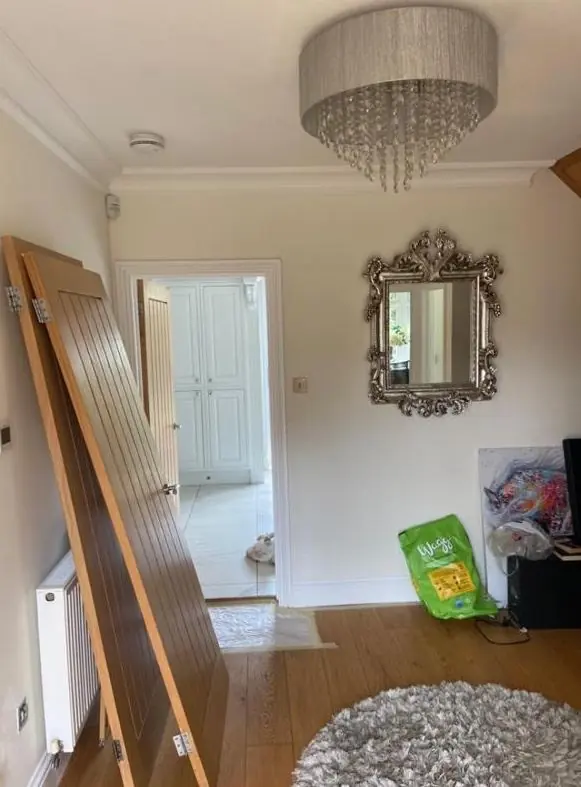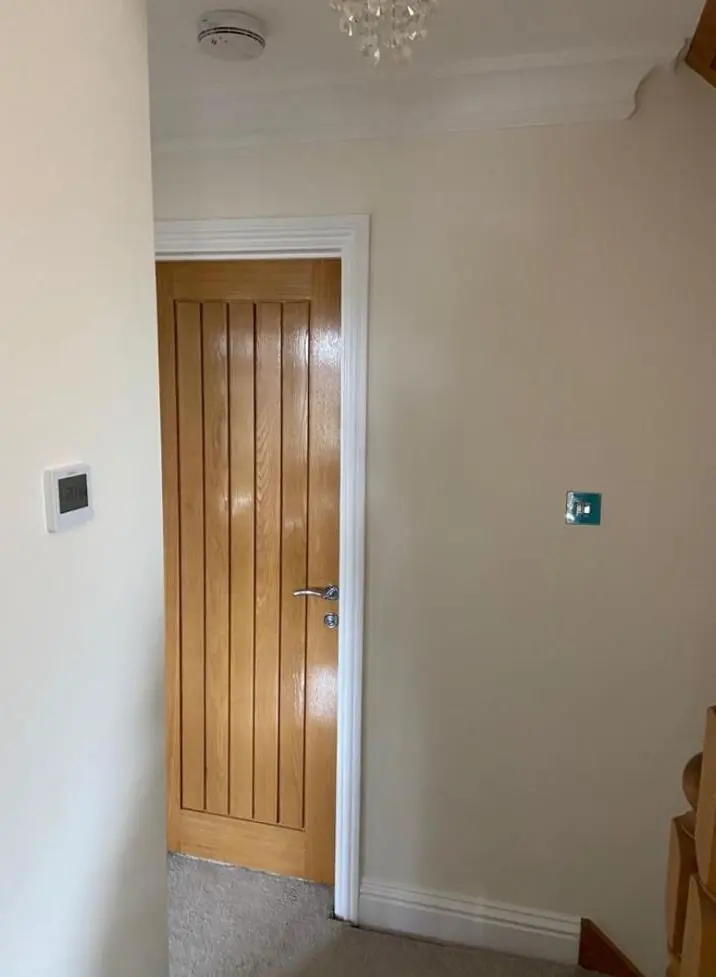
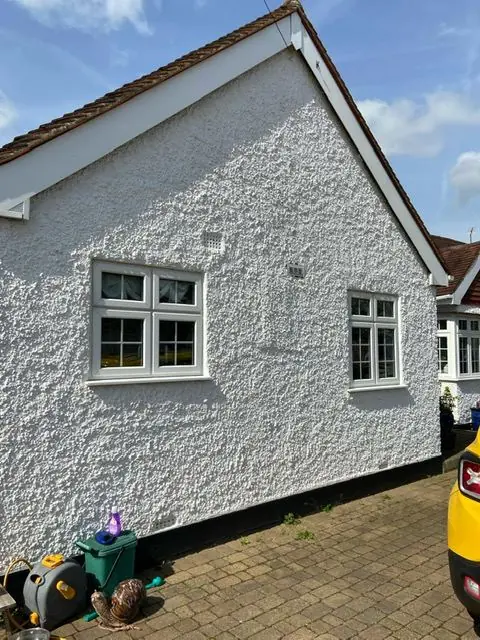
DH Painter & Decorator covers Boughton from our Northampton base, about 3.4 miles north of the town centre on the A508 Harborough Road. Dean, with over 30 years in the trade, paints and decorates the village's historic stone cottages, its 20th century houses and the newer homes on the Buckton Fields estate.
An estate village on Northampton’s northern edge
Boughton sits on the A508 Harborough Road, on the northern fringe of Northampton in postcode NN2. The 2011 census recorded 1,112 residents in the parish, though that figure predates most of Buckton Fields. Moulton Lane runs east towards Moulton, Brampton Lane west towards the Bramptons, and Obelisk Spinney and Obelisk Rise form a green buffer between the village and the town.
The Domesday Book recorded Boughton as a village of 39 households. Its later shape came from Boughton Hall and Boughton Park, which lie west and north of the village. In the 18th century William Wentworth, 2nd Earl of Strafford, remodelled the park and built a series of Gothic follies, all now Grade II listed, including the Hawking Tower, the Spectacle and the Obelisk. Most of the older buildings in the village, from the Rectory to Obelisk Farm and the Old Bakehouse, were built to serve the Hall or house the people who worked for it. That is why the 2018 conservation area appraisal calls Boughton a characteristic Northamptonshire estate village.
The historic core: Pendle stone, thatch and small casements
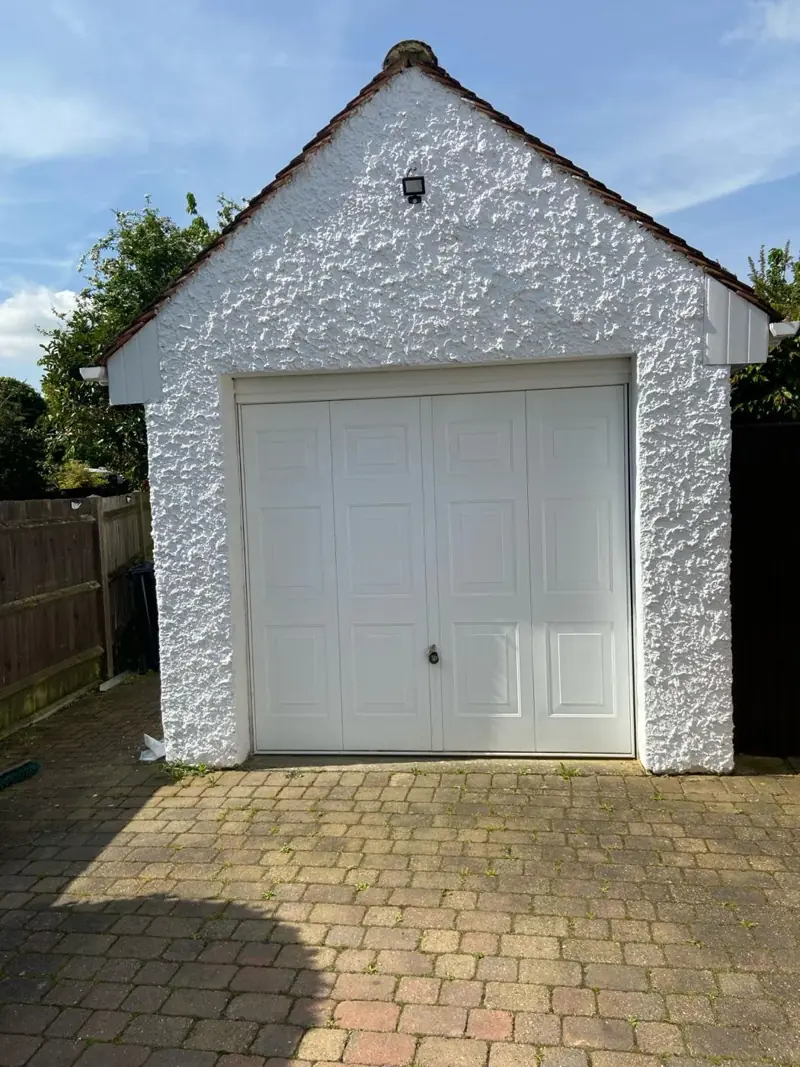
The oldest houses date from the 17th century and cluster on Church Street and Butcher’s Lane. Merewater, the former Lion pub, carries a 1634 datestone. The cottages are built of roughly dressed, thinly coursed Boughton Pendle stone and local ironstone with thick lime-mortar joints, under long-straw thatch or slate, with brick stacks, small-paned timber casements, plank doors and timber lintels either painted black or left bare.
For a decorator, almost every one of those details changes how the work is done:
- Stone walls should stay unpainted. Where a coating is already on, it needs a breathable mineral or lime-based product, never an acrylic masonry paint that traps moisture.
- Thatch rules out heat guns and flames anywhere near the eaves, so old paint on joinery is stripped chemically or by hand.
- Small-paned casements, some with leaded lights as at 7 Butcher’s Lane, need slow hand preparation and a flexible joinery paint, with care around fine glazing bars and lead cames.
- Plank doors with strap hinges, like the one at Merewater, suit microporous or oil-based finishes.
- Interiors usually have lime plaster, low ceilings and beams, where breathable emulsions work better than vinyl paints.
Our exterior painting page covers how we prepare and coat outside joinery in general; in Boughton the products are chosen around stone, lime and thatch.
Conservation area, Article 4 and listed buildings
Boughton Conservation Area was designated in 1971, revised in 2002 and extended in 2018 to take in Nos. 1 to 8 Swedish Houses on Humfrey Lane. It covers the village core and Boughton Park. The parish holds 26 Grade II listed structures and two Scheduled Monuments, Boughton Bowl Barrow and the ruins of Old St John’s Church near Boughton Green.
In 2019 the council made an Article 4 Direction, confirmed in 2020, that removes permitted development rights for changes to front elevations on named houses on Butcher’s Lane, Church Street, Humfrey Lane and Spring Close. The appraisal had window and door alterations in mind. For painting, the practical upshot is simple: on those houses and on listed buildings, repaint like for like, and agree any change of colour or stripping of historic finishes with West Northamptonshire Council before work starts.
The appraisal also gives the village something rare, a recorded joinery palette. Windows in the core are usually white, sometimes pale green or pale yellow, and a darker Boughton estate green survives at Nos. 6 and 8 Butcher’s Lane and No. 2 Swedish Houses. Our colour and finish advice starts from those colours for conservation-area homes.
Twentieth century Boughton: Swedish Houses, pebbledash and big gardens
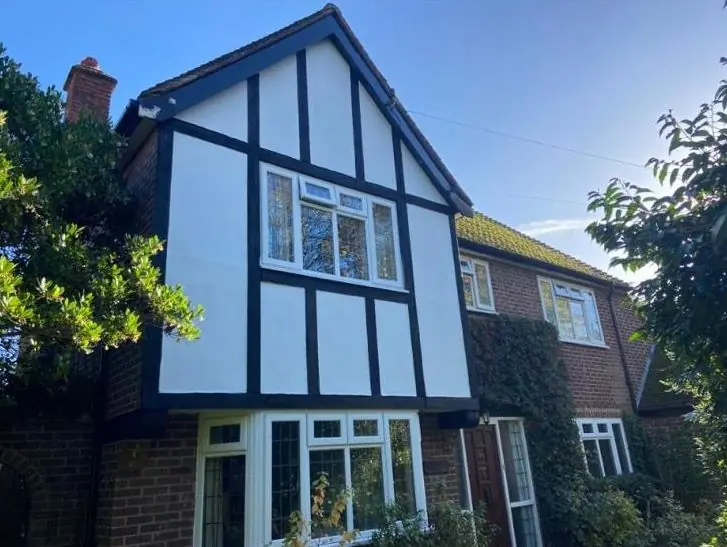
The village grew piecemeal through the last century, road by road:
| Houses | Where | What the paintwork involves |
|---|---|---|
| Large detached houses, some Arts and Crafts, many built by 1943 | Northern Butcher’s Lane, Spring Close, Moulton Lane | Long runs of joinery, gates and fences; some locally listed and under Article 4 |
| 1940s semi-detached Swedish Houses | Humfrey Lane at Howard Lane | Black or dark brown stained timber cladding, re-coated in a matching dark wood finish |
| Former council houses | Butcher’s Lane and Humfrey Lane | Purplish brick, with pebbledash to the first floor on two Butcher’s Lane houses |
| 1960s estate and later detached houses | Howard Lane, Vyse Road, Spring Close | Mostly brick, with render or half-render on houses such as Croft House and Winston House |
Rendered and pebbledashed walls here can take a standard masonry coating once loose dash and cracks are repaired, which is the opposite of the advice for the stone cottages a few hundred yards away. Our render and masonry painting page explains that preparation.
Buckton Fields
In the south-west of the parish, Buckton Fields was approved in 2013, with Phase 1 starting in 2015, Phase 2 around 2020 and Taylor Wimpey’s Phase 3 from 2022. The appraisal put the scheme at about 1,000 homes, so it now holds a large share of the parish’s households. Homes nearest the conservation area, fronting Harborough Road, use a regular-coursed pale brown stone similar to Boughton Pendle.
Inside these homes the work is different again: new plaster that needs a mist coat in extensions and repairs, settlement cracks to fill once they stop moving, and the first full redecoration after the builder’s thin emulsion. Our new plaster and extension painting page goes into that in detail.
Trees, lanes and getting the ladders in
Boughton is heavily treed, with cedar, pine, willow, chestnut and hornbeam through the village and many Tree Preservation Orders, including belts along Spring Close and south of Humfrey Lane. Shaded elevations collect leaf litter, sap and green algae, so outside work starts with a fungicidal wash, and ladders are placed so they do not damage protected trees.
Access takes planning too. Church Street is narrow with doors close to the road, Butcher’s Lane and Spring Close have no pavements, and Vyse Road has only limited ones. Church Street, Moulton Lane and Humfrey Lane get heavy traffic and parking pressure at peak times, and Boughton Primary School on Moulton Lane brings the school run. We set up ladders with signage and time front-elevation work outside those peaks.
The village has no shops. Its non-residential buildings are the Whyte Melville pub on Church Street, whose painted white ashlar front is locally listed, the parish church, the primary school, T J Daycare, the Village Hall and the small businesses at Kimbell Mews on Humfrey Lane. Work on any of these is phased around opening hours and term dates with low-odour products, as described on our commercial painting page.
Last updated by Dean, DH Painter & Decorator.