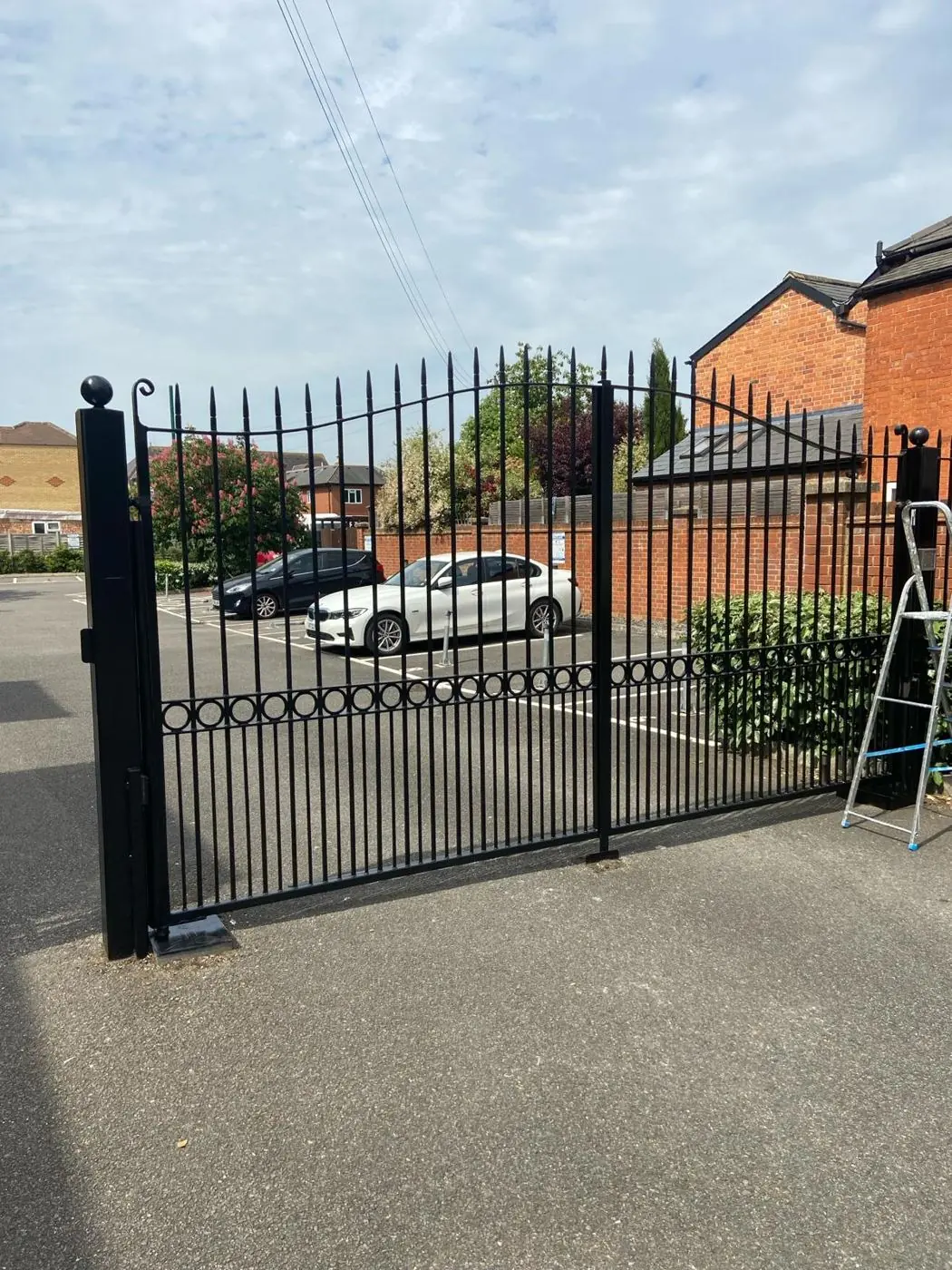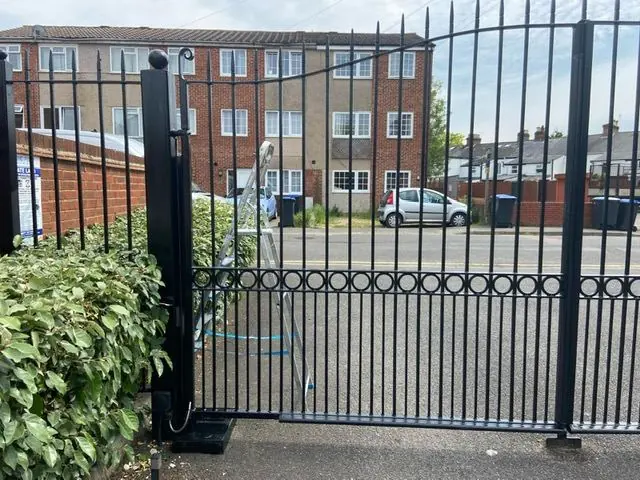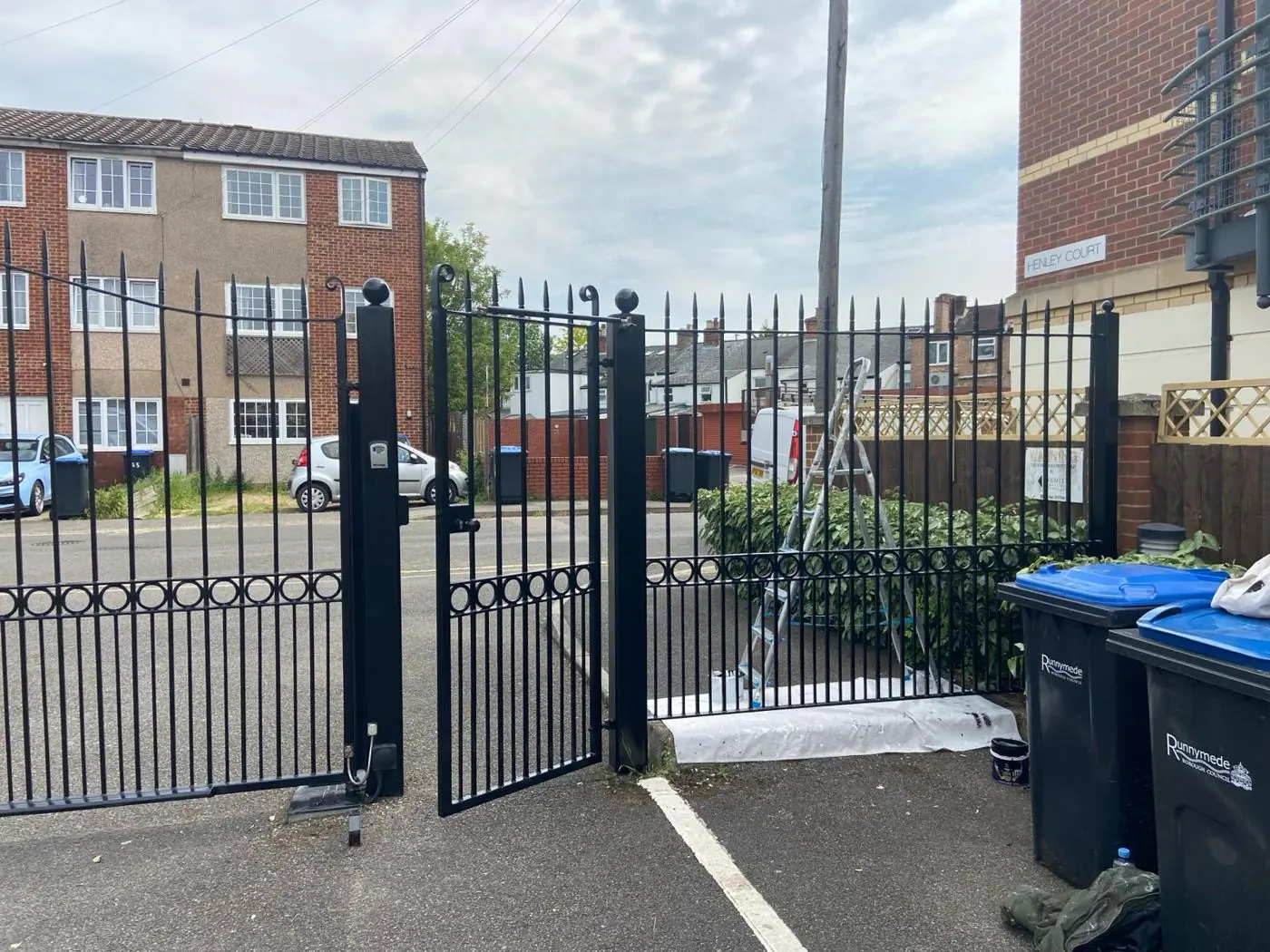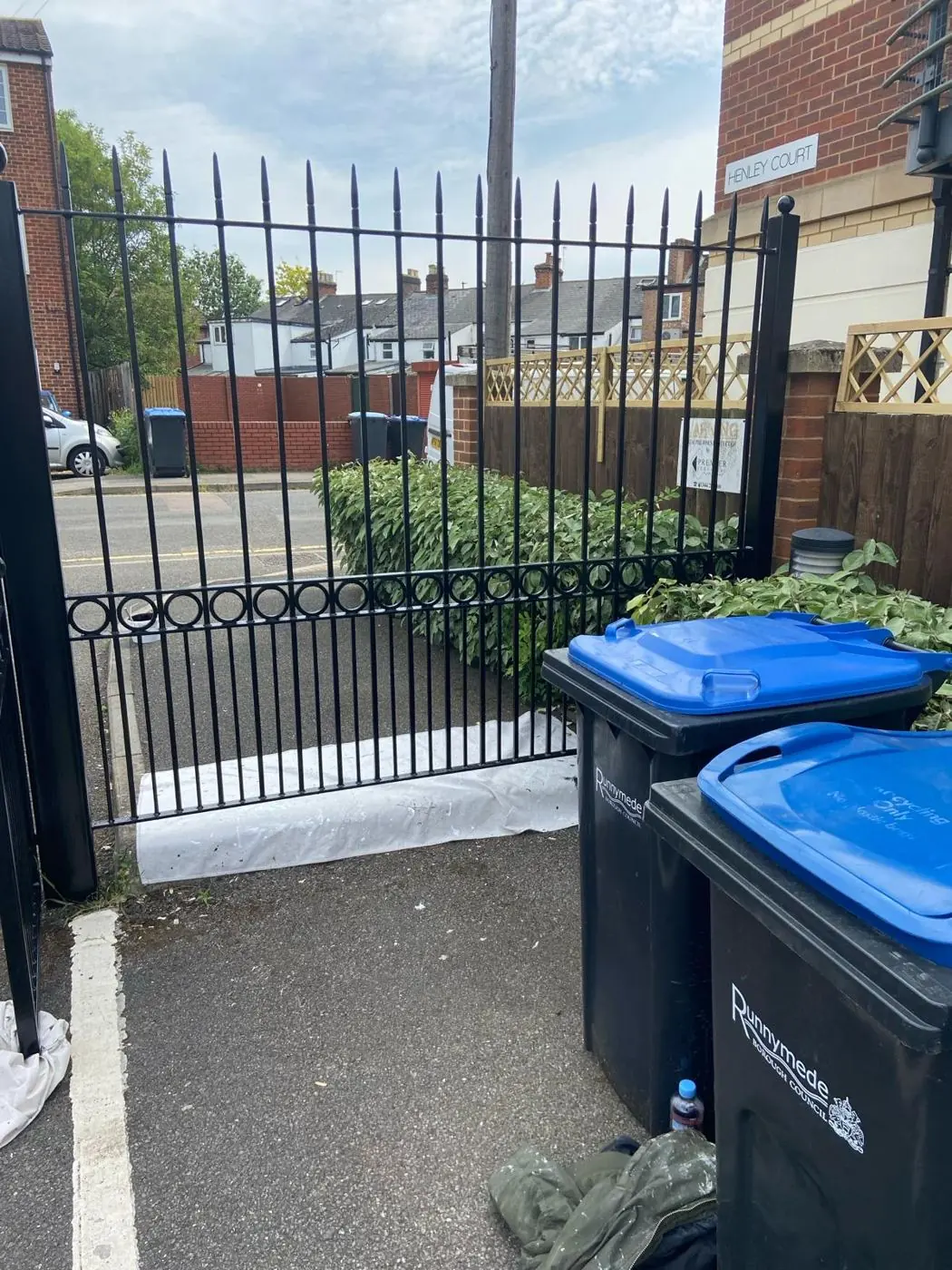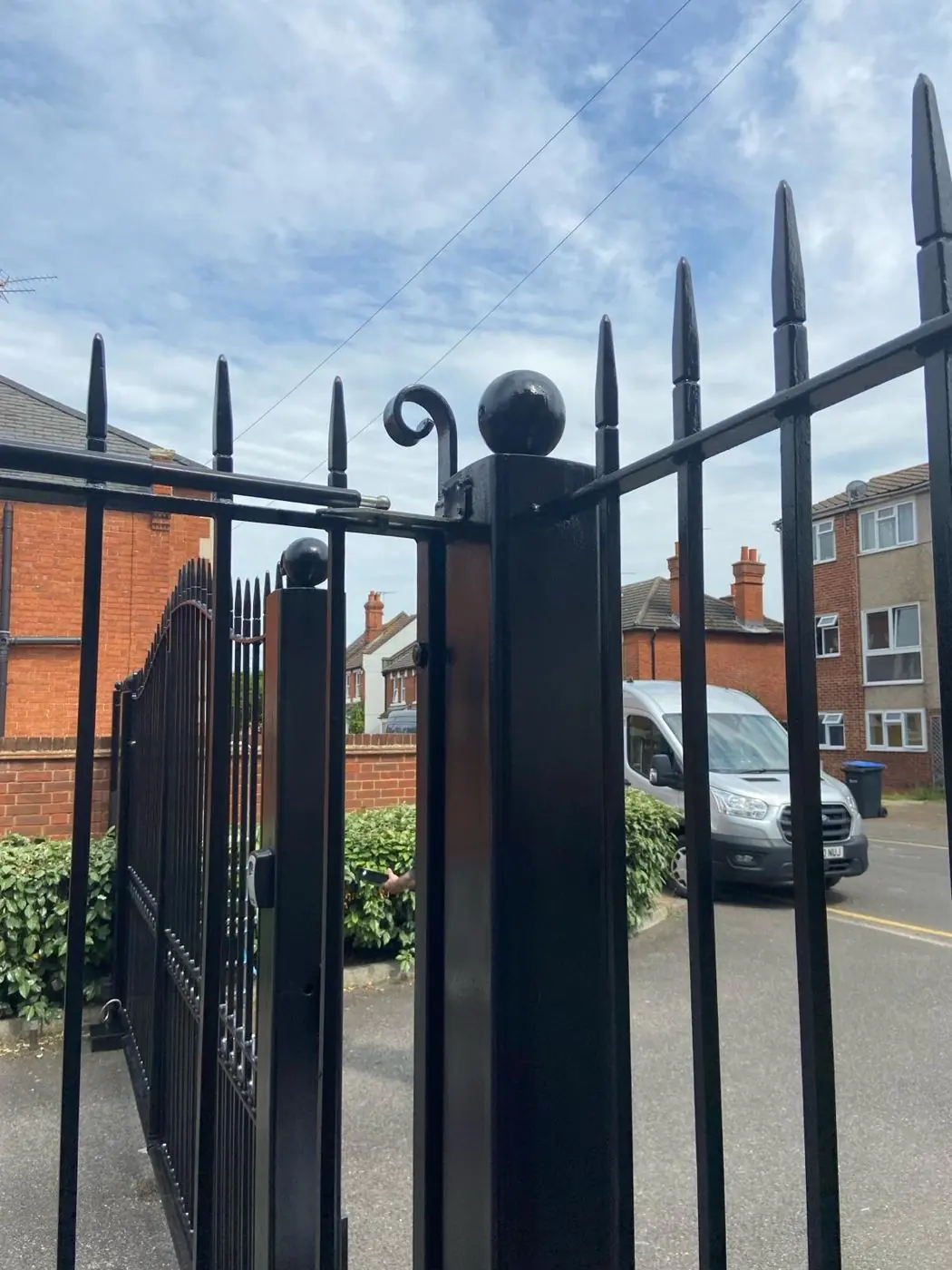
DH Painter & Decorator treats and repaints metal gates and railings in Duston, about 2.1 miles west of Northampton town centre. The work runs from ironwork set into the old village's ironstone walls to longer school and community boundaries, with rust taken back before dark heritage finishes go on.
Ironwork set into ironstone
In Duston’s historic core around Main Road, Church Lane and Millway, ironstone walls are a defining feature, and where a metal gate or railing is set into one, the pairing creates a particular problem. Where a bar or gate post is leaded or bedded into stone and the paint fails, rust expands at the joint and can split the stone around it. On these boundaries we pay most attention to the feet of railings and the hinge pins of gates, cleaning out loose corrosion, treating what cannot be removed, and sealing the junction so water stops running into it.
The stone itself is a different matter. Those stone boundaries are protected and named in the public realm plan, so painting them is off the table. When we work on a gate set into such a wall, we mask the stone, keep primer and paint off it, and clean up any marks before we leave. The ironwork gets the attention; the wall stays as it was.
Repair in place, not replacement
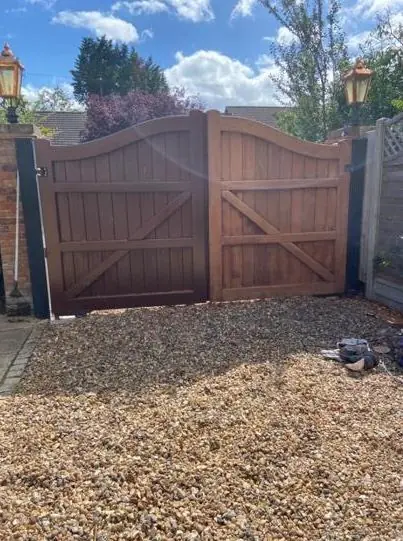
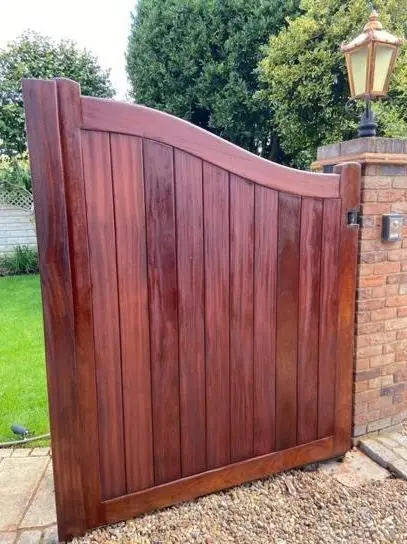
Within the Duston Conservation Area, demolishing a wall, fence or gate over a metre high next to a highway needs consent. The 2009 appraisal counts removal of historic walls and poor maintenance as harmful to the area. Keeping an existing iron gate sound is therefore usually the simpler route. Most old gates are wrought or cast iron, which last well once rust is dealt with and a proper paint system goes on. Cast iron is brittle, so finials and decorative panels are cleaned by hand rather than struck.
On listed buildings, such as the Grade II houses along Main Road, a gate attached to the property may come under listed building consent if its character changes. Repainting black ironwork black is like-for-like work. If you want a different colour, check with the conservation officer before we start.
Schools, the churchyard and larger boundaries
Beyond the old village the boundaries get longer: The Duston School’s playing fields on Berrywood Road, the cemetery and allotments on the same road, and parks such as Errington Park and Mendip Park. Where those boundaries are metal, work is timed around the people using them, with holidays for schools and quieter days for public spaces. Long modern runs are often galvanised steel, which needs a primer made for galvanised surfaces before any top coat.
St Luke’s churchyard sits at the end of a long lane, enclosed by ironstone walls with a lych gate. The churchyard covers about 4,500 square metres, and with no road up to it, ladders and tins are carried in along the lane. On sites like this the same rule applies: treat the metal, protect the stone.
Colour, finish and road spray
For railings in the old village, black or another dark heritage colour suits the ironstone and pale render around them, and a traditional semi-gloss or eggshell metal finish looks more in keeping than high gloss. Ironwork near Main Road and the busy boundary roads such as Berrywood Road and Tollgate Way picks up spray and road grime, so we degrease and wash it before priming.
The step-by-step process for each type of metal, from wire brushing to rust-inhibiting primer and top coats, is on our metal gate and railing painting page. The Duston area page sets out the other painting we cover in the parish.
Last updated by Dean, DH Painter & Decorator.