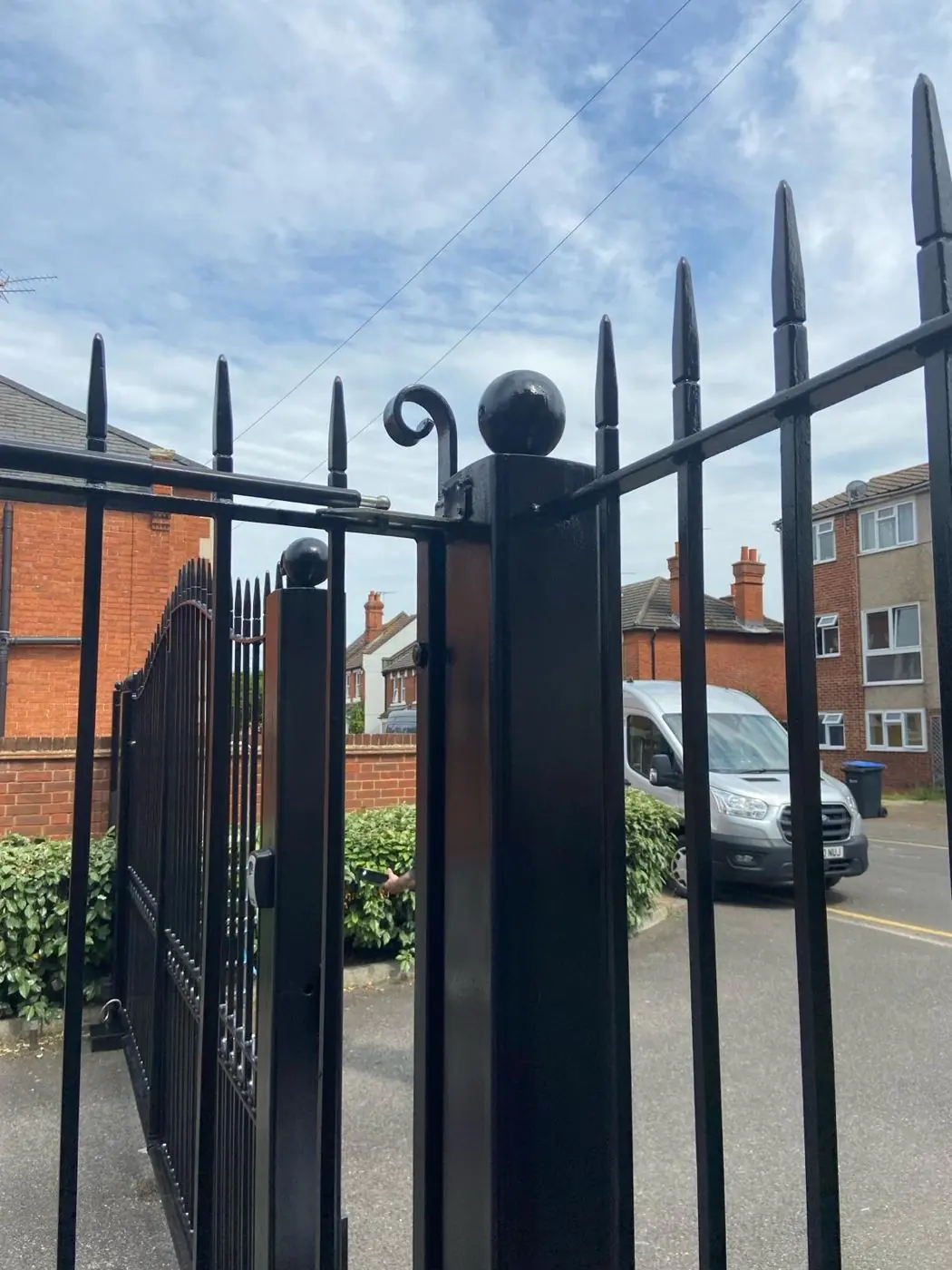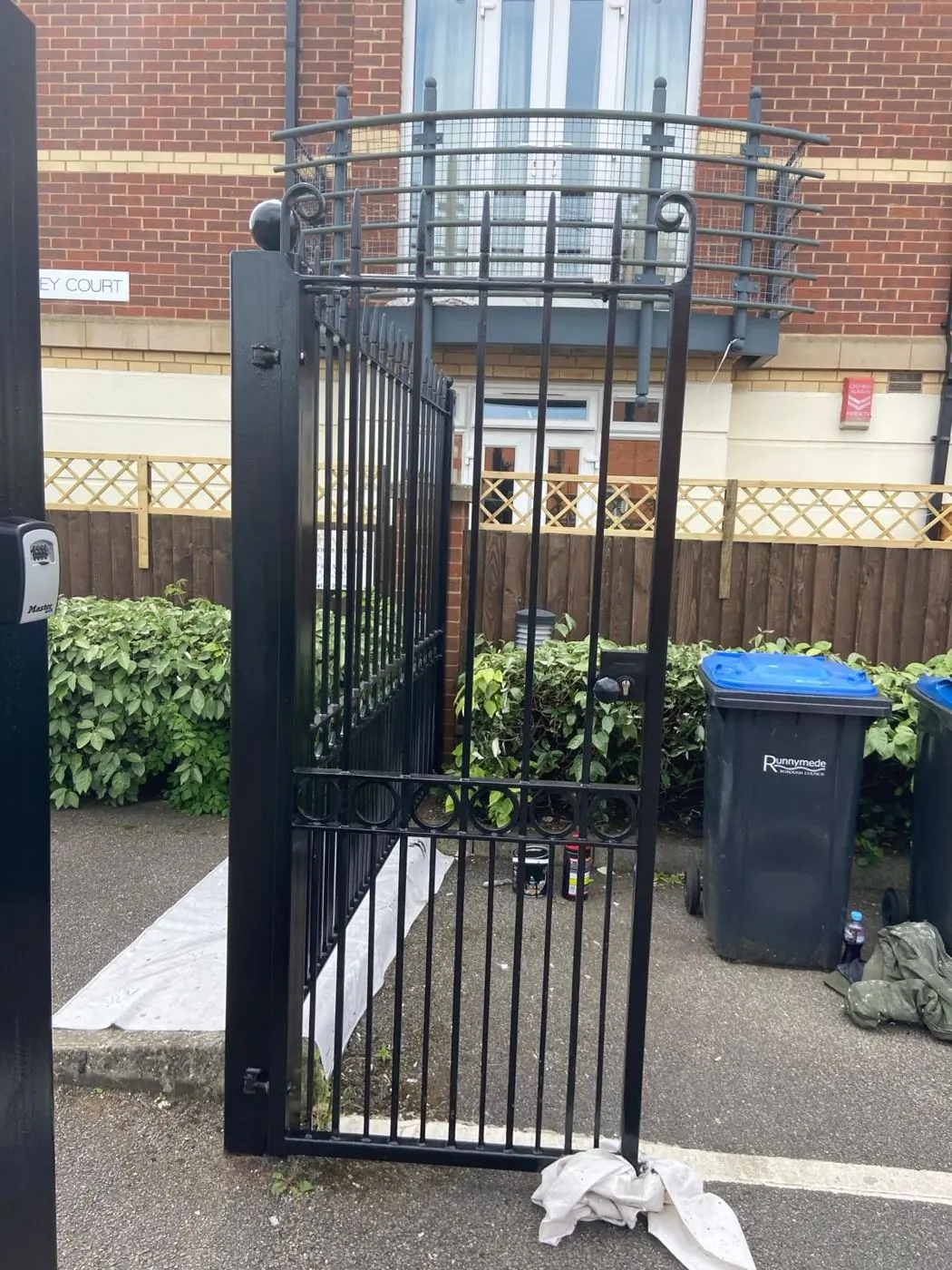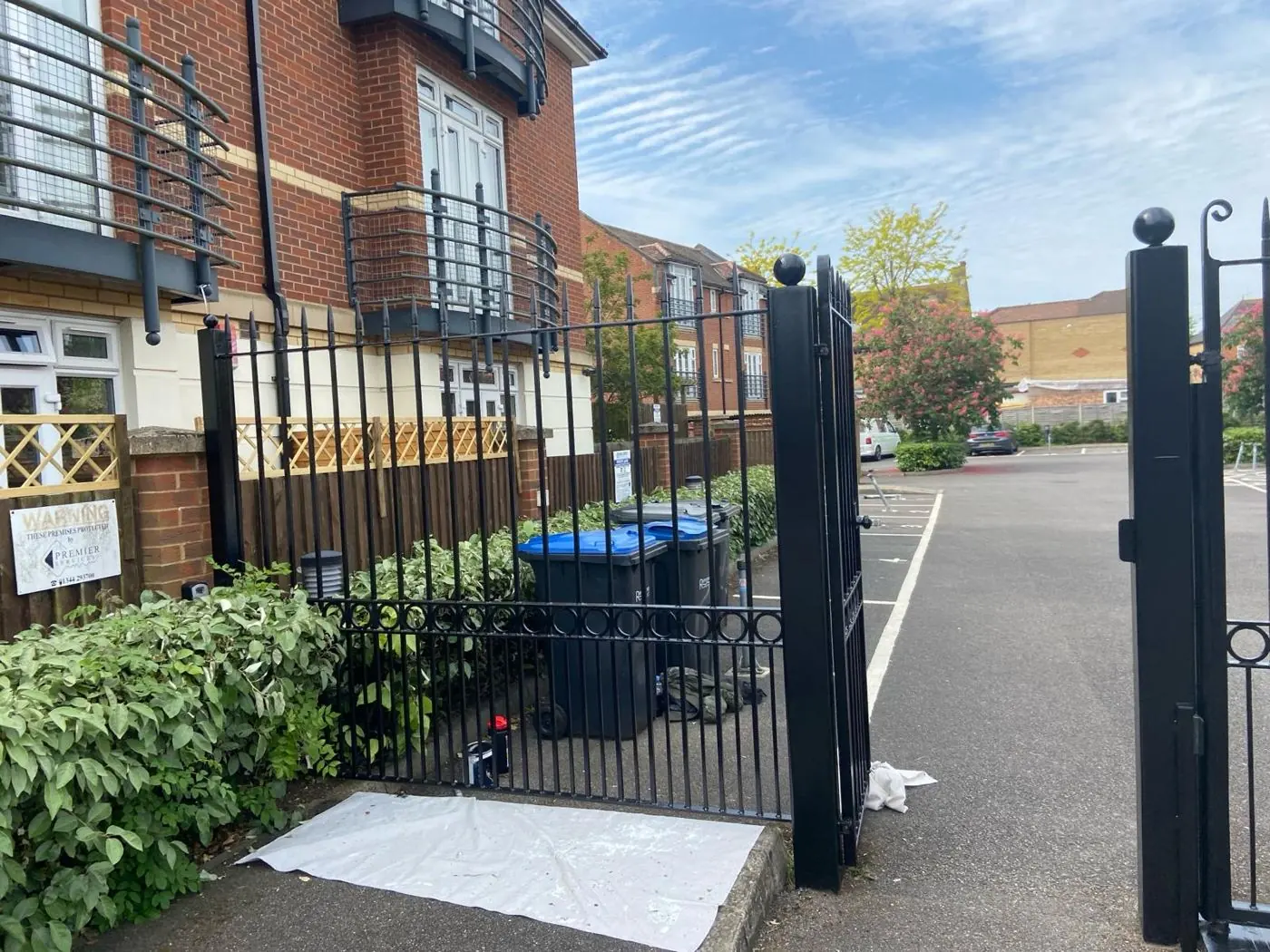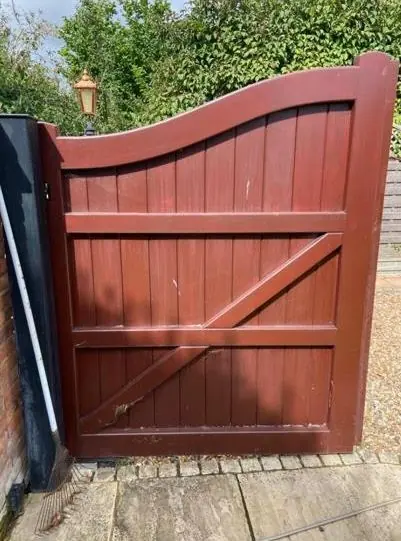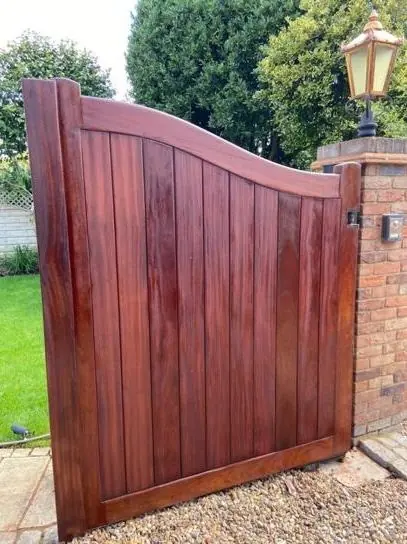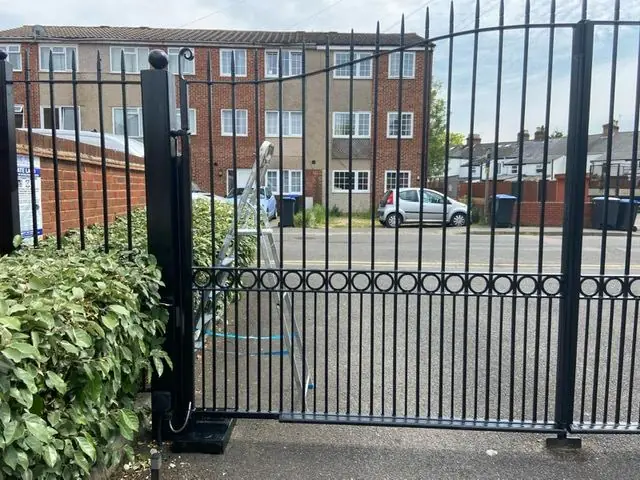
DH Painter & Decorator paints metal gates and railings in St Crispin, the NN5 neighbourhood on the former St Crispin's Hospital site. We cover it from our Northampton base about 2.6 miles away, with Dean preparing the metal back to sound before any paint goes on.
Two kinds of ironwork on one site
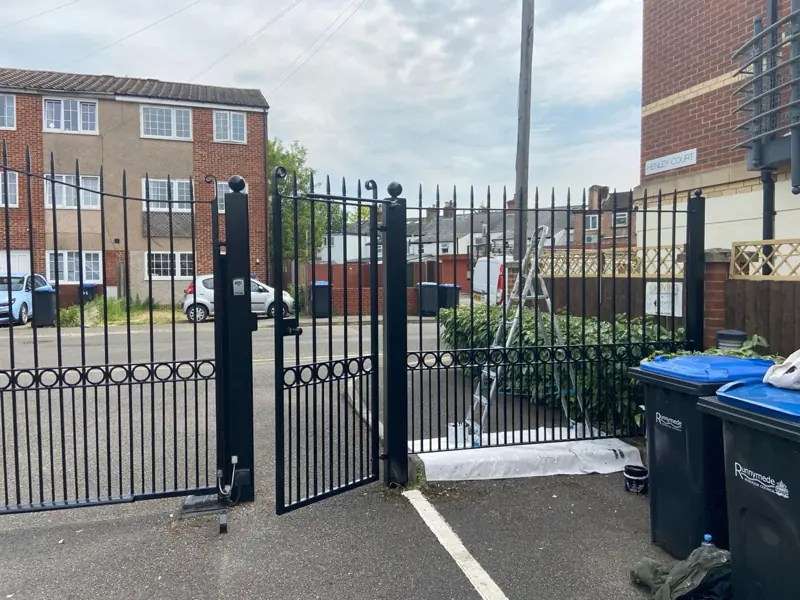
Most of St Crispin was built after 1995, and the modern estate has fewer railings than an older suburb would. Where there is metalwork on the newer streets, it is mainly around apartment blocks, for example entrance railings or gates to bin stores, typically in mild or galvanised steel.
The site also has period ironwork from its hospital years, which is a different matter. The St Crispin Cemetery Gardens, the former hospital cemetery, have an iron fence that has been under restoration since 2025. Connolly Lodge, built in 1886 as the isolation hospital and now Grade II listed, has French-style pavilion roofs topped with cast-iron cresting.
Listed metalwork comes with conditions
Cresting on Connolly Lodge, and any original ironwork attached to the chapel or the old hospital blocks, sits inside the St Crispin’s Conservation Area and in some cases on a listed building. Repainting it in the existing colour with a compatible system is generally treated as maintenance, but stripping it, changing the colour or replacing sections is likely to need consent from West Northamptonshire Council. Cast iron of that age is also brittle. It cracks if it is hammered or needle-gunned too hard, so it is cleaned with hand tools and rotary brushes and treated with care. If the cresting needs repair rather than repainting, a specialist metalworker should be involved first.
Work like this is usually commissioned by the building owner or a managing agent. We are happy to look at it and say plainly whether it is a painting job or a restoration job.
Damp, shade and rust
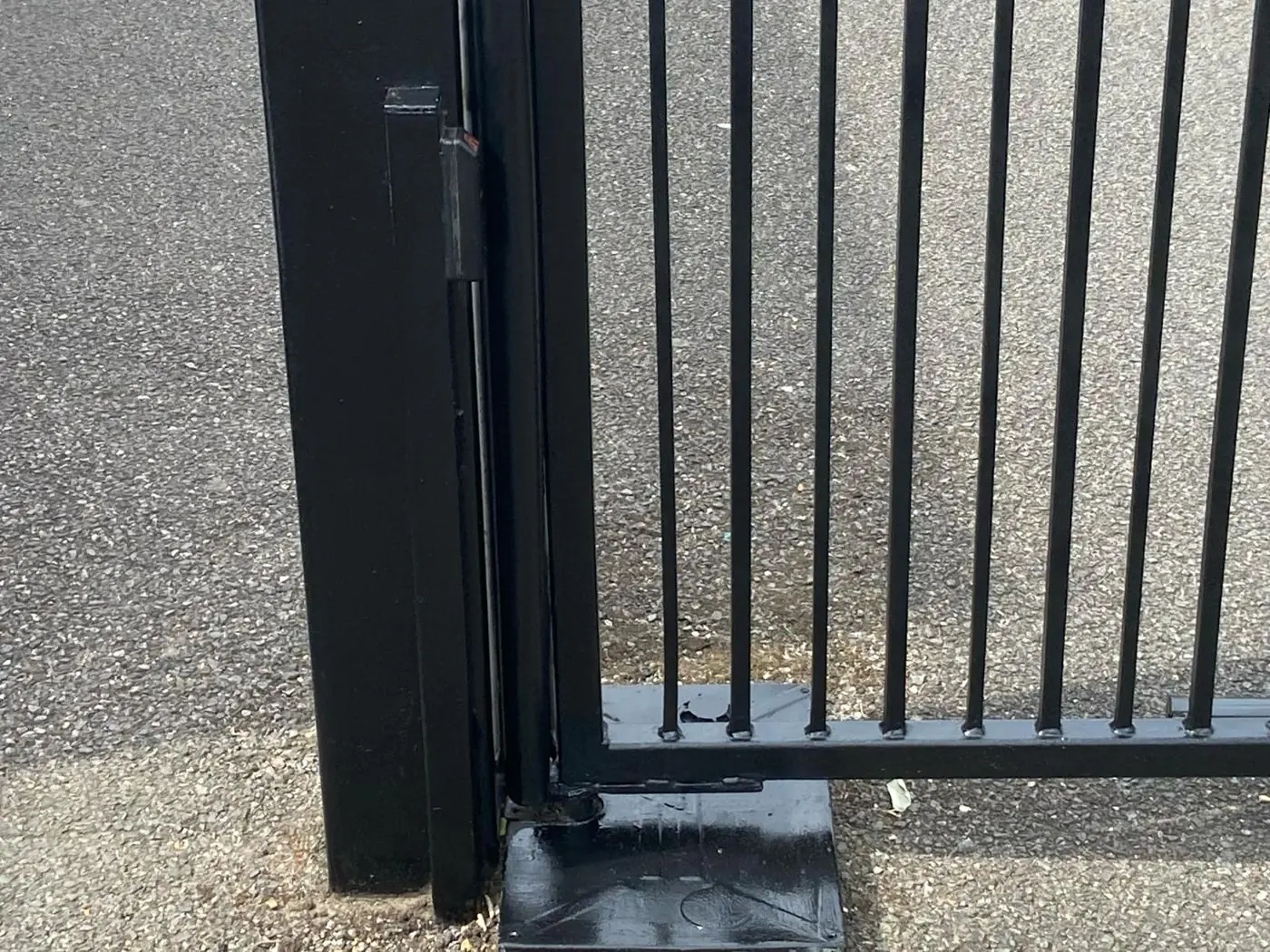
The trees of Berry Wood and the old parkland keep parts of the site shaded and damp. Metal that stays wet for long periods rusts faster wherever the paint is chipped, and leaf litter piled against the foot of a railing holds water against the bars and base plates. That is where rust usually starts here: at ground level, at fixings and at welded joints.
| What you have | Typical problem | Our approach |
|---|---|---|
| Steel railings at apartment blocks | Rust at base plates and welds | Wire brush to sound metal, rust-inhibiting primer, two finish coats |
| Galvanised gates and bin store doors | Paint peeling off the zinc | Remove loose paint, etch or specialist primer for galvanised steel |
| Victorian cast iron on historic buildings | Many old layers, brittle castings | Gentle cleaning, conservation-compatible coatings, consent where needed |
Working around communal areas
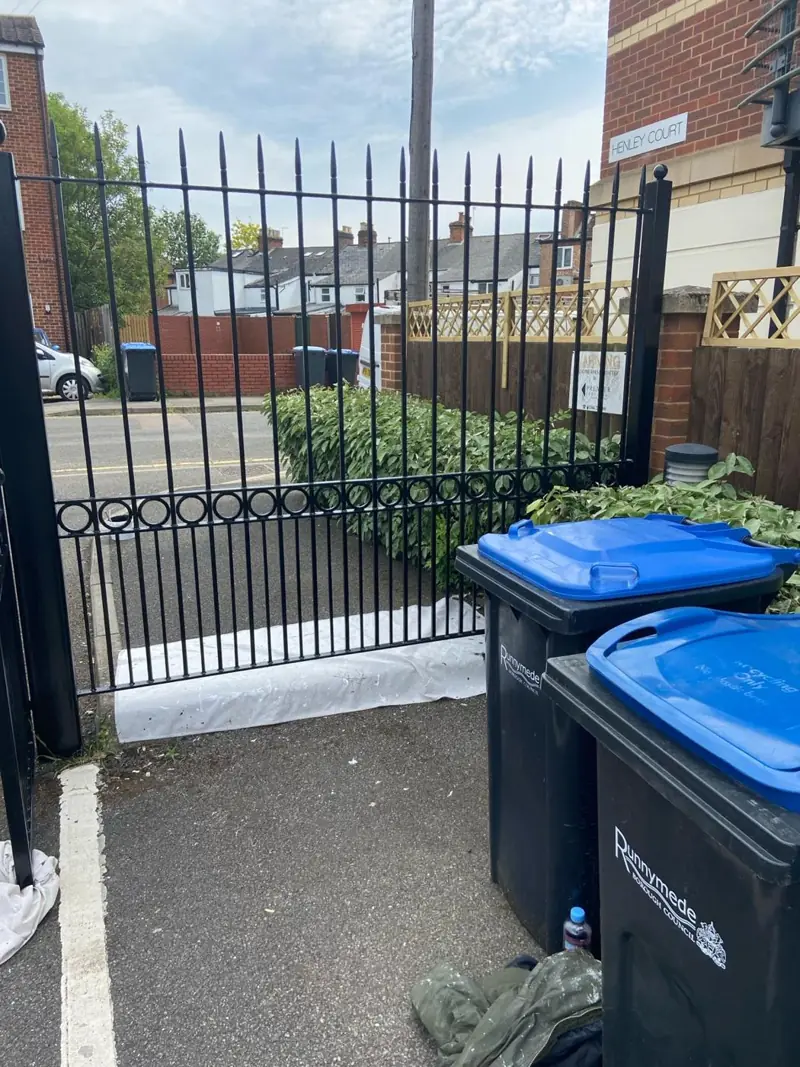
Railings by apartment blocks usually line paths, entrances and parking courts that residents use all day. We cordon off a short section at a time, put up wet paint notices, keep a clear route past the work and lay sheets so dust from wire brushing does not end up on cars or paving. If a gate is the only way into a block or bin store, we paint it in stages so it can still be used, or agree a time with the managing agent when it can be propped open.
For a front gate on a private house, the job is simpler: take it off its hinges if that helps, deal with any seized hinge pins, and paint every face including the edges and the underside of the bottom rail, which is where water sits.
Our main metal gate and railing painting service covers metal types and primers in full. To see the other services we offer in the neighbourhood, visit our St Crispin page.
Last updated by Dean, DH Painter & Decorator.