DH Painter & Decorator stains and treats garden fences and gates in Kings Heath, NN5, an estate about 1.7 miles from Northampton town centre on the Dallington side. Dean checks how to reach your back garden first, since many homes on the estate front paths or greens.
Private gardens on a plan built around green space
Kings Heath was laid out from 1950 on a kidney-shaped plan centred on a large shared green, and it was praised in its early years for that open, village-like feel. Behind the public space, though, the family houses have their own rear gardens, and those gardens are bounded by timber fences and gates. Like any timber left outdoors, they grey, split and go soft at the base unless they are treated from time to time.
Seventy years on, few of those fences are the first ones put up, and with houses changing hands at different times, one row of back gardens can mix older boarding, newer panels and gates of different ages. We treat each boundary on its own merits rather than assuming one product fits them all.
How do we get to the back gate?
This is the first question on most Kings Heath fence jobs. Mid-terrace houses have no side passage, and where the back of a row opens onto a path rather than a road, everything comes in by hand. Depending on the house, we may reach the garden:
- through a rear gate off a shared path, carrying everything from the nearest parking;
- through the house itself, with dust sheets laid along the route;
- from the side, on an end-of-terrace or semi-detached plot.
We sort this out when we visit to quote. Stain tins, brushes and sheets are light, but a sprayer or a pressure washer for cleaning old growth off the panels means more trips, and it is better to plan for that than to discover it on the morning.
Stain, oil or paint for an open site?
Gardens open to one of the estate’s greens or other open ground get wind and rain from more directions than a walled town garden. That affects what goes on the fence:
- Water-based fence stain suits rough-sawn panels and is quick to recoat, which helps where a fence takes a lot of weather.
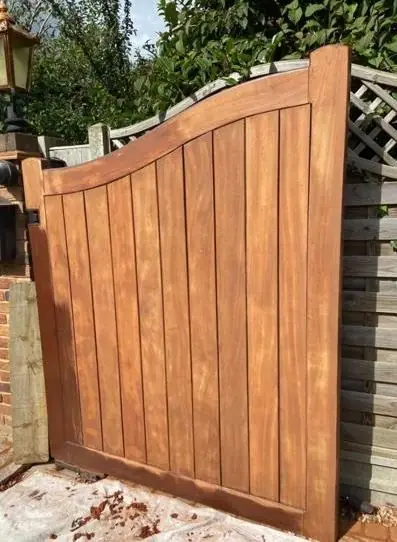
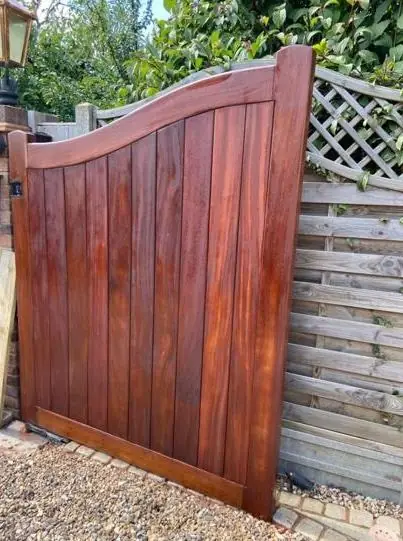
- Penetrating oil or a translucent wood stain suits smooth planed gates and feather-edge boards, where you want the grain to show.
- Opaque exterior wood paint gives the strongest colour and protection on a gate, but commits you to repainting rather than re-staining in future.
Whatever goes on, the bottom rails and posts near the soil decide how long a fence lasts, so those get the most attention.
Timber needs to be dry when it is treated, and exposed fences take longer to dry after rain, so we leave enough fine days between cleaning and coating. Our guide to timing outdoor painting explains why late spring and summer usually suit this work. The fence and gate staining service page covers cleaning, repairs and products in more depth.
Whose side of the fence is it?
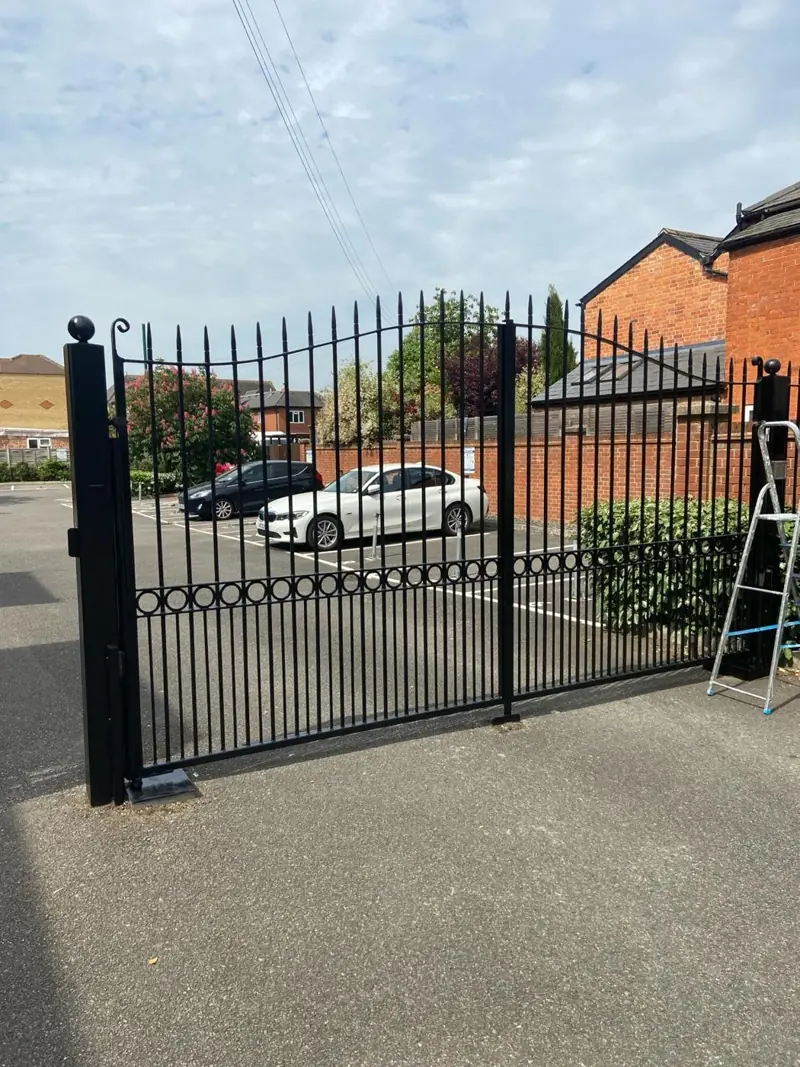
On a former council estate with mixed ownership, a boundary fence may belong to you, your neighbour, the council or a landlord. Before we stain a shared fence we ask whose it is, and we only treat your side unless the neighbour agrees to both. Stain colour shows through to the other side on thin panels, so a dark shade on yours can affect the look of theirs. Mid-tone browns and greens are the safer choice where the fence is shared and the neighbour has not been asked.
We cover the whole estate from Northampton. See the Kings Heath page for other outdoor and indoor work we take on there.
Last updated by Dean, DH Painter & Decorator.