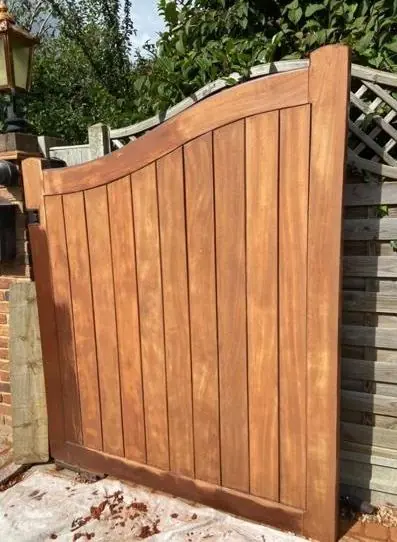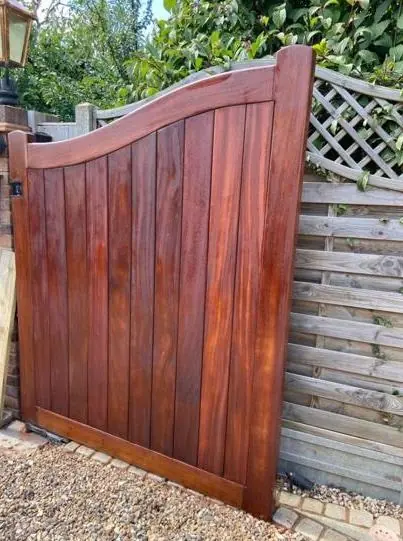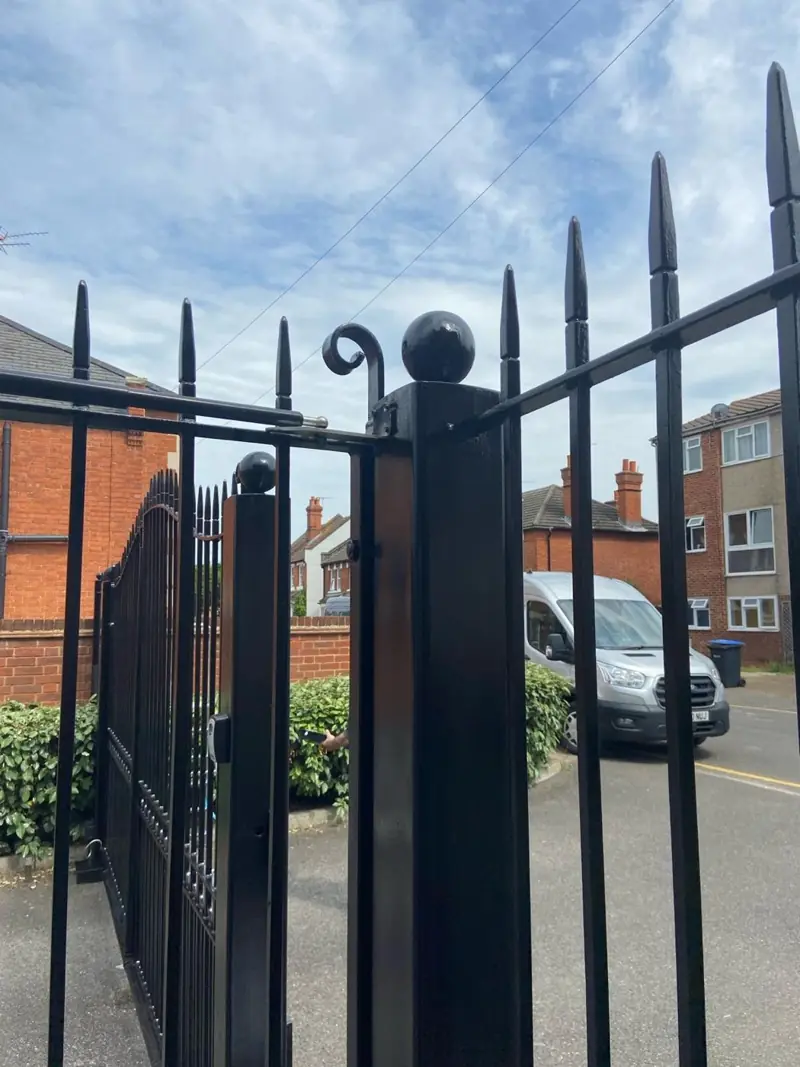
We stain and treat timber fences, gates and cladding in Boughton, the NN2 village roughly 3.4 miles north of Northampton town centre. Most of the work sits on the larger plots of the outer roads and on the young fences of Buckton Fields, with the 1940s Swedish Houses as a special case.
Where the timber is in Boughton
The old core of Church Street and Butcher’s Lane is built tight to the road, with stone walls rather than fences. Timber boundaries appear further out. The appraisal describes detached houses on Vyse Road, Moulton Lane and northern Butcher’s Lane set back behind large gardens, hedges and stone walls, and those plots tend to have long fence runs down the sides and wide timber gates across drives. At Buckton Fields, in the south-west of the parish, garden fencing is only a few years old across the earlier phases and newer still on the later ones.
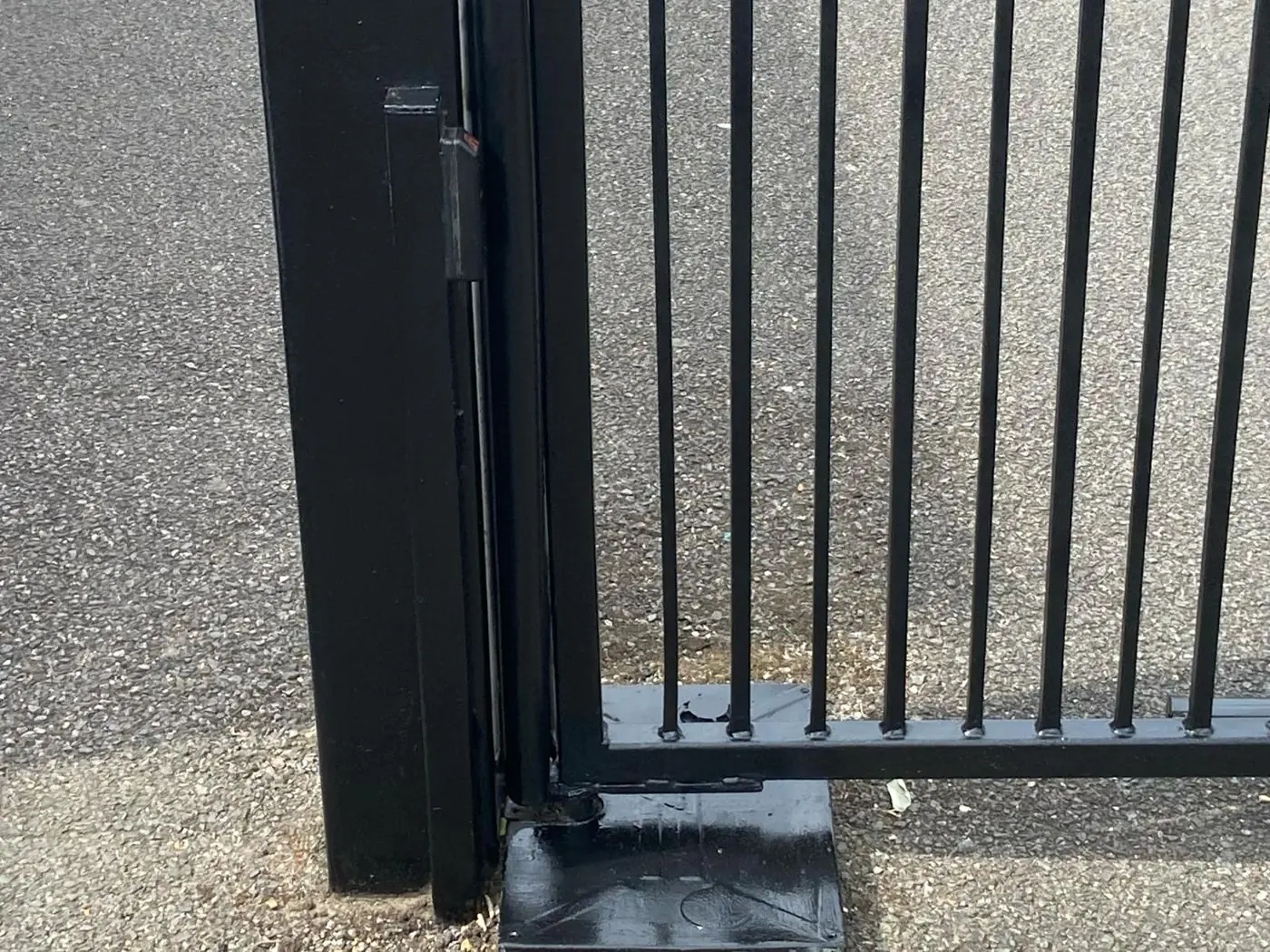
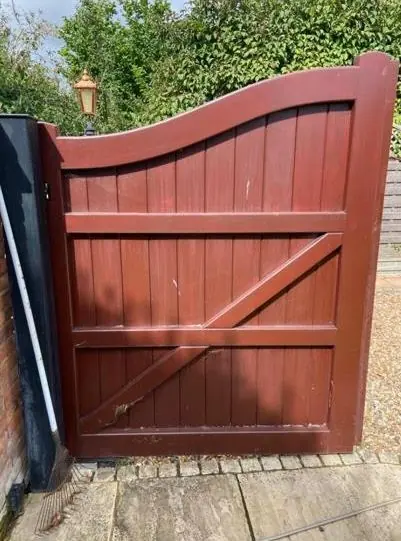
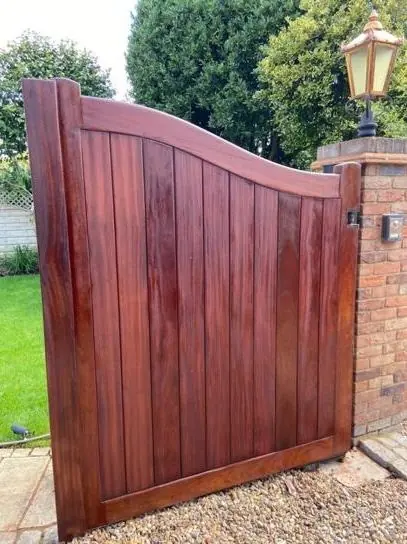
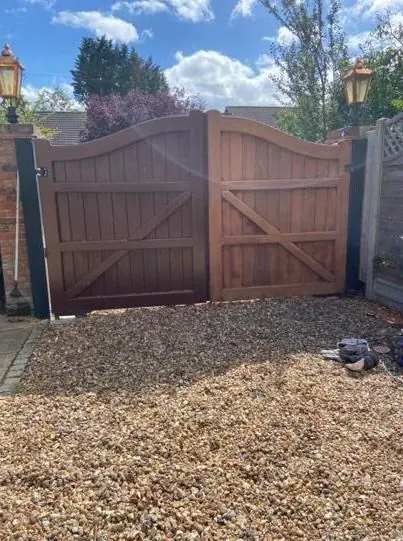
Each needs a different first visit. A long side boundary on Vyse Road is mostly a question of time and dry weather. A five-bar or close-boarded drive gate is more about hinges, rot at the foot of the posts and whether it has been painted, oiled or stained before, as those coatings do not mix.
New fencing at Buckton Fields
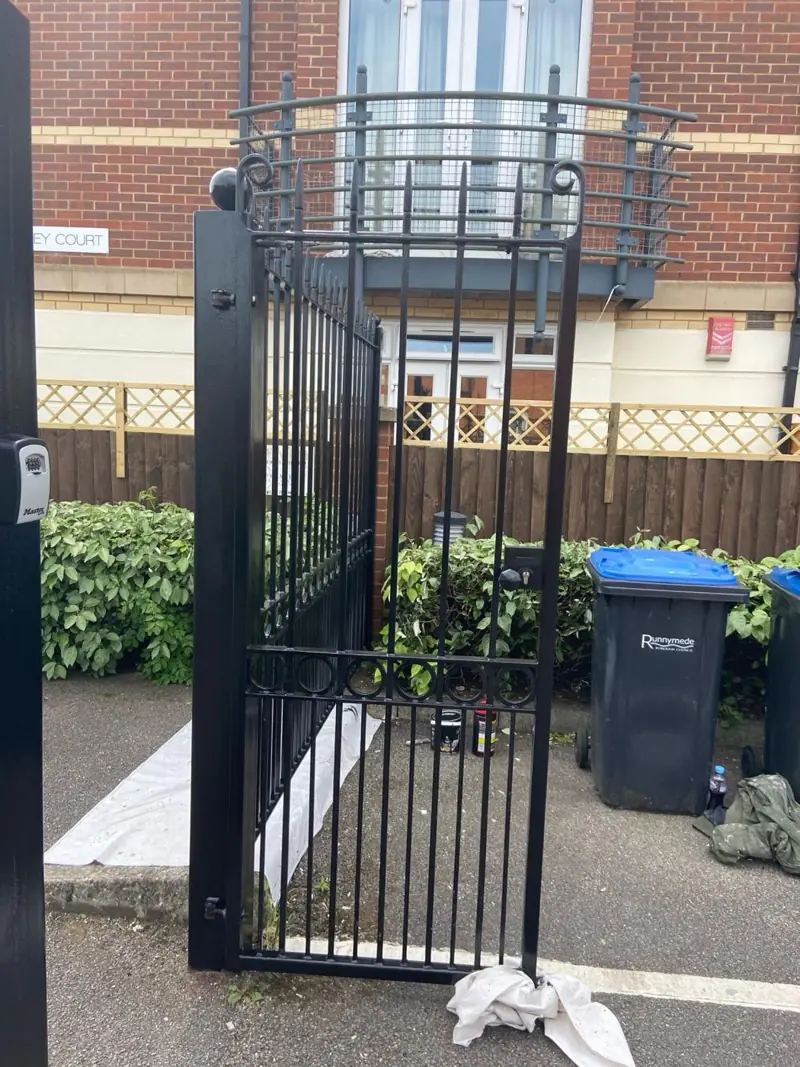
New pressure-treated panels often arrive green or brown from the treatment and are still wet inside. Staining them straight away traps that moisture. We generally advise letting new fence timber weather for a season before the first coat, then cleaning off any surface dirt and applying a water-based or spirit-based stain chosen for the colour you want. A first coat on new timber soaks in fast and unevenly, so we plan two. If your fence was put up by the developer, check whether it is a shared boundary before choosing a colour, as the side facing your neighbour is theirs to decide on too.
Hedges, shade and the damp side of the fence
Boughton is heavily treed and many trees carry Tree Preservation Orders, including belts along Spring Close and south of Humfrey Lane. Fences that sit in the lee of a hedge or under canopy stay damp and turn green, and gravel boards rot first. Before staining we brush and wash off algae with a fungicide, let the timber dry, and treat bare or soft areas. Stain over damp wood peels or blotches. We also work around roots and branches rather than cutting them back, since protected trees need notice to the council before any work.
The Swedish Houses on Humfrey Lane
The 1940s semi-detached Swedish Houses at the Humfrey Lane and Howard Lane junction are clad in black or dark brown stained timber. Nos. 1-6 are locally listed and covered by the 2019 Article 4 direction, and the conservation area was extended in 2018 to take in Nos. 1-8. Recoating that cladding is very much staining work, but the colour is not a free choice. We match the existing dark tone with a stain or opaque wood finish, testing a small area first, and owners who want anything different should speak to West Northamptonshire Council before we order product.
Gates within the conservation area
On cottages in the core, a timber side gate may be the only exterior wood besides the windows and door. If you are repainting joinery in one of the appraisal’s historic colours, such as white, pale green or the darker Boughton estate green, a gate can be finished to match rather than stained. Our main wood staining service for gates and fences sets out the products we use, and the Boughton area page covers the rest of the village.
Last updated by Dean, DH Painter & Decorator.