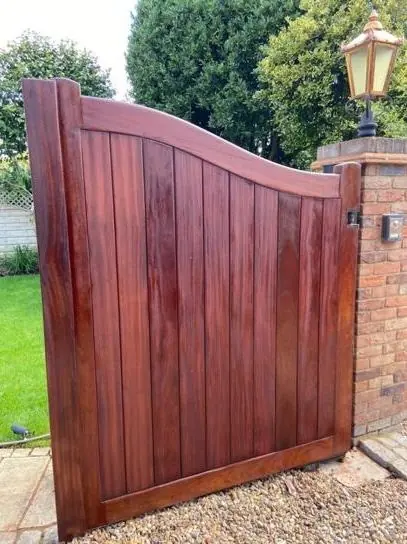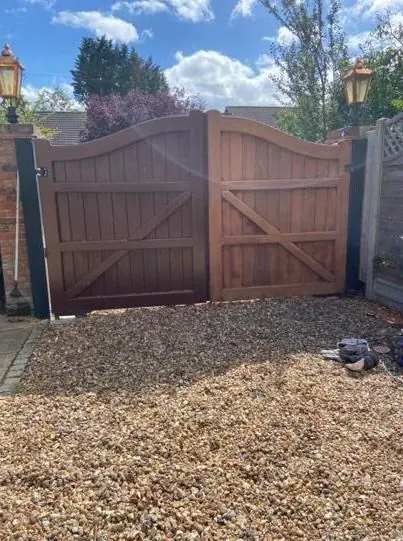
Dean stains and paints garden fences and timber gates in Queen's Park (NN2), a district 1.3 miles from the middle of Northampton. Almost all of this work is behind the houses: enclosed rear gardens and the gated side access found on some Balmoral Road terraces, since the fronts here have brick walls and railings instead.
The timber is all at the back
In Queen’s Park the front boundary of a terrace is usually a low brick wall, often with railings on top. Panel fencing and picket gates are rare at the front. The timber is behind the house, in the enclosed rear gardens that come with the bay-fronted terraces, along the boundaries between neighbours and on the side gates that some Balmoral Road houses have to their garden passage.
That changes the job in a few practical ways. A rear garden on a terrace is narrow, often bordered by fences on both sides and the back, and usually shaded for part of the day by the houses around it. Timber in that position stays damp longer after rain. Dean checks moisture before staining, because finish brushed onto wet boards does not soak in. It sits on the surface and peels.
Side gates that take a daily knock
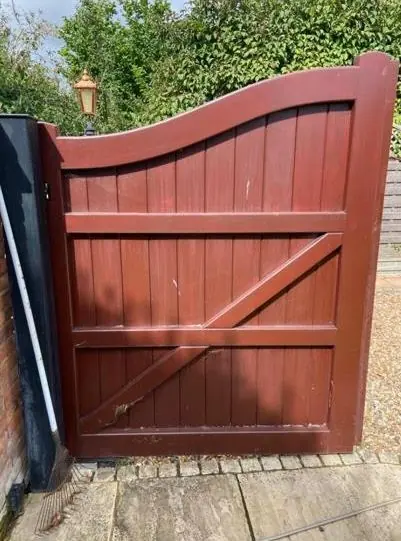
Where a terrace has gated side access, that gate gets more use than any fence. Bins go through it, bikes lean on it and it is opened and shut every day. The wear shows in predictable places:
- the bottom rail, which picks up splash from the passage floor
- the hinge side, where the stiles twist slightly as the gate drops
- the top edge, where end grain soaks up rain if it is not sealed
- the area around the latch, where hands wear the finish away
We clean and sand those areas back properly, seal the end grain and stain or paint both faces and every edge. A gate finished on its outer face only will move and crack as one side takes in water and the other does not. If it has dropped on its hinges, we tell you before starting so it can be rehung first.
A fence job with no way round
On a mid-terrace without side access, every tin, brush and dust sheet for the garden goes through the house. Stain is thin and runs easily, which makes it riskier to carry over carpets than emulsion. Dean decants it into small, lidded containers, sheets the route through the hallway and kitchen, and does all brush washing outside. It is slower than walking down a side passage, but your floors stay clean.
Shared fences and colour in a small garden
Fences between terraced gardens usually have a neighbour on the other side, so we only stain the side you own unless your neighbour has agreed to more. We use a brush rather than a sprayer in gardens this close together, so the finish does not drift onto the next-door fence, washing or car.
Colour matters more in a narrow town garden than you might expect. A dark stain on three sides of a shaded plot can make it feel smaller. A mid or pale tone reflects more light back towards the house. We are happy to put sample patches on a board so you can see them in your own garden’s light before deciding.
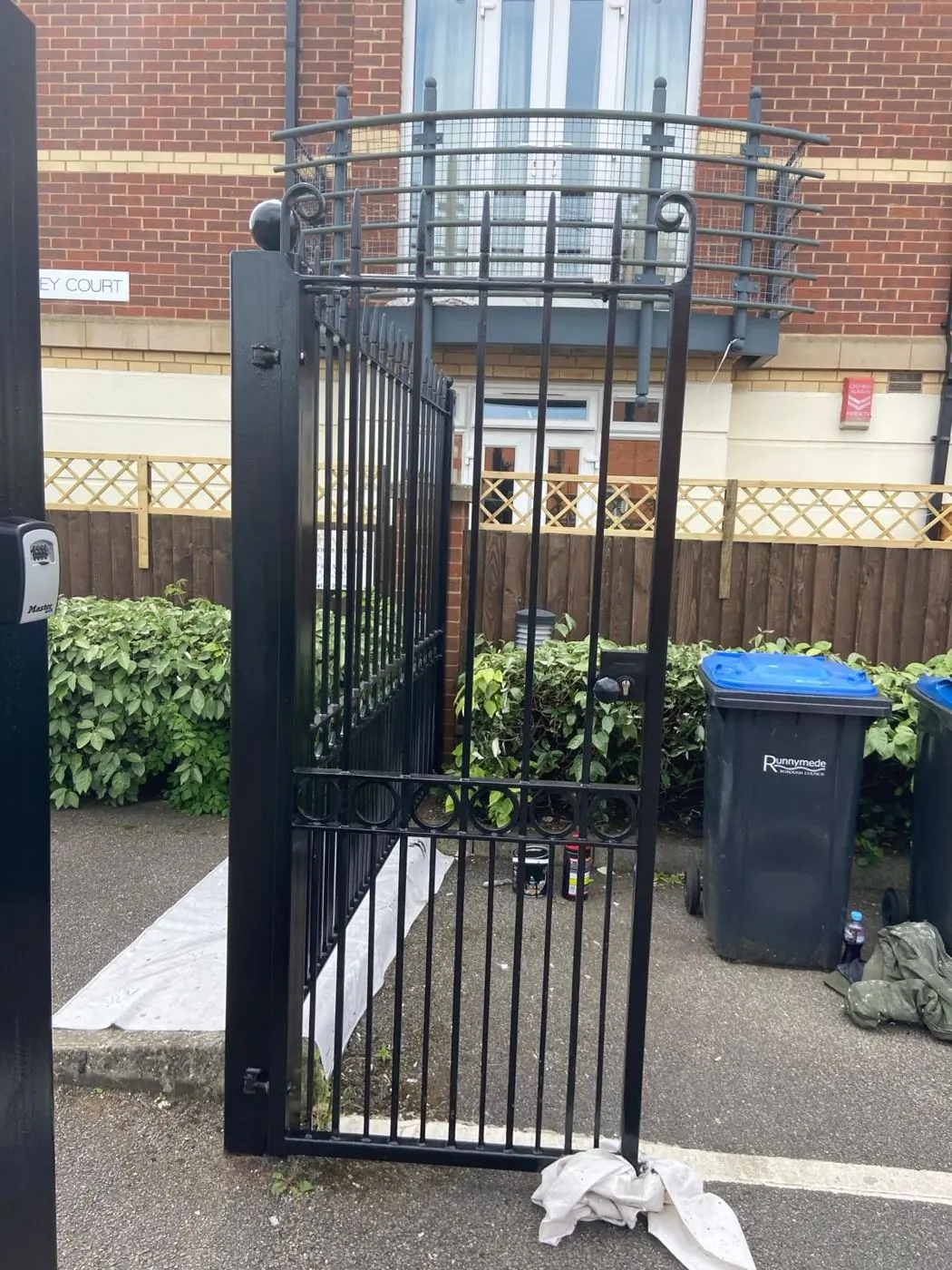
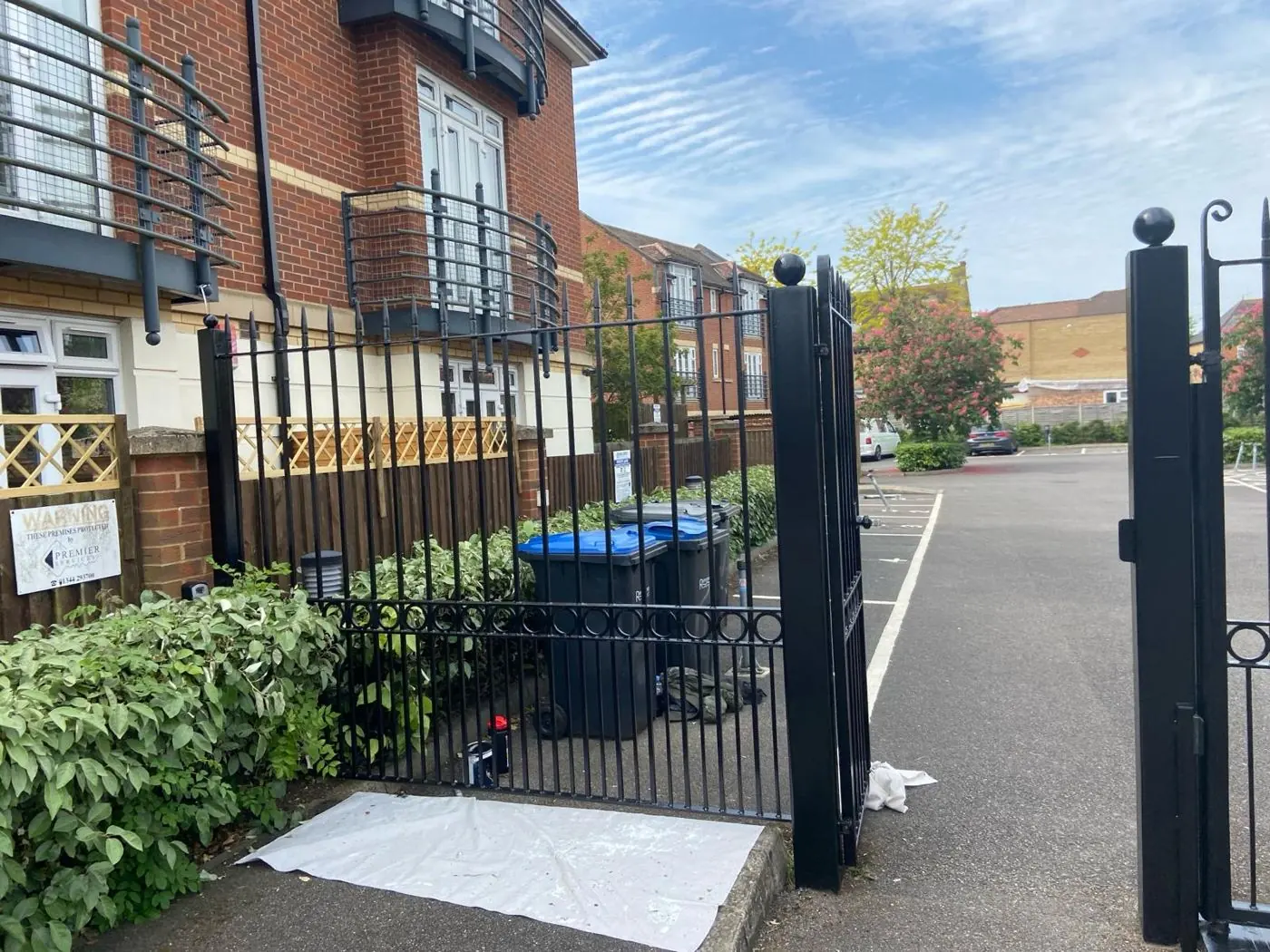
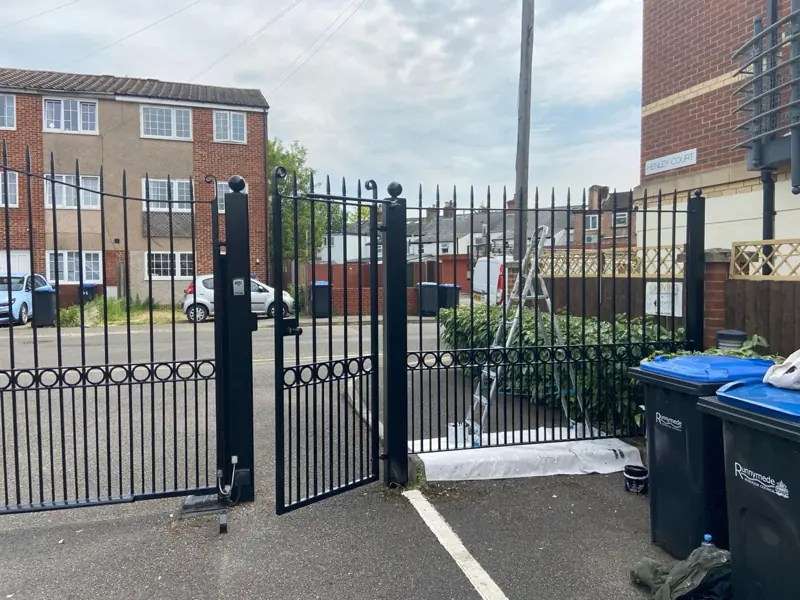
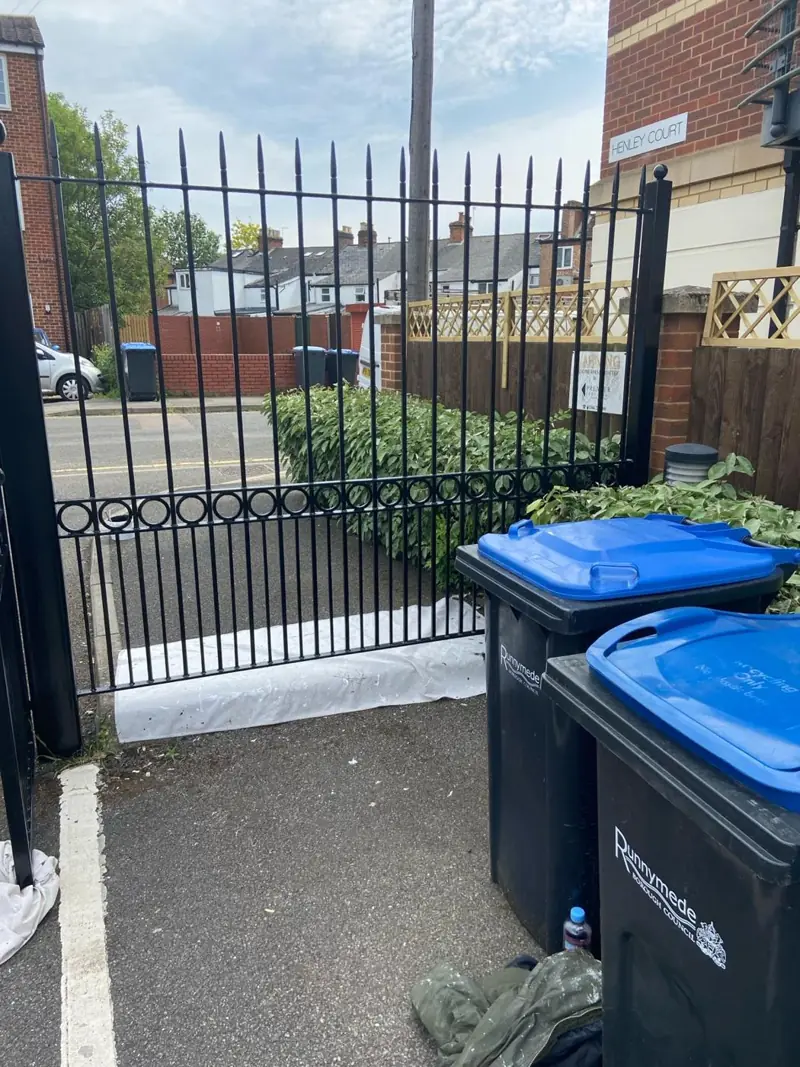
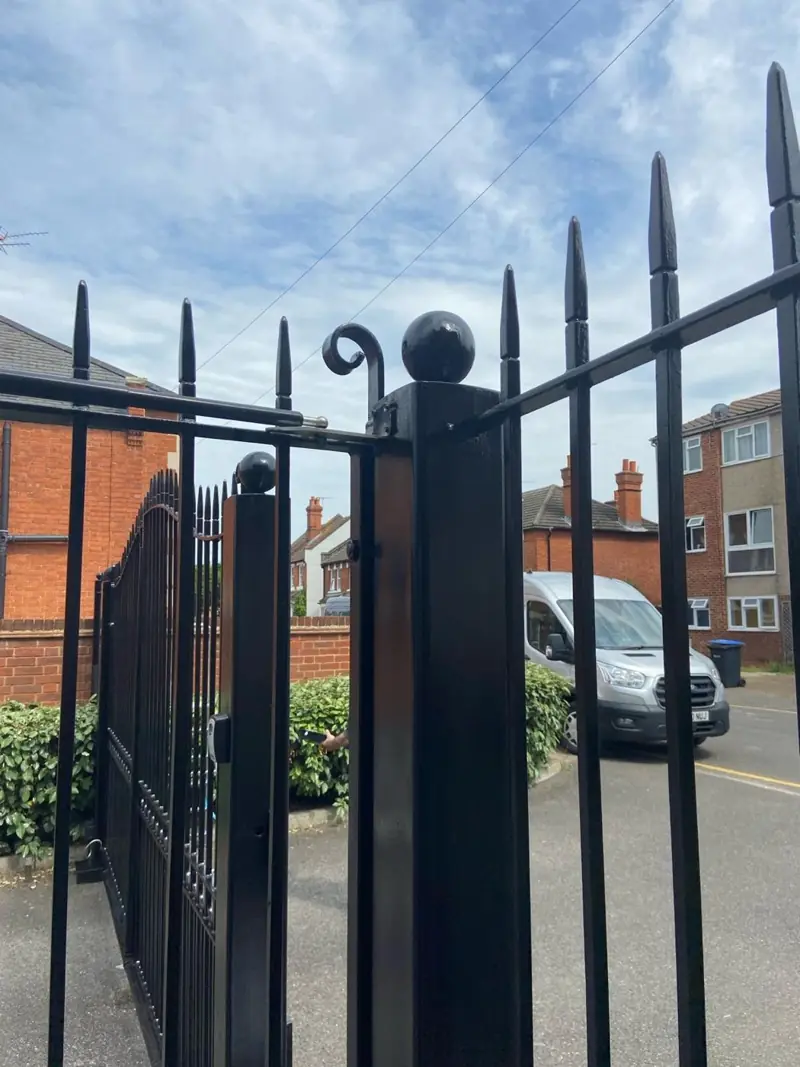
If the front of your house has iron railings that need attention, see our page on metal gate and railing painting in Queen’s Park. The full preparation and product guidance for timber is on the main fence and gate staining service page, and everything else we cover locally is on our Queen’s Park page.
Last updated by Dean, DH Painter & Decorator.