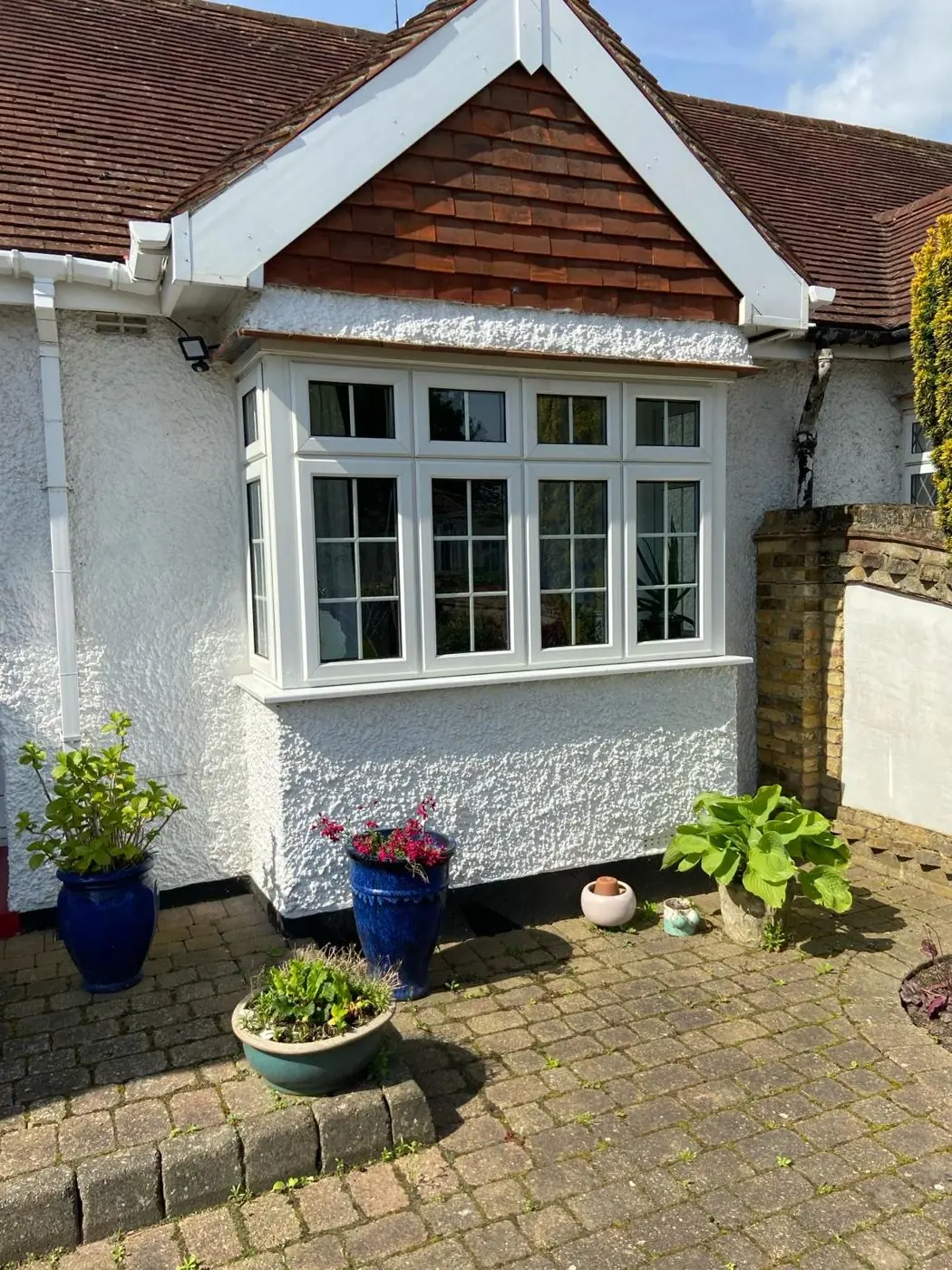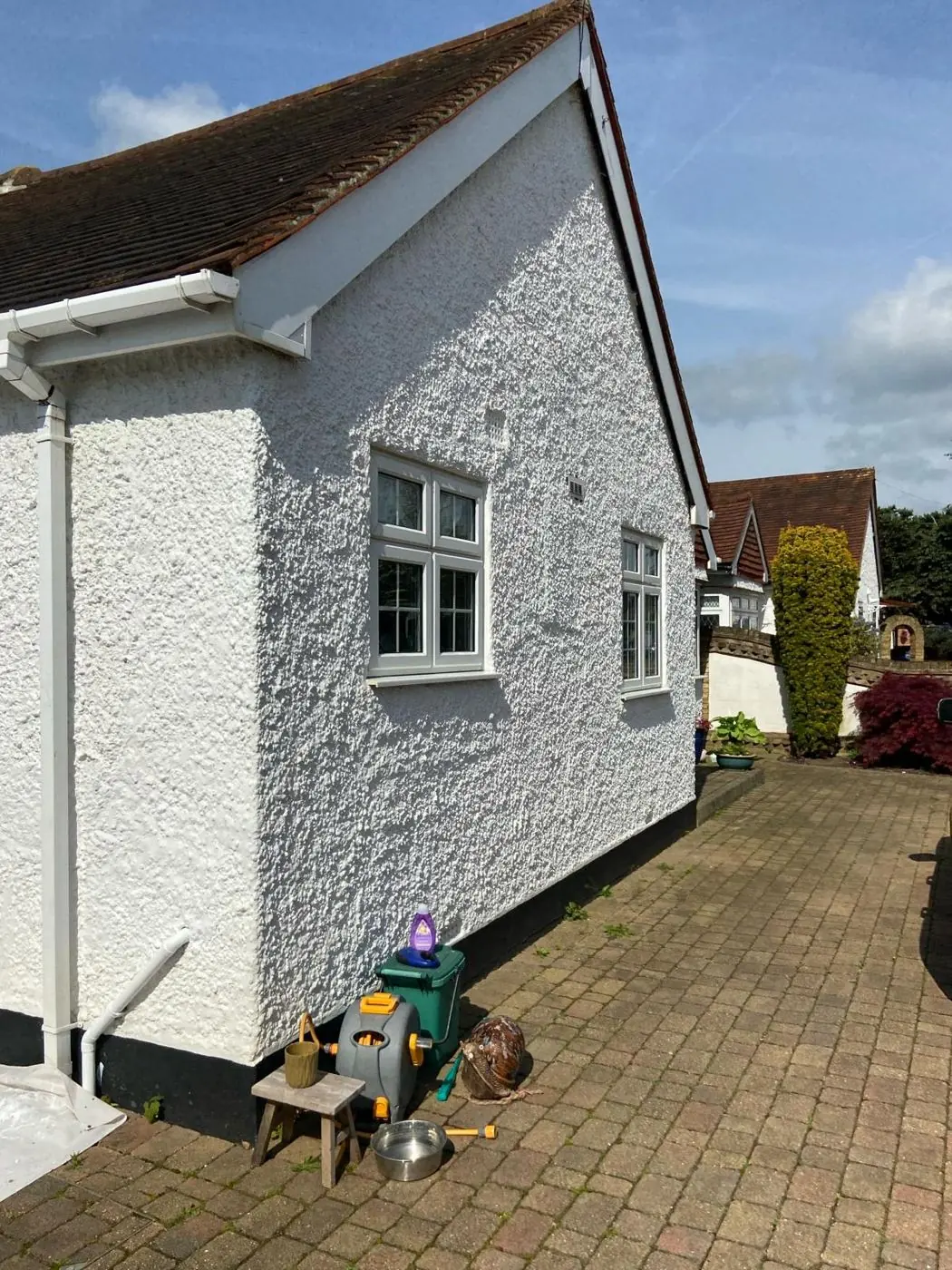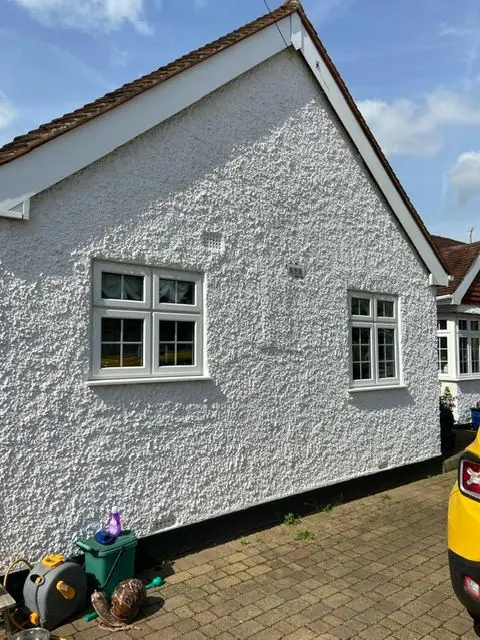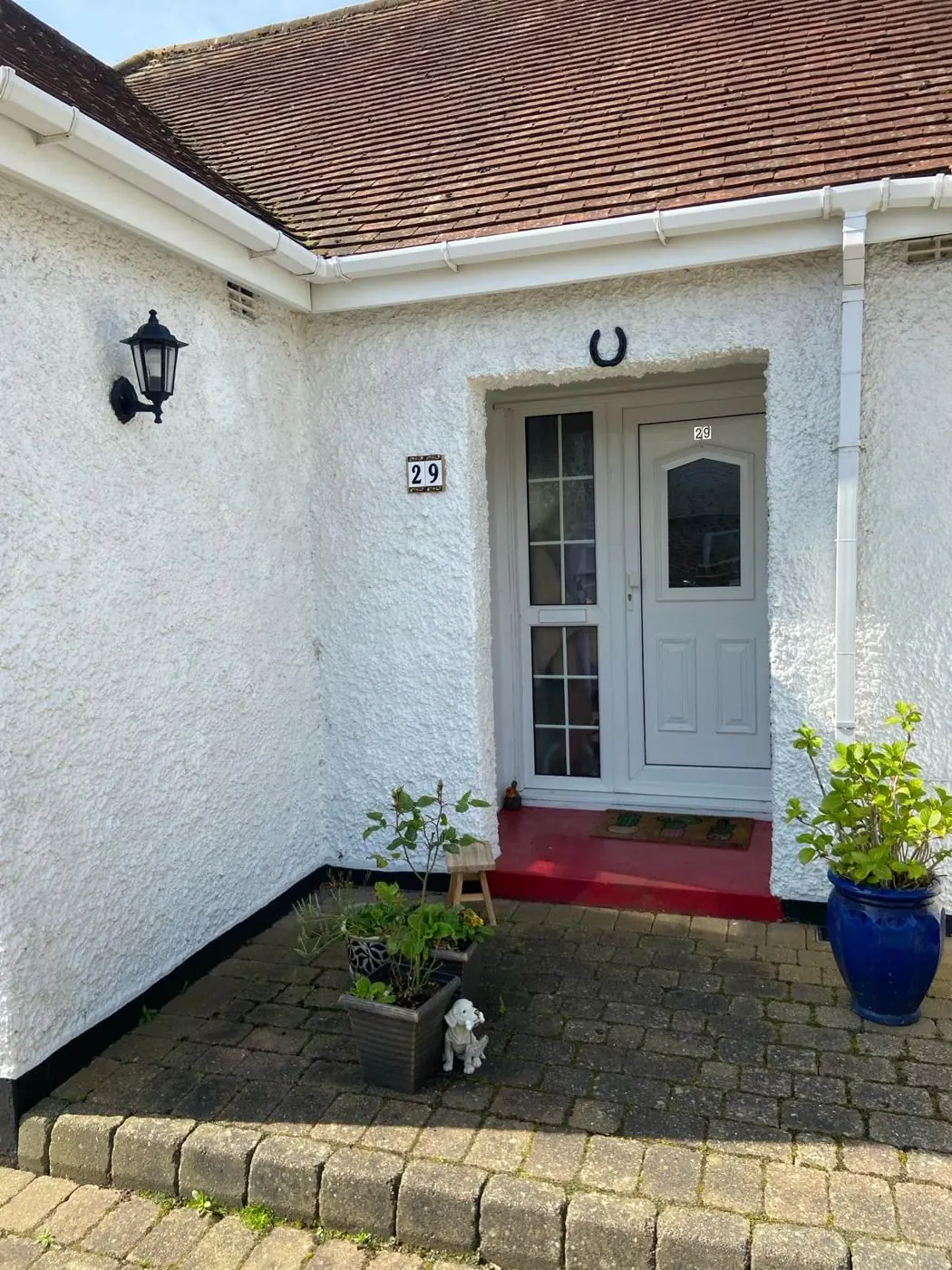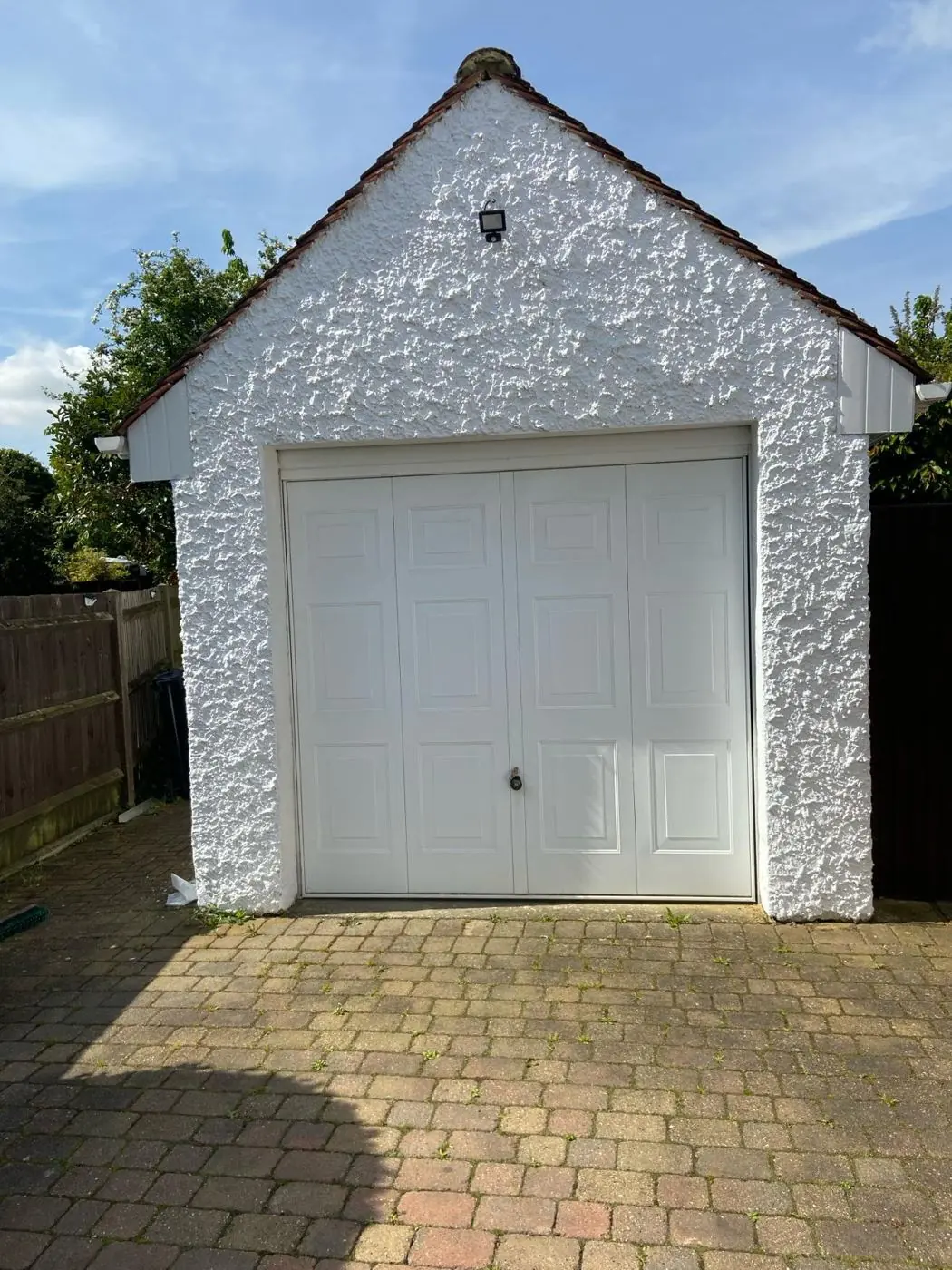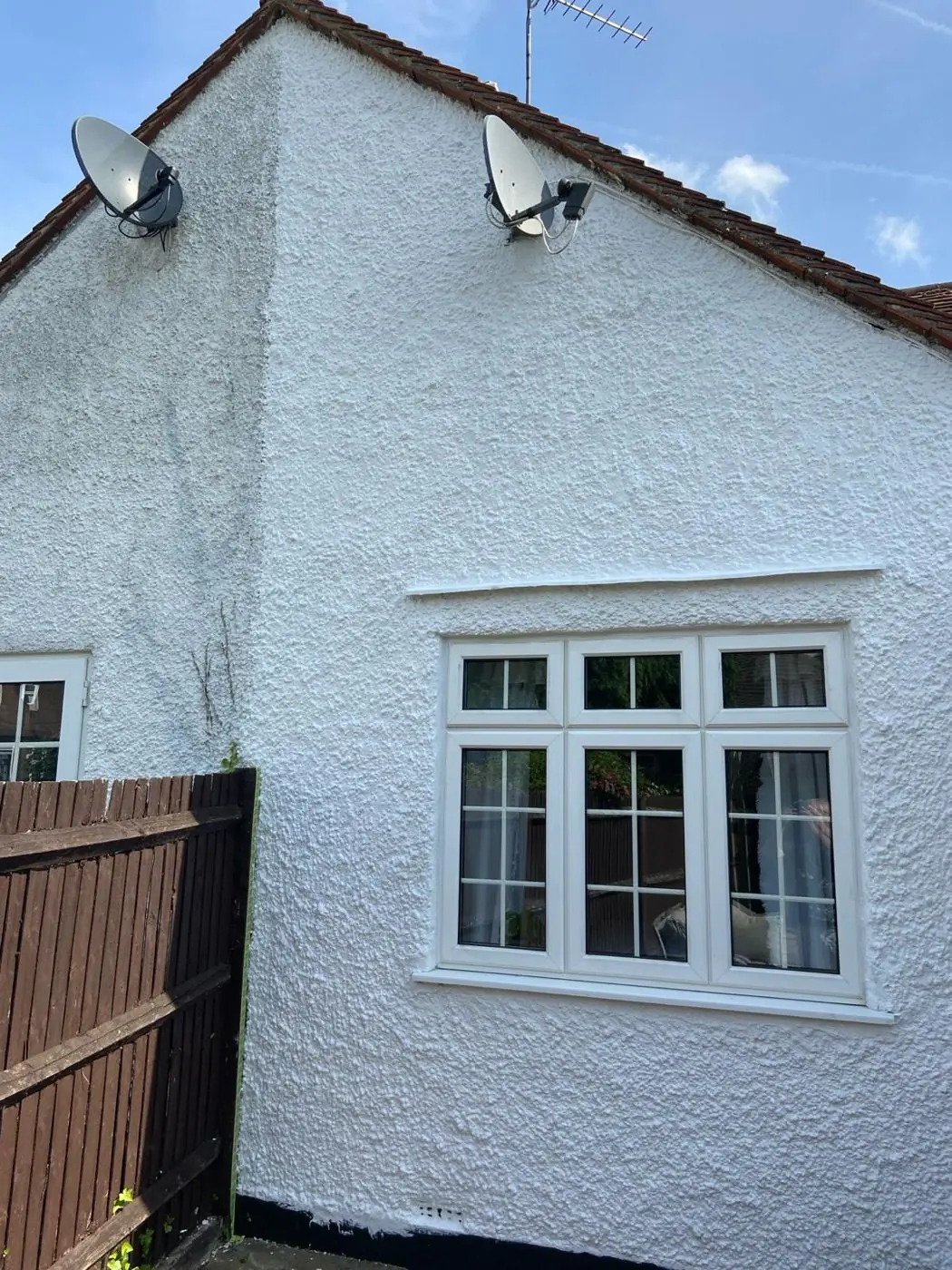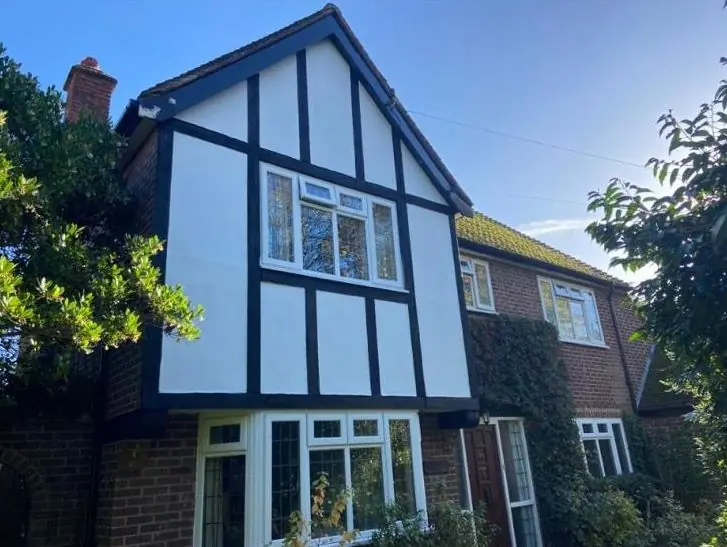
We paint render and masonry in Boughton, the village 3.4 miles north of Northampton town centre in postcode district NN2. Paintable walls here are mostly 20th century render and pebbledash, so the first job on any quote is telling those apart from historic stone that should stay bare.
Start by asking whether the wall should be painted
In most villages a render job begins with the algae. In Boughton it begins one step earlier. The conservation area appraisal describes a core of 17th and 18th century houses in roughly dressed Pendle stone and ironstone, pointed in light-coloured lime mortar. Those walls sit at the heart of the conservation area designated in 1971, and they are not candidates for masonry paint. A sealed acrylic coat on soft stone and lime joints holds damp in, and the face of the stone can spall behind it.
Render, by contrast, is limited and fairly easy to place. The appraisal names render or half-render on modern houses such as Croft House, Winston House, the Corner House and Weldon House, pebbledash on the first floor of two former council houses on Butcher’s Lane, and a brick-and-pebbledash pair, Annandale and Avon Cottage, with bay windows. Those are the walls this page is really about. Away from the core, the 1960s houses on Howard Lane, Vyse Road and Spring Close are mostly brick, and only some carry render, so it is worth checking which of your walls are actually coated before asking for a quote.
| Wall in Boughton | Where the appraisal records it | What we would do |
|---|---|---|
| Pendle stone and ironstone, lime mortar | Church Street, Butcher’s Lane, Moulton Lane cottages | Leave unpainted; if already coated, breathable mineral or lime-based paint only |
| Pebbledash over brick | Former council houses on Butcher’s Lane; Annandale and Avon Cottage | Fix loose dash and cracks, then a masonry coating |
| Smooth render or half-render | Croft House, Winston House, Weldon House and similar | Fungicidal wash, stabilise chalky areas, masonry paint |
| Painted ashlar | The Whyte Melville, Church Street | Breathable finish matched to the existing white |
Pebbledash on the Butcher’s Lane houses
On mid 20th century purplish-brick semis, the pebbledash sits on the upper floor, which puts the work above a lane with no pavement. Before any coating, we tap the dash to find hollow patches, cut out and patch loose areas, and fill cracks. Pebbledash takes a lot of paint and a lot of brushing into the stones, so it is slower than smooth render of the same size. Bay windows like those on Annandale and Avon Cottage add cutting-in along the frames and sills, which we mask or cut by hand rather than spray. Once sound, these walls suit a standard masonry coating, applied in two full coats.
Damp walls under the parkland trees
Boughton’s tree cover is part of its character, with Tree Preservation Orders along Spring Close and south of Humfrey Lane. Render in deep shade stays wet for days after rain and grows green and black algae quickly. A biocide wash, rinse and full drying time come before any primer, and that drying time is the part we will not shorten. Our guide to painting render and roughcast explains the stabilising step for chalky walls in more detail.
What the conservation area rules cover
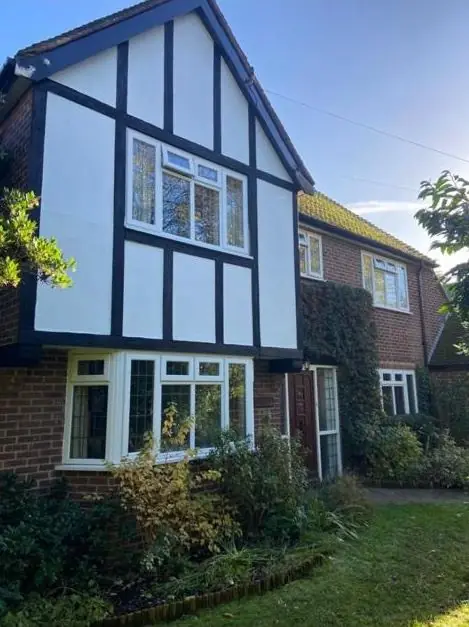
Within the conservation area, cladding a house in render, stone, timber or tiles needs permission. Painting a wall that is already rendered and painted is maintenance. Painting bare stone for the first time on a listed building, or on one of the Article 4 houses’ front elevations, is a change you would need to clear with West Northamptonshire Council before we start. If you are unsure which applies, we will say so plainly on the quote visit rather than guess.
For how we prepare and coat render generally, see our main render and masonry painting service. Other work in the village is on the Boughton area page.
Last updated by Dean, DH Painter & Decorator.