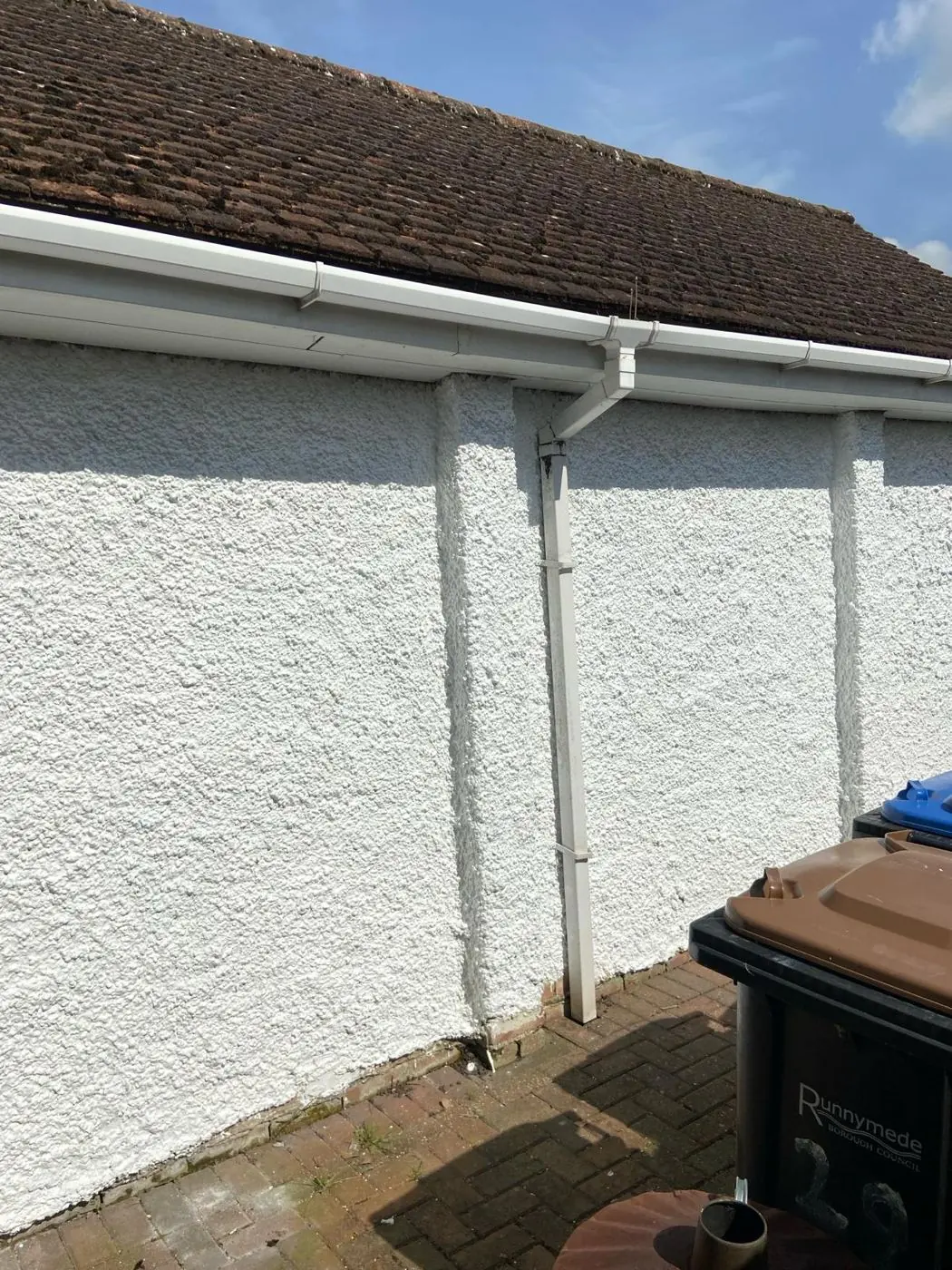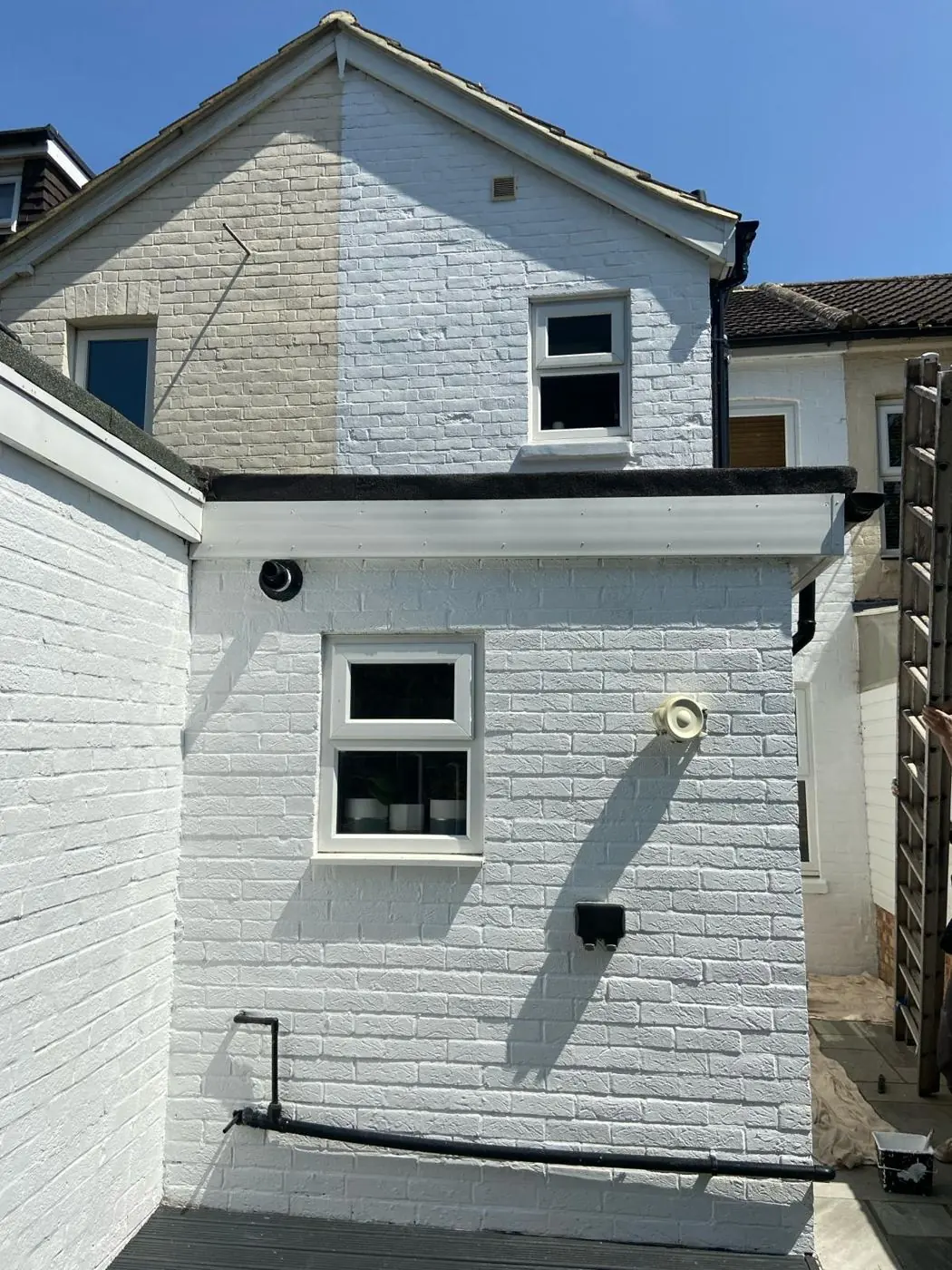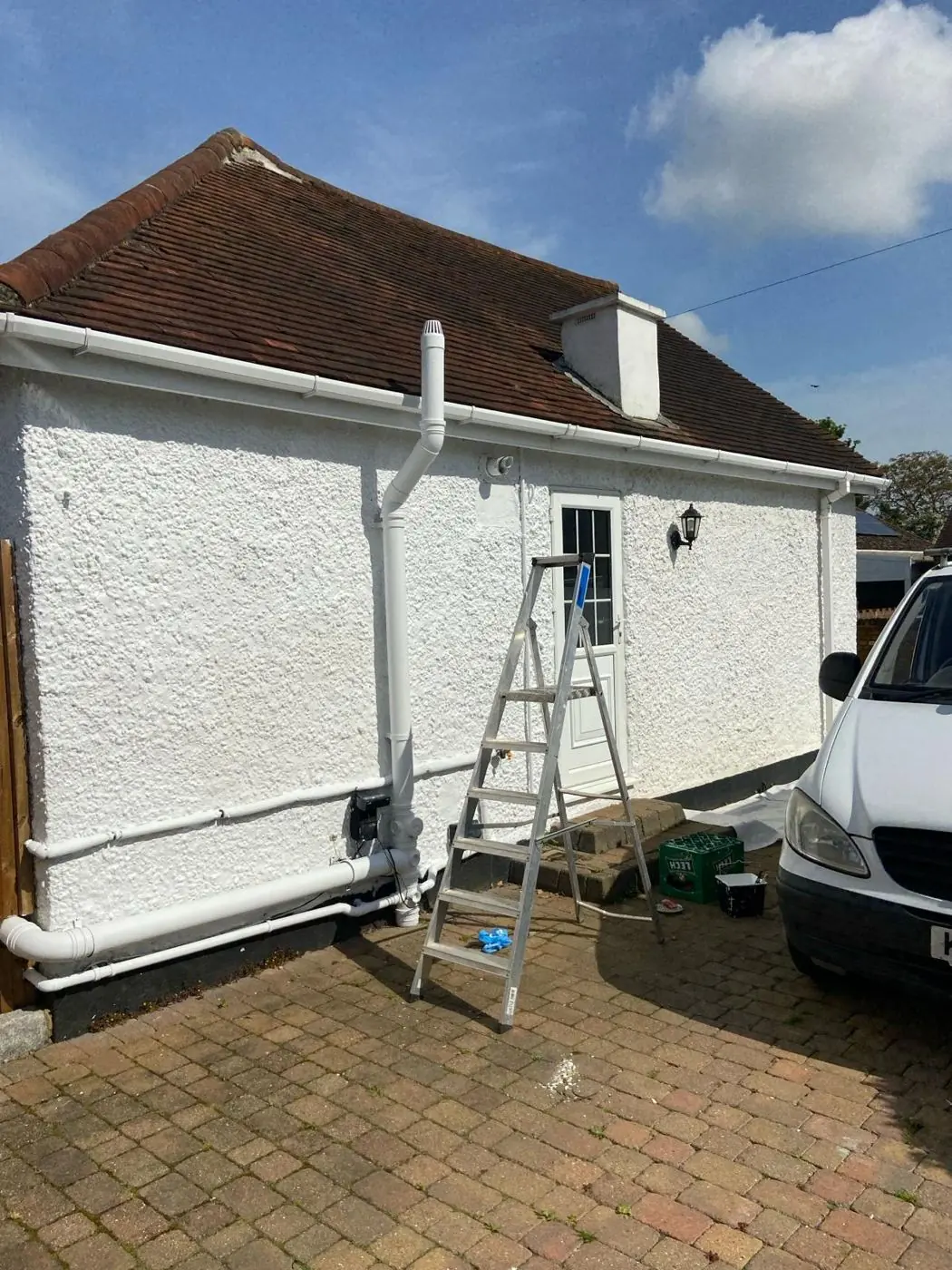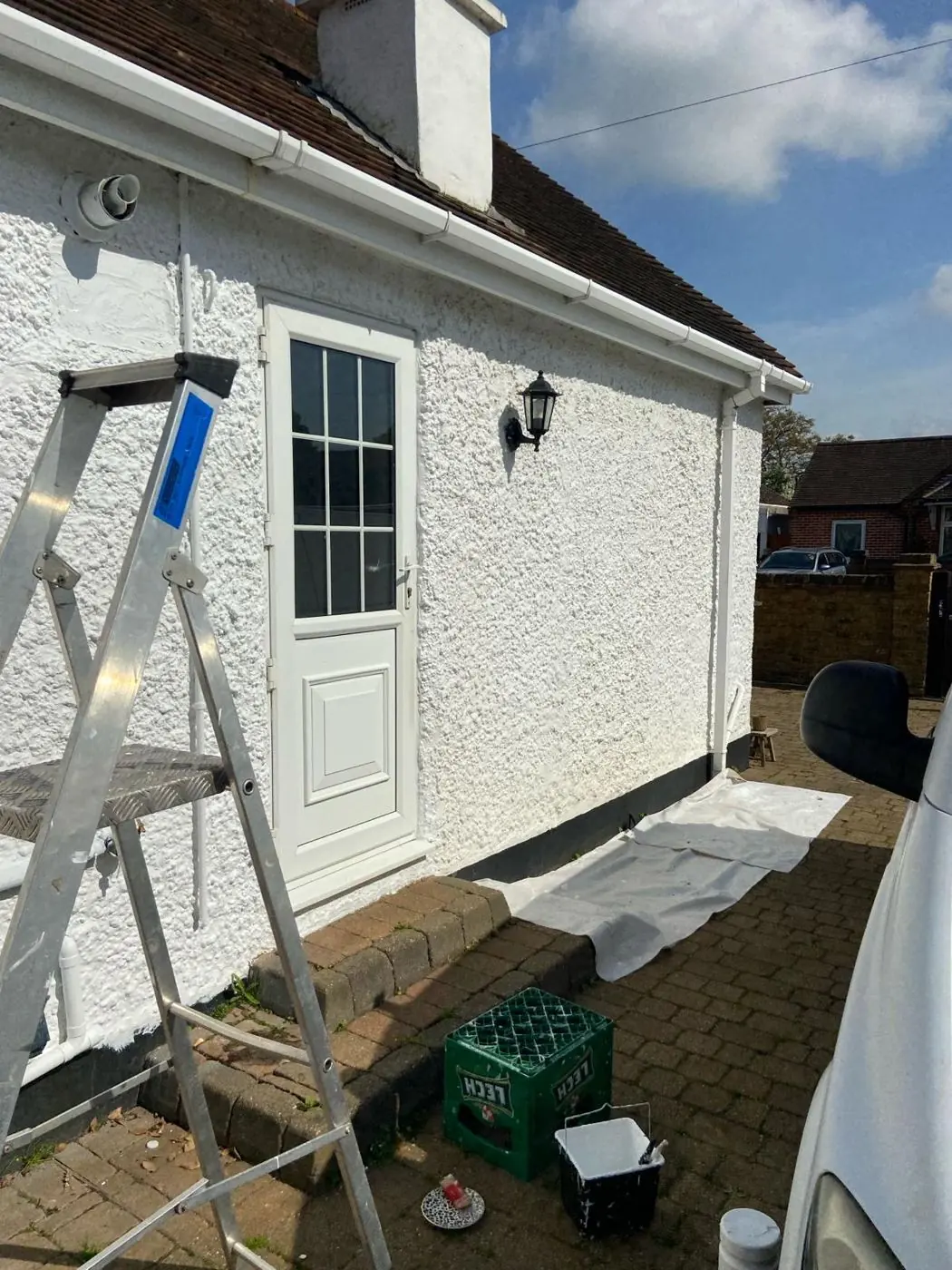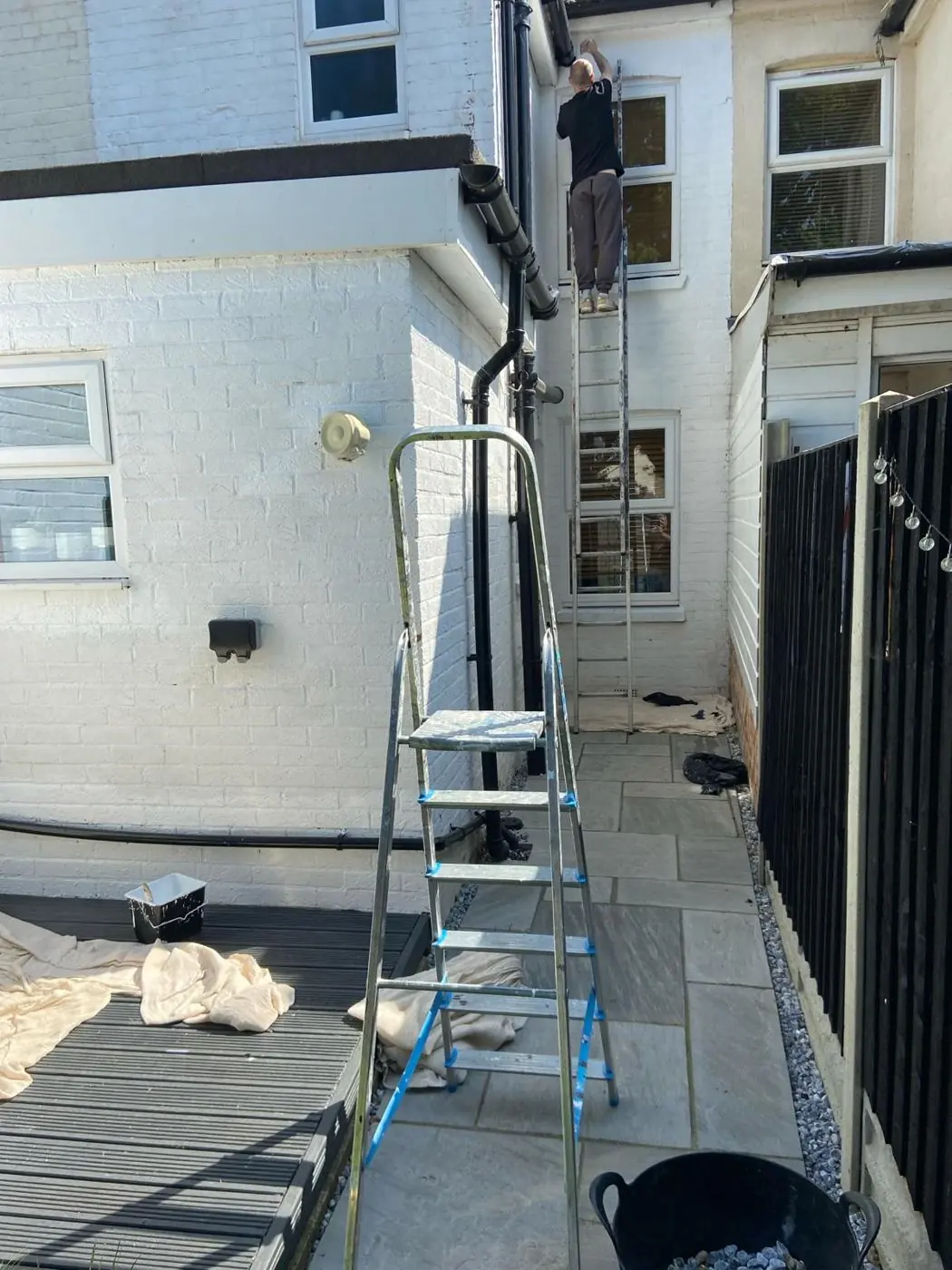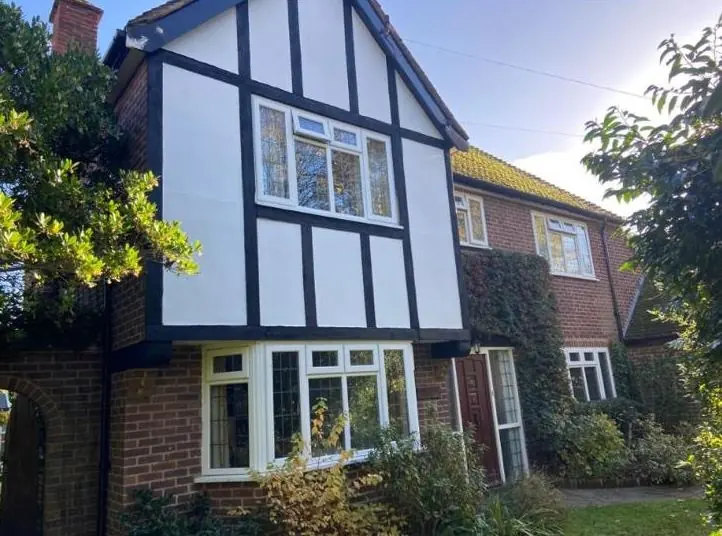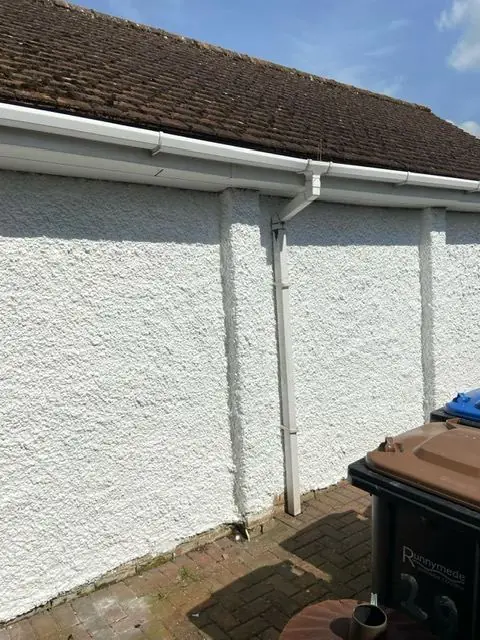
Dean paints render, brick and other masonry in Kings Heath, NN5, the Womersley estate north-west of Northampton, under two miles from the centre. Because the estate's wall materials are not documented, every quote starts with a site check of what the wall is and what is already on it.
What is the wall made of?
The records for Kings Heath describe its plan in detail: a symmetrical, kidney-shaped layout around a central green, terraces and semis on river-named streets, flats beside the shopping centre and a parade at Park Square. What they do not record is the facing material of the houses. We are not going to guess it on a web page, and you should be wary of anyone who quotes for masonry paint over the phone without seeing the wall.
The answer changes the job. Bare brick may not want coating at all. A rendered panel that was painted decades ago needs its old coating tested before anything new goes over it. A wall that has never been painted needs a coating that lets moisture out. On a first visit Dean will look at:
- whether the surface is brick, render or a mix of the two;
- whether it has been painted before, and whether that paint is chalky, flaking or sound;
- cracks, blown patches and failed pointing that need repair before any coating;
- signs of damp at low level or under sills, which change the choice of paint.
Breathable, render-grade or brick paint
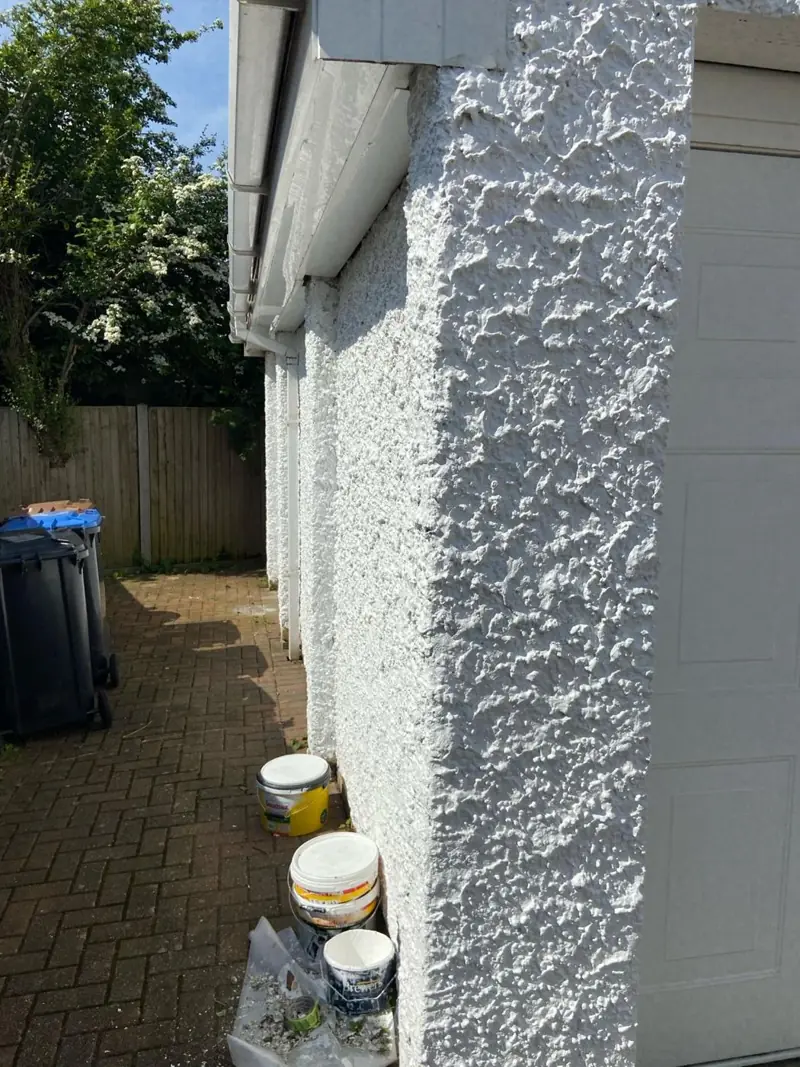
Once the wall is understood, the coating follows from it. Masonry that needs to dry out through its face gets a breathable mineral or silicate system. Sound, previously painted render usually takes a quality smooth or fine-textured masonry paint after cleaning and stabilising. Brick that someone has already painted is kept painted, because stripping it is rarely worth the damage. Our guide to painting render and roughcast covers the reasoning, and the main render and masonry painting page explains our preparation in more detail.
Masonry on these seventy-year-old houses has often been patched and repainted by successive occupiers. Where an earlier coat has trapped moisture, it has to come off in the affected area before a breathable system will do its job.
Park Square’s cream walls
The most visible painted masonry in Kings Heath is at Park Square, the shopping parade on the estate’s central axis whose shopping centre won a RIBA bronze medal in 1953. Its walls are cream with pillars around the square and black edging. They were freshly repainted by volunteers in March 2026, the opening stage of the square’s regeneration, and anti-graffiti work there now has council funding.
For masonry on a parade like this, the finish has to be easy to keep looking right. Two things matter: a coating that can take anti-graffiti treatment or be cleaned without losing colour, and a shade that can be bought again later so a patch-repaint blends in. If you own or manage a unit there, ask about matching the existing cream rather than starting a new colour scheme on one bay.
Painting half a shared wall
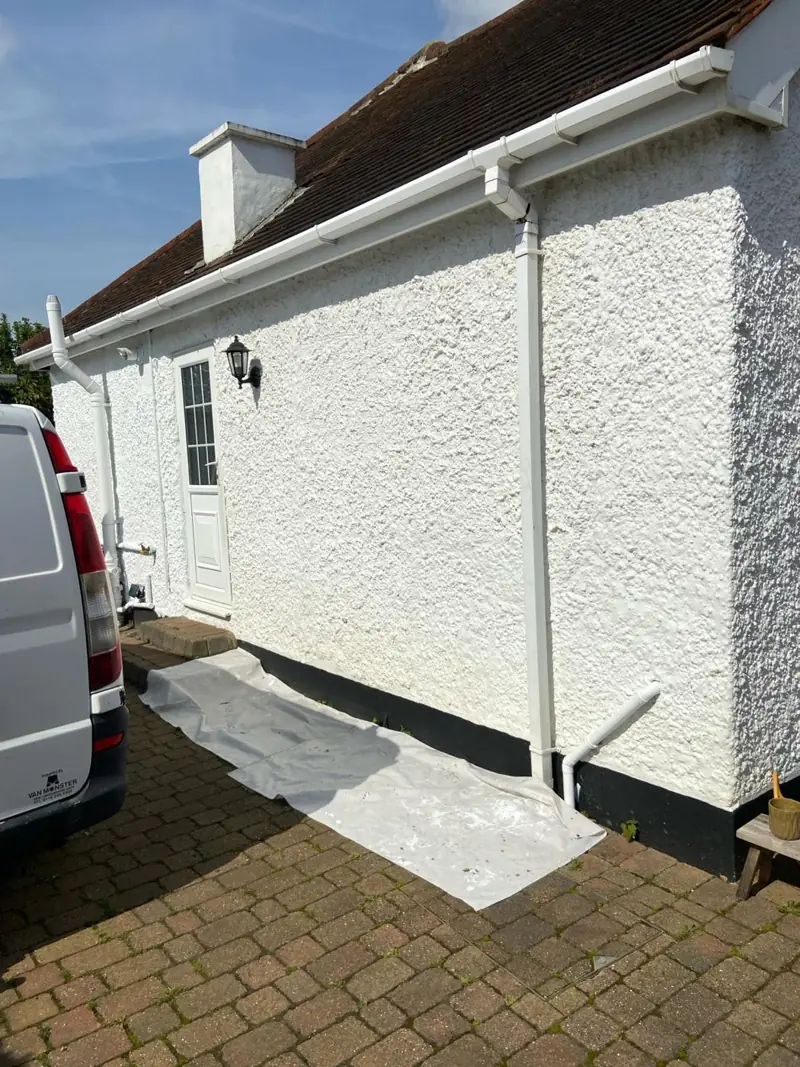
Because ownership along a Kings Heath terrace is mixed, your house may be getting masonry paint while the one next door stays bare or keeps a different colour. Masonry paint should end on a clean line at the party boundary, and drips and overspray on the neighbour’s side are cleaned off the same day. If the neighbouring house is council-owned or let by a landlord, agree the edge with them before work starts.
The Kings Heath page lists the other services we cover on the estate.
Last updated by Dean, DH Painter & Decorator.