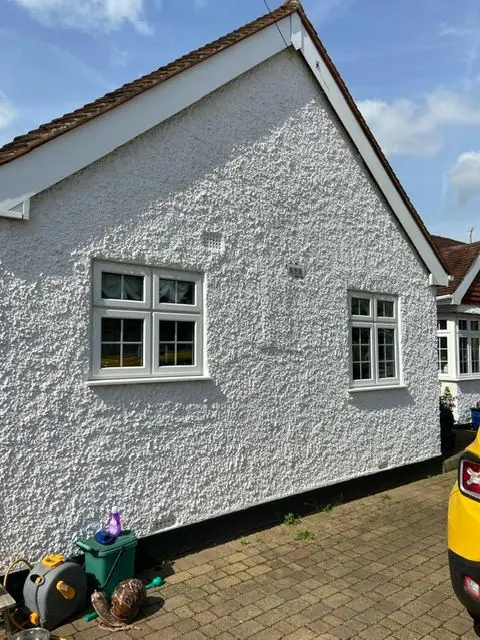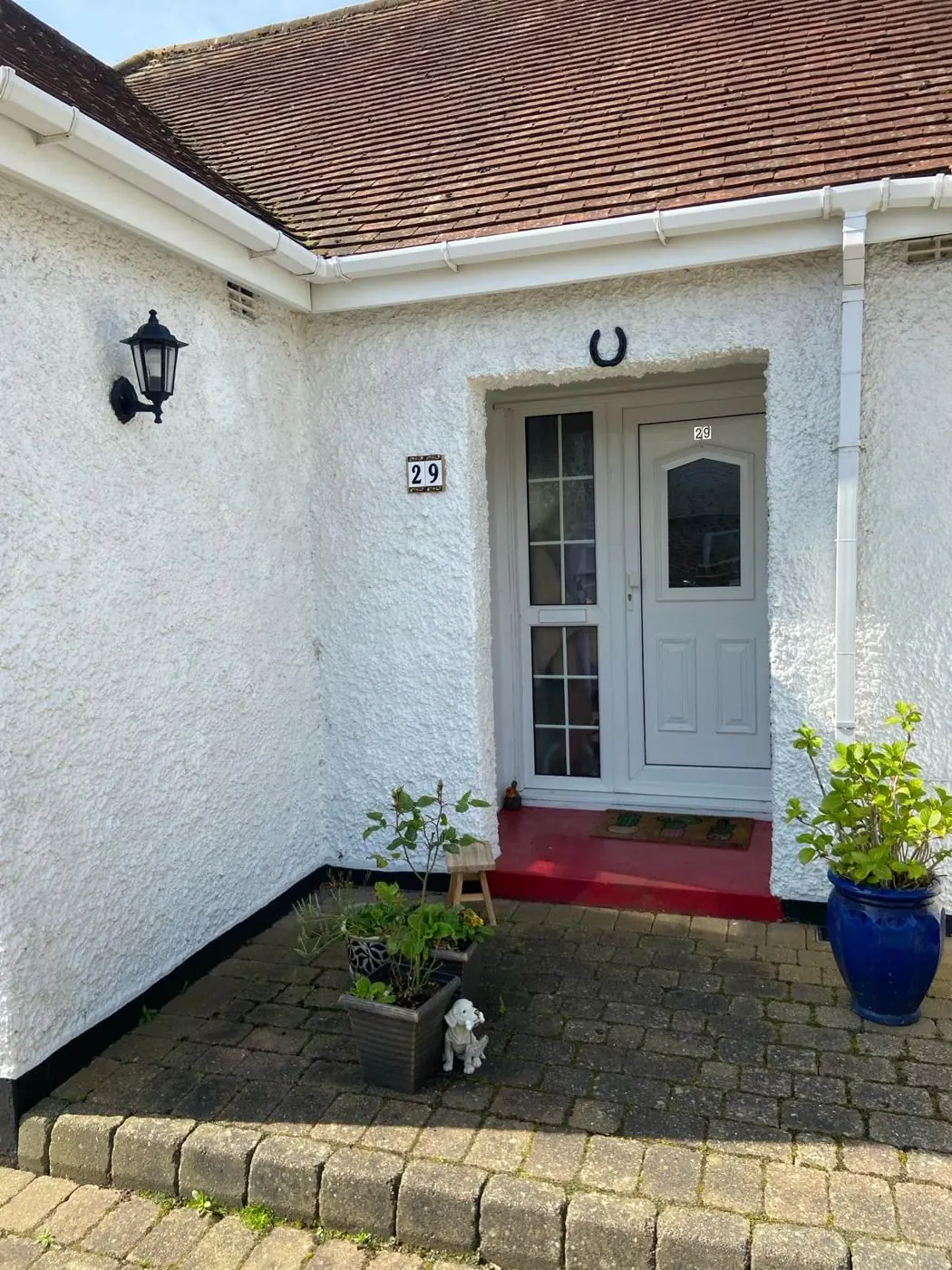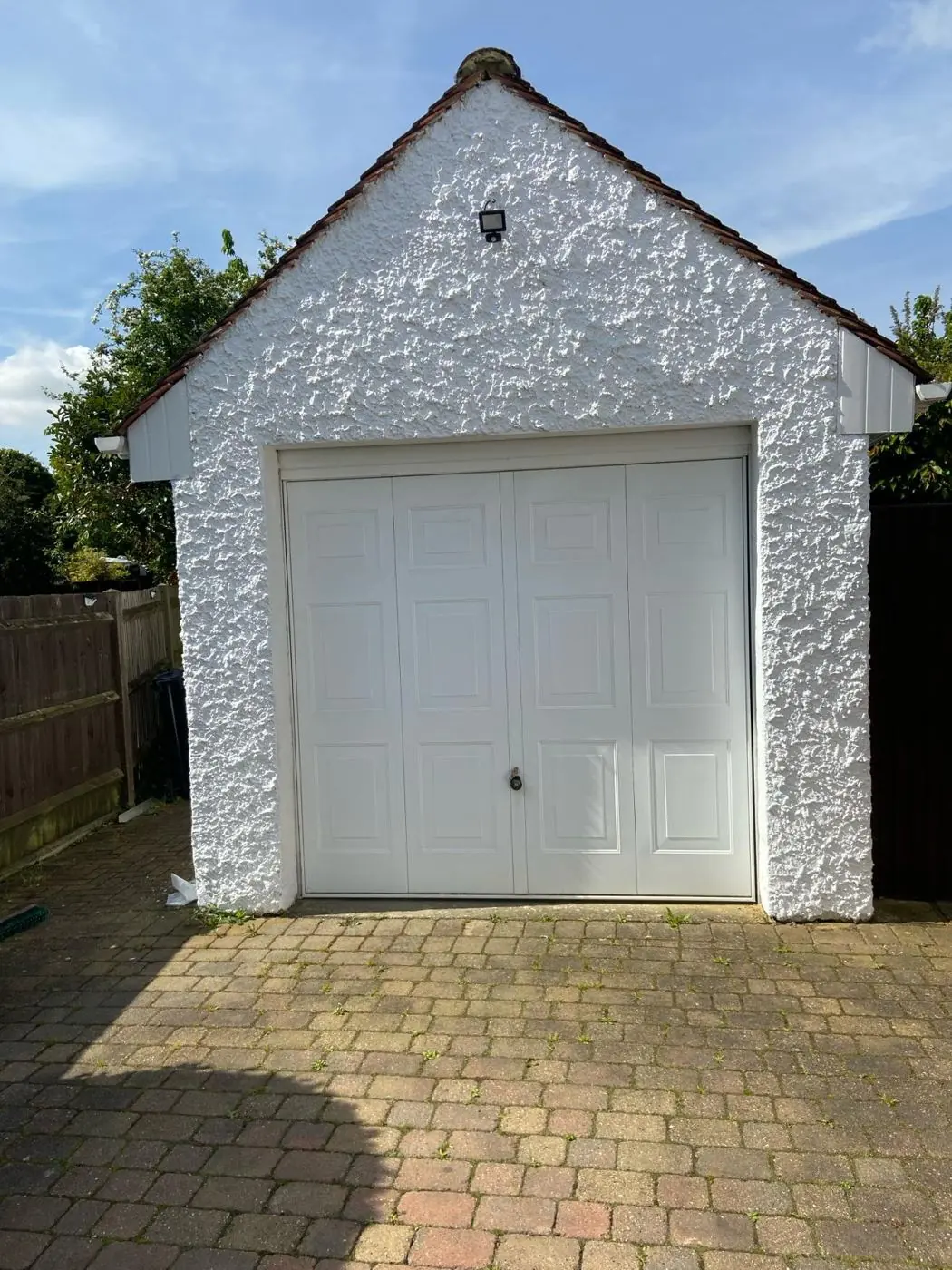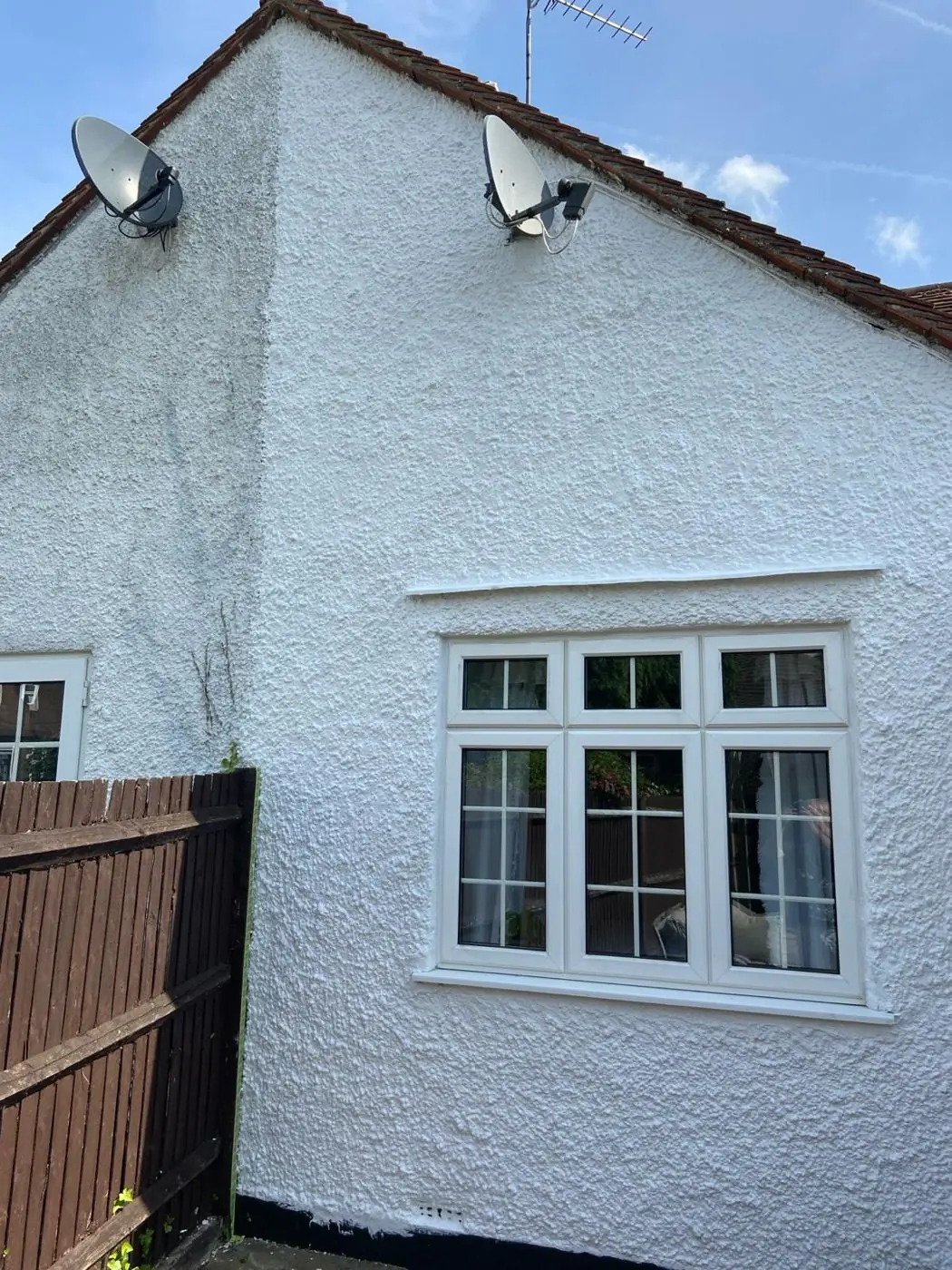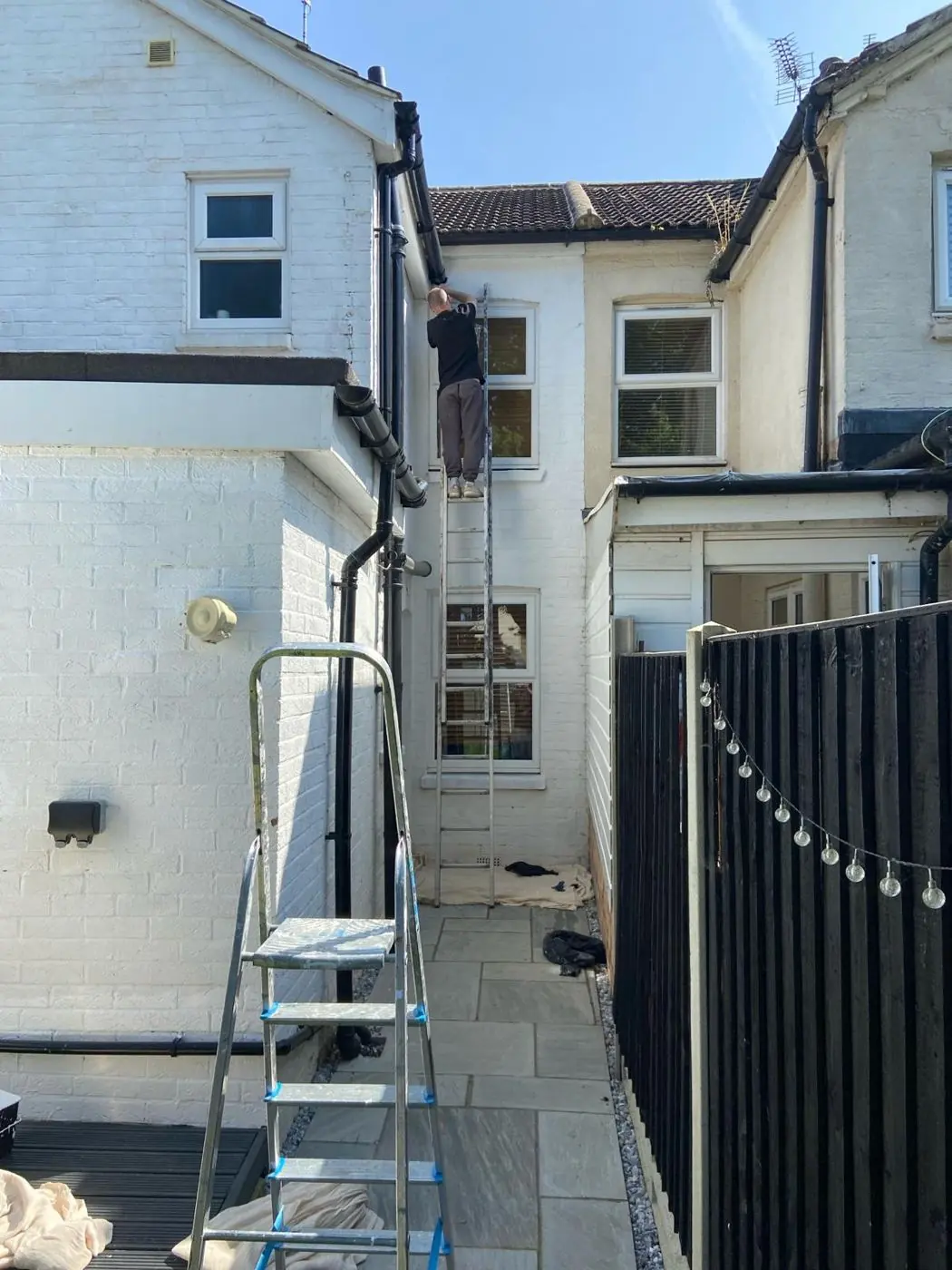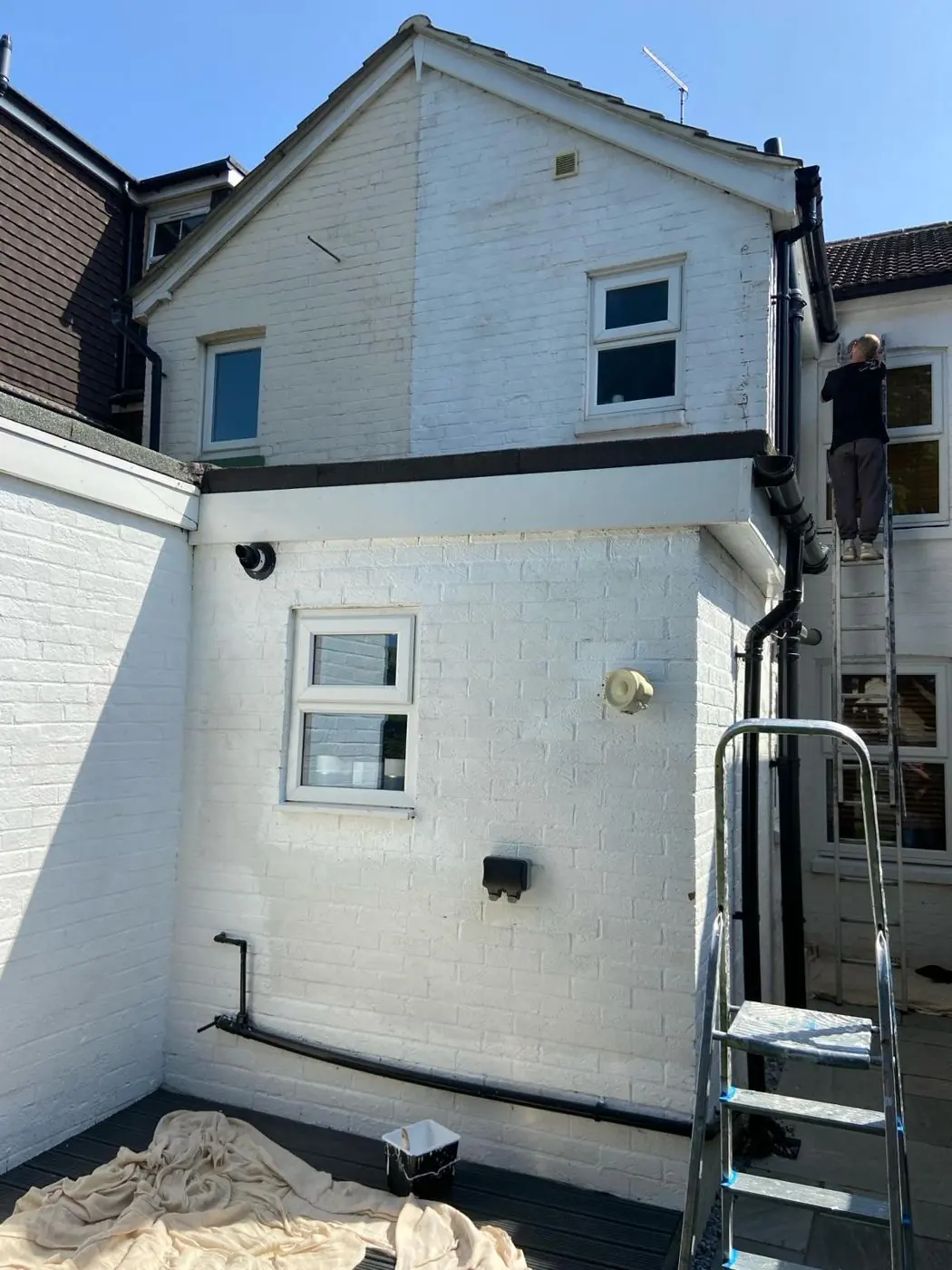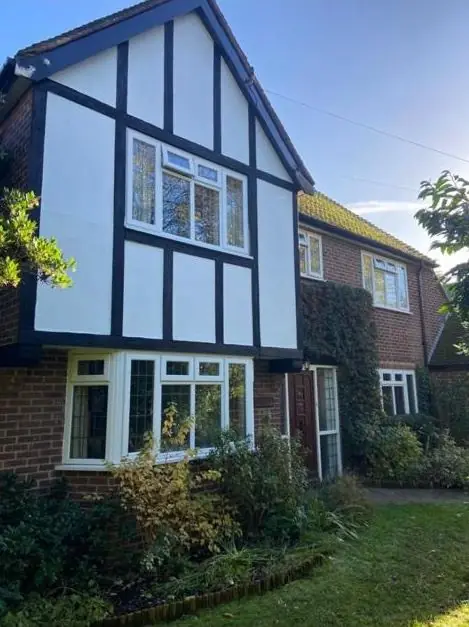
We paint rendered, pebbledashed and previously painted masonry on houses in St David's, NN2, about 1.9 miles north of Northampton town centre. Because wall finishes vary from house to house on the estate, Dean looks at the walls before quoting and matches the coating to what is there.
Check the wall before anyone talks about paint
There is no reliable record of which St David’s houses are rendered, pebbledashed or left as bare brick, and estate houses of this age vary from one to the next as owners and landlords have made changes over the decades. So a render job here starts with a look at the wall itself. We check whether it is smooth render, roughcast or pebbledash, whether it has been painted before and with what, and whether any of it sounds hollow when tapped.
That survey decides the job. Sound, previously painted render may only need cleaning, stabilising and two coats. Blown patches have to be cut out and repaired before painting, or the new coating will fail with the render underneath it. And a brick wall that has never been painted is often better left that way, because once paint goes on it has to be kept up.
Older walls on St Davids Road and Langdale Road
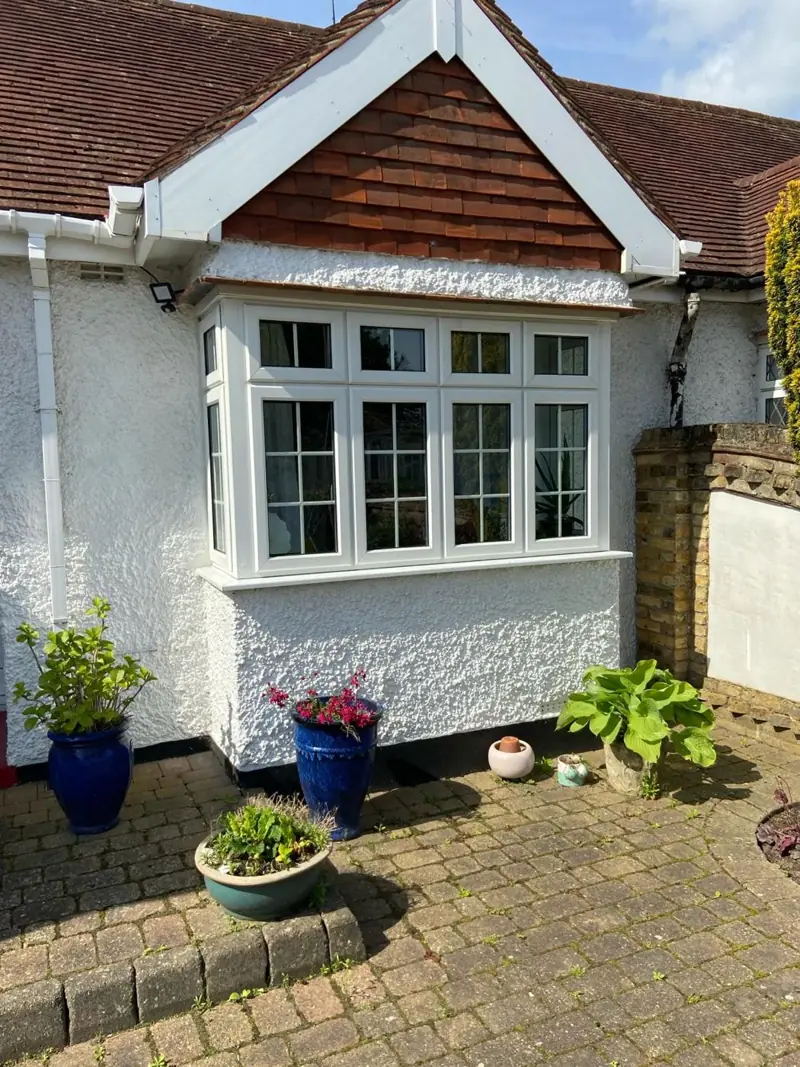
St Davids Road is the oldest of the core streets, with a modal build year of 1914 in EPC records and some houses dating back to about 1900. Langdale Road also has houses from the early 1900s. Walls of that age are likely to be solid rather than cavity built, and they rely on being able to dry out through their faces. Sealing them in with a non-breathable coating can trap moisture, which then shows up as blistering outside or damp patches inside.
For these houses we use a breathable masonry paint and avoid stacking more film-forming layers on top of old ones where the existing coating is already failing. Where an old wall carries thick, flaking paint, getting back to a sound surface comes before anything new goes on. The later houses, from the 1930s on Rosedale Road and Whiston Road and the 1950s semis on Eastern Avenue and Bondfield Avenue, are more forgiving, but the same rule of matching coating to wall applies.
Open ground on the eastern side
St David’s has a lot of open ground around it. St David’s Open Space lies east of Eastern Avenue, Kingsthorpe Golf Course sits to the south-east and Bradlaugh Fields to the east, with allotments at the north-east and south ends of the district and grass verges between many of the houses. Walls that face open ground lack the shelter that neighbouring houses give, and shaded walls near trees and long grass are the ones most likely to grow green algae. We treat any growth with a fungicidal wash and leave it to work before brushing down, so the new coat is not painted over live spores.
The district is not on the Nene floodplain, so rising damp from flood events is not the usual concern here. Damp patches on a St David’s wall are more often down to leaking gutters, failed pointing or bridged render, which we look for during the survey.
Access on terraces and semis
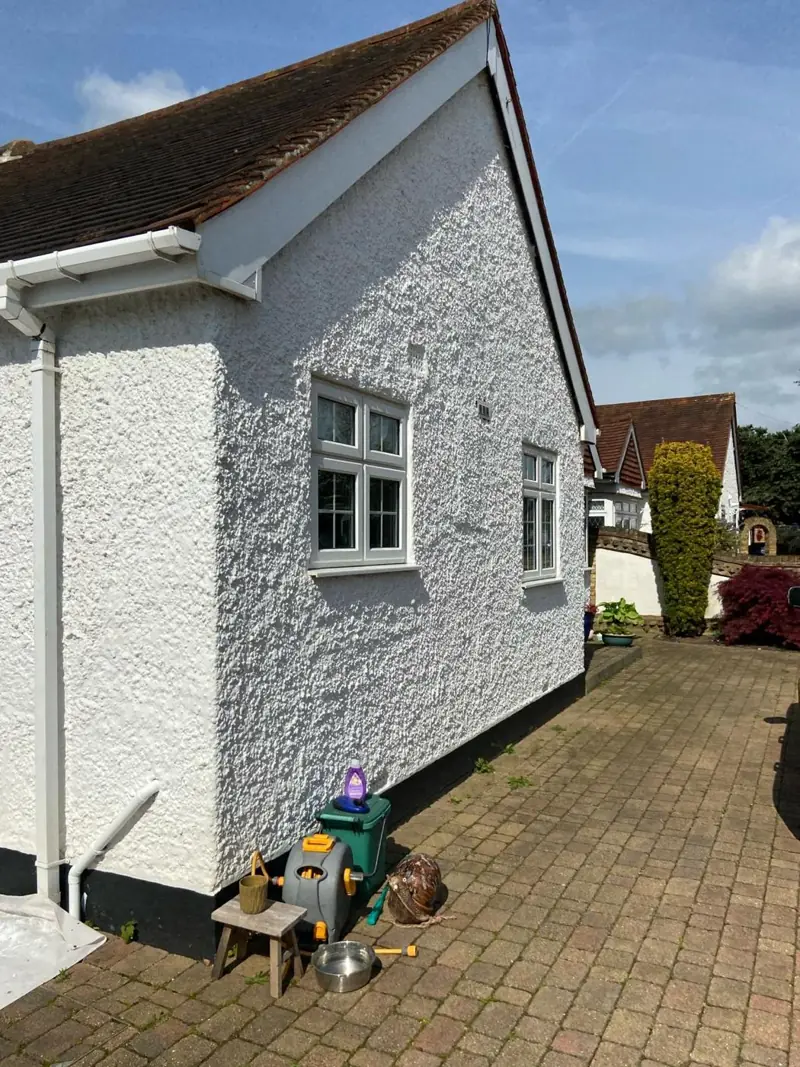
A terraced front can usually be painted from ladders on the pavement. A full two-storey rendered elevation, or a back wall reached only through the house, may need a tower scaffold, which Dean confirms when he sees the wall. On semis, the side wall is often the one in worst condition because it gets the least attention.
The full process, from crack filling to masking, is on our render and masonry painting service page, and our guide to painting render and roughcast covers coating choice in more depth. Other work in the area is listed on our St David’s page.
Last updated by Dean, DH Painter & Decorator.