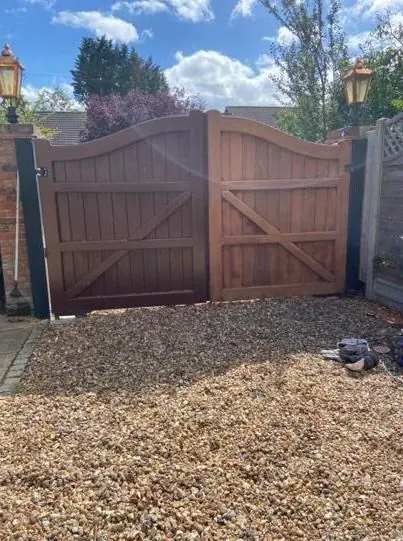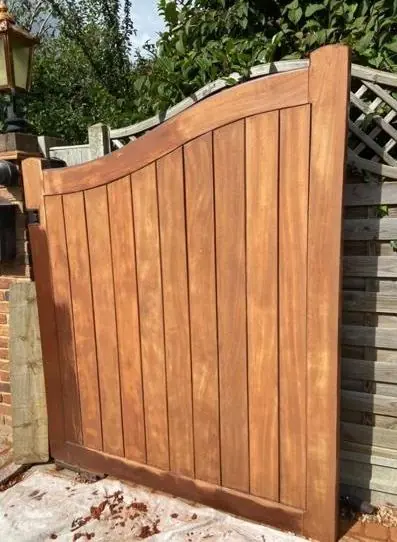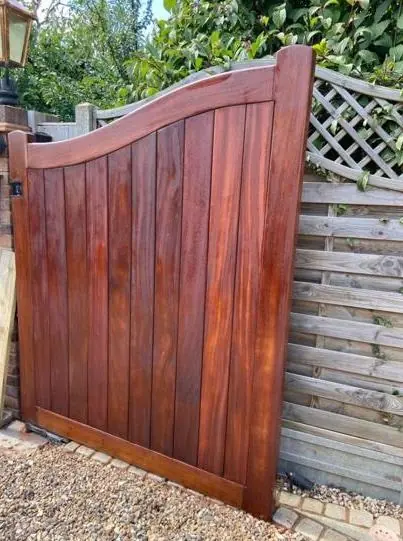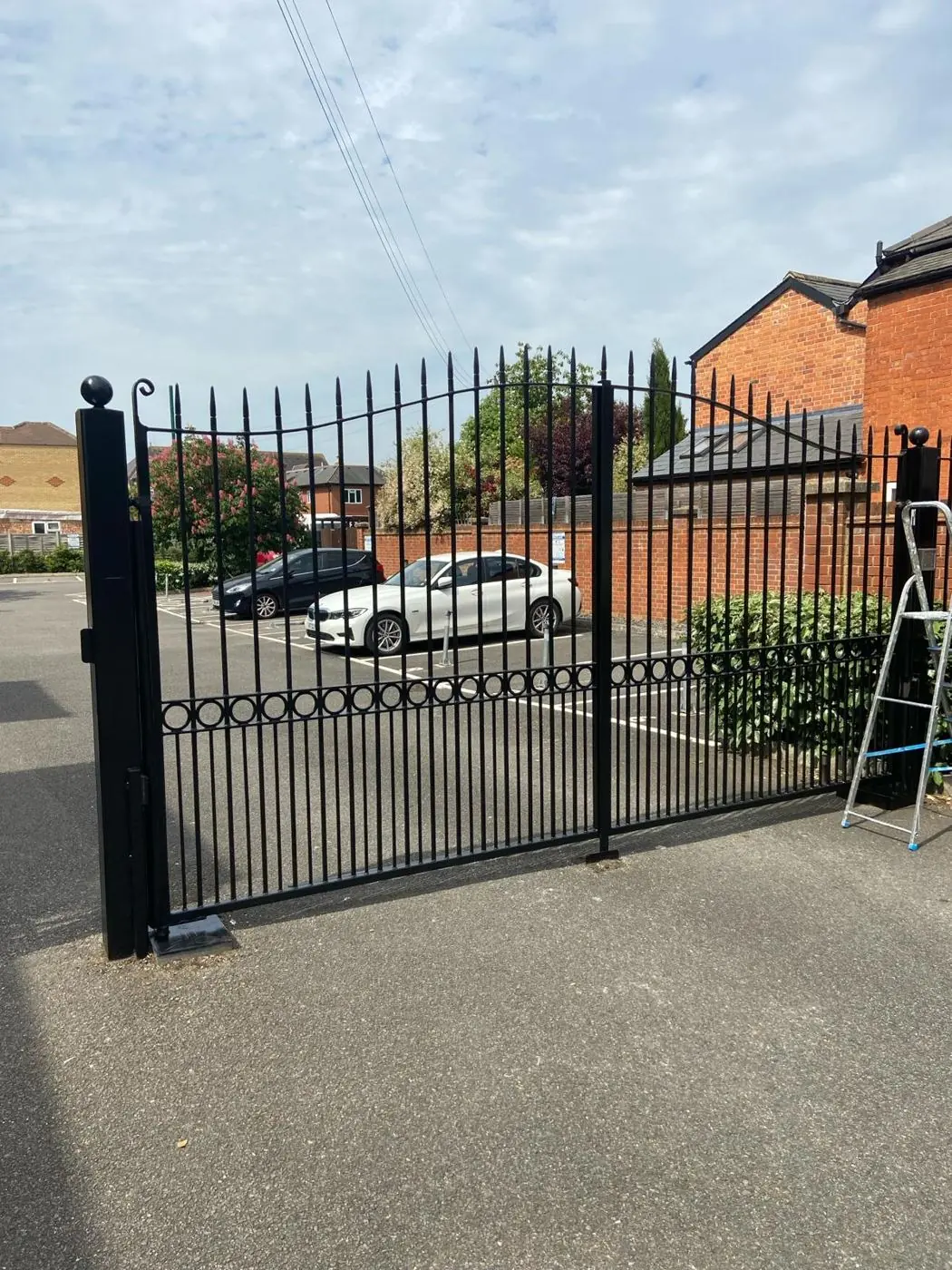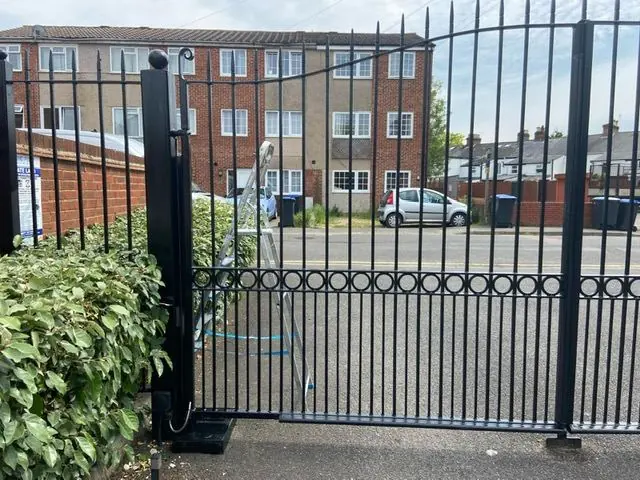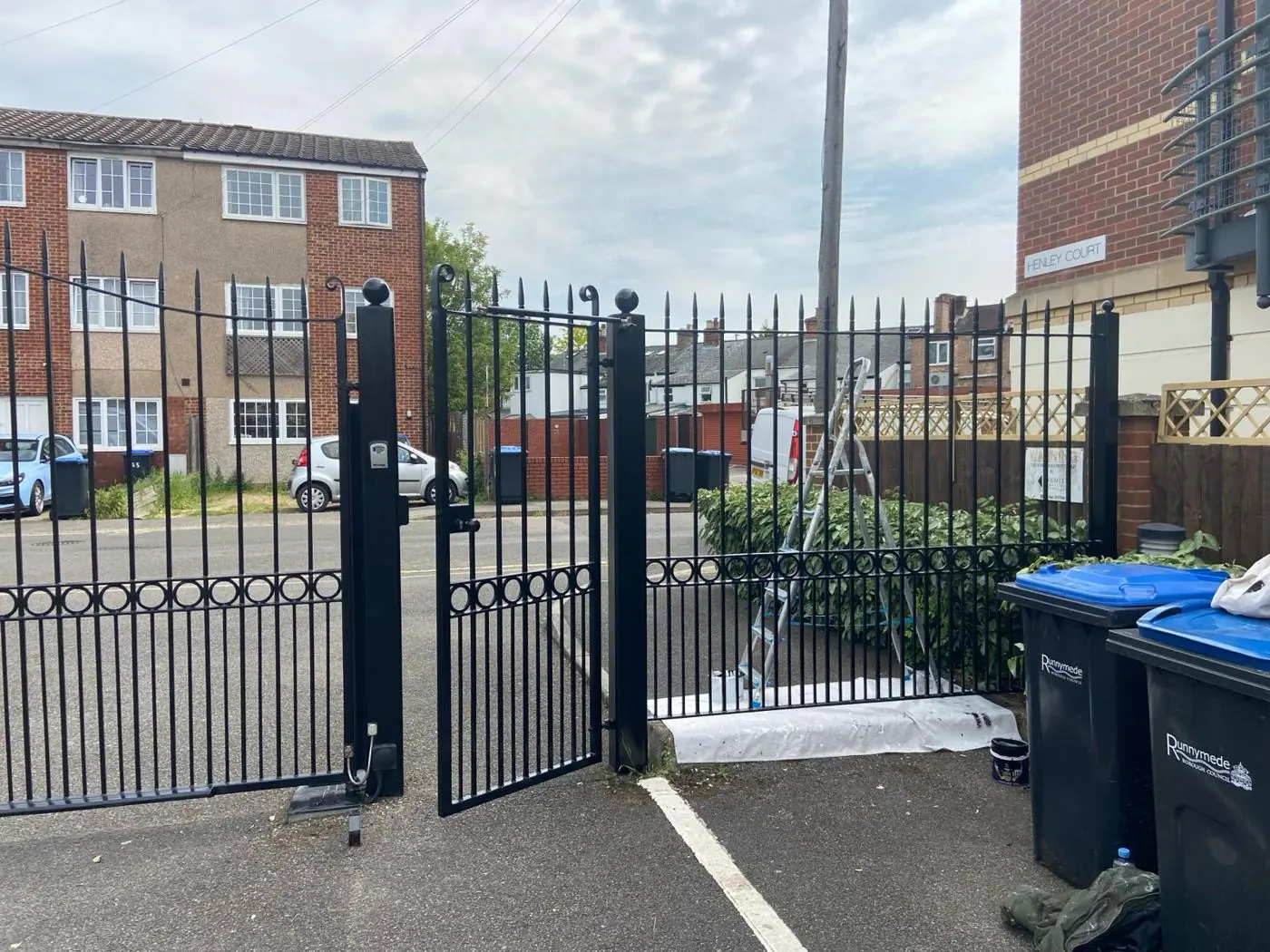
We paint metal gates, railings and handrails in Boughton, about 3.4 miles north of Northampton town centre in NN2. Ironwork is fairly scarce in this stone village, so the work is mainly drive gates on detached houses, metal casements on some historic windows and railings at non-residential sites.
Less ironwork than a town street
Boughton’s historic core does not have the rows of cast-iron front railings you find on Victorian terraces in town. Cottages on Church Street open almost straight onto the road with no front garden at all, and boundaries further out are hedges and stone walls. Metalwork is still here, though, in a few clear places:
- gates to detached houses on the outer roads, such as Vyse Road and Moulton Lane
- metal casements on some older windows, including the timber-and-metal casements at Obelisk Farm
- handrails, garden gates and the occasional balustrade on 20th century houses
- railings around school and community buildings
Two well-known pieces of painted metal in the village, the Grade II K6 telephone box and the pillar box, are not private property, so they are not work we take on.
Drive gates behind deep front gardens
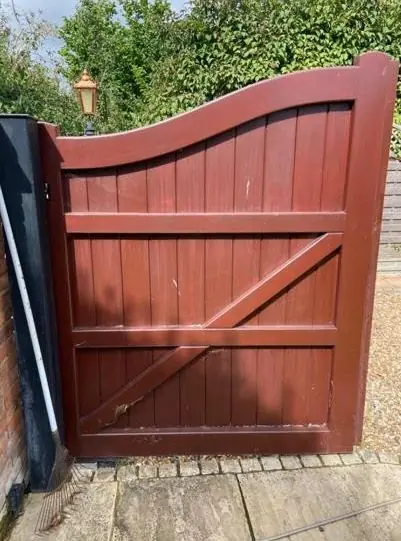
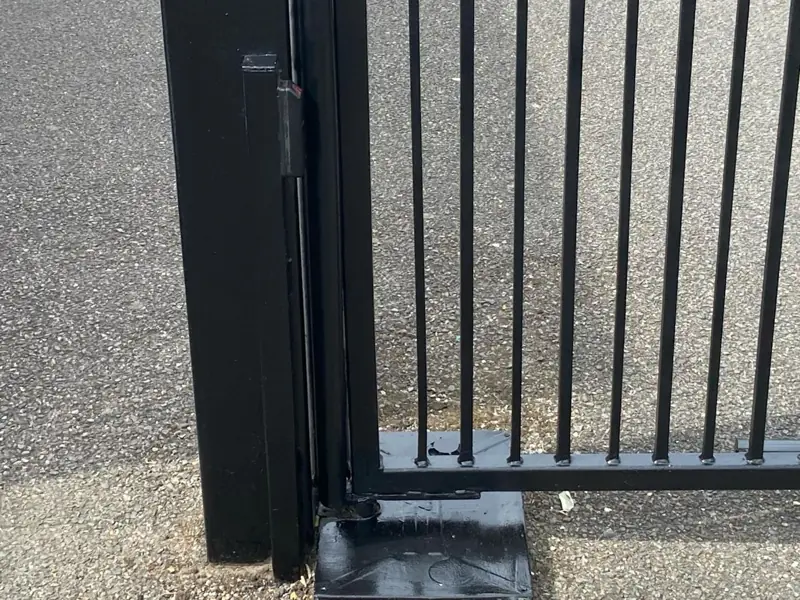
The early 20th century houses on northern Butcher’s Lane, Spring Close and Moulton Lane sit back from the road, and many have gates at the drive or path. Under Boughton’s tree cover, metal gates stay damp, collect leaf litter at the foot and rust first at the hinges, the bottom rail and wherever they meet a stone pier. We wire-brush and scrape back to sound metal, treat rust spots, prime bare steel or iron with a metal primer and build up the finish coats. Where a gate is galvanised, it needs a specific primer, or the paint will lift. Hinges are greased and checked, and a gate is propped open while it dries so it does not stick to its stop or latch. Black gloss or satin is the usual choice, though a gate on a conservation area house can be matched to the historic joinery colours the appraisal records.
Metal casements on listed houses
Some of Boughton’s 17th century buildings have metal casements, often set in timber frames under painted timber lintels. These are fiddly. Glass sits close to the metal, putty may be old and brittle, and on a listed building like Obelisk Farm, stripping or a change of colour can need listed building consent. We clean and prepare by hand, keep to the existing colour unless you have permission otherwise, and never use a heat gun where the house or its neighbour is thatched. The appraisal favours repair over replacement on traditional windows, and careful painting is part of that. Where a metal casement sits in a timber frame, the two need different primers, so we treat them as separate surfaces even though they are painted at the same visit.
Boughton’s stone setting adds one more point. Where a gate or rail is fixed into a stone pier or wall, rust expanding at the fixing can crack the stone around it. We clean those joints carefully, keep paint off the stone face, and flag any fixing that has already split its masonry so you can have it repaired in lime mortar.
School and community railings
Boughton Primary School on Moulton Lane opened in 1841, and Moulton Lane is the part of the village with the most signage and heavy peak-time traffic. Railing work there, or at T J Daycare on the same road, suits school holidays or days the setting is closed, with wet paint clearly signed and fumes kept low. The Village Hall at the southern end of Butcher’s Lane is another site where any railings or handrails would need scheduling around bookings.
For our metal preparation and coatings in more detail, see the main metal gate and railing painting service. The Boughton area page covers other jobs in the village, and our painter and decorator cost guide shows what affects the price.
Last updated by Dean, DH Painter & Decorator.