Dean helps Boughton homeowners choose colours and finishes as part of a decorating job, about 3.4 miles north of Northampton town centre. In the conservation area that starts from the joinery colours the 2018 appraisal records, including the darker Boughton estate green; in Buckton Fields the choice is far more open.
The village already has a recorded palette
Few places come with their own colour notes, but Boughton does. The Boughton Village Conservation Area Appraisal of 2018, an adopted planning document, describes what the windows in the historic core actually look like, and its guidance says replacement windows, if painted, should be light, such as white or pale yellow, or a colour based on the original.
| Colour | Where the appraisal records it | How we would use it |
|---|---|---|
| White | Usual window colour across the core | A soft white rather than brilliant white sits better against pale brown Pendle stone |
| Pale yellow | Some windows in the core; named in the guidance | Cottage casements, or a door on a stone house that already has white windows |
| Pale green | Some windows in the core | Casements under thatch, where it reads as soft against straw and stone |
| Boughton estate green | Surviving at Nos. 6 and 8 Butcher’s Lane and No. 2 Swedish Houses | A deeper, historic option for doors and joinery with a real local link |
The estate green is the interesting one. It ties back to the period when most of the village was built to serve Boughton Hall, and it survives on only a few houses. For an owner in the core who wants something richer than white without picking a shade from a national chart, it is a colour with a reason to be there. We match it from the surviving examples by eye and sample board, not from a guessed paint code.
Article 4 and listed houses: the colour has to be right first time
An Article 4 Direction confirmed in 2020 removed permitted development rights for front elevations on named properties, including Butchers, The White House and Adamfield on Butcher’s Lane; No. 18, No. 42, Jasmin Cottage, The Old House and The Little Cottage on Church Street; Nos. 49 and 51, Nos. 1 to 6 Swedish Houses and Mullions on Humfrey Lane; and Adam Close, St Anthony’s and Halfacre on Spring Close. The appraisal had window and door alterations particularly in mind. On these houses, repainting like for like is the safe course, and a change of colour on the front should be raised with West Northamptonshire Council before any paint is bought.
The same applies, more strictly, to the parish’s 26 listed structures, where a new exterior colour can need listed building consent. Our advice in both cases is to agree the shade, with the council if needed, before the job is booked.
Black lintels, bare timber and dark-stained cladding
Two smaller decisions are particular to Boughton’s older houses. Timber lintels over cottage windows are traditionally painted black or left bare, and it is worth deciding which before the windows are done, because a black lintel frames a pale casement very differently from weathered oak. The Swedish Houses on Humfrey Lane, from the 1940s, are clad in black or dark brown stained timber. They are locally listed and under Article 4, so the colour question there is simply how closely a new stain or opaque finish matches what is already on.
Buckton Fields and the 20th century roads
Outside the conservation area, owners on the Buckton Fields estate and many of the later roads can choose freely. One useful anchor is that the Buckton Fields homes nearest the conservation area, fronting Harborough Road, use a regular-coursed pale brown stone similar to Boughton Pendle. Warm off-whites, stone shades and muted greens tend to sit well with it, where a stark white or a cold grey can look harsh against that stone.
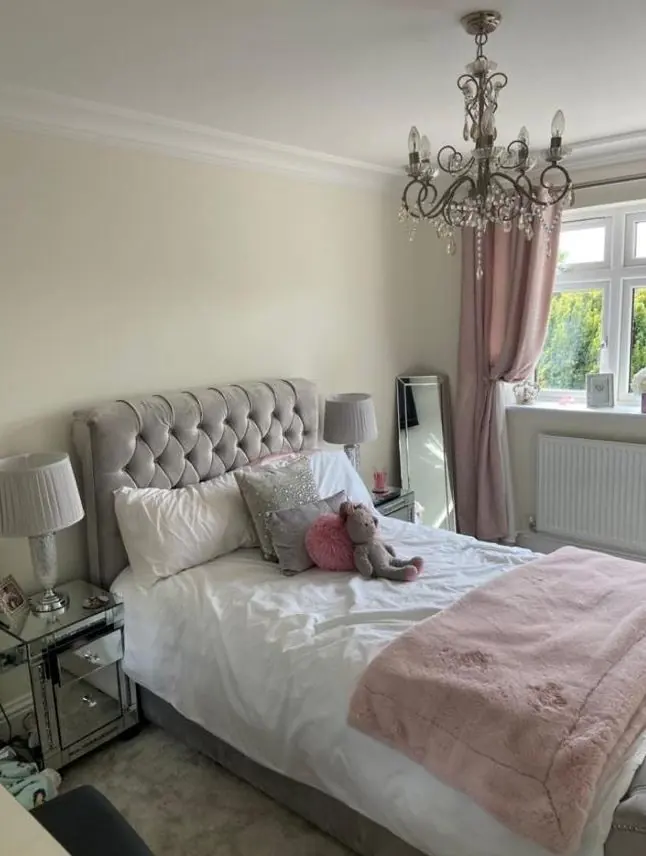
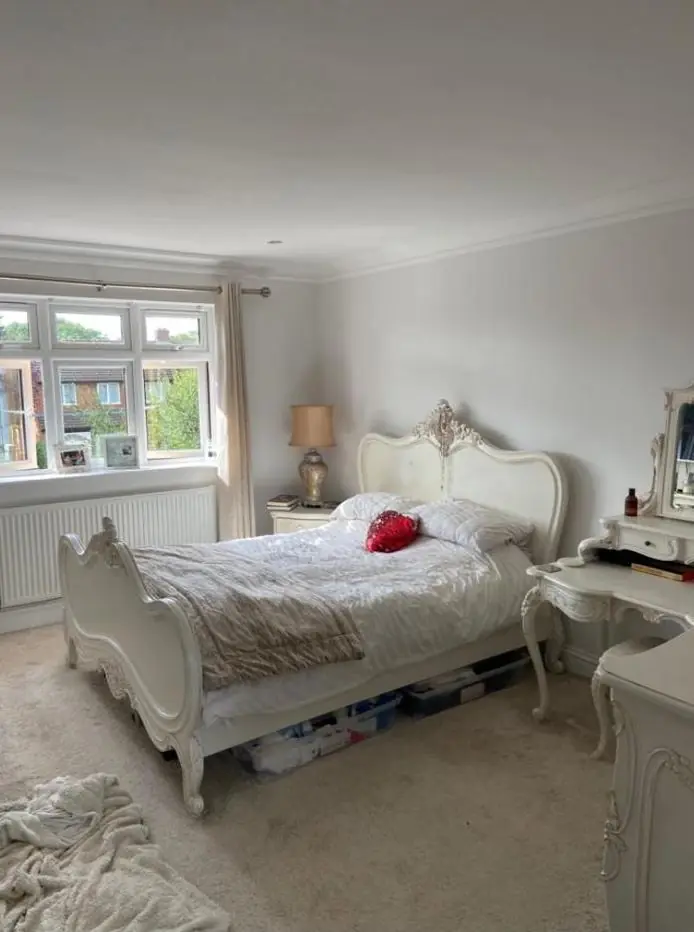
Inside, the village’s mature parkland trees, many under Tree Preservation Orders, shade a lot of rooms and cast a green tint through the windows in summer. We suggest painting large sample boards and looking at them morning and evening on the darkest wall before committing. The wider approach is on our colour and finish advice page, and more about the village is on the Boughton area page.
Last updated by Dean, DH Painter & Decorator.