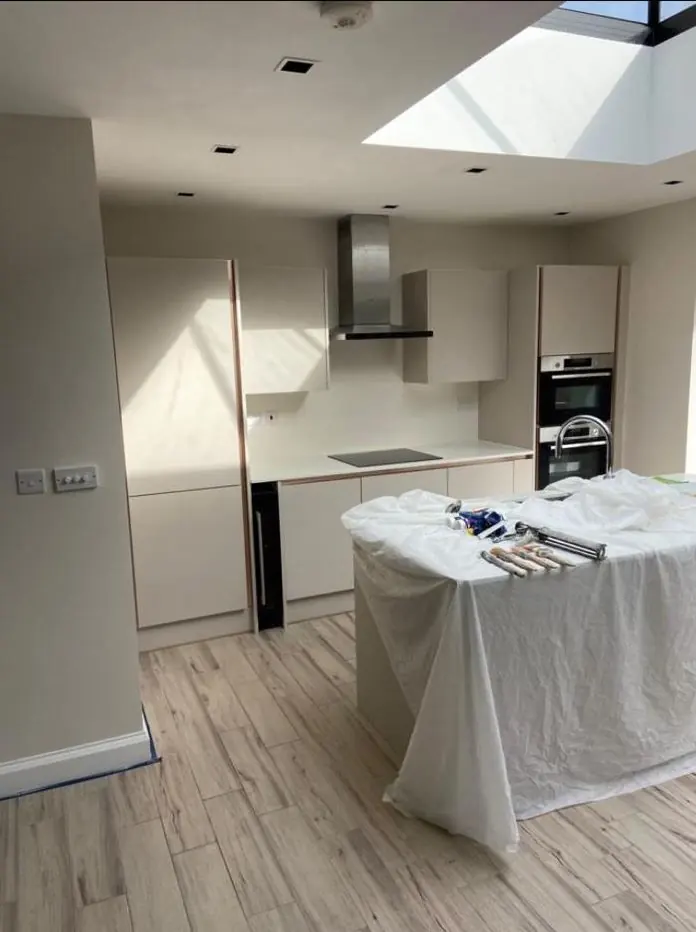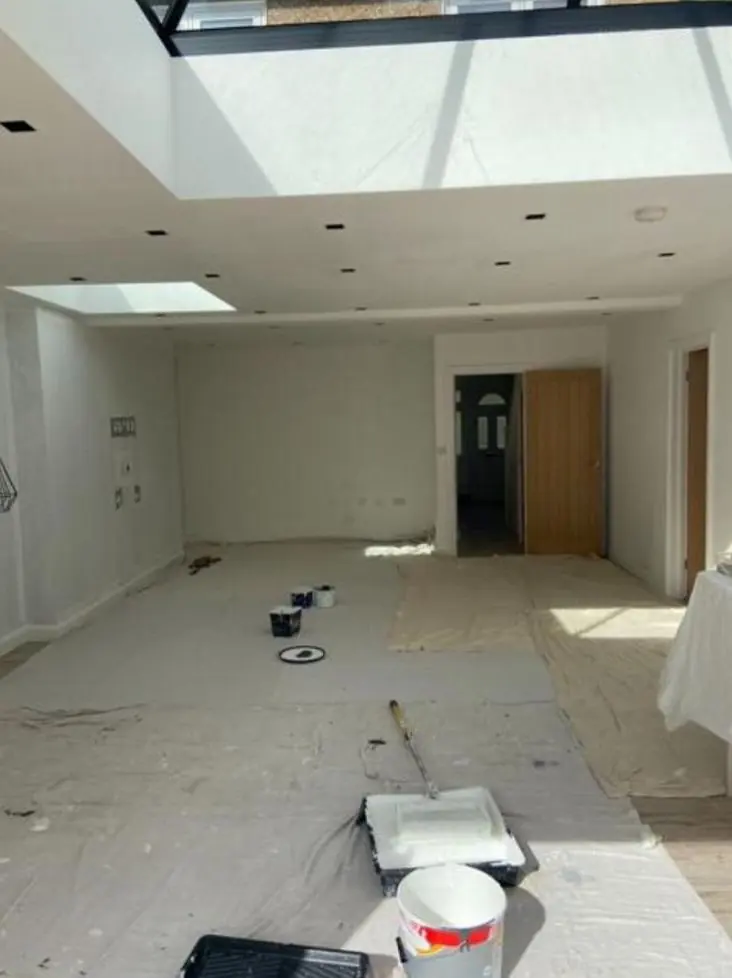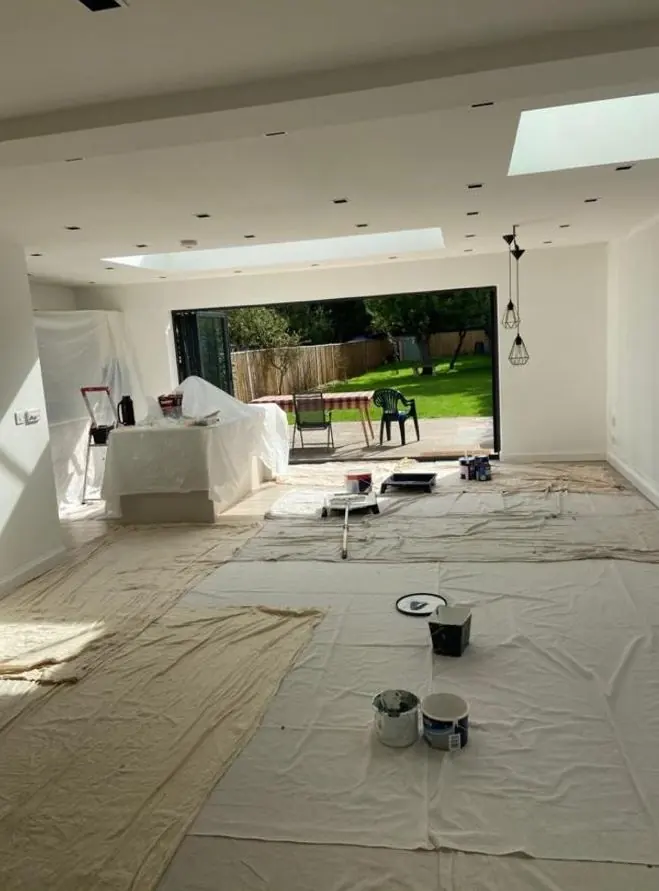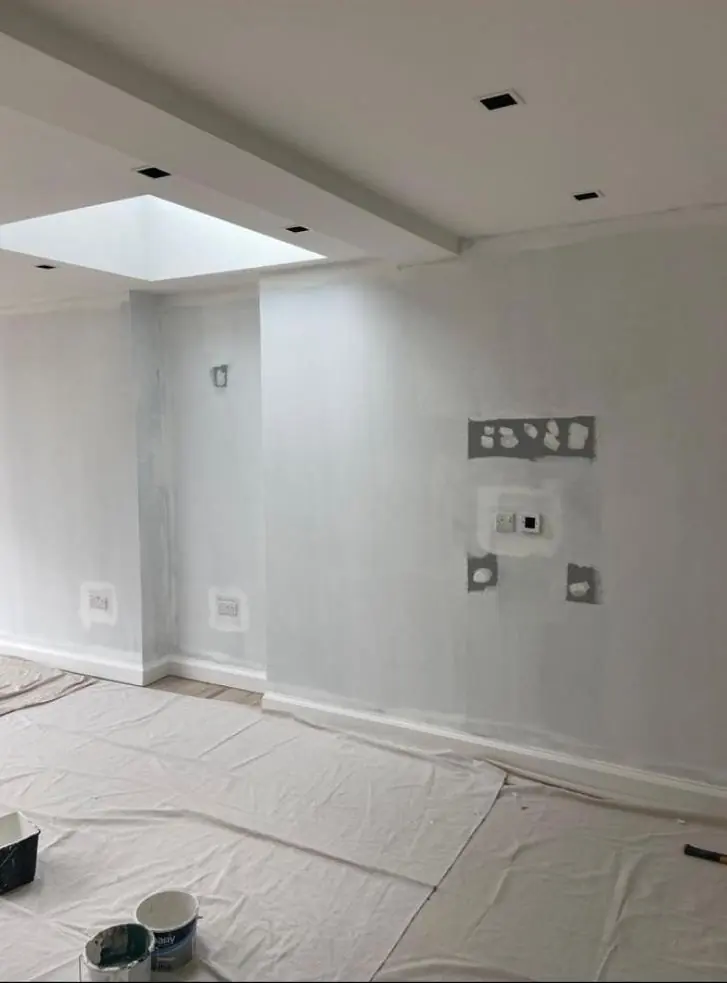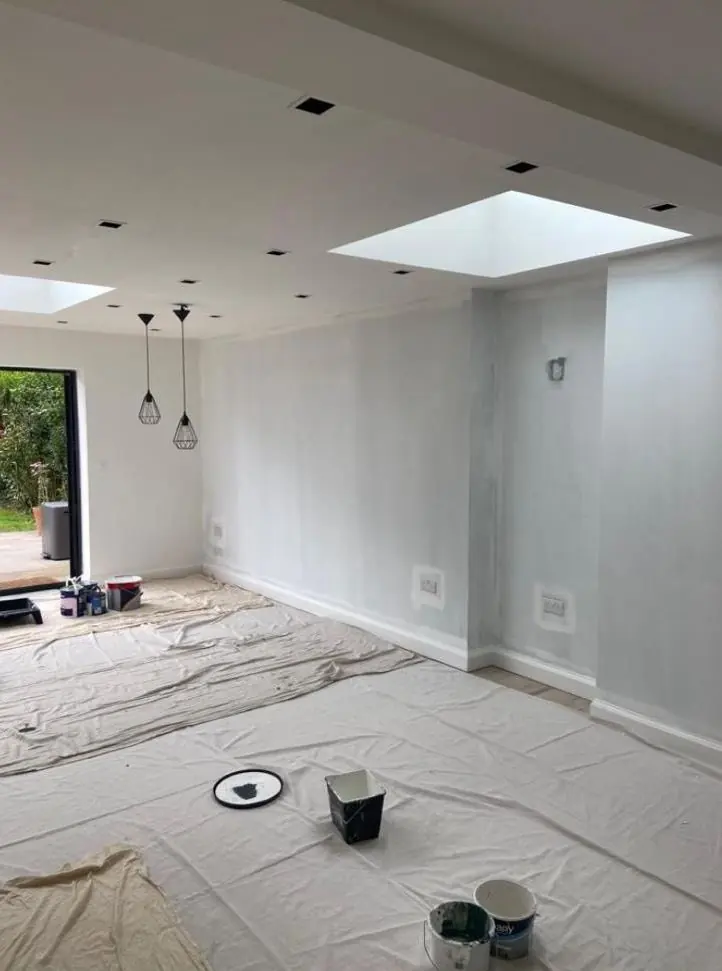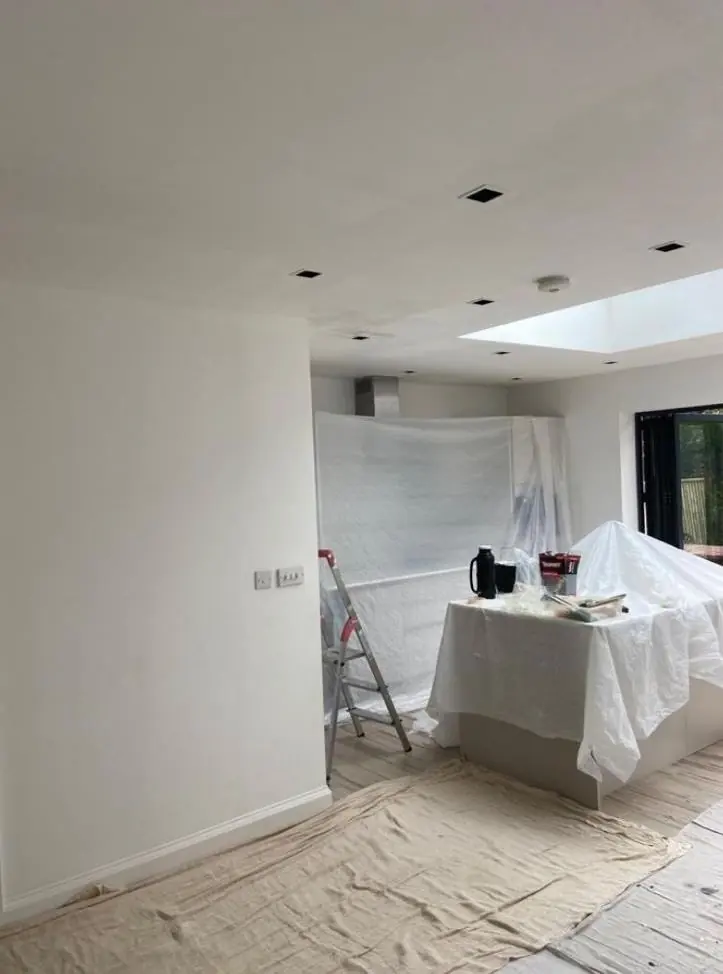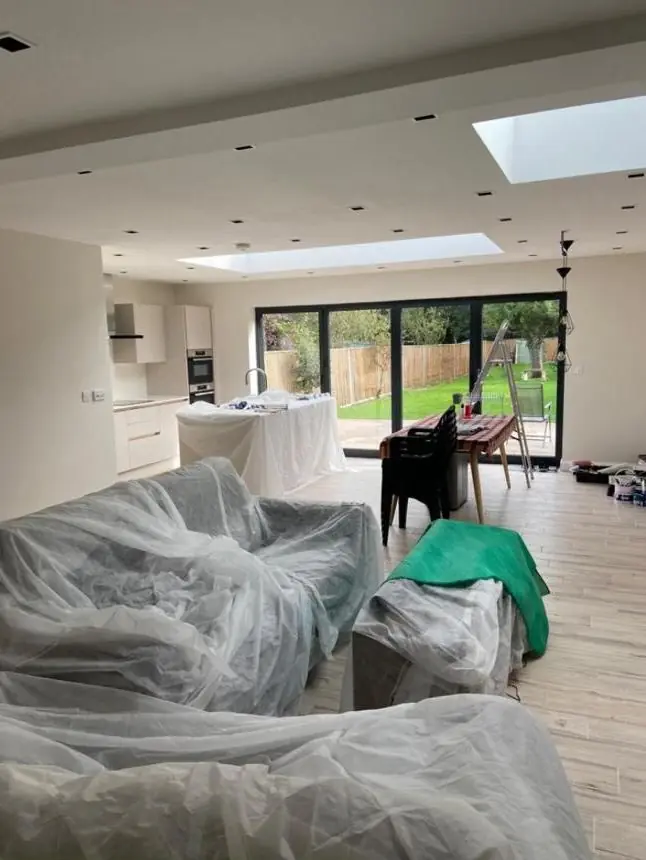
Dean decorates newly plastered rooms and extensions in Boughton, 3.4 miles north of Northampton town centre in NN2. Most of this work falls into two groups: the Buckton Fields homes built in phases since 2015, and extensions or re-skims on older houses in and around the conservation area.
Buckton Fields after the developer’s paint
Buckton Fields was approved in 2013 and is being built in phases in the south-west of the parish off Harborough Road. Martin Grant Homes and Bloor Homes started Phase 1 in 2015, which was mostly occupied by 2020; Phase 2 began around 2020 and Taylor Wimpey started Phase 3 in 2022. The appraisal put the whole scheme at about 1,000 homes. That means houses of several different ages sitting side by side, some still drying out, some ready for their first full redecoration.
New homes are usually handed over with a thin contract emulsion on fresh plaster and plasterboard. It looks fine on the first day, but it marks easily and does not wipe clean. Owners tend to hold off on decorating while the building dries and settles, and that is sensible. When the time comes, the job is less about colour and more about putting right what the first year has shown up: shrinkage cracks at corners and ceiling lines, nail pops, open joints in MDF skirtings and patchy areas where the contract paint was thin.
Newer phases may still have bare skim in places such as utility rooms, garages converted to living space or areas the owner has had re-plastered. Fresh plaster needs to be dry before any paint goes on, and the first coat needs to soak in rather than sit on top. Our guide to mist coats on new plaster explains why.
Extensions to older village houses
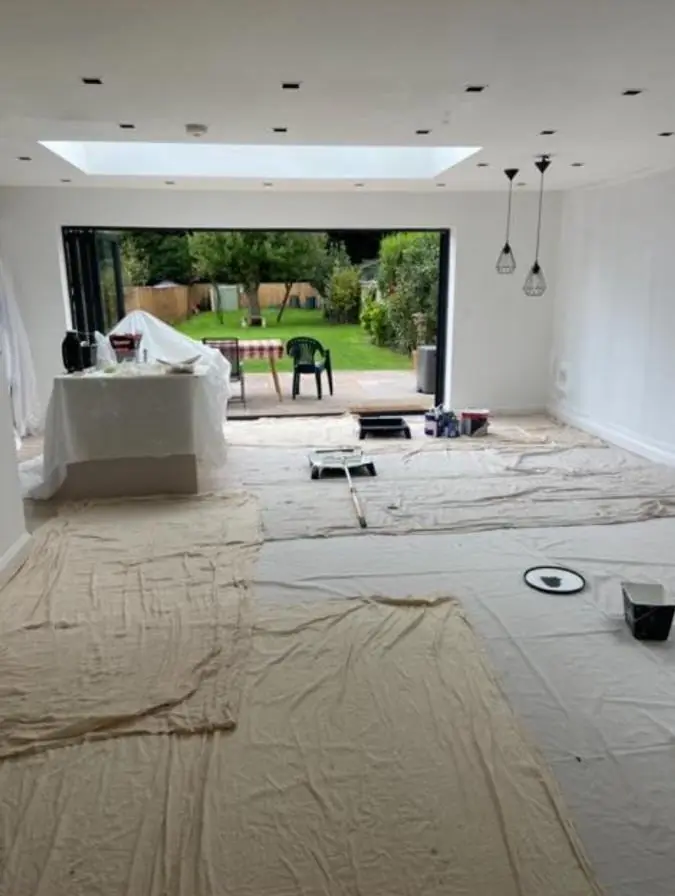
The 2018 conservation area appraisal says extensions to Boughton’s historic houses should be subordinate to the original and use matching materials. From a decorator’s point of view, the interesting part is the join. Inside, a new extension is normally gypsum skim on block or plasterboard, while the old house behind it may have lime plaster on roughly coursed Pendle stone or ironstone. The two surfaces absorb paint very differently and move differently.
- New gypsum skim takes a diluted mist coat and then standard finish coats.
- Old lime plaster is better kept breathable, so we use a mineral or breathable emulsion on that side.
- Where they meet, a fine crack often appears as the new work settles. We leave a short settling period where we can, then fill and flexibly seal the line before finish coats.
- Choosing one colour that reads the same across two different paints takes a sample on both surfaces first.
If the house is listed, building work will already have gone through listed building consent. Check whether the consent says anything about interior finishes before we start, especially where new work opens into a historic room.
Fitting in with the builder
We work after the plasterer and before the flooring and kitchen fitters where possible. A rough order for a Boughton extension looks like this:
| Stage | Who | What we check |
|---|---|---|
| Plaster drying | Builder, then us | Even pale colour, no dark damp patches near new and old junctions |
| Mist coat | Us | Even absorption across all new skim |
| Snagging | Us | Trowel marks, cracks and dings the mist coat reveals |
| Woodwork | Us | New skirtings, frames and doors sealed and painted |
| Finish coats | Us | Two coats on walls and ceilings |
Access can shape the timetable. Builders’ vans and skips on Church Street, Moulton Lane or Humfrey Lane add to parking pressure the appraisal already describes at peak times, so we arrive outside the school run on Moulton Lane and keep our own vehicle off narrow frontages.
The full method, including timings and materials, is on our main new plaster and extension painting page. Our Boughton area page lists the other work we cover here.
Last updated by Dean, DH Painter & Decorator.