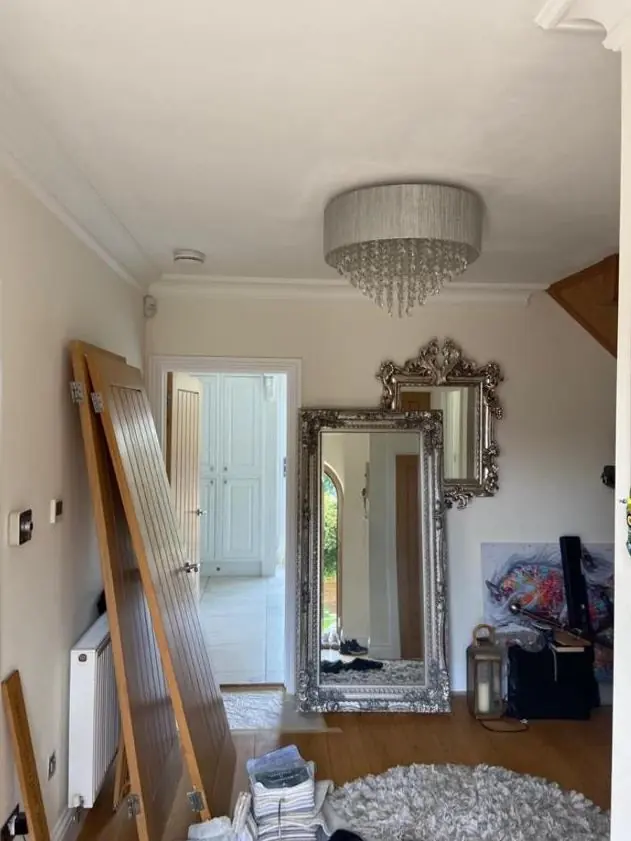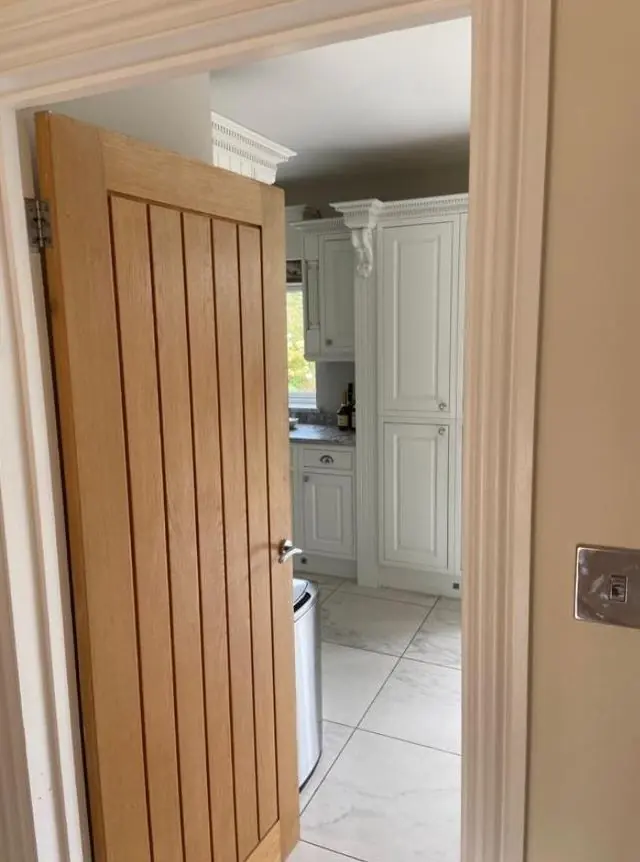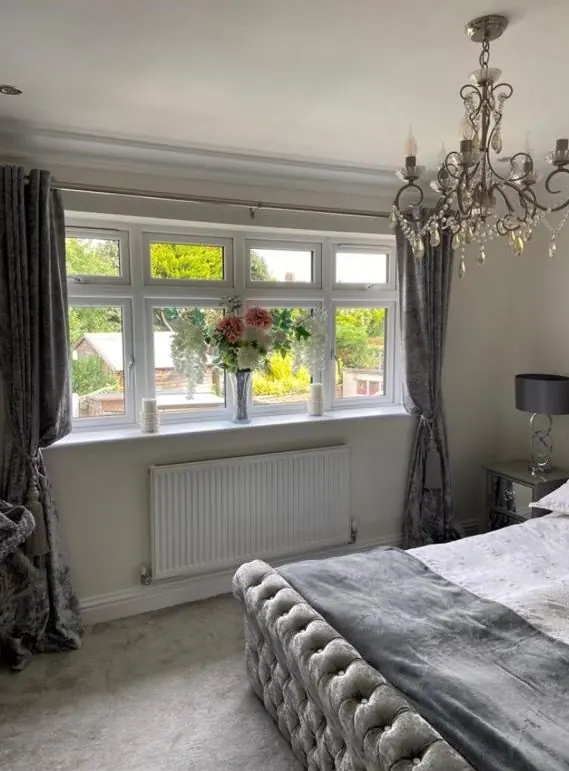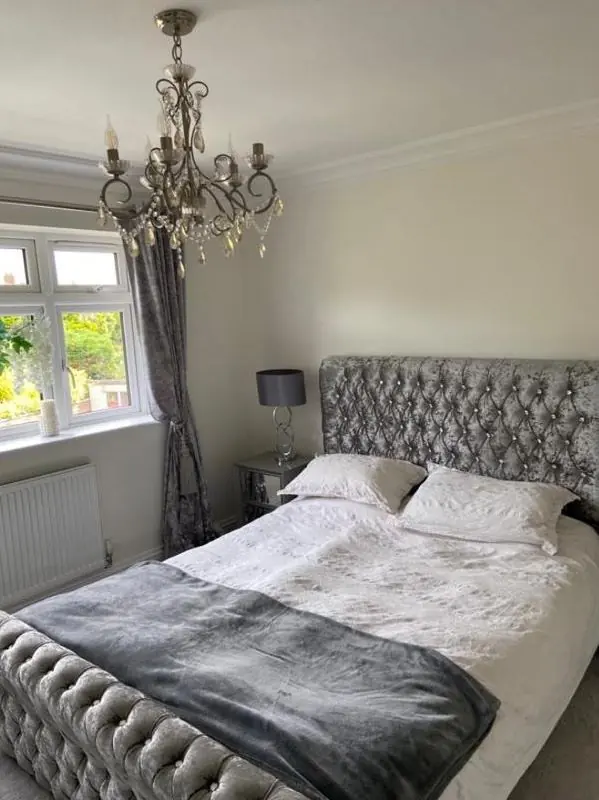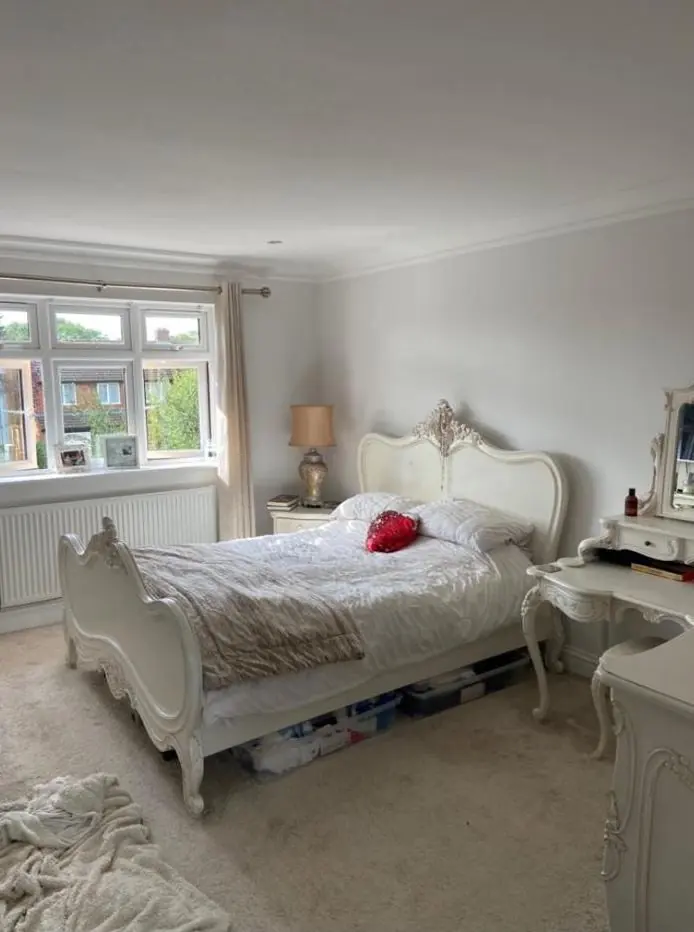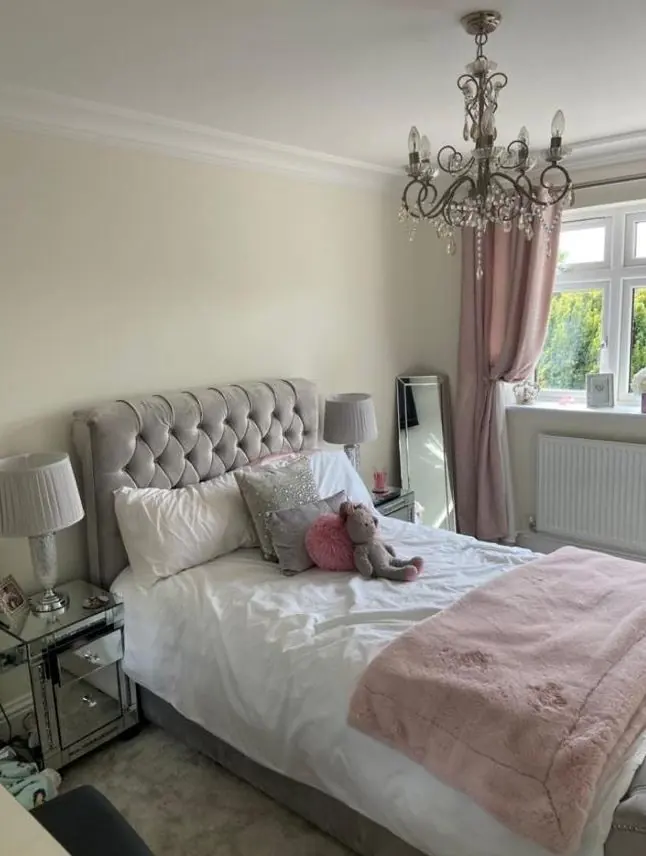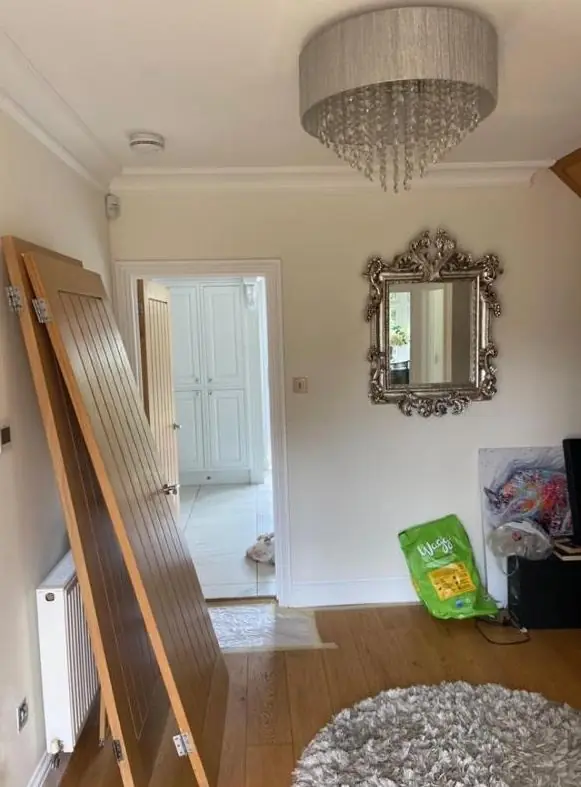
Dean paints the inside of homes in Boughton, the estate village on the A508 about 3.4 miles north of Northampton town centre. The work splits two ways here: breathable finishes over old lime plaster in the 17th to 19th century core, and first proper redecorations in the Buckton Fields homes built since 2015.
One parish, two very different kinds of interior
Boughton covers a lot of ground for a parish of its size. The old village around Church Street and Butcher’s Lane grew up to serve Boughton Hall, and its oldest houses date from the 17th century. In the south-west corner, off Harborough Road, Buckton Fields has added roughly 1,000 homes in phases since 2015. Ask two Boughton households what their walls are made of and you can get answers about three centuries apart.
That gap decides almost everything about how a room is prepared and which paint goes on it, so the first thing we do on a visit is work out which kind of house we are standing in. The general process we follow is set out on our interior painting page; what follows is what changes in Boughton.
Lime plaster, beams and small casements in the old core
The conservation area appraisal describes the historic cottages as roughly dressed Pendle stone and ironstone with thick lime-mortar joints, under long-straw thatch or slate. Walls like these were built to let moisture pass through them. Inside, the plaster on solid stone is usually lime, and it tends to be uneven, soft at the surface and patched over the years.
Sealing that plaster under a vinyl emulsion can trap damp in the wall, which then shows as blistering or flaking paint and powdery plaster behind it. For these rooms we suggest breathable emulsions, such as clay or mineral-based paints, and we test what is already on the walls before choosing. If a modern plastic paint is already on top, it may need to come off in patches where it has failed rather than being painted over again.
Other things that slow a cottage interior down, and that we price in honestly:
- Low ceilings and exposed beams, which mean cutting in by hand around timber that is rarely straight.
- Small windows with small panes, as the appraisal notes across the core, so rooms are darker and every brush mark on a reveal shows in raking light.
- Shallow front entrances opening almost straight onto the road on Church Street, which means dust sheets and protection start at the front door.
What listed building status means inside
There are 26 Grade II listed structures in the parish, and several are houses in the core, including 7 Butcher’s Lane, Merewater, Obelisk Farm, The Old Bakehouse and No. 15 Church Street. Listing covers the interior as well as the outside. Like-for-like redecoration is normally fine, but stripping historic finishes, removing old plaster or changing the character of a room can need listed building consent from West Northamptonshire Council. The listing for 7 Butcher’s Lane even mentions a reputed wall painting inside. If your house is listed, we will check what is on the walls before anything is sanded or scraped.
The first full redecoration in a Buckton Fields home
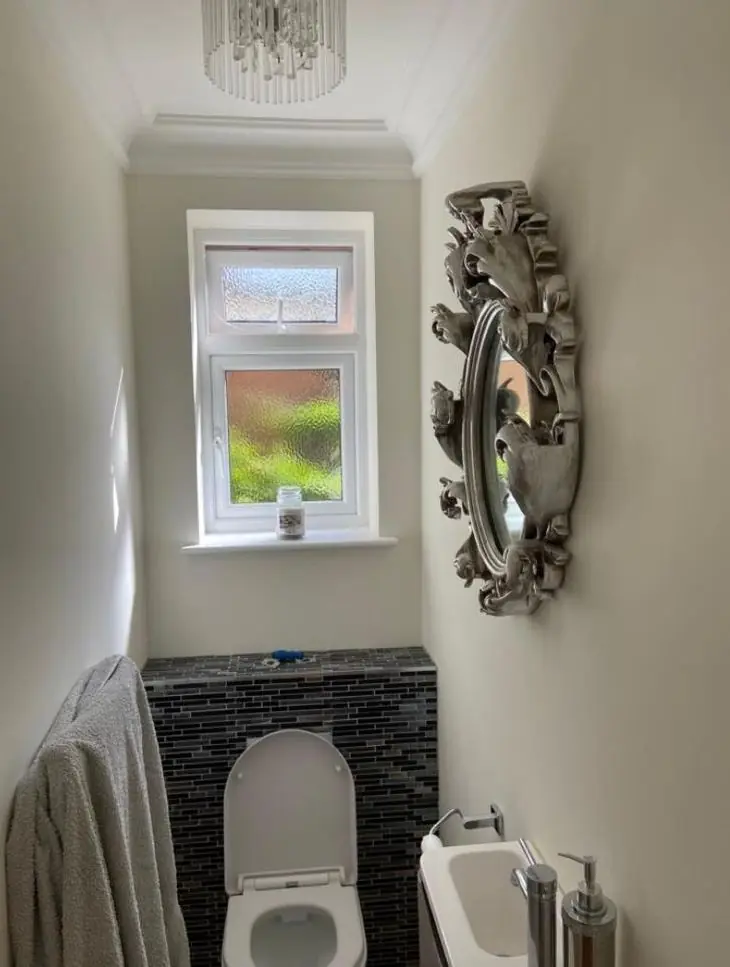
Buckton Fields homes date from Phase 1 in 2015 through to Taylor Wimpey’s Phase 3 from 2022. Many will still have their builder’s finish: a thin, often watery emulsion straight over plasterboard and skim, with nail pops, hairline cracks at ceiling joints and gaps along skirtings as the timber and plaster settle in the first few years.
For those homes a first redecoration usually means:
- A proper mist coat wherever a newer extension, garage conversion or patched area has bare plaster. Our mist coat guide explains why.
- Raking out and filling settlement cracks, then flexible caulk along skirtings and architraves.
- Two full coats of a better-quality emulsion, often a washable one for hallways, stairs and children’s rooms.
These are not difficult rooms, but they reward patience at the filling stage. Paint over a crack that is still moving and it reappears within a season.
The 20th century houses in between
Between the core and the new estate sit the detached houses on Moulton Lane, Vyse Road and Spring Close, the 1960s estate along Howard Lane and the former council houses on Butcher’s Lane and Humfrey Lane. These are mostly brick-built, so the walls usually take standard emulsions and satin woodwork without the breathability questions of the core. The large early 20th century houses set back behind deep gardens on Moulton Lane and Spring Close are a bigger job by size alone, so we plan them room by room so you can keep living there.
Wherever you are in the parish, the parkland trees and Tree Preservation Order belts keep many rooms shaded, so we suggest testing sample patches on the darkest wall before choosing. More about the village is on our Boughton area page.
Last updated by Dean, DH Painter & Decorator.