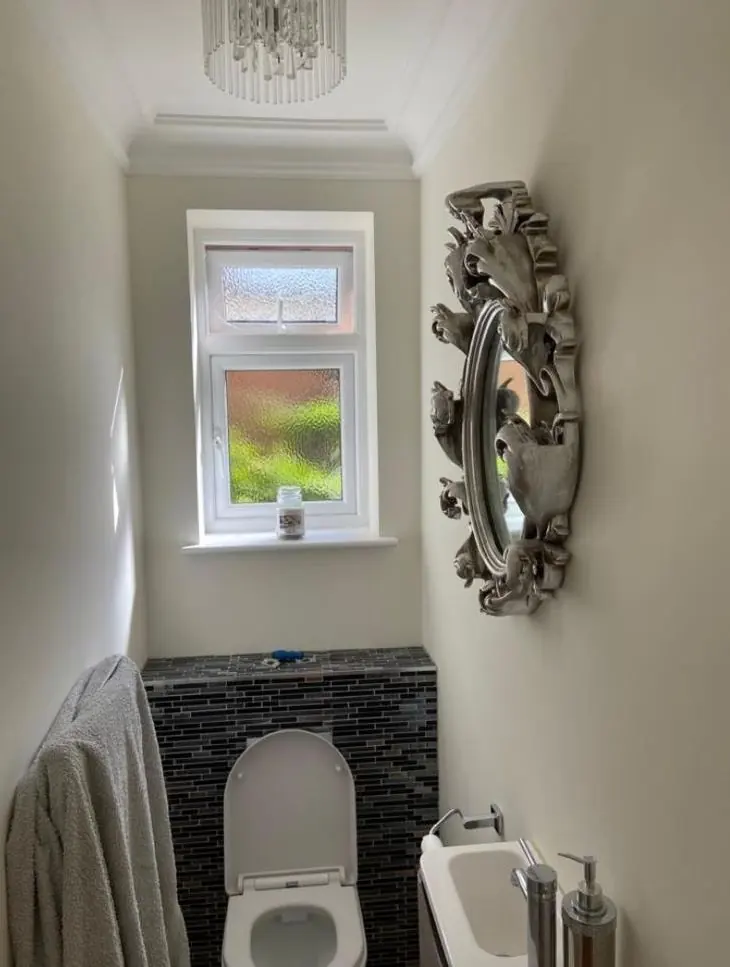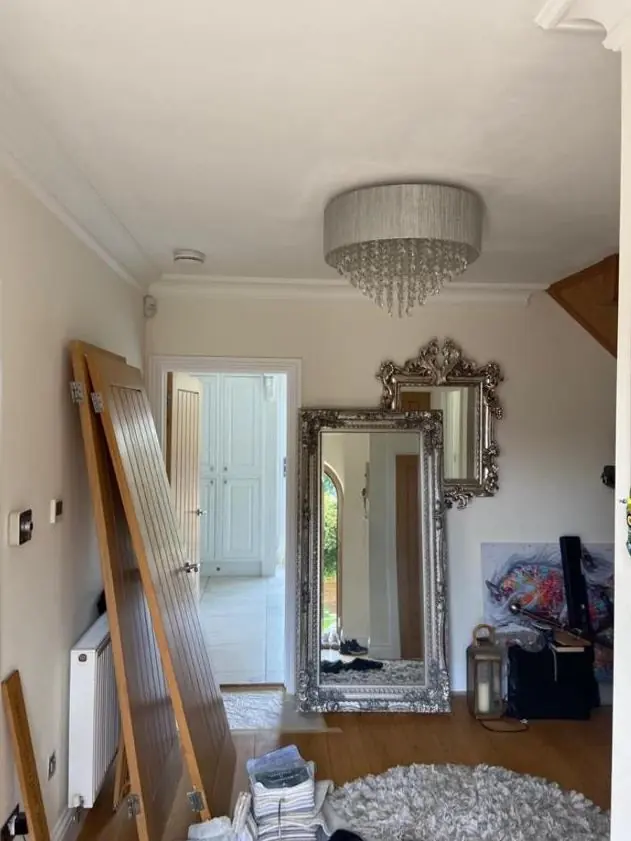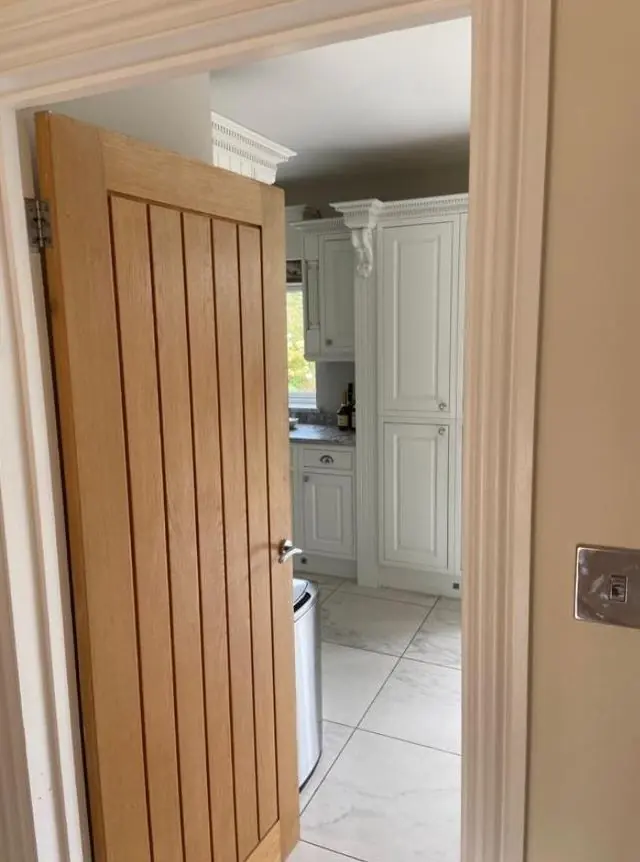
DH Painter & Decorator offers decorative paint finishes in Boughton, about 3.4 miles north of Northampton town centre. In the village's old stone cottages that means limewash-effect walls and painted beams; in the Arts and Crafts houses on northern Butcher's Lane, panelling and period detail; in Buckton Fields, adding character to new rooms.
Limewash looks and painted beams for the stone cottages
The cottages along Church Street and Butcher’s Lane are the oldest houses in Boughton, built in the 17th and 18th centuries of Pendle stone and ironstone with thick lime-mortar joints. Inside, the walls are often lime plaster that undulates, and many rooms have low ceilings crossed by timber beams.
These rooms suit a finish that works with the unevenness rather than one that needs a flat wall. A limewash-effect finish, built up in thin washes with a large brush so the colour gathers in hollows and thins over high spots, gives the soft, clouded look of traditional lime. Done with breathable products, it also suits the way a solid stone wall handles moisture. A glossy or high-build effect would look wrong here and could trap damp.
Beams are a decision in themselves. Some owners want old black paint taken back so the timber shows; others want beams painted to lift a low, dark room. Two practical points apply in Boughton:
- Some of these cottages are thatched in long straw, so we never use heat guns or flames to strip beams or joinery. Removal is chemical or by hand.
- Beams that have been bare for a long time need a breathable finish, such as a limewash, a mineral paint or a wax, so the wood is not sealed.
Panelling and period detail in the Arts and Crafts houses
Further north on Butcher’s Lane, and on Spring Close and Moulton Lane, are large detached houses from the early 20th century, many built by 1943 and set back behind deep gardens. The appraisal describes some as Arts and Crafts, and several, including Adam Close, Adamfield and The White House, are locally listed.
Houses of this style suit decoration that was part of the original idea: painted timber panelling to dado height, deep picture rails, and joinery picked out in a contrasting colour. If original panelling survives, our job is careful preparation and a finish that lets the joints and mouldings read crisply, usually an eggshell rather than gloss. Where panelling is being added, we can paint new MDF so the pins and mitres disappear. A muted colour taken from the period, rather than a fashionable dark shade, tends to suit these rooms.
Where we would leave things alone
Boughton has 26 listed structures, and some of the most important are houses. The listing for 7 Butcher’s Lane, a mid-17th century thatched cottage, records a reputed wall painting inside. In a house like that, no decorative scheme should go over historic decoration, and any change to a listed interior’s character may need listed building consent from West Northamptonshire Council. If we find older paint layers, stencilling or lettering under modern coats in any old Boughton house, we stop and show you before going further.
Giving a Buckton Fields room some character
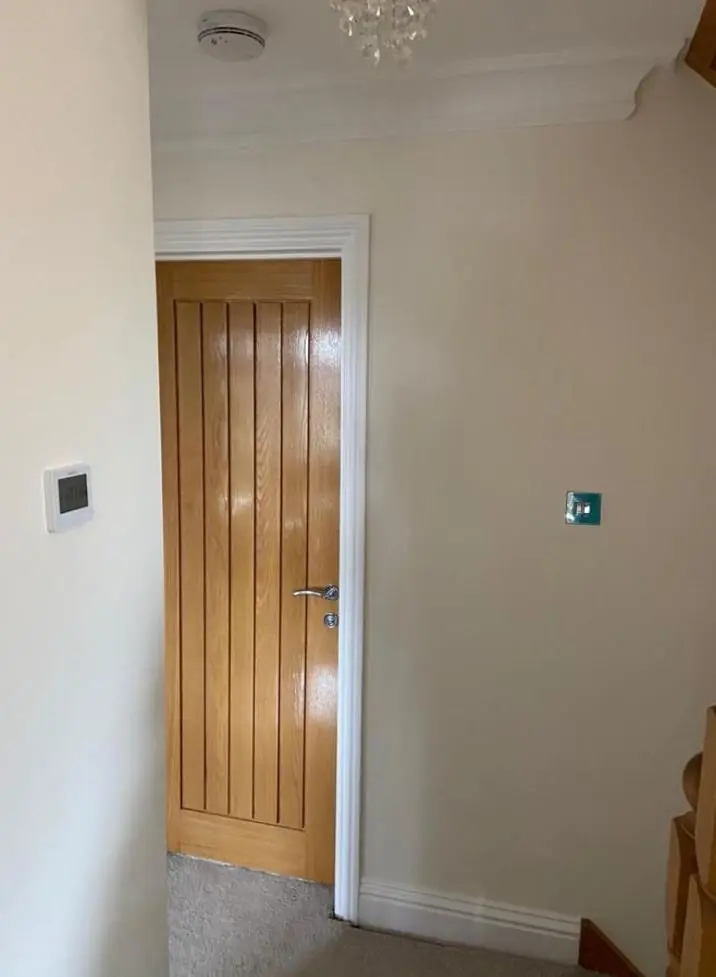
The Buckton Fields homes, built in phases since 2015, give a clean slate: flat walls, square corners and standard joinery. That makes them a good fit for crisper effects that would fight an old wall:
- Two-tone walls with a dead-level dividing line, popular in hallways and children’s rooms.
- A painted arch or block of colour behind a bed or a desk.
- Simple panelling added to a stair wall or a bedroom, then painted in one colour for a quieter look.
The one thing to wait for is drying. Where an extension or repair has fresh plaster, it needs to dry out and take a mist coat before any effect goes on. More detail on effects and techniques is on our decorative finishes page, and more on the village is on our Boughton area page.
Last updated by Dean, DH Painter & Decorator.