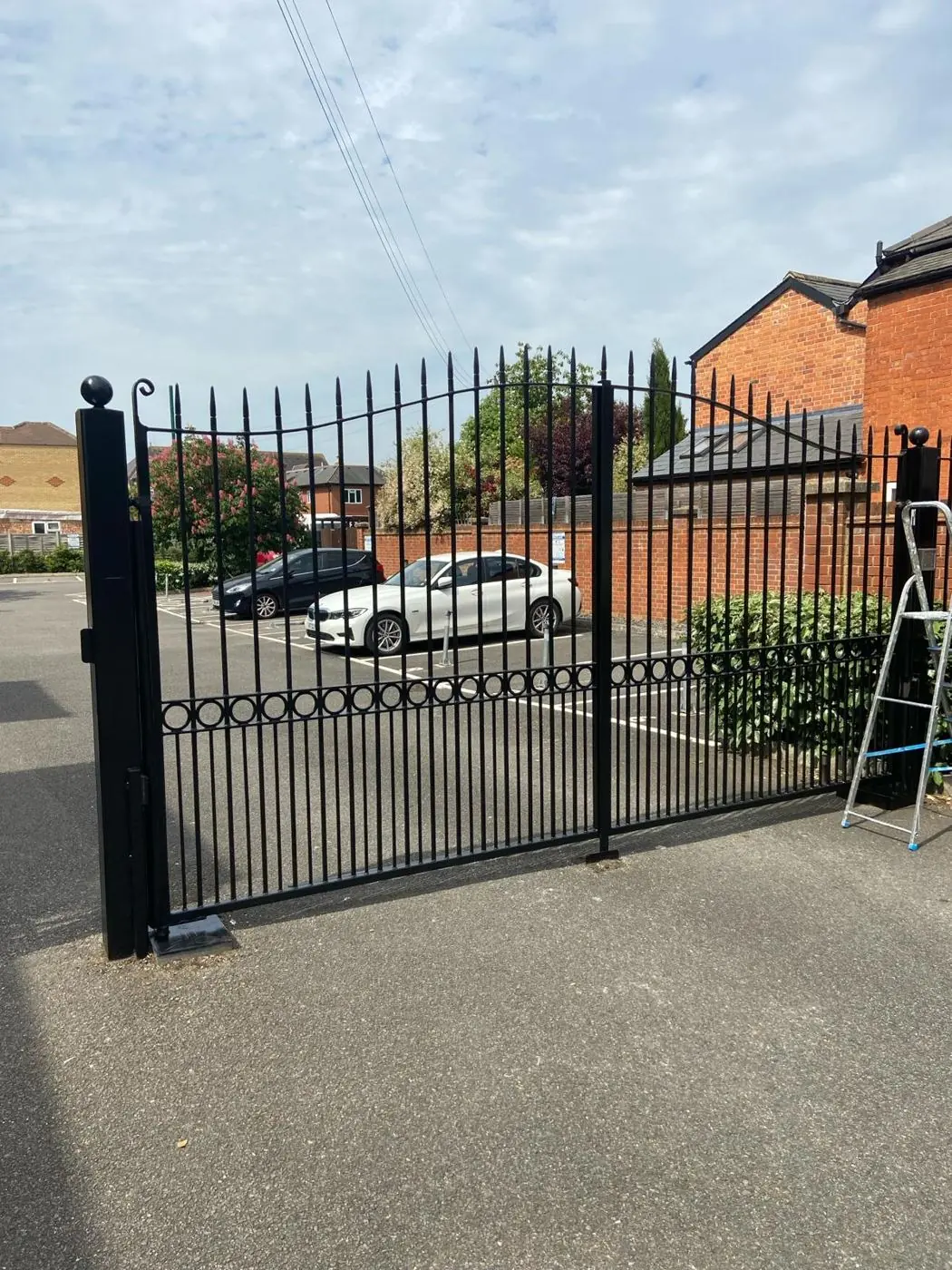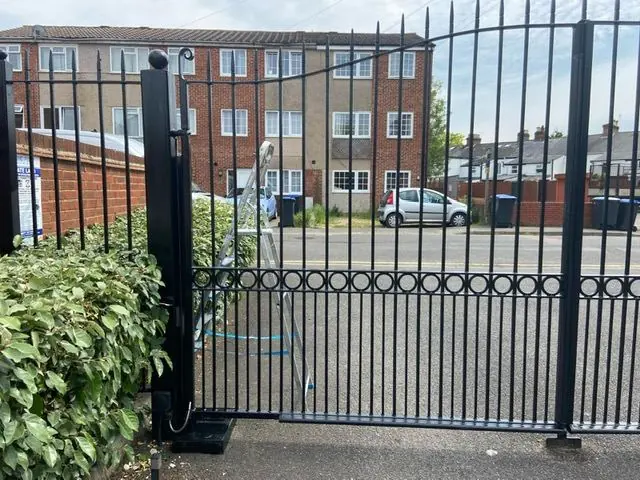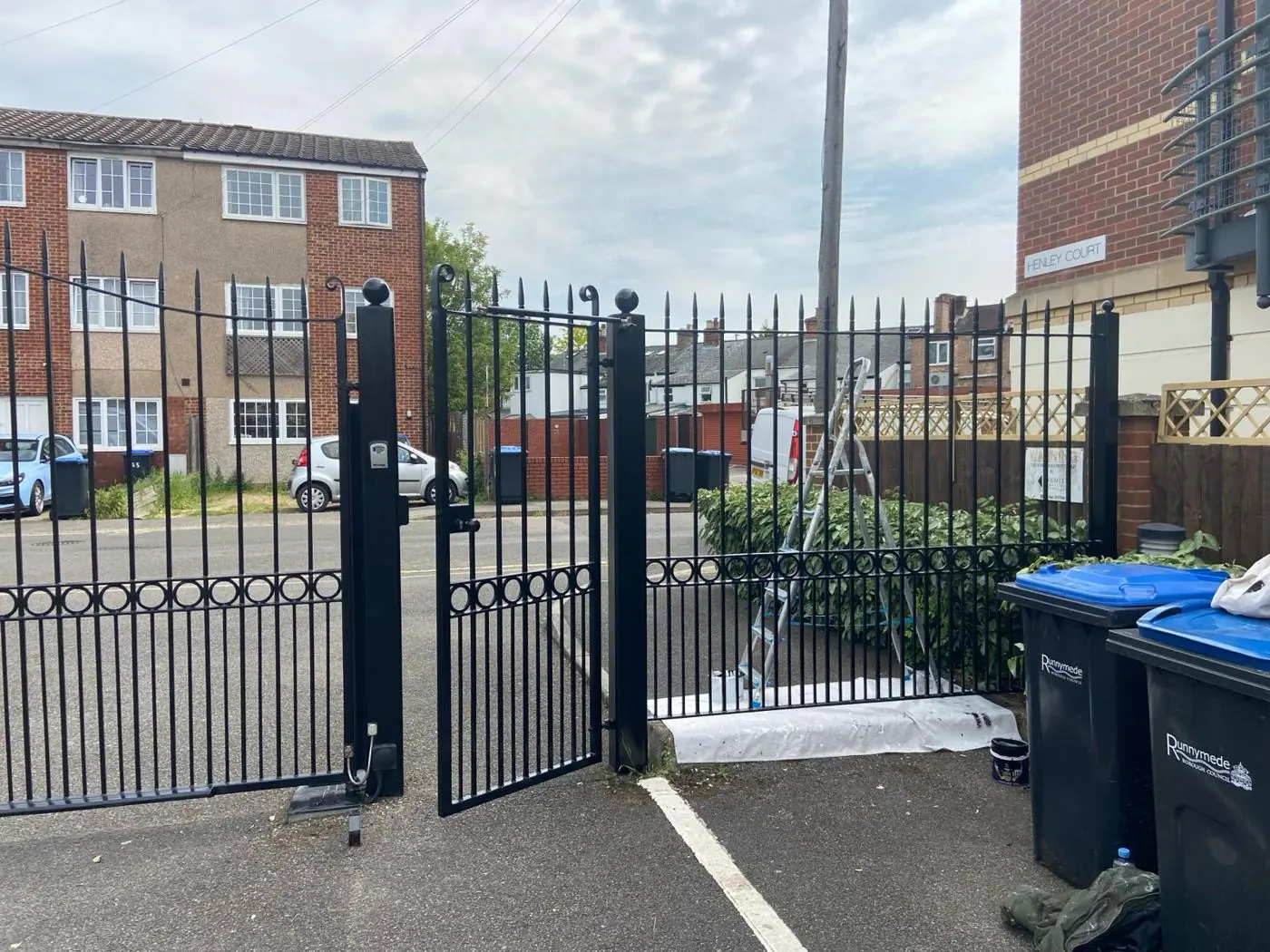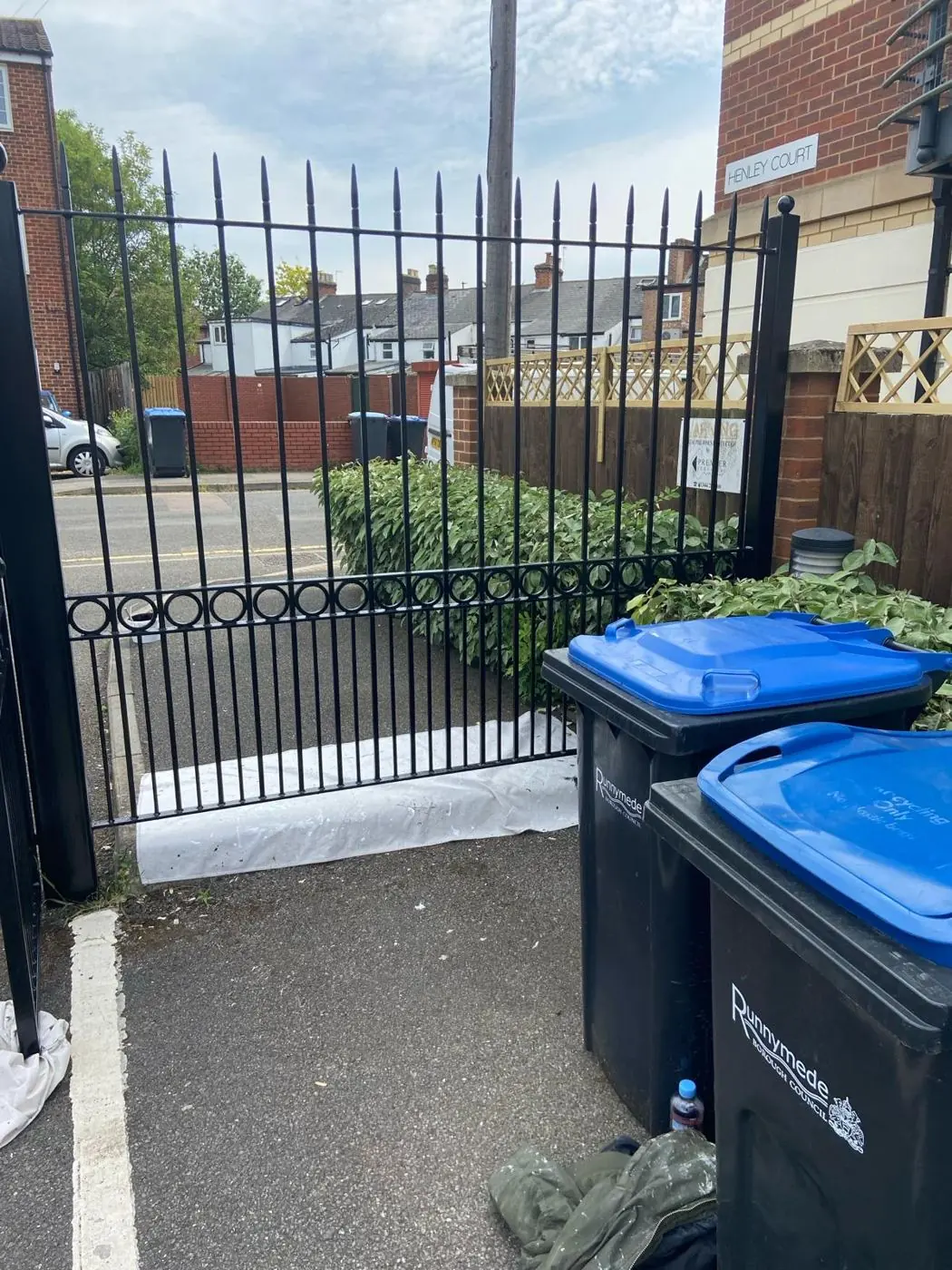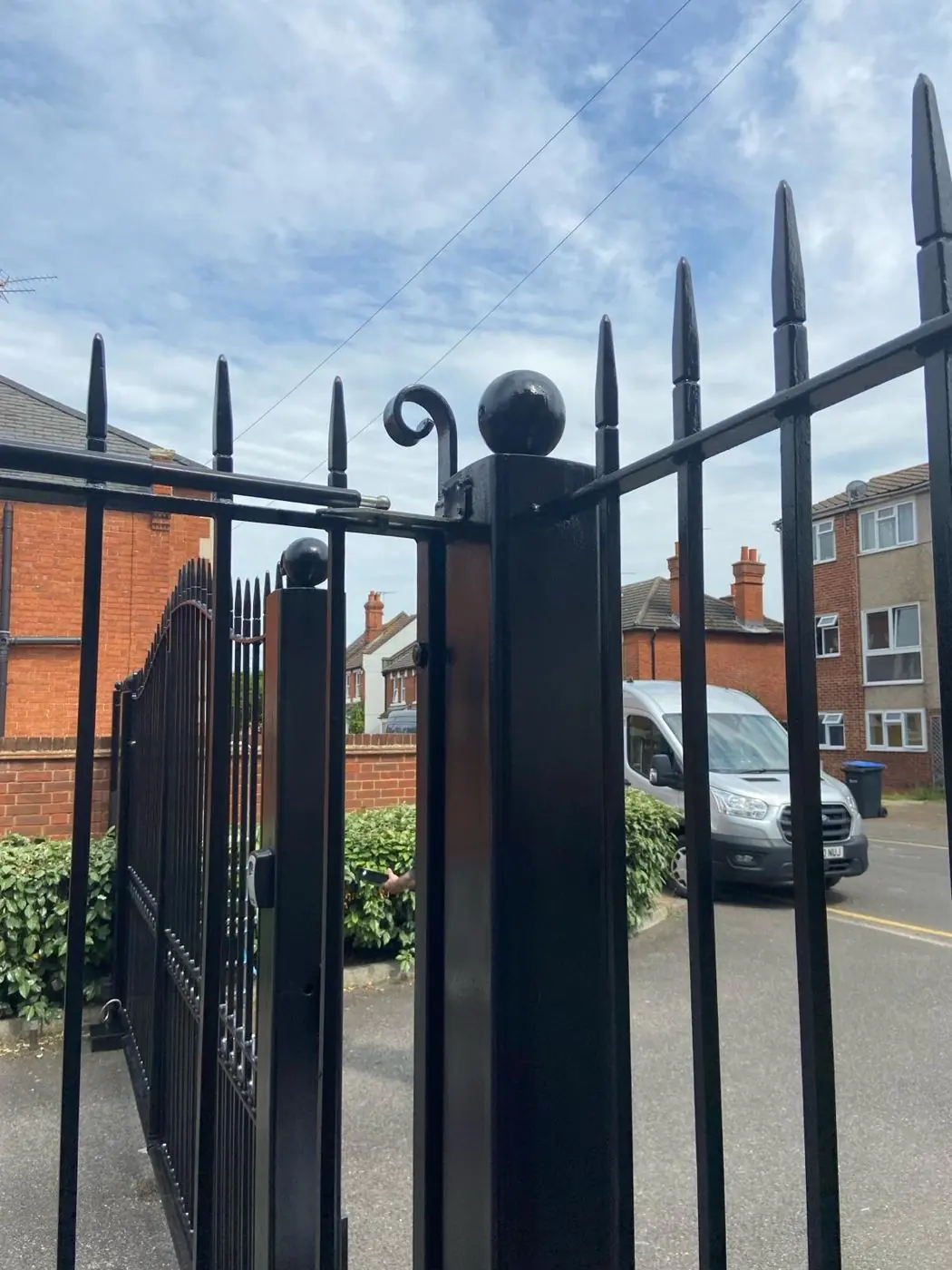
DH Painter & Decorator repaints iron and steel gates and railings in Pitsford, 4.7 miles north of Northampton. Dean takes rust back to sound metal, primes it to suit the metal type, and finishes in the traditional dark colours that suit the village's stone walls.
Ironwork set into Pitsford’s walls and piers
Metalwork in Pitsford is closely tied to its stone. The historic core is laid out as walled plots, with tall Pendle stone boundary walls and gate piers, and iron gates hung between them. When the paint on a hinge pin or a gate bar fails, rust expands, and where the iron is leaded or mortared into stone it can crack the stone around it. So repainting is not only about the gate’s appearance. Keeping water off the fixings protects the pier or wall it is set into.
Before any prep, Dean works out what the metal is. Older gates and railings in the village are likely to be wrought or cast iron, while gates on the post-war houses at Broadlands, Drummond Close and Glebe Lane are more often mild or galvanised steel. Cast iron is brittle, so it is cleaned by hand rather than hammered. Galvanised steel needs a dedicated primer or the paint will peel. The details of each metal are covered on our metal gate and railing painting page.
Listed gate piers at Pitsford House and Pitsford Hall
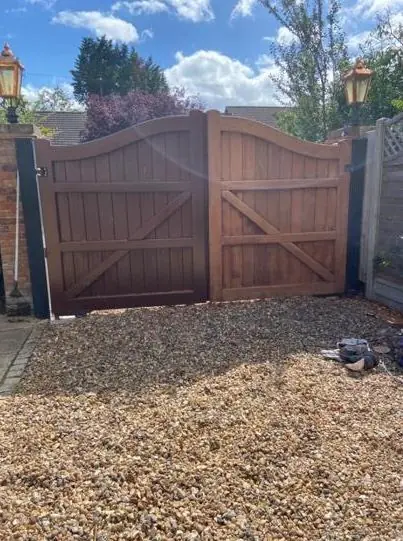
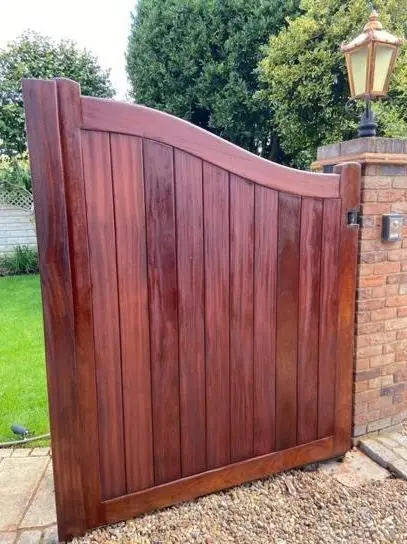
The gate piers to Pitsford House and to Pitsford Hall (now Pitsford School) are both Grade II listed, and the Pitsford Conservation Area covers most of the historic core. Painting existing ironwork like-for-like is routine maintenance, but if you are thinking about a change of colour, removing gates, or replacing railings at a listed or prominent property, ask West Northamptonshire Council first. Pitsford House has been subdivided, so shared gates and boundary ironwork may need several owners to agree on the work and the finish before it is booked.
Rust on a damp, tree-covered hilltop
Two things in Pitsford speed up corrosion. The first is damp: the village is surrounded by springs and has around fifty Tree Preservation Orders, so gates under trees or behind overgrown hedges rarely dry out. Leaf litter collects at the foot of gates and against hinge posts, holding wet against the lowest bars. The second is exposure: the core sits about 30m above the surrounding valleys, so west-facing ironwork takes driven rain off the open farmland.
Our preparation reflects that:
- Clear leaf litter and soil from the base of gates and posts.
- Wire brush and scrape loose rust and flaking layers back to sound metal, paying most attention to bottom rails, hinges and joints.
- Treat remaining surface rust and prime bare metal the same day, before it can flash rust in the damp air.
- Mask the surrounding stone so primer and paint do not mark porous Pendle stone.
- Apply undercoat and top coat, working paint into scrollwork and around collars.
Why black and dark finishes suit the village
Traditional black, or very dark greens and greys, are the expected finish for ironwork in a stone village like Pitsford, and they suit gates around the churchyard area and in walled plots alike. A gloss or satin black also shows up missed spots clearly, which makes it easier to check coverage on intricate work. On the estates there is more freedom, and colour can be matched to front doors or garage doors. Access is worth thinking about too: Church Lane is narrow between high retaining walls and parts of Moulton Road and Manor Road have no pavement, so street-side gates may need to be worked on at quieter times. Other work on Pitsford’s houses is listed under our Pitsford coverage.
Last updated by Dean, DH Painter & Decorator.