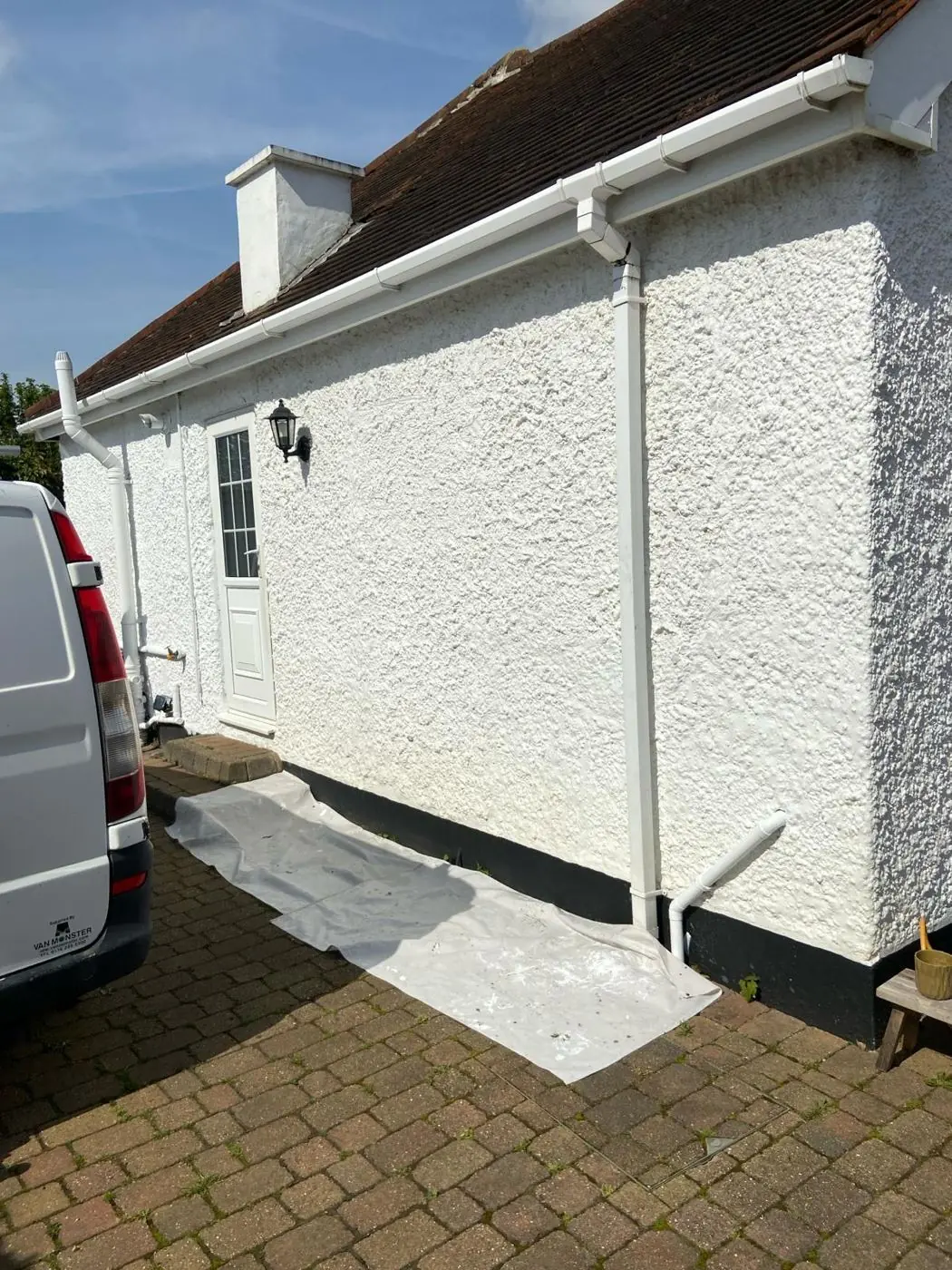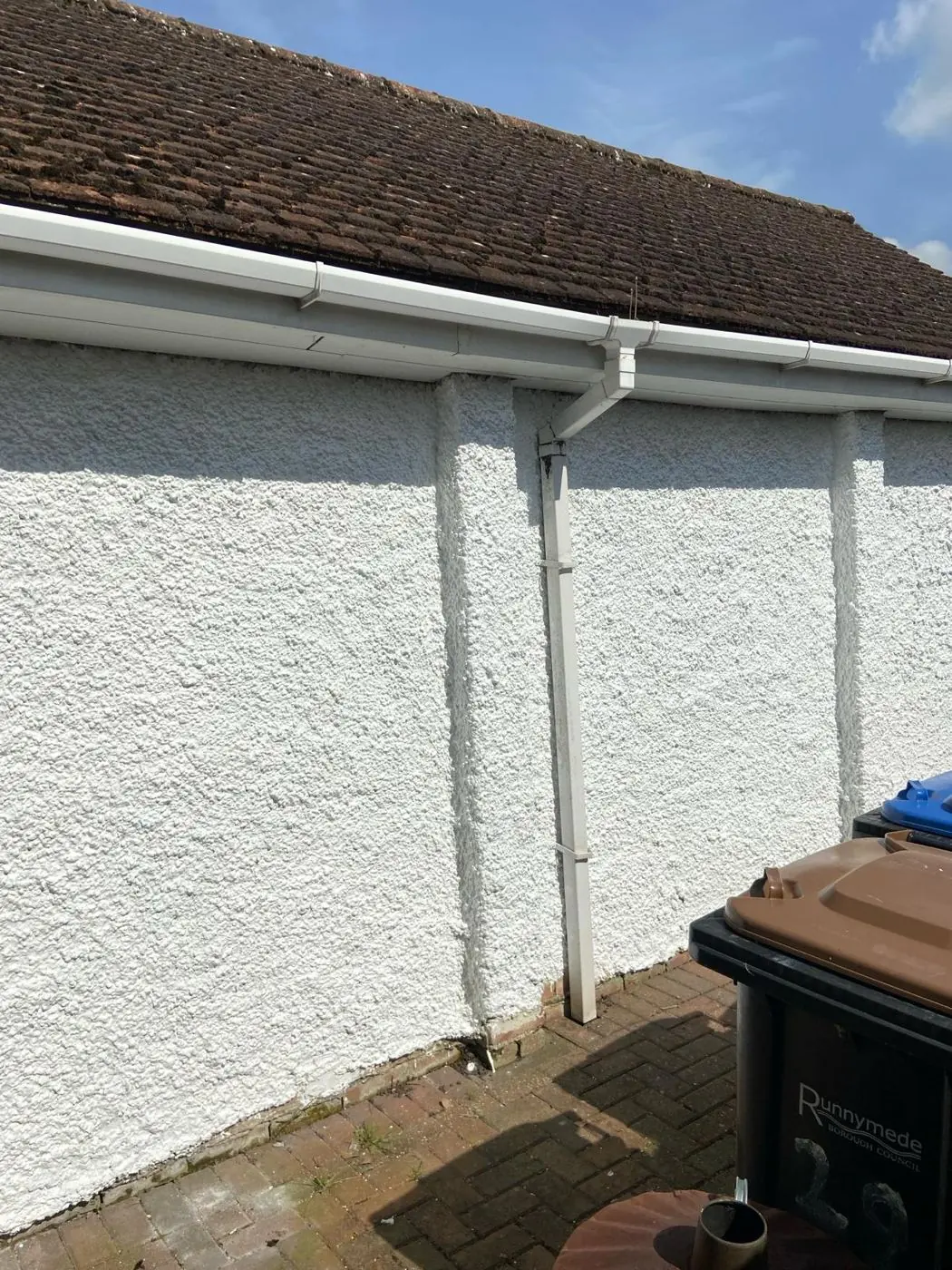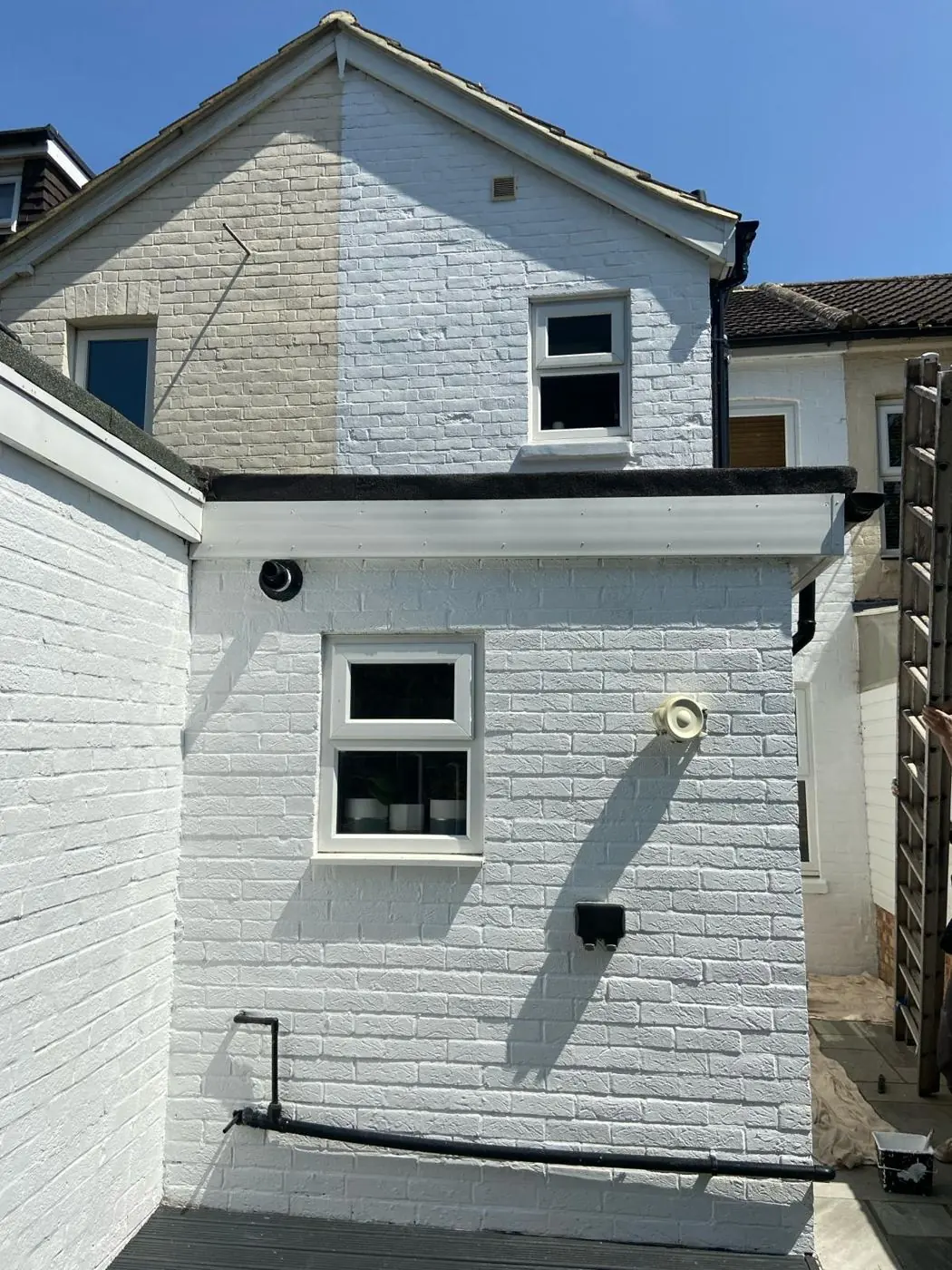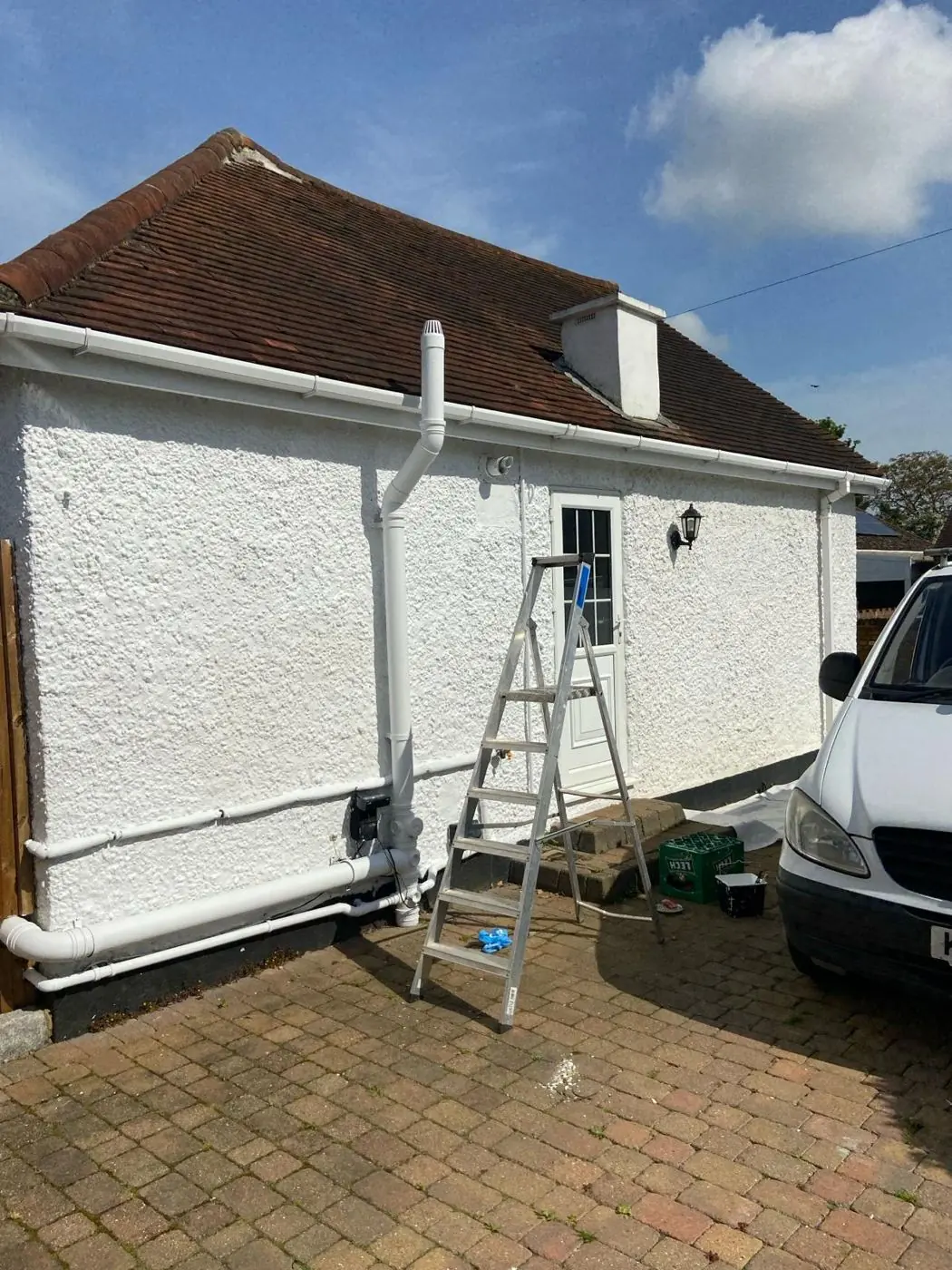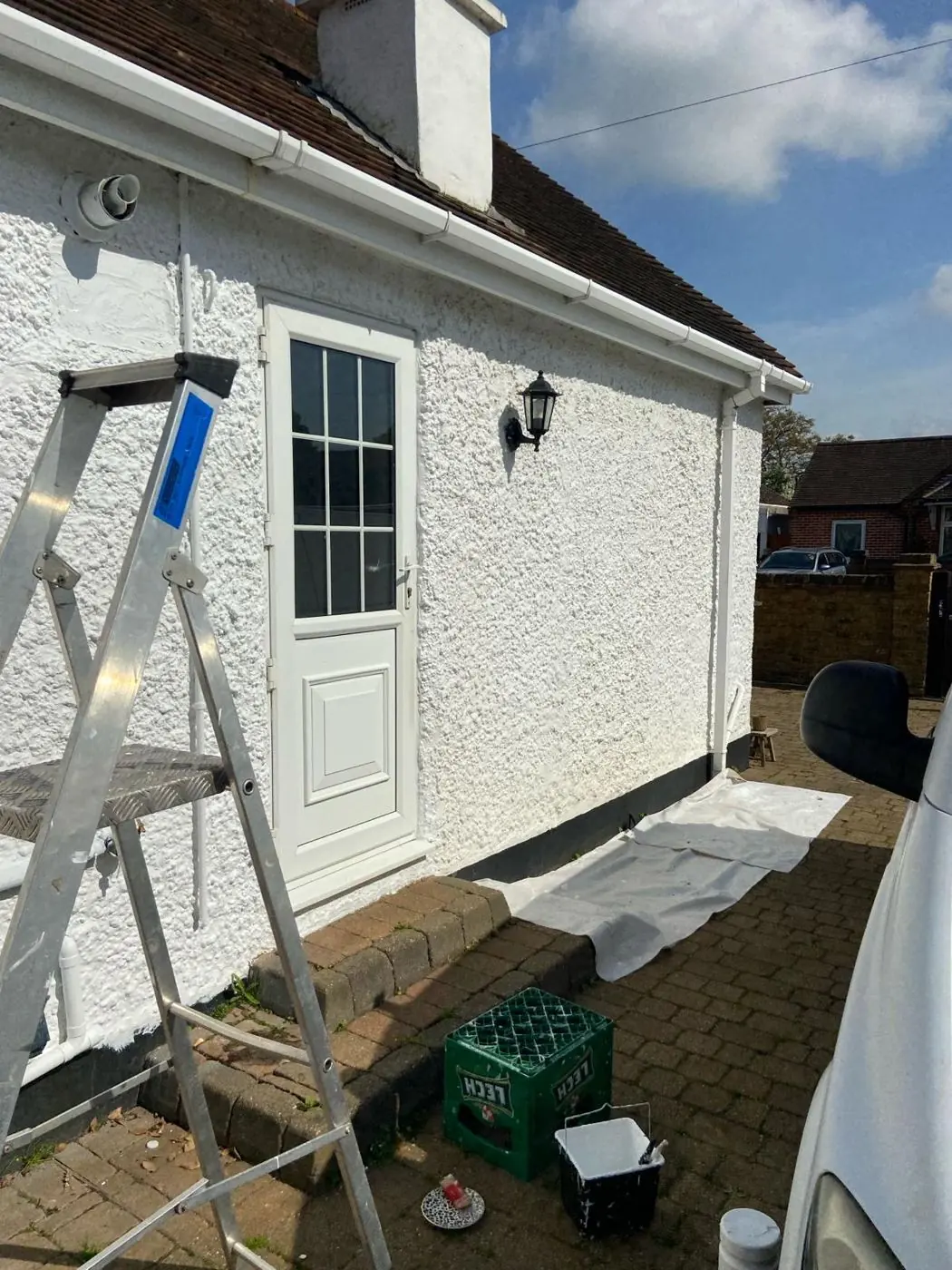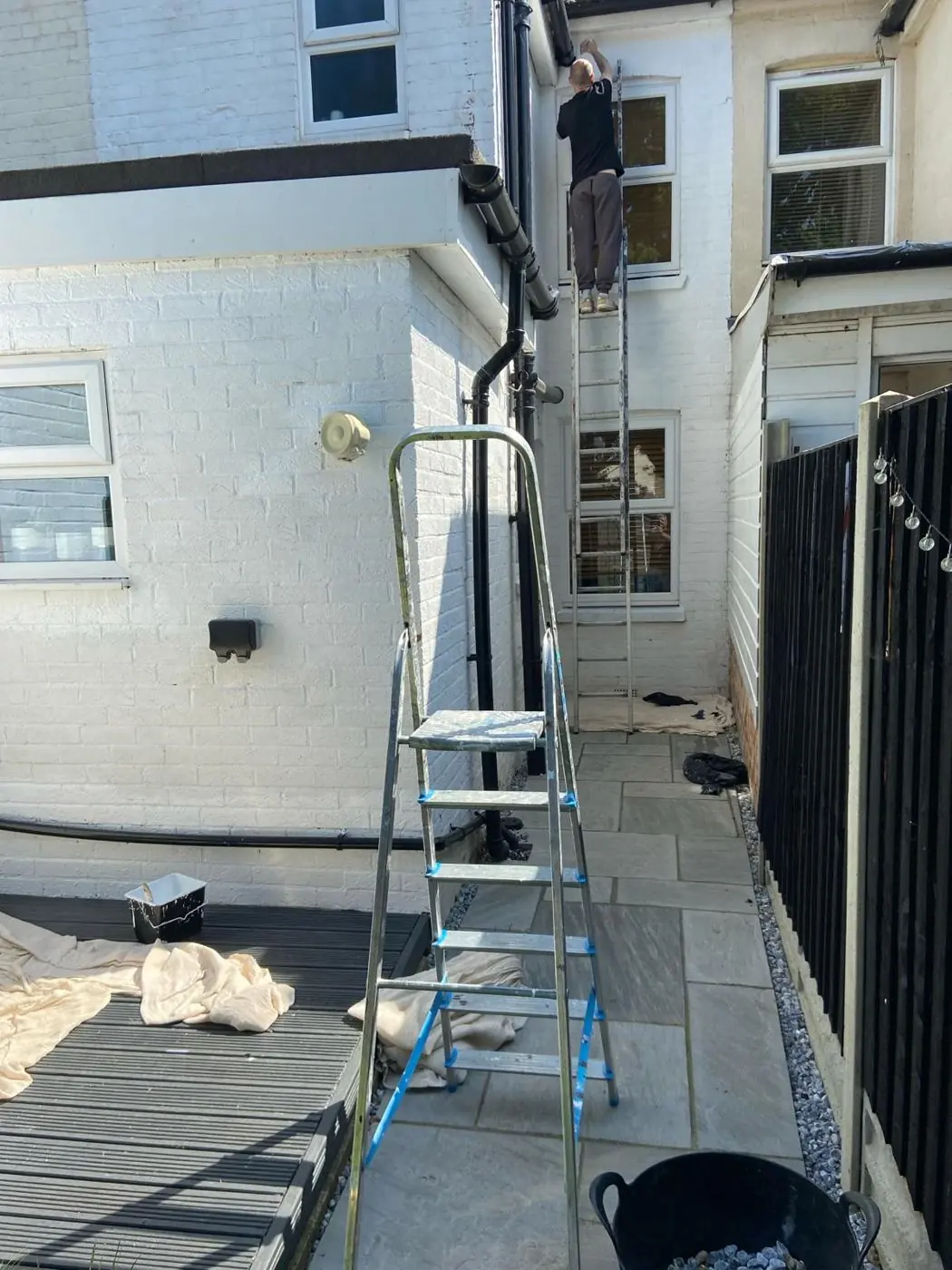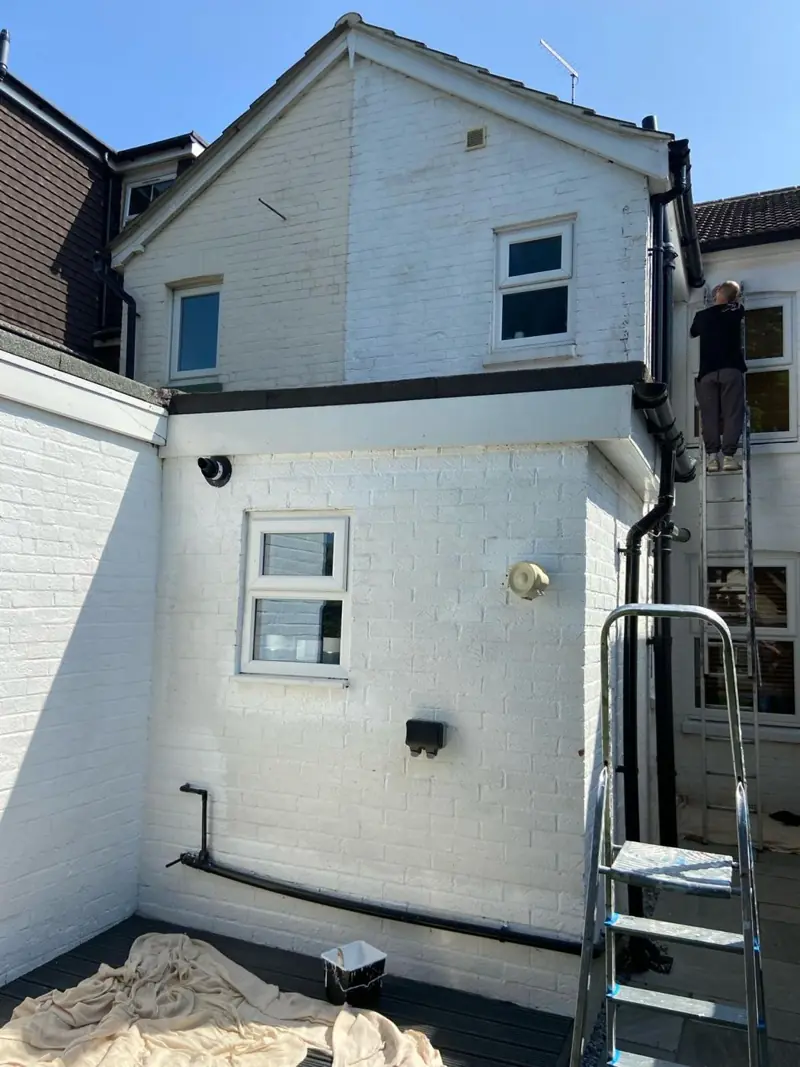
DH Painter & Decorator paints fascias, soffits, gutters and downpipes in Brixworth, which sits on high ground some 6.5 miles north of Northampton. Nearly all of it is on houses put up since the 1960s on the village's southern and eastern side. Dean surveys the roofline and gives a free quote.
Which Brixworth houses actually have fascias
Roofline work in Brixworth follows the age of the house. The thatched cottages in the old core, such as those on Harborough Road and Church Street, have no fascia boards at all: the thatch runs out over a deep, low eave. Many of the slate and tile roofs on older stone houses finish with plain eaves too, and some cottages that lost their thatch now carry corrugated tin. There is little for a fascia painter to do on any of them.
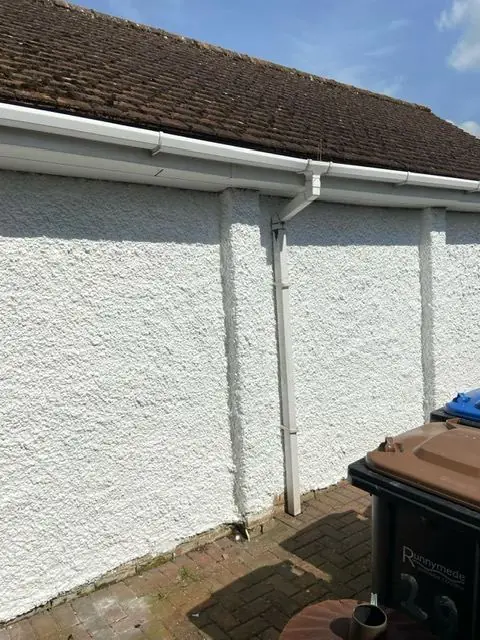
The boards appear on the 19th and early 20th-century brick terraces in places, and on almost every house built on the fields south and east of the original village from the 1960s onwards. Those estates, along with Pytchley Close and parts of Station Road, are where most of this service applies. Where a house has gable ends, that means bargeboards as well as fascias and soffits, plus the guttering.
Leaf litter and sap from protected trees
Brixworth Hall Park is a housing estate built inside the former parkland of a demolished 18th-century hall, and it keeps the mature planting, tree belts and lake. Around the conservation area some 59 trees carry individual preservation orders, with 9 more protected groups. For a roofline, that means gutters that fill quickly, damp boards behind blocked outlets and a film of sap on soffits under overhanging limbs.
Before any painting, we clear the gutters, flush the outlets and look at the timber where water has been sitting. Soft spots are cut out and filled or flagged for a carpenter. Sap is washed off, because paint will not hold on it. Since protected branches cannot be trimmed for access, ladders are set out around them, and on the shadiest sides we wait longer between coats.
A high plateau and a westerly view
The village stands high on an undulating plateau above the Brampton brook valley, with open countryside to the west and Pitsford Water about a mile south-east. Houses on the outer edges catch more wind-driven rain and sun than those in the sheltered middle of the village. The west and south-facing boards are usually the first to crack and flake, while north-facing soffits under trees tend to stay damp and grow mould instead. Ends of fascia boards where they meet the gable, and the joints behind gutter brackets, are the other weak points. We start our survey on the exposed sides, and where a full repaint is not yet needed we can prepare and coat the exposed elevations only.
Timber, uPVC and the conservation area
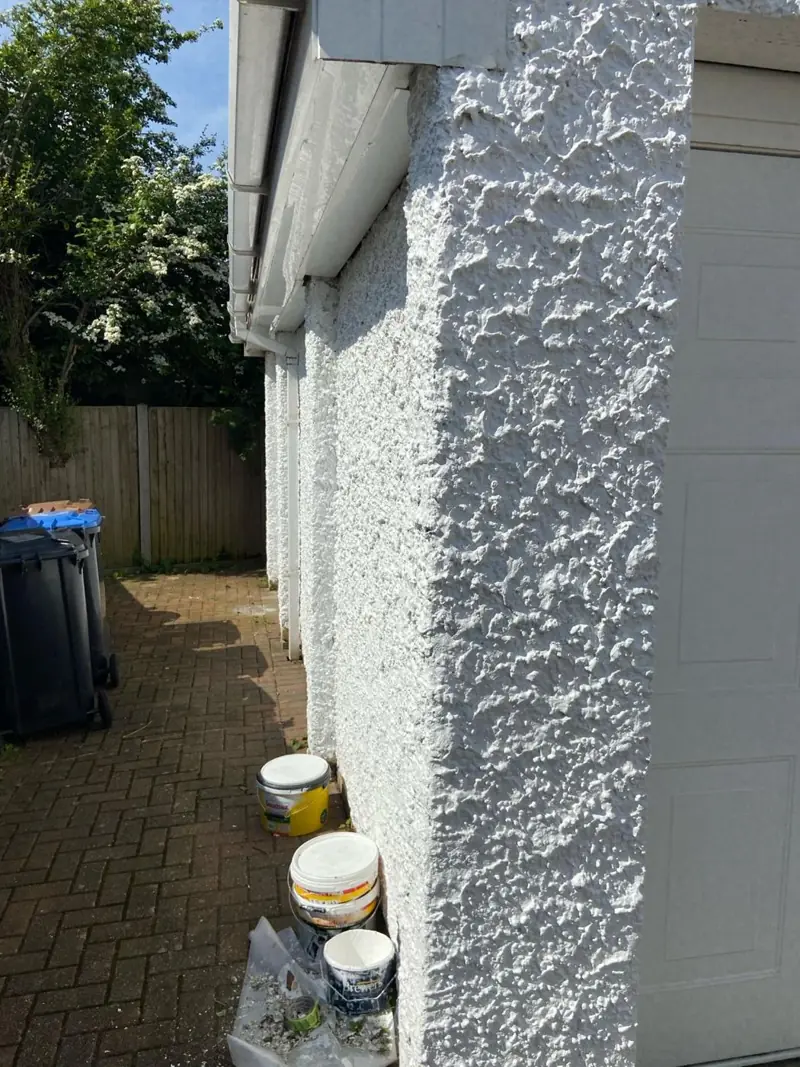
Older estate houses often still have painted timber fascias. Those are scraped back, knots sealed, bare wood primed, then undercoated and top-coated. Later houses tend to have uPVC, which can be cleaned, keyed and painted with a primer made for plastic if you want a colour change. Brixworth Hall Park lies inside the conservation area, but the 2019 Article 4 direction names particular properties on the older streets, so a roofline colour change on a named address should be checked with the council first. Roofline work is weather-dependent, so our guide to the right season for outside painting is worth a look before booking. The main fascia and soffit painting page explains the full sequence. If the walls and windows need doing too, our Brixworth area page lists the other work we take on in the village.
Last updated by Dean, DH Painter & Decorator.