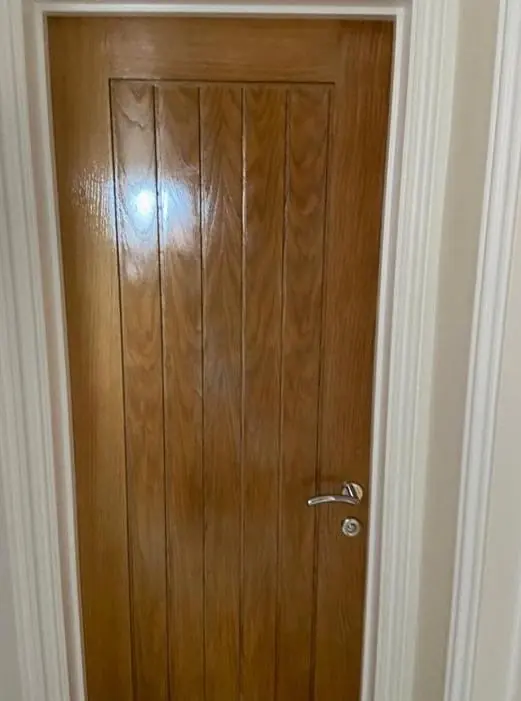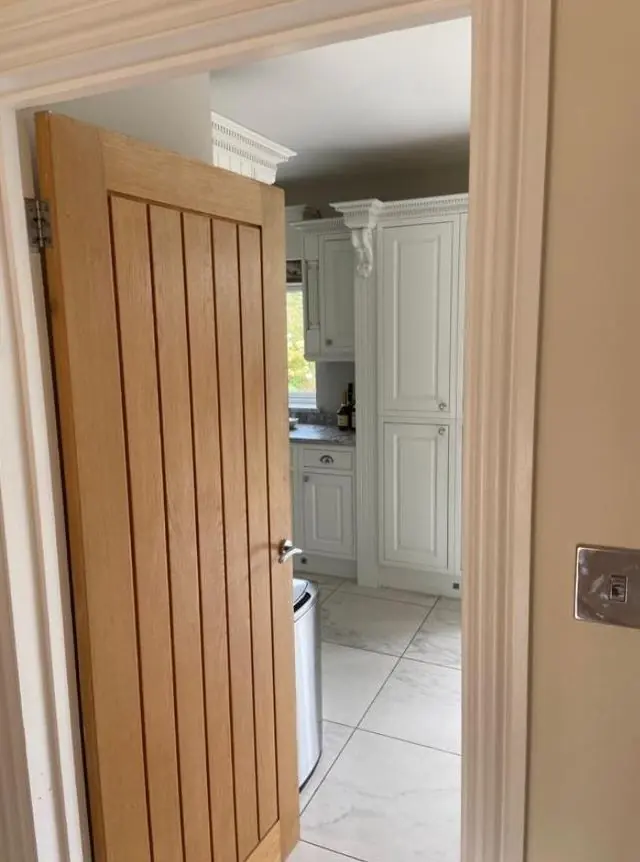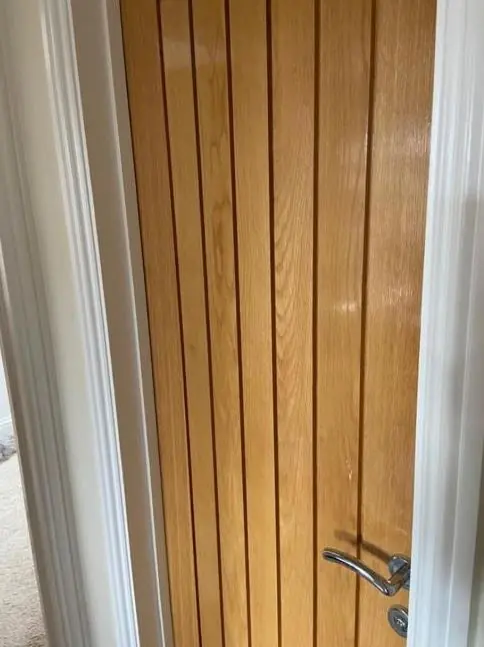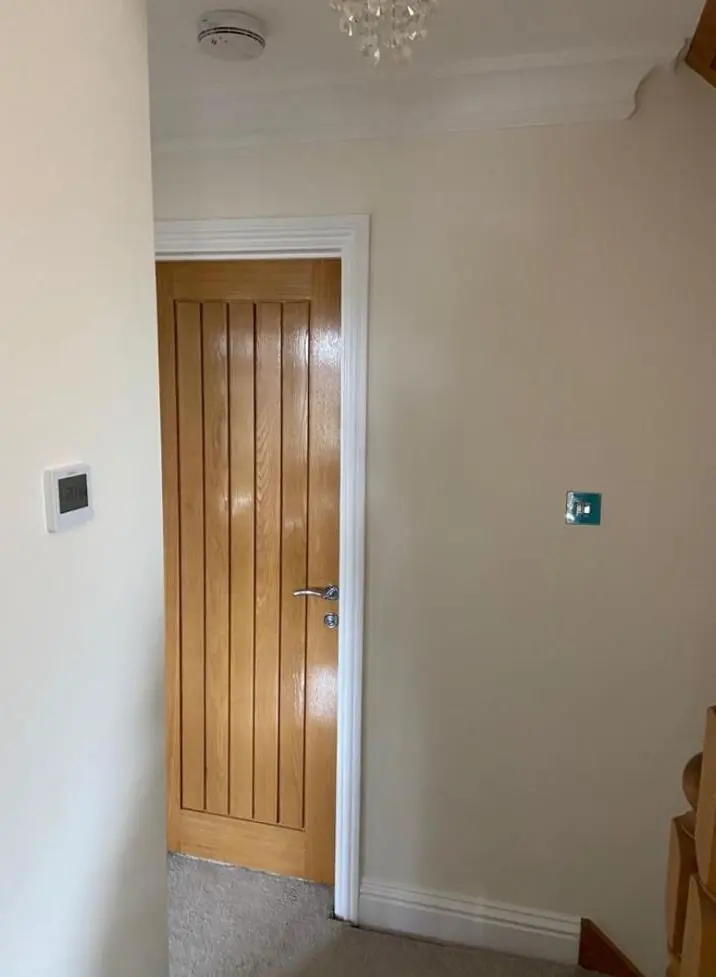
We paint doors, skirtings, frames, sashes and casements in Brixworth, the stone-built village north of Northampton beside the A508. In the conservation area that is often the main exterior job on a house, because the stone itself stays bare; on the estates to the south and east it is mostly interior MDF and pine.
Why joinery carries the old village
Walk along Church Street, Silver Street or Newlands and the walls you see are squared lias, limestone rubble and the warm local ironstone. The 2017 conservation area appraisal wants that stone left as it is: it calls render a negative feature and warns that masonry paint often harms pre-1919 walls. So on a historic Brixworth house, the painted parts of the front are usually the timber. Casements, sashes, plank doors and the odd gate are what weathers, and keeping them sound protects the frames and the stone around them.
That shifts the balance of a typical exterior job here. Instead of a day on the walls and an afternoon on the windows, the joinery is the whole brief, and the time goes into cutting back flaking paint, consolidating soft timber at the bottom rails and getting a clean, sharp line against stone that must not be marked.
Plank doors, casements and Victorian sashes
The woodwork in Brixworth falls into a few clear groups, and each takes different handling:
- Plank doors on the vernacular cottages and the wide former workshop doors on Kennel Terrace. Boarded doors open and close at the joints with the seasons, so we use an oil-based or microporous joinery finish that can flex and let the timber breathe.
- White timber casements on the 18th and 19th century stone houses. Many sit under stone lintels or between stone mullions, which we mask and cut around rather than paint over.
- Timber sashes on the Victorian houses and the former workhouse on Spratton Road. These need the parting beads and staff beads freed, the meeting rails eased and the sash left running, not painted shut.
- Victorian doors with glazed upper panels along Northampton Road, where the glazing beads and putty lines need care before the top coat.
Colour, Article 4 and what needs permission
Since October 2019, an Article 4(1) direction has meant that owners of named Brixworth buildings need planning permission before painting the outside of a front elevation, or of any side that looks onto a road or open space. For joinery that matters most on the cottage streets, such as Silver Street, Church Street and Newlands. Repainting joinery the colour it already is counts as upkeep, but a change of colour on one of those fronts can need planning permission. We check the address before quoting a new colour.
The appraisal also asks for repainted window joinery in white or a shade based on the original, and it presumes against swapping timber for uPVC. That keeps colour choices on old cottages narrow, which is no bad thing: a crisp white casement against gold ironstone is what makes these streets look the way they do. Doors give a little more room, and we can talk through traditional shades that sit well with the stone.
| Where in Brixworth | Typical woodwork | Finish we would use |
|---|---|---|
| Historic core (Church Street, Silver Street, Harborough Road) | Plank doors, white casements | Microporous or oil-based joinery paint |
| Northampton Road and Newlands Victorian houses | Sashes, glazed panel doors | Oil-based gloss or satin, sash-friendly build |
| Estates south and east, Brixworth Hall Park | MDF or pine skirtings, interior doors | Water-based satin or eggshell |
Indoors: from cottage pine to estate MDF
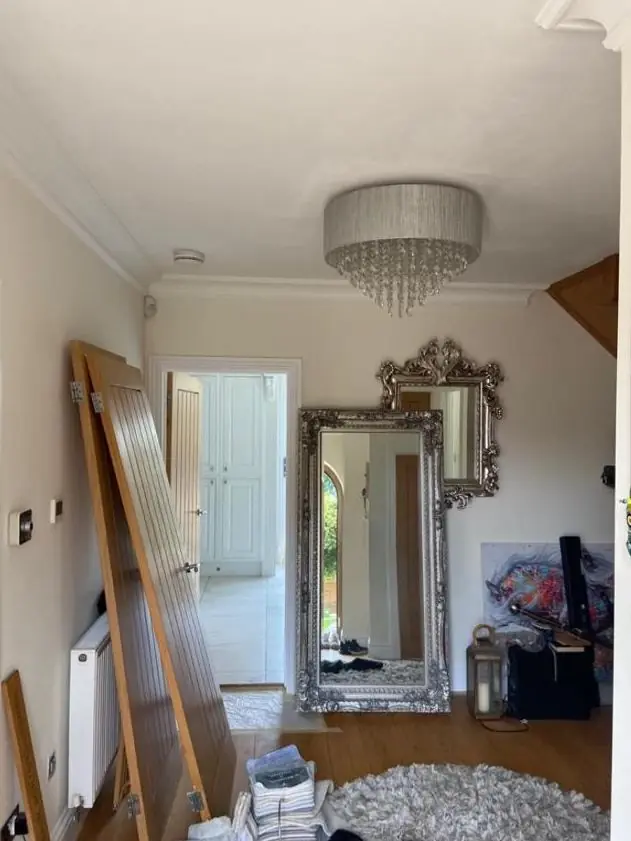
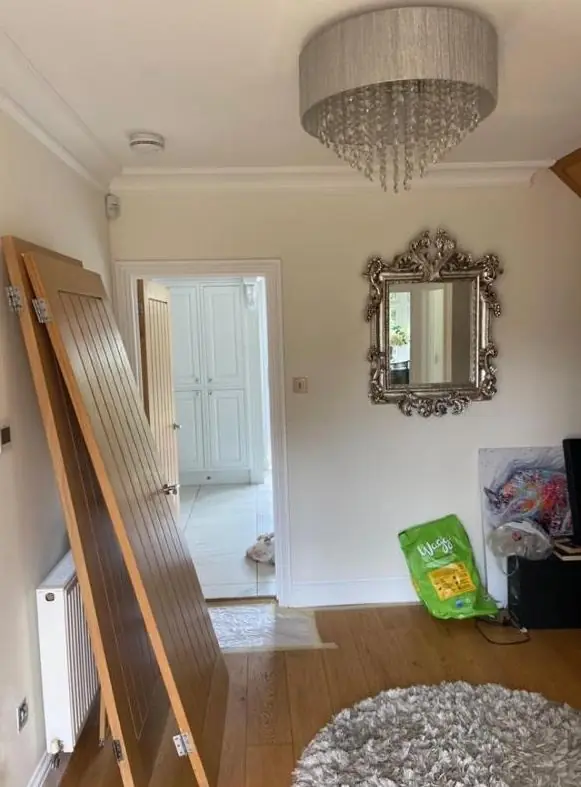
Inside the one-room-deep cottages, skirtings and door linings rarely run true. Walls lean, floors dip and the lime plaster wanders, so we scribe caulk lines by eye rather than chase a perfectly straight edge that would only show up how crooked the room is. Old pine doors often carry several layers of gloss, and where runs or drips have built up we cut them back before recoating.
The 1960s-onwards houses south of the old village and around Pytchley Close are simpler: factory-primed MDF skirtings, moulded interior doors and standard frames. A water-based satin stays white and dries quickly enough to keep a hallway in use. General preparation, from knotting to keying old gloss, is covered on our main door and skirting painting page, tips on choosing a decorator for period joinery are in our guide to choosing a painter, and other Brixworth work is listed on the village hub.
Last updated by Dean, DH Painter & Decorator.