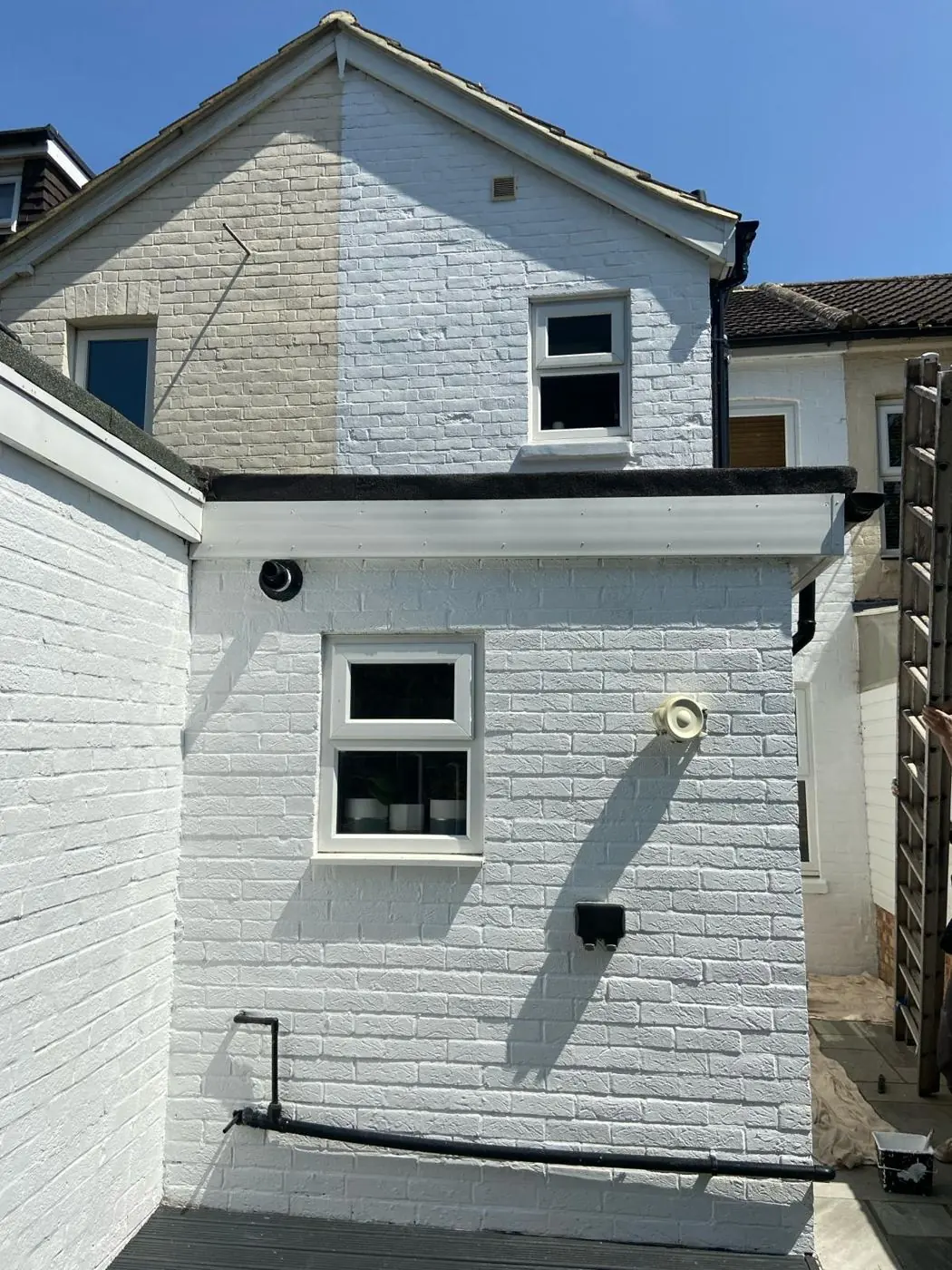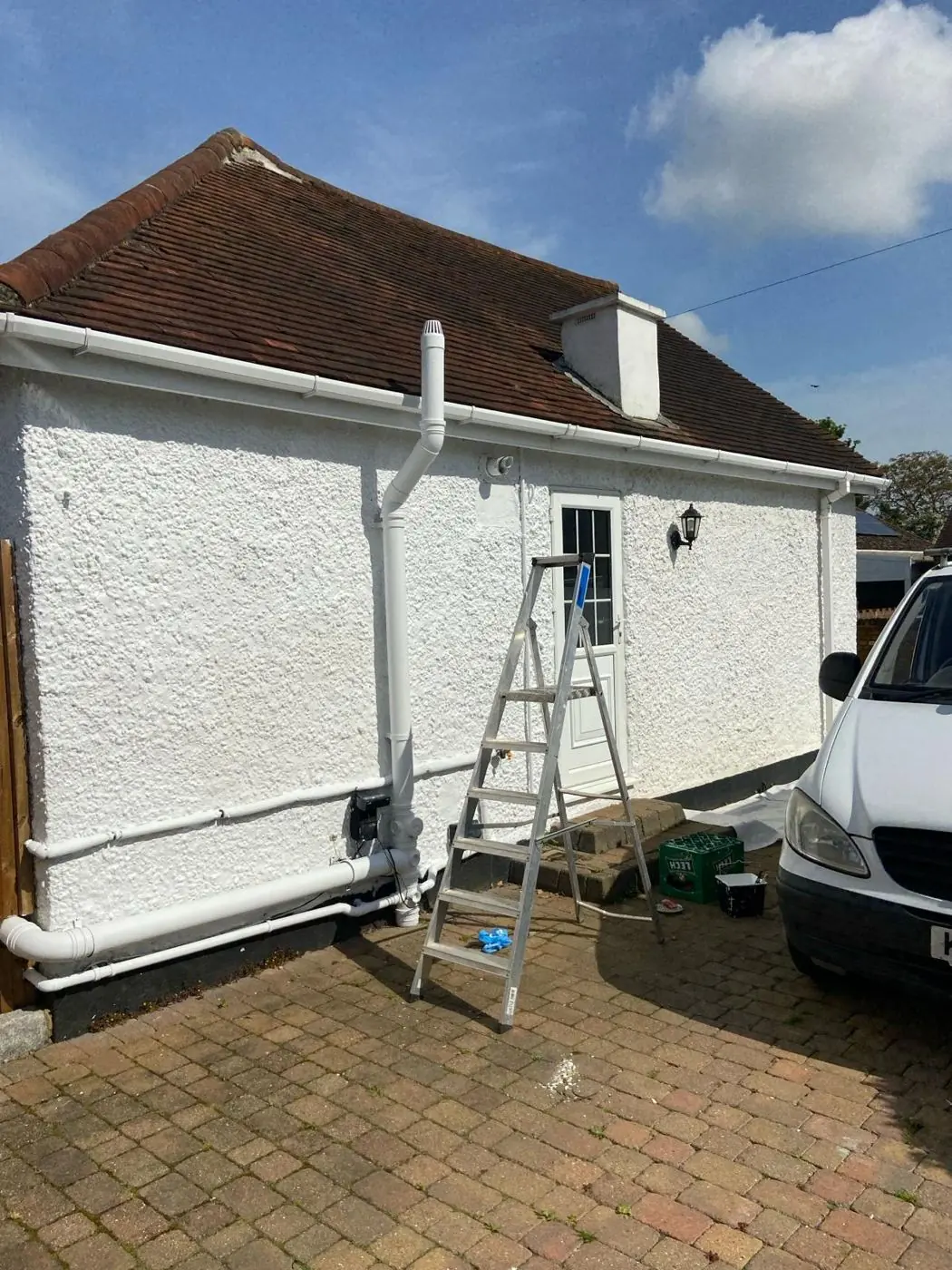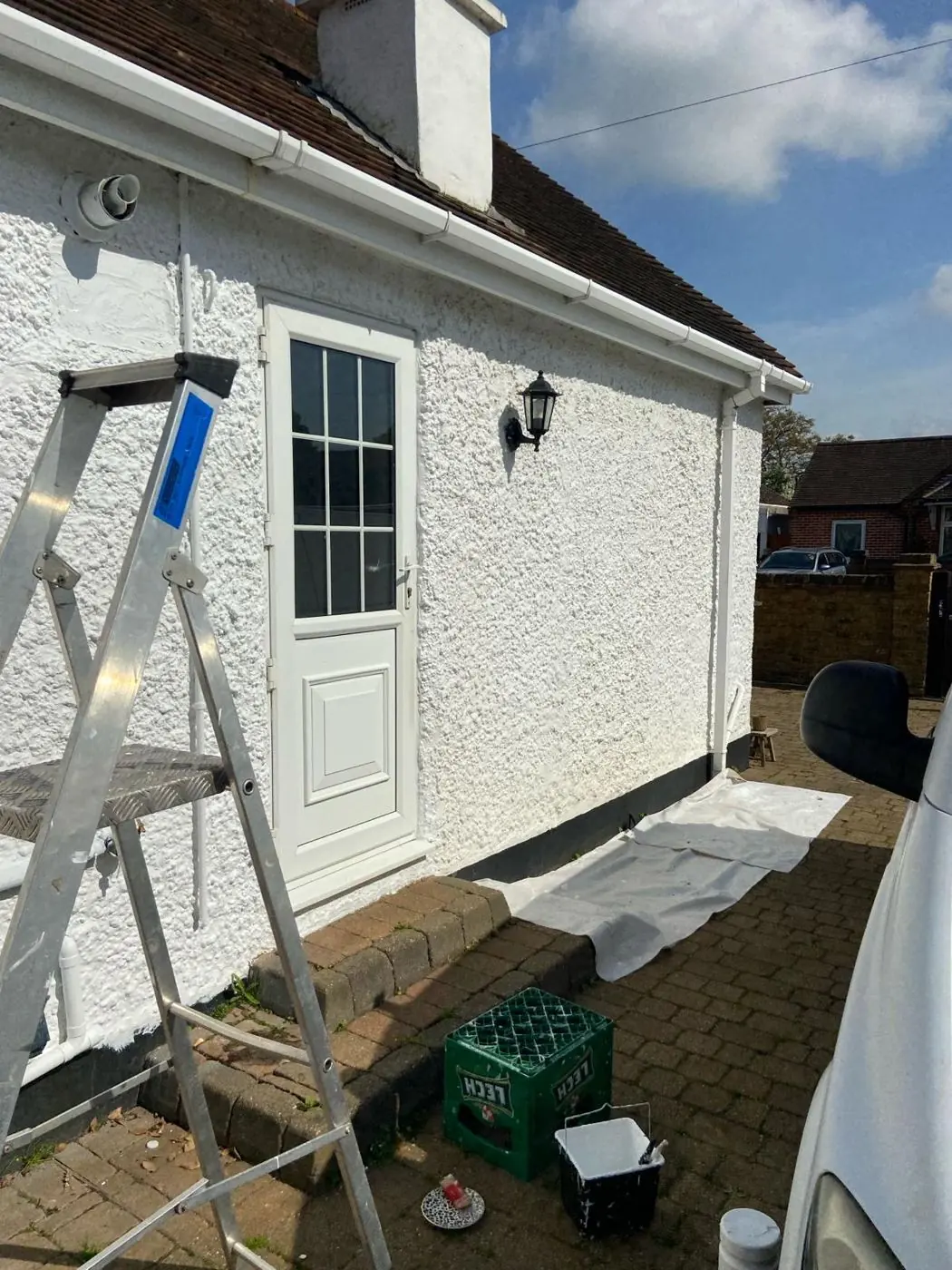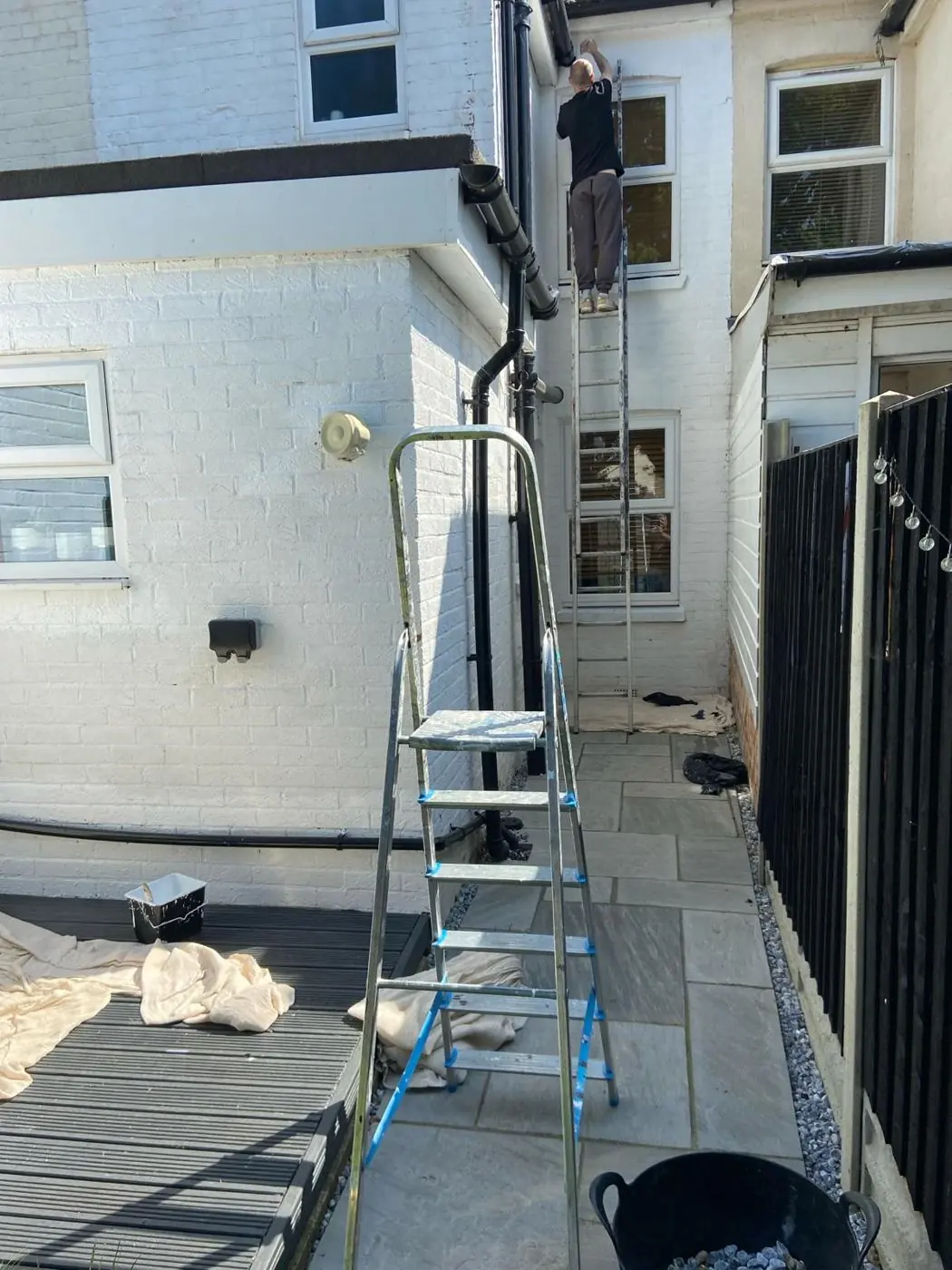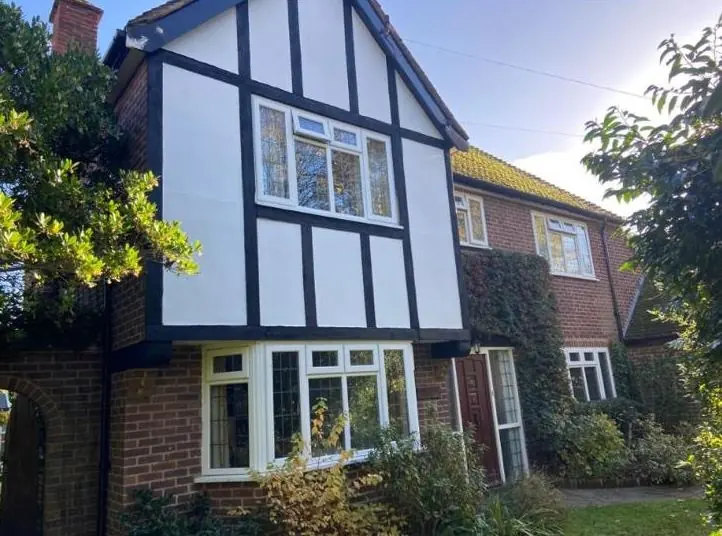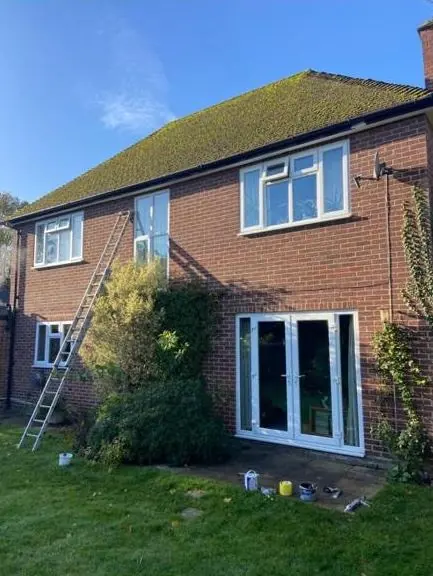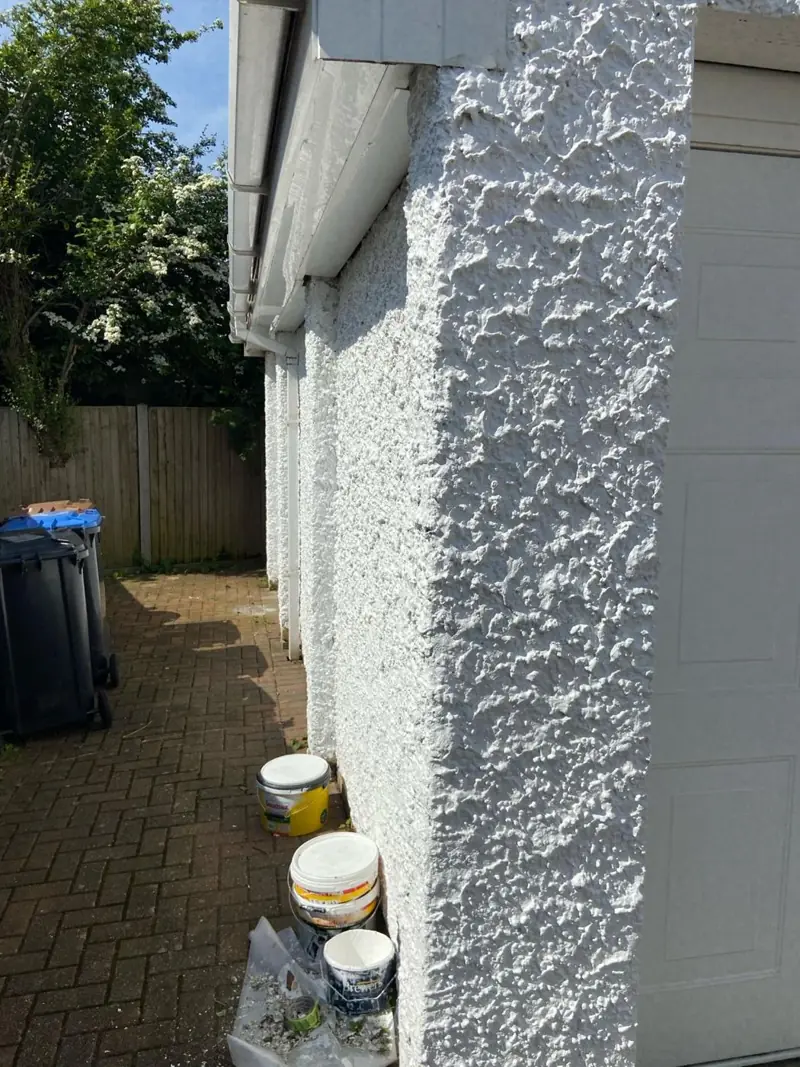
DH Painter & Decorator paints timber fascias, soffits, bargeboards and gutters in Pitsford, 4.7 miles north of Northampton. Most of this work is on the village's 20th century houses, since many historic stone roofs have plain eaves and the thatched cottages have none.
Where Pitsford actually has fascias and soffits
Walk down the eastern end of High Street or along Church Lane and you will notice that many old roofs have no boxed soffit at all. The 17th to early 19th century stone houses mostly carry Welsh slate, with some clay tile, finished with simple eaves where the roof oversails the wall. Timber fascia boards and soffits arrive with the 20th century housing: the inter-war pairs on High Street and the northern edge of Grange Lane, then the post-war and modern houses on Broadlands, Drummond Close and Glebe Lane. Those are the rooflines most people in Pitsford need painted.
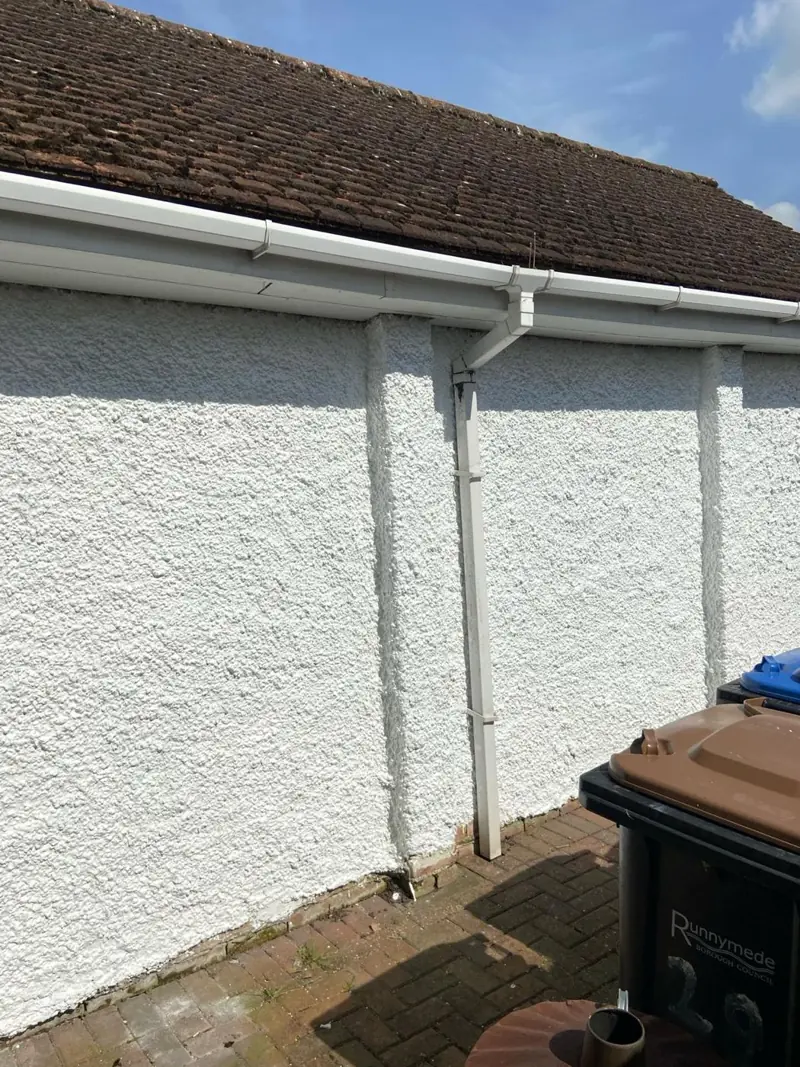
On these houses the job covers fascias, soffits and gutters as one, often with bargeboards on gable ends. Boards are checked for soft timber, flaking paint is scraped and feathered, knots are sealed, bare wood is primed, and then undercoat and top coat follow. Where some houses on an estate have uPVC boards next to timber, only the timber is painted; uPVC is cleaned rather than coated unless the owner specifically asks for a suitable product. The standard sequence is described on our fascia and soffit painting page.
Thatch, slate and stone-gabled roofs
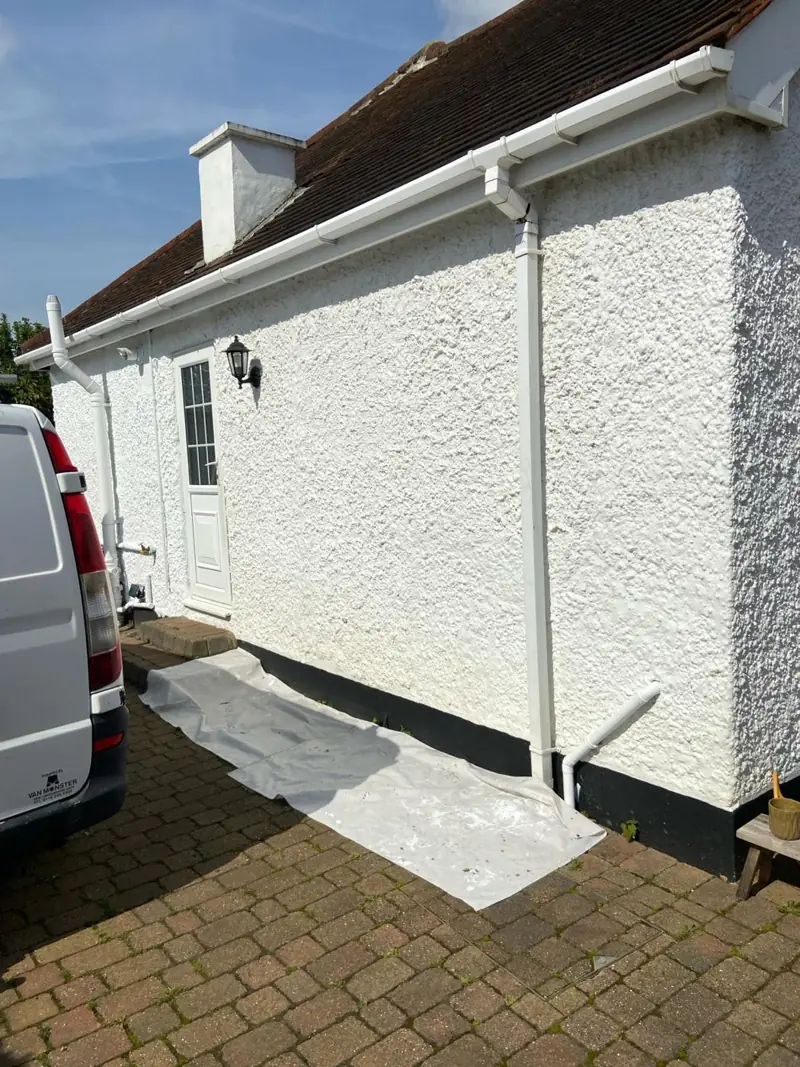
Long-straw thatch survives on Paddock Cottage on Grange Lane, York Cottage and Nos 20 and 21 Manor Road. A thatched roof has no fascia to paint, but the joinery tucked under the thatch, such as window frames just below the thatch line, still needs attention. Near thatch we use no heat guns or blowtorches of any kind; old paint is removed by hand scraping and sanding only. Ladders are set so they never rest on or disturb the straw.
On stone houses with slate roofs, the paintable roofline is often limited to a timber bargeboard on a gable or the gutter brackets. These small runs are easy to neglect and, being high up, tend to be the first to weather. They are worth doing at the same time as windows, so one access setup covers both.
Exposure on the ridge between Pitsford Water and the Sedge Brook
Pitsford sits on a watershed. The historic core is about 30m above the surrounding valleys, with Pitsford Water to the north-east and open arable land around. Wind-driven rain reaches west-facing eaves without much shelter, and those boards break down faster than the sheltered side of the same house. On the other hand, the village’s protected trees drop leaves and needles into gutters, and blocked gutters overflow onto fascias and soffits, rotting them from behind. A sound repaint needs dry timber, so we plan roofline work for settled weather and clear the gutters before preparation starts. Our guide on timing exterior painting in the UK explains the temperature and moisture limits.
Reaching the roofline safely
Fascia work is high-level work, and Pitsford’s streets add their own obstacles. Telegraph poles and overhead wires run along Manor Road. Parts of Grange Lane and Moulton Road have no pavement. On the estates, driveways and front gardens usually give room for a tower, but on the older lanes the ladder footing might have to sit right at the road edge. Dean checks the line of the wires and the footing at the free quote, and if a section cannot be reached safely from ladders, a tower or scaffold is discussed up front. For walls, joinery and interiors in the same village, see painting and decorating in Pitsford.
Last updated by Dean, DH Painter & Decorator.