Dean applies decorative and traditional finishes in Brixworth, the NN6 village north of Northampton on the old Market Harborough turnpike. In the old village that mainly means limewash on painted pre-1919 masonry, which the council's own guidance favours, and heritage schemes inside period cottages. Newer homes suit feature walls, panelling and picked-out detail.
Limewash, and why the council prefers it here
The 2017 appraisal of the Brixworth Village Conservation Area makes a point that shapes much decorative work in the village: on pre-1919 buildings, masonry paint is often the wrong choice and limewash or lime render the better one. Modern acrylic masonry paint seals the face of soft stone and brick, so moisture that would have evaporated gets trapped behind it and pushes the surface off. Limewash is a different kind of finish altogether. It soaks into the surface, lets the wall breathe, and weathers back slowly rather than peeling.
Where it fits in Brixworth:
- Pre-1919 stone or brick that has already been painted, where a breathable finish should replace the old one as it fails.
- Stone outbuildings, garden walls and barns where a soft, chalky finish is wanted.
- Interior walls in old cottages with lime plaster.
Limewash goes on in several thin coats, damped down between them, and it dislikes frost, strong sun and drying wind. On this exposed plateau we plan exterior limewash for mild, settled spells. Our guide to painting render and masonry covers how breathable systems differ from ordinary masonry paint.
One firm limit: bare ironstone and lias should stay bare. The appraisal treats painting or rendering it as harmful to the street scene, and on Article 4 properties any painting of a front or roadside elevation needs planning permission. Limewash is for surfaces that are already painted, not a way to colour natural stone.
Heritage schemes inside period cottages and stone houses
The oldest houses in the village, some with datestones from 1594, 1691 and 1709, and the grander lias ashlar houses of the 18th and 19th centuries, suit interiors that look of their period rather than freshly modern. That can mean:
- Painted beams in a flat, breathable finish, or careful cleaning and waxing where the timber is better left natural.
- Distemper-style flat finishes on lime plaster ceilings.
- Ledged plank doors in an oil-based eggshell or a traditional colour, picked out against the walls.
- Deep window reveals and shutters finished as one with the joinery.
Stone mullions, lintels and exposed stone inside are masked and left alone. In listed buildings, changing historic finishes may need listed building consent, so we suggest checking with West Northamptonshire Council before anything beyond like-for-like work.
Feature work in Brixworth’s newer houses
The brick estates south of the old village, and newer infill such as Hall Farm Close, have plastered walls without the waves of lime, which opens up finishes that would fight a cottage wall: a two-tone split at dado height, painted panelling, or a colour-drenched snug. One idea that suits these houses is to borrow from the old core, using a warm ochre or ironstone tone, or a limewash-effect paint, on a single wall so a modern room nods to the village around it. Glazes and dark colours show every dent, so the wall is filled and sanded first.
How we approach a decorative job in the village
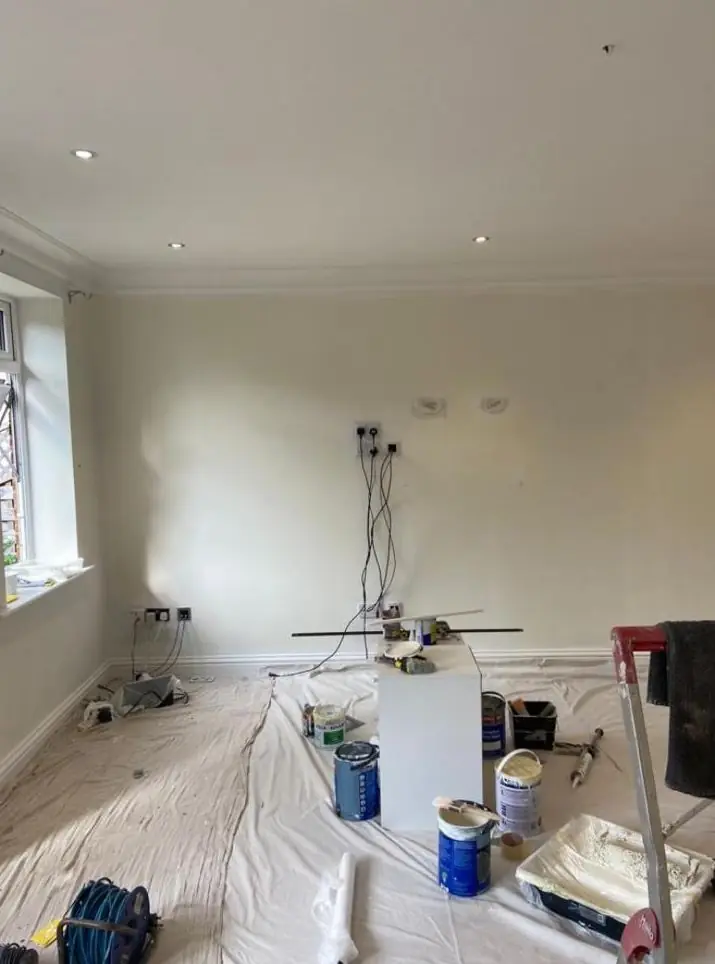
A first visit looks at what is on the surface now, which in Brixworth can be anything from bare lias to decades of acrylic over soft red brick from the old village brickworks. On a named Article 4 address, the front elevation is checked against the direction before any limewash colour is agreed, and a small test patch goes somewhere out of sight first. Our main decorative finishes page explains the effects we offer, and our Brixworth page covers decorating in the village more widely.
Last updated by Dean, DH Painter & Decorator.