
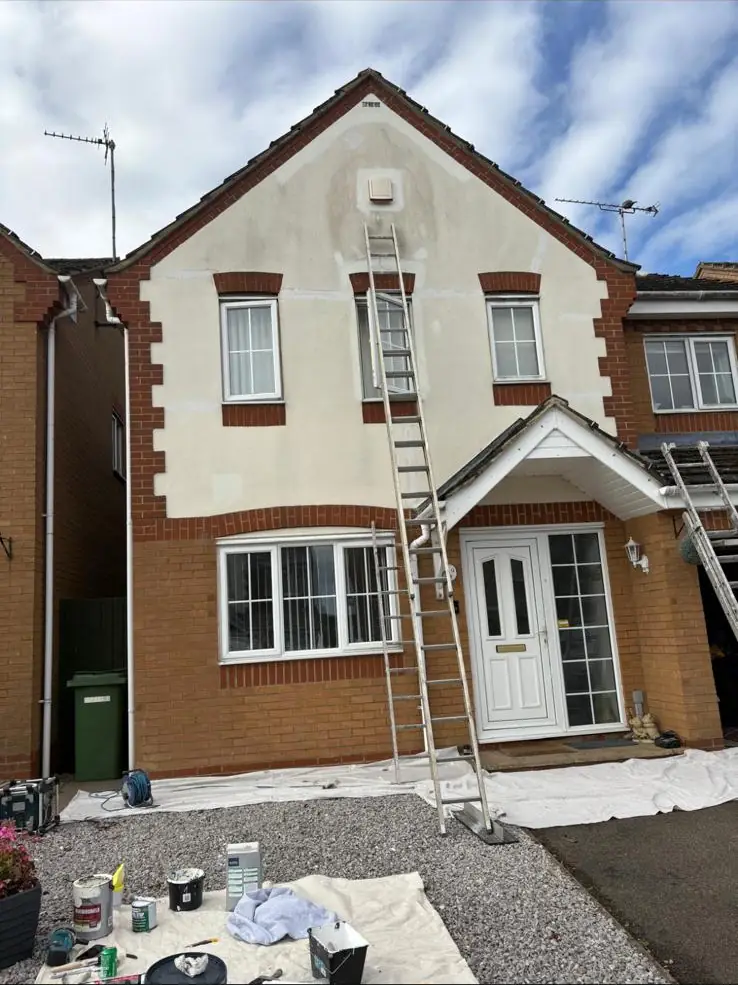


We paint render and masonry in Brixworth. The council's 2017 appraisal says exactly where render is found in the old village and asks for bare stone to stay bare, so the job here is about the right coating on the right wall. Free quotes from Dean.
Where is render found in Brixworth?
Render is unusual in Brixworth’s old village. The 2017 conservation area appraisal calls it “not a feature of walls” and names the exceptions. Those, plus the newer housing outside the core, are where render and masonry painting applies:
- Newlands: rendered houses among the stone, in a street partly covered by the 2019 Article 4 direction.
- Kennel Terrace: a rendered commercial terrace inside the conservation area.
- Froghall: rendered cottages, brought into the conservation area when it was extended in 2017.
- Corner of Holcot Road: the mid 20th-century flat-roofed former Co-op, which the appraisal describes as rendered as is appropriate for its age and style.
- Froxhill Crescent area: 1970s and 80s houses, mainly red brick, with what the Neighbourhood Plan calls occasional first-floor rendering and cream colour wash.
- Later estates: render panels and features on some of the 1990s and post-2013 houses.
| Fact | Detail | Source |
|---|---|---|
| Render in the old village | ‘Not a feature of walls’; found at Newlands, Kennel Terrace, Froghall and the former Co-op | West Northamptonshire Council |
| Pre-1919 walls | Masonry paint often not acceptable; limewash or lime render preferred | West Northamptonshire Council |
| Froxhill Crescent area | Occasional first-floor rendering and cream colour wash | brixworthparishcouncil.gov.uk |
| Article 4 streets with render | Newlands, Froghall and Kennel Terrace are named in the 2019 direction | West Northamptonshire Council |
| Type | Share |
|---|---|
| Detached | 51.9% |
| Semi-detached | 28.3% |
| Terraced | 15.3% |
| Flat or maisonette | 4.4% |
Source: Census 2021 (ONS), accommodation type (TS044) tables via Nomis. The figures are for the census area that best fits Brixworth, so its edges are not exactly Brixworth’s.
Why bare ironstone and lias stay bare
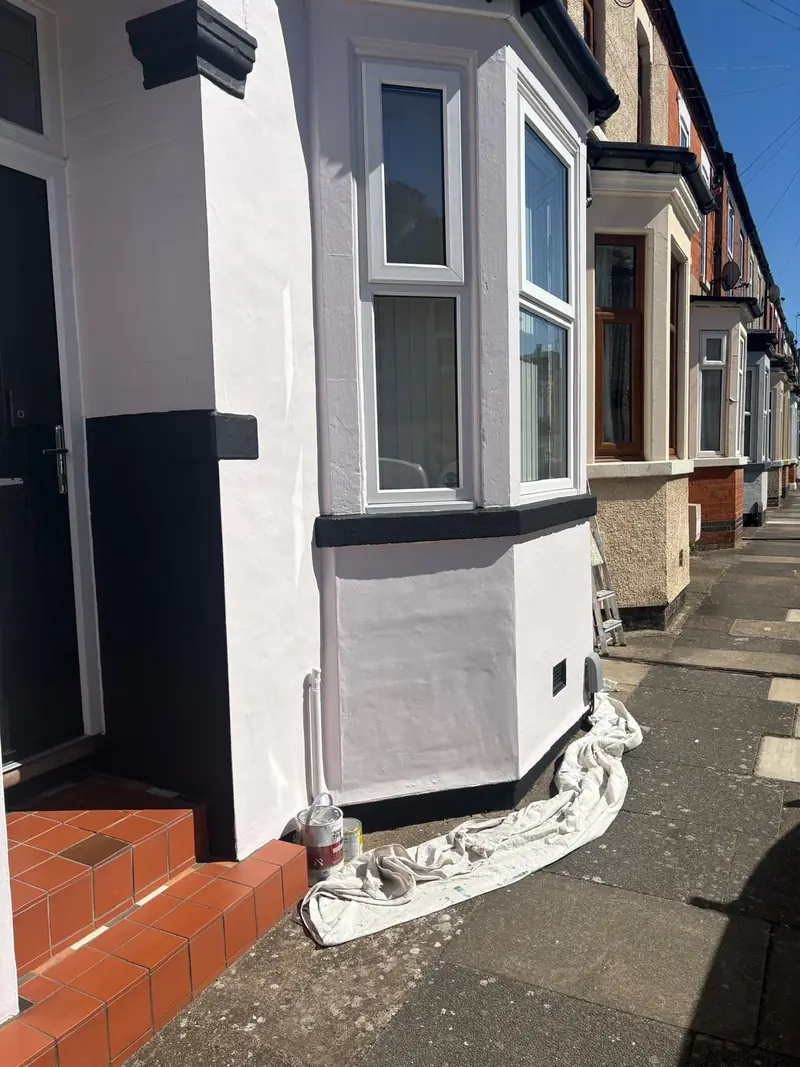
The same appraisal says masonry paints are often not acceptable on buildings that pre-date 1919, because they can damage stone and brickwork, and that a lime-based render or limewash is more appropriate. It also says render generally detracts from the street scene, especially on agricultural stone buildings. Put together, that means we do not paint or render good ironstone, lias or old brick in Brixworth, and we will say so if asked. The same goes for the village’s older red brick, such as Nos 108-116 Northampton Road, picked out in the 2017 appraisal as candidates for the local list, where the red brick with blue engineering-brick courses at Nos 110-116 should be cleaned rather than painted. Where an old wall was painted in modern masonry paint years ago and is now flaking, the long-term answer is to remove it and limewash, which our limewash and decorative finishes page for Brixworth explains.
Lime render or cement render? Choosing the coating
The coating depends on what the render is made of, and in Brixworth both kinds are found within a few streets of each other.
| Wall | Likely render | Coating we would use |
|---|---|---|
| Pre-1919 rendered cottage or house in the core | Lime, or lime later patched with cement | Limewash or a breathable mineral (silicate) paint |
| Mid 20th-century building such as the former Co-op | Cement render | Good-quality masonry paint after cleaning and repairs |
| 1970s-80s first-floor render panels, Froxhill Crescent area | Cement render, often colour-washed | Masonry paint; the cream colour wash re-matched or changed outside the conservation area |
| 1990s and newer estate render | Cement or through-coloured render | Masonry paint on painted render; through-coloured render cleaned rather than painted |
If we are not sure which render a wall has, we test it: a lime render is softer and more porous, and cement patches on an old wall usually show as harder, darker areas with cracks around them. Painting cement-type masonry paint over lime traps moisture and is the commonest cause of blown, flaking paint on old village houses.
On the Froxhill Crescent houses the render sits high: the Neighbourhood Plan describes first-floor rendering on otherwise brick walls, so the panels are above the ground-floor windows. They are worked from a tower or a ladder with a stand-off, and the red brick below is sheeted carefully, because masonry paint splashed onto textured brick is very hard to get off.
Repairs and pointing before any coating
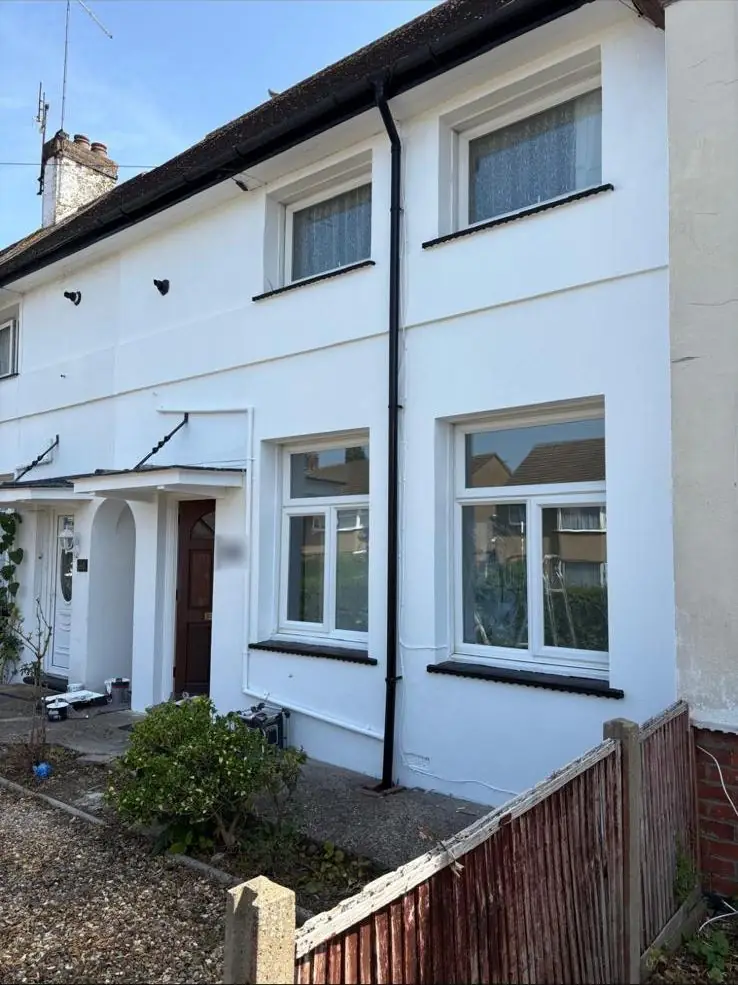
Paint only lasts as long as the surface under it. Before coating, we tap the render for hollow areas, cut back and patch cracks, and clean off algae, which grows readily on walls shaded by Brixworth’s many protected trees. The appraisal asks for pointing in an appropriate grade of lime mortar on historic buildings, so repairs on old walls are done in lime, not cement. On the Article 4 addresses, including Newlands and Kennel Terrace, a change of colour on a front or roadside elevation also needs planning permission. The main render and masonry painting service and our guide to painting render and roughcast explain the method, and other Brixworth work is listed on the Brixworth page.
Sources
- Brixworth Village Conservation Area Appraisal and Management Plan, December 2017, West Northamptonshire Council (Daventry District Council) (accessed 2026-11-16)
- Brixworth Neighbourhood Development Plan, March 2021 review, Brixworth Parish Council (accessed 2026-11-16)
- Article 4(1) Direction, Brixworth Conservation Area, October 2019, West Northamptonshire Council (Daventry District Council) (accessed 2026-11-16)
Last updated .