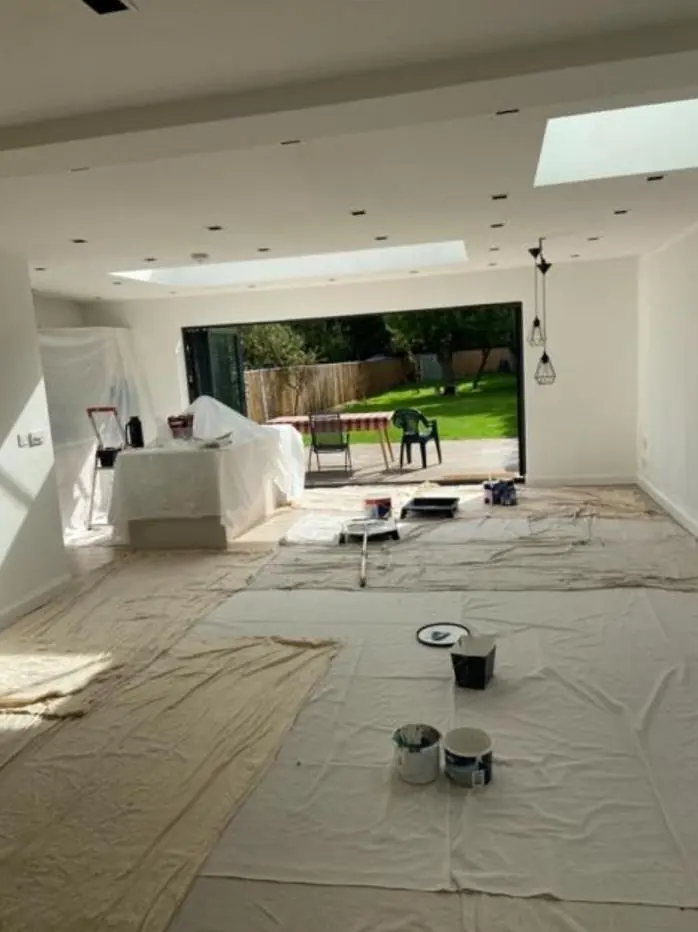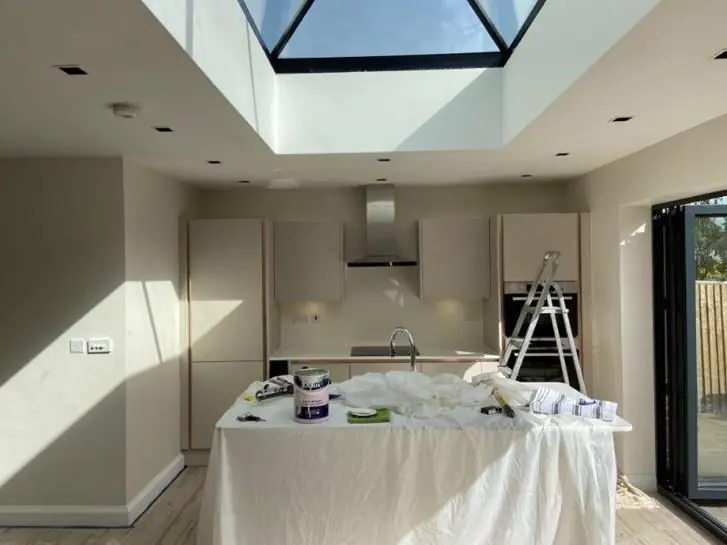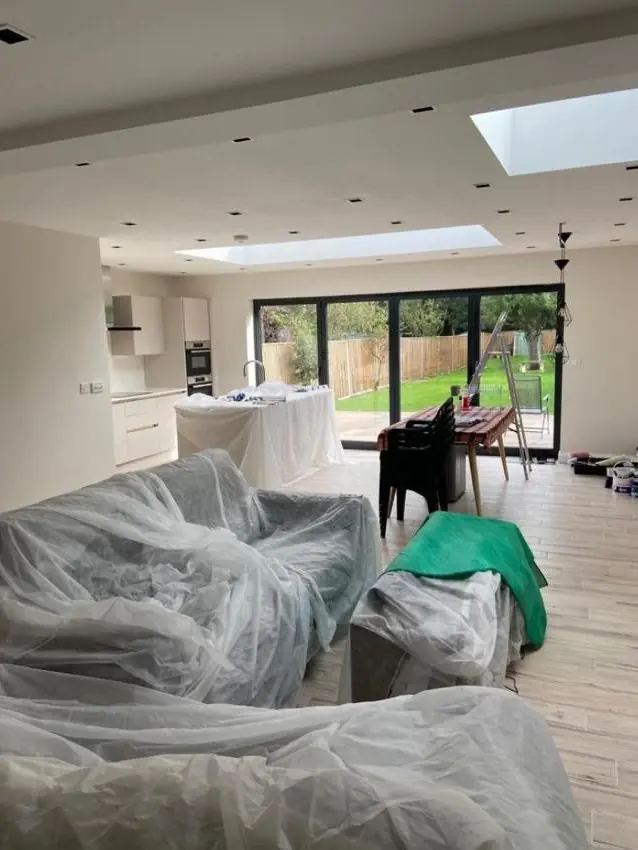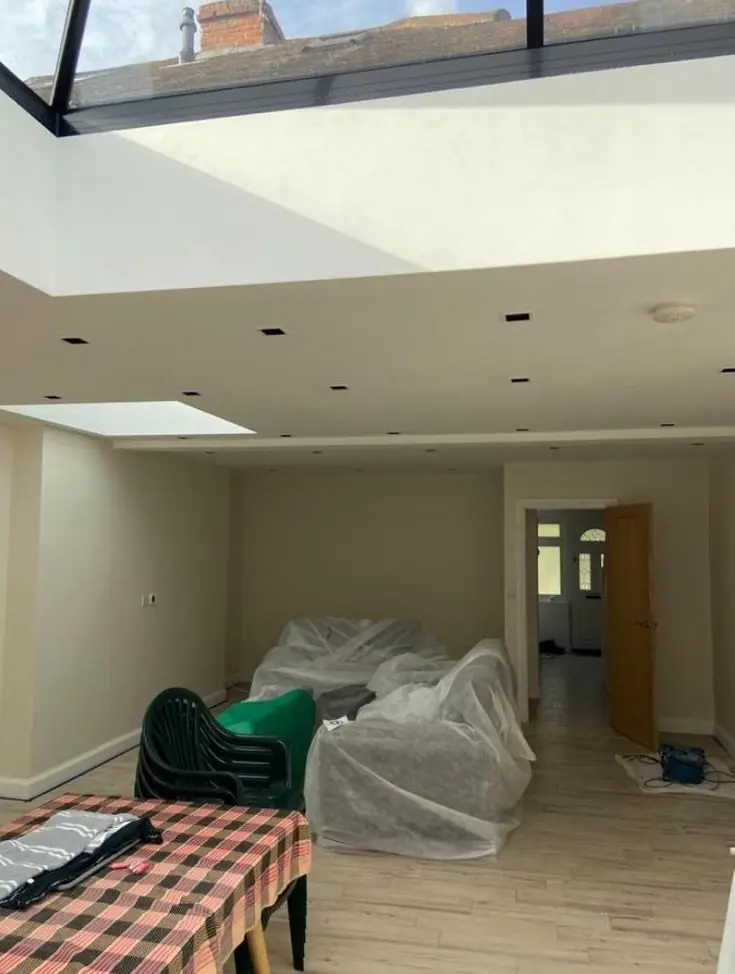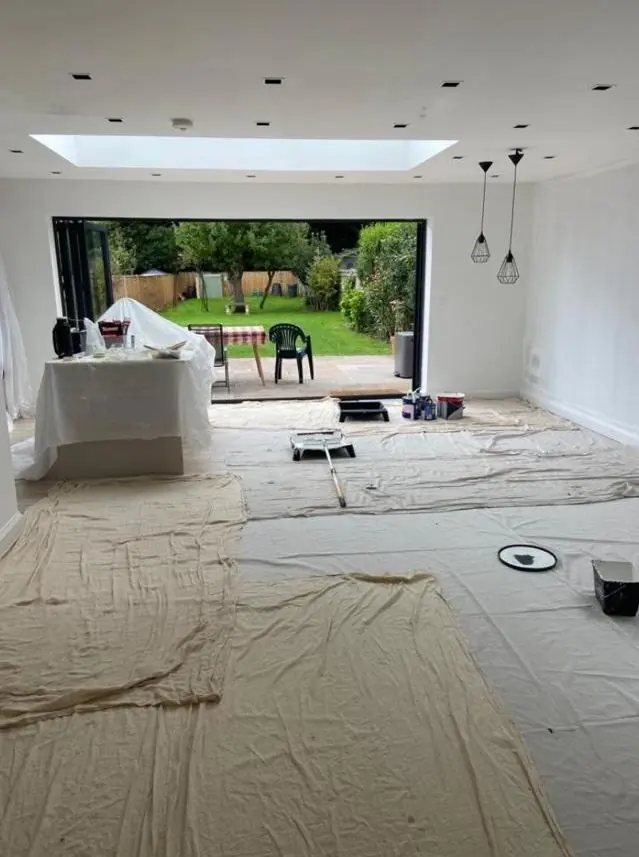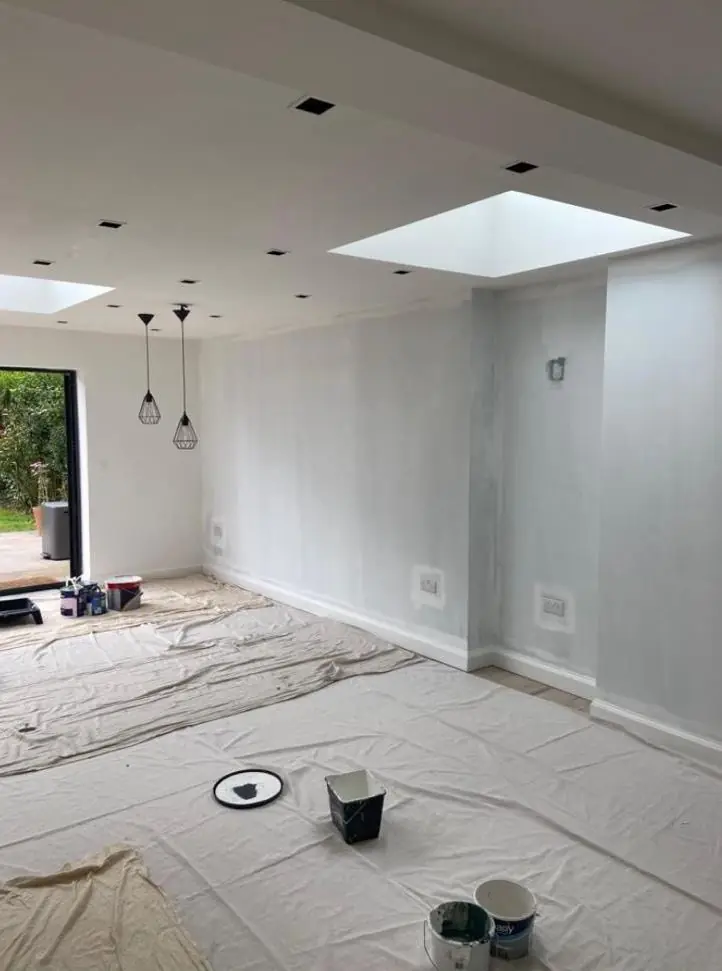
We decorate new plaster, extensions and re-skimmed rooms in Brixworth, the NN6 village where building has spread south and east since the 1960s. Work ranges from single-storey extensions on the newer estates to stone cottages where fresh gypsum meets centuries-old lime plaster.
What gets built and re-plastered in Brixworth
Building has carried on around the south and east of the village for decades, and recent schemes such as Hall Farm Close mix stone with brick detailing. On those houses, new plaster usually means a kitchen or garden room extension, a loft conversion or a re-skim after rewiring. In the conservation area the picture is different. The 2017 appraisal limits extensions to two storeys and asks for sympathetic materials, so additions to the old stone houses tend to be modest, and a lot of the new plaster in the core is patch repair or a re-skim inside an existing room.
Bare plaster on the newer houses
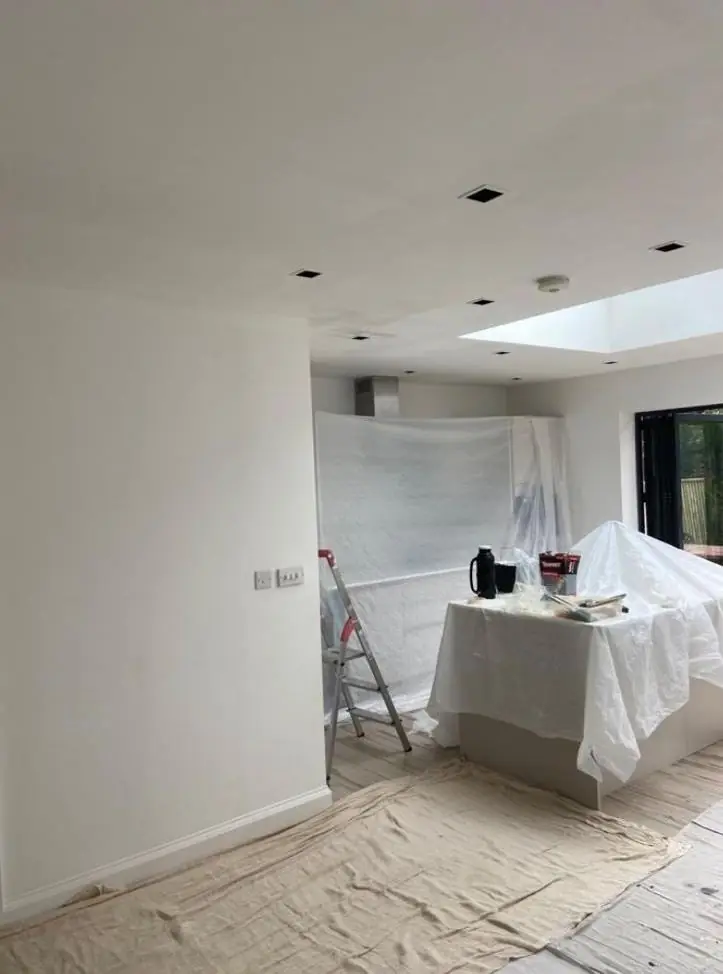
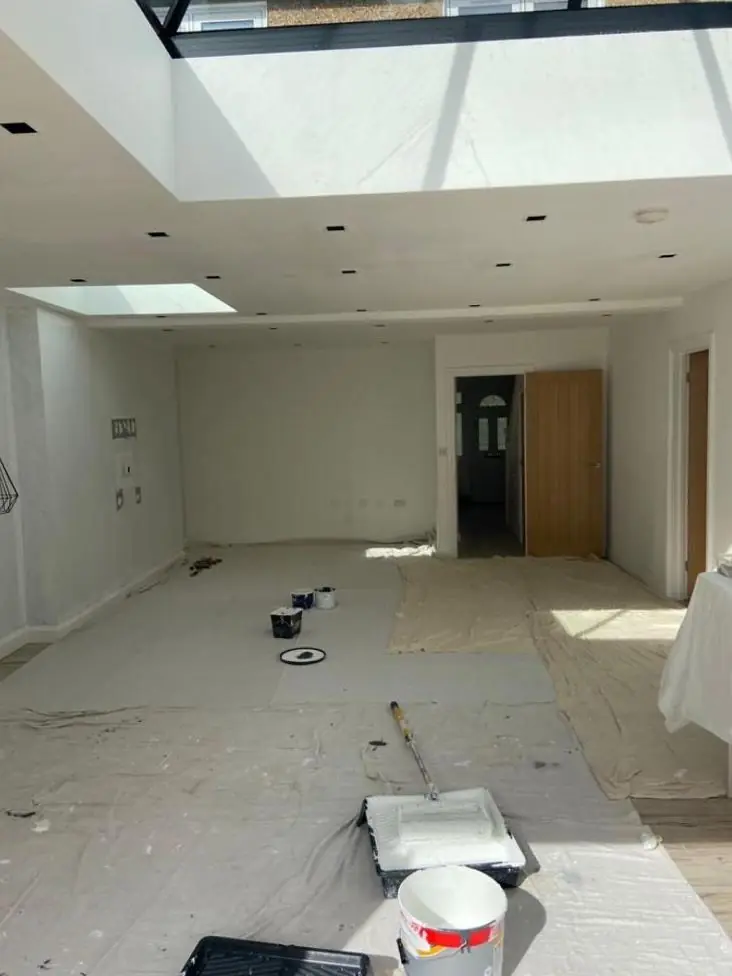
On a garden room or kitchen extension on the southern estates, or a new home at Hall Farm Close, the order of work is the familiar one: wait for the skim to turn an even pale pink, apply a diluted mist coat, fill what it reveals, then two full coats, with new MDF joinery primed at the same stage. Our guide to painting new plaster covers the drying and mist-coat stages in detail.
The local complication is weather. Brixworth sits high on an open plateau, and an extension skimmed in winter on the exposed western edge of the village, with the heating not yet connected, can take weeks to dry through. Painting too soon traps moisture and leads to flaking, so we check corners, reveals and behind radiators before quoting a start date.
When gypsum meets lime in an old stone house
The older Brixworth cottages were plastered inside with lime straight onto thick ironstone or lias. Many are one room deep, and their walls are far from flat. When a builder skims part of a room in modern gypsum, or a new extension opens through an old wall, three things tend to follow:
- a fine crack along the line where new plaster meets old, as the two move at different rates;
- a visible change in texture, because the new skim is glass-flat and the old lime is not;
- damp patches on the old side if it gets sealed in with a vinyl emulsion.
We handle the junction with a flexible filler rather than a hard one, and on the old walls we use a breathable mineral or clay-based emulsion so moisture can still escape from the stone. Where the change in texture would stand out, lining paper across the old side can bring the two surfaces closer together.
Outside the extension
New exterior joinery on an extension, such as fascias, bargeboards or timber doors, can be painted while we are on site. If the house is on Brixworth’s Article 4 list and the new work faces a road or open space, any external colour should match what the planning approval allows. We only paint what has been agreed.
Interior colour follows the same thinking. In a new garden room on one of the estates, almost any shade works once the mist coat is down. In an extension that opens off an old cottage, it often helps to pick a soft colour that sits comfortably beside the warm ironstone of the original walls, so the new room reads as part of the house rather than an add-on. We can bring sample pots and paint test patches on both the new and old surfaces, because the same colour will look different on flat gypsum and on uneven lime.
More on our approach is on the main new plaster and extension painting page, and the other work we cover in the village is on the Brixworth area page.
Last updated by Dean, DH Painter & Decorator.