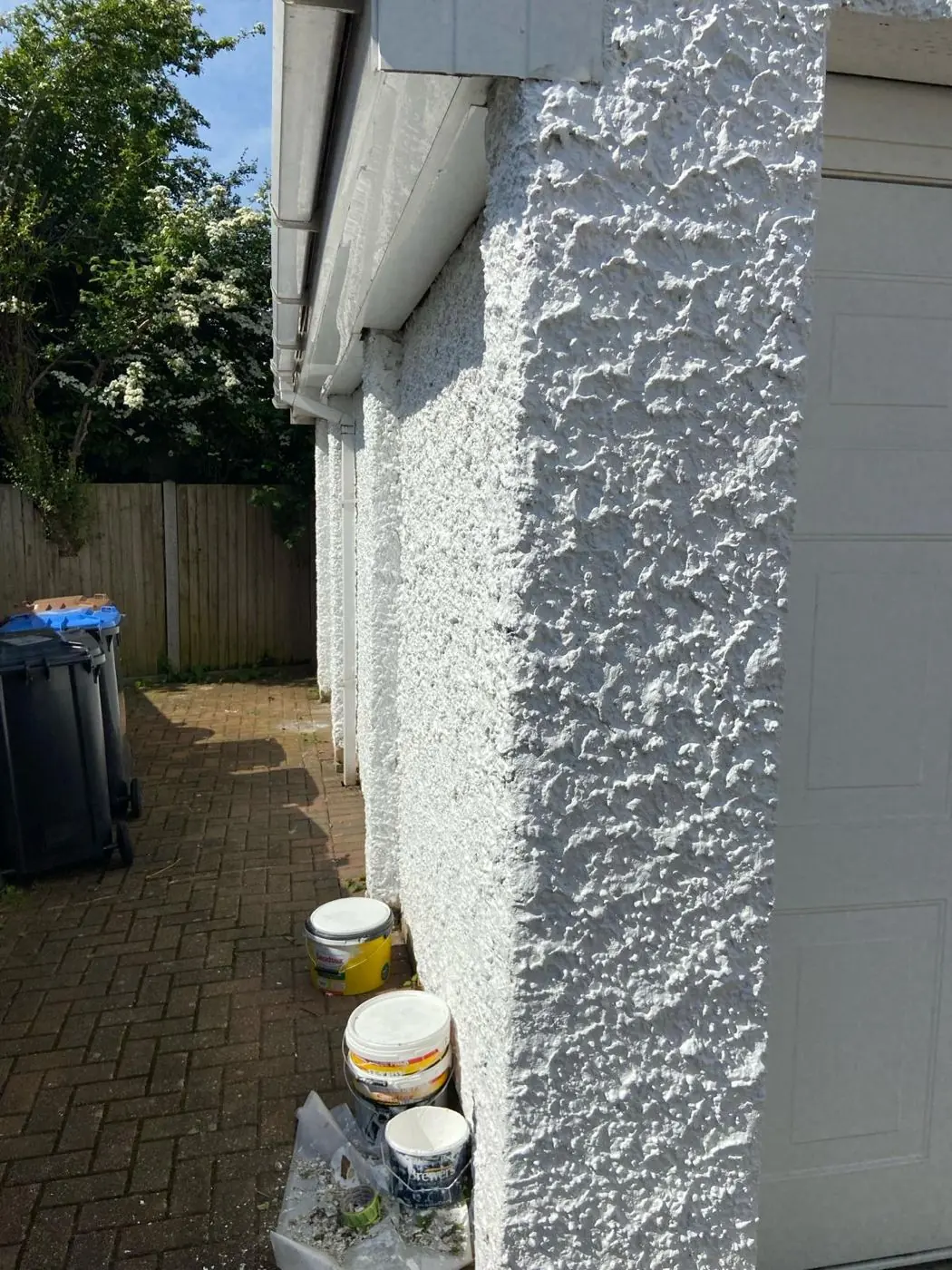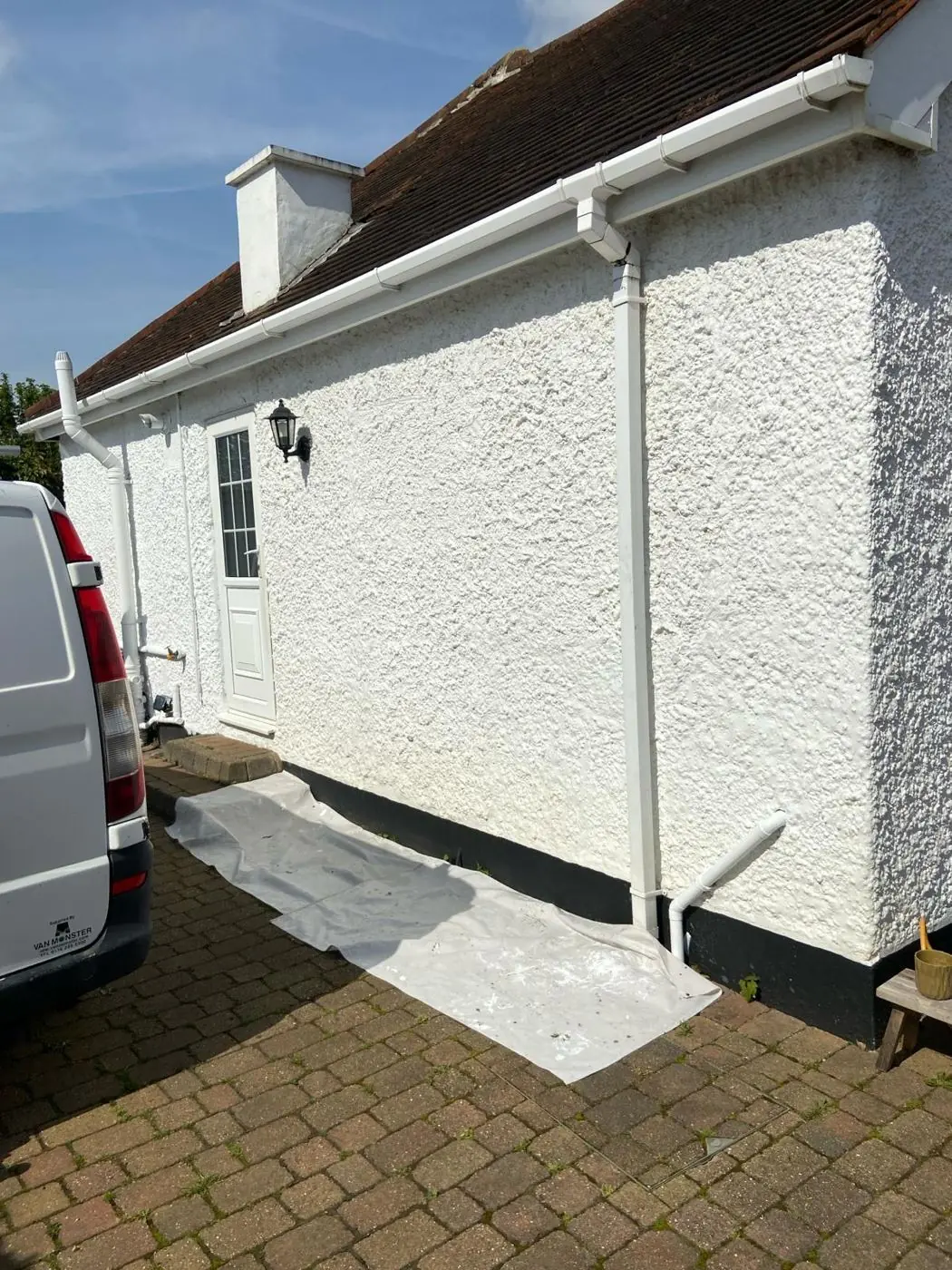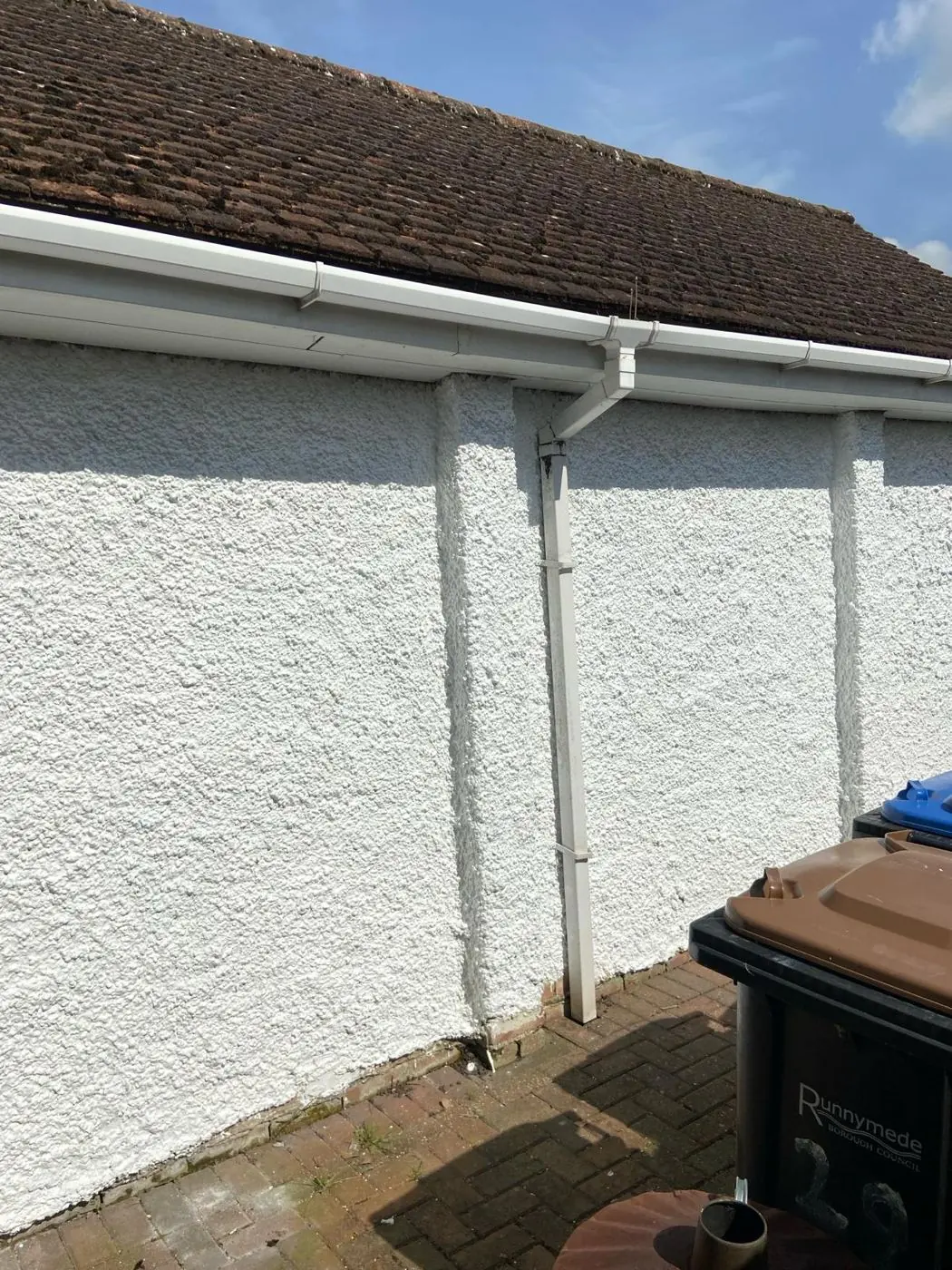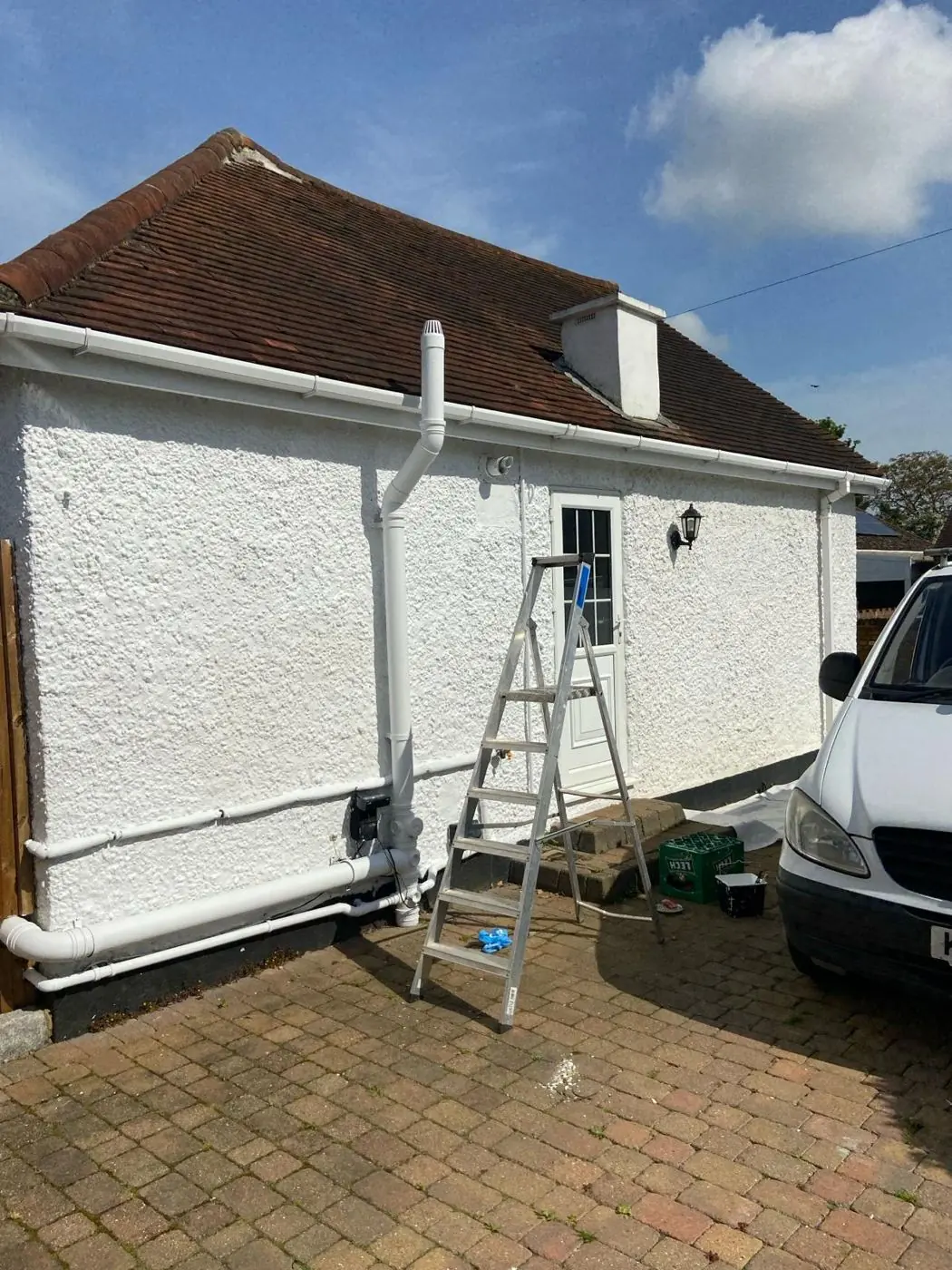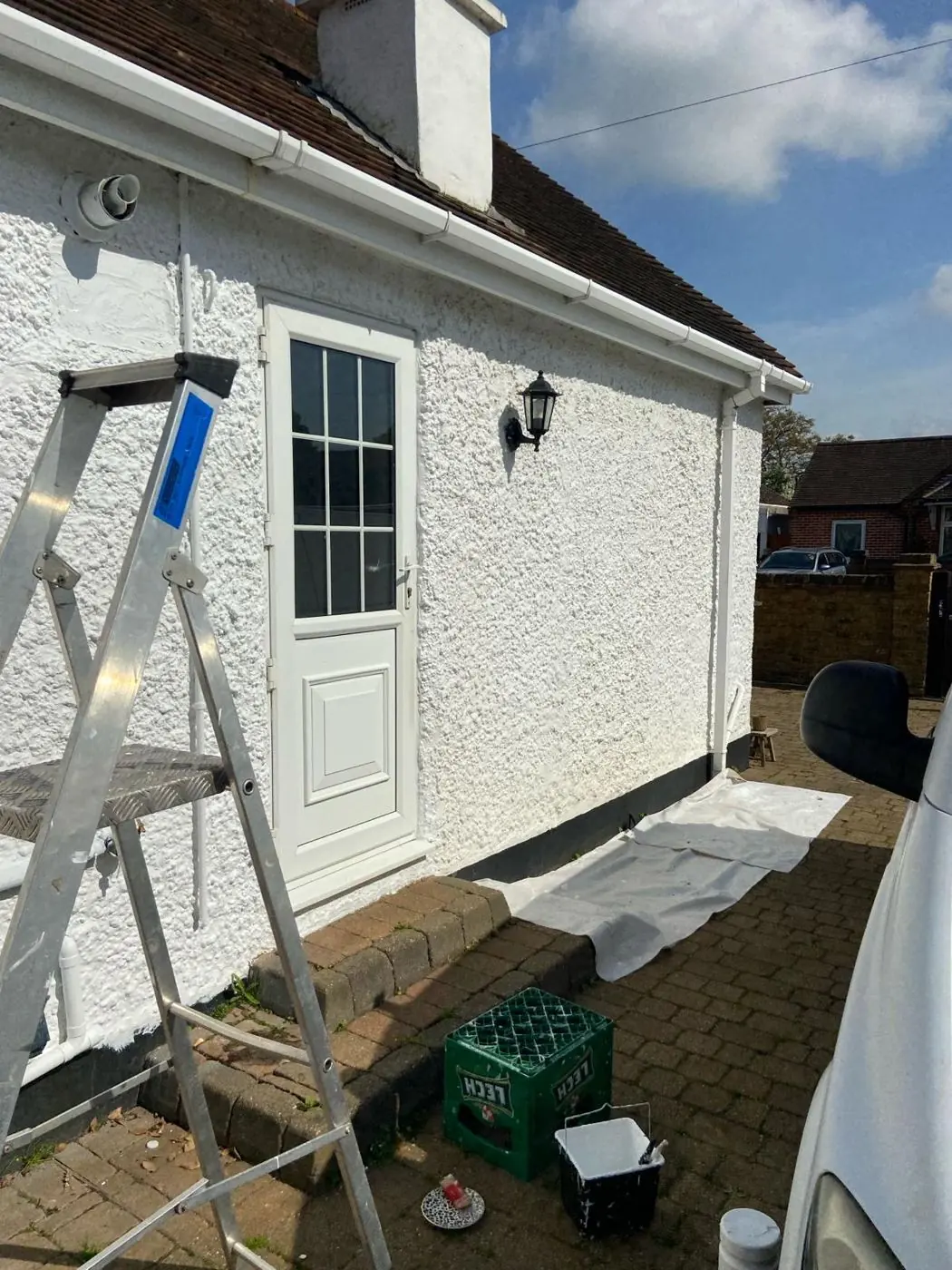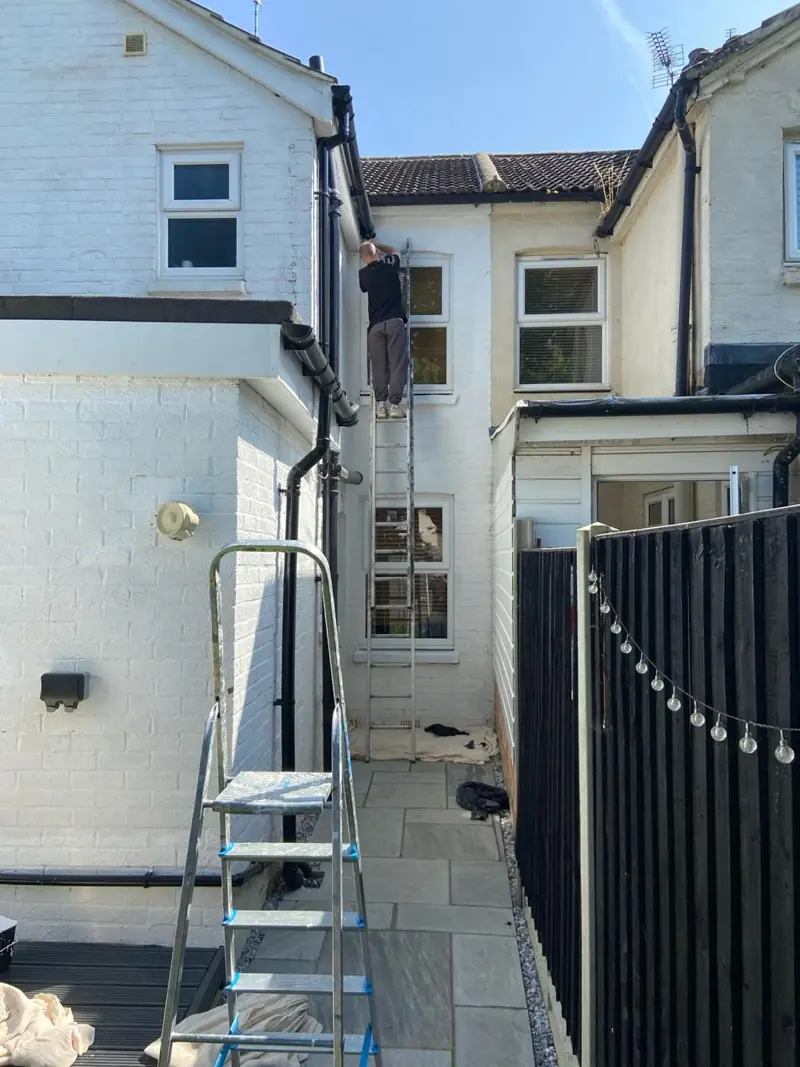
DH Painter & Decorator paints timber fascias, soffits and bargeboards in Walgrave, about 7.9 miles north-east of Northampton. The main candidates are houses on Jubilee Drive, Townsend and Springfield Roads, Amber Drive and the later closes. We also treat the simpler exposed-rafter eaves on older stone houses. Quotes are free.
Three building phases, three different sets of eaves
Walgrave’s housing was added in steps, and the roofline timber tells you which step a house belongs to.
- Jubilee Drive, around 1929. Inter-war eaves boards are now close to a century old. Some may have been patched, part-replaced or covered over, and the paint layers underneath can include older lead-based coatings.
- Townsend Road and Springfield Road, around 1949. Post-war houses with timber that has been through many cycles of repainting. Built-up layers crack across the grain and let water in behind them.
- Amber Drive around 1975, then Walker’s Acre, Church View and Manor Farm Close up to the 1990s. These houses most often still carry their original timber fascias and soffits, and are now at the age when bottom edges, joints and corners start to go soft.
We check each board before quoting, because the house’s age is a guide and not a diagnosis.
What eaves timber goes through in an open, tree-lined village
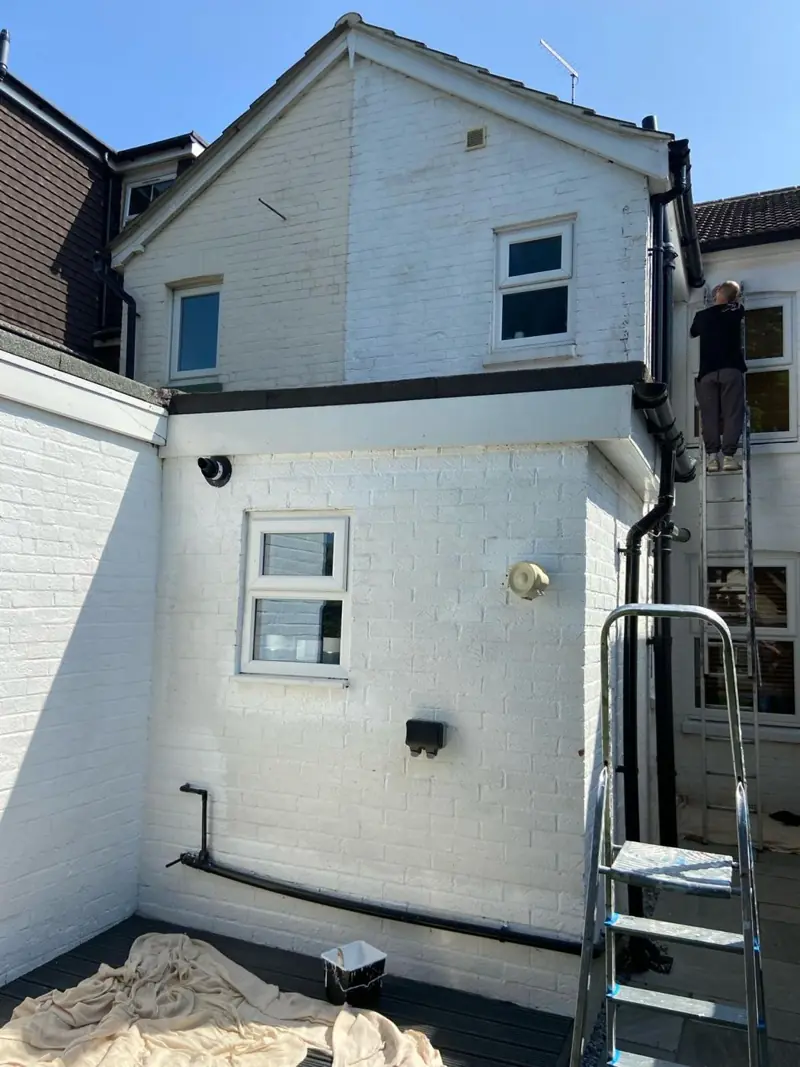
Walgrave sits among farmland, with the older core on higher ground around St Peter’s Church and lower ground to the south. Rooflines on the more exposed sites take driving rain straight on, and mature trees through the village drop leaves and seed into gutters. A blocked gutter spills over the back of the fascia, and that steady wetting is the usual reason a board rots from behind while the front still looks sound.
When we prepare fascias here we clear the gutter line, look at the rear face where we can reach it, scrape back to firm paint, cut out and splice soft sections, prime bare timber, fill and sand, then finish. The full process is set out on the main fascia and soffit painting page. If timber is past repair, we tell you so you can arrange a carpenter or roofer before we paint.
Older stone houses with open eaves
The historic houses on Gold Street, Holcot Road and the High Street often have no boxed fascia at all. The roof oversails the lias wall with simple eaves and exposed rafter ends. Here the work is slower and more careful:
Each rafter end is cleaned, checked for rot with a probe, and sealed at the end grain, which is where water gets in. We use a microporous paint that lets the old timber dry out, rather than a hard gloss that cracks and holds damp against the wood. Paint is kept off the stone below. On a listed house the colour stays as it is unless consent says otherwise, and we raise that question before work starts.
Access on cul-de-sacs, and when to book
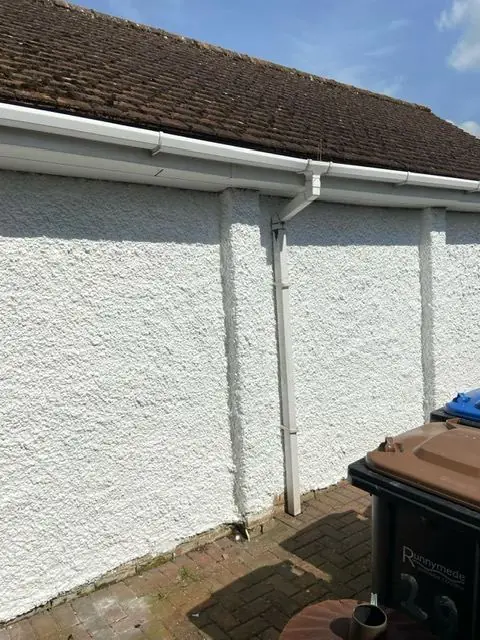
Eaves work happens on ladders or a tower, so the space in front of the house matters. On cul-de-sac infill such as Manor Farm Close and Walker’s Acre, we look at the drive and verge space at the quote visit and agree with you, and with neighbours if needed, where the ladder stands and where the van goes. On the older roads, ladders may need to stand close to the highway, and we keep the area around them guarded.
Fascia paint needs dry timber and a dry few hours afterwards, and pollen and insects stick to wet gloss, so we prefer calm, settled days. We plan the job as a full visit from Northampton with all materials loaded beforehand, and often combine eaves with windows and doors so the scaffold or tower only has to come once. For other services in the village see our Walgrave page.
Last updated by Dean, DH Painter & Decorator.