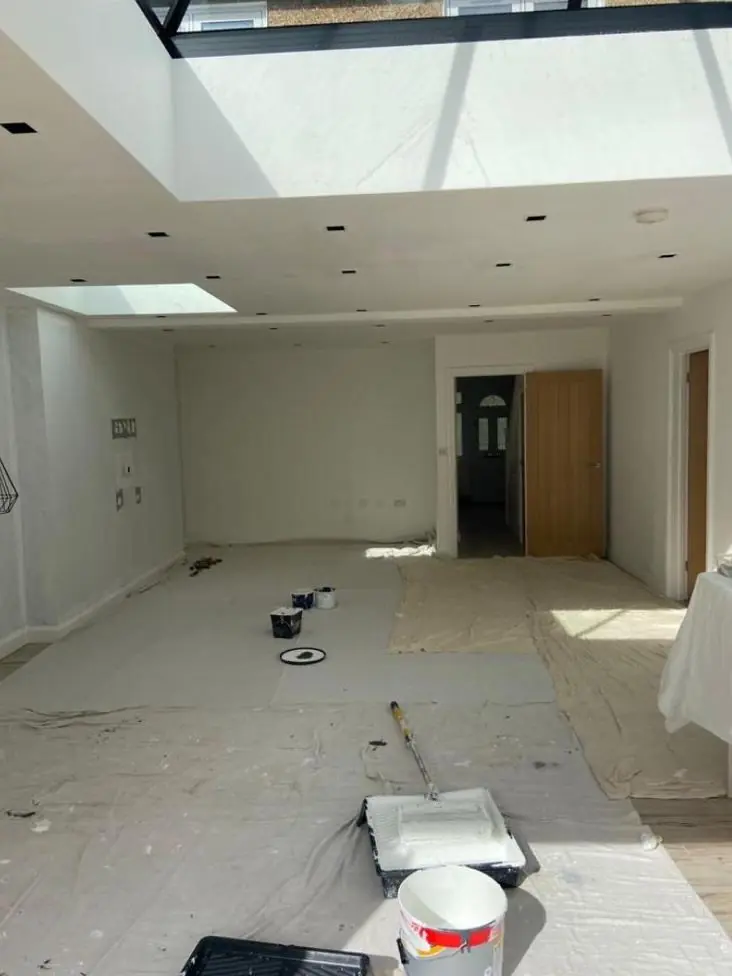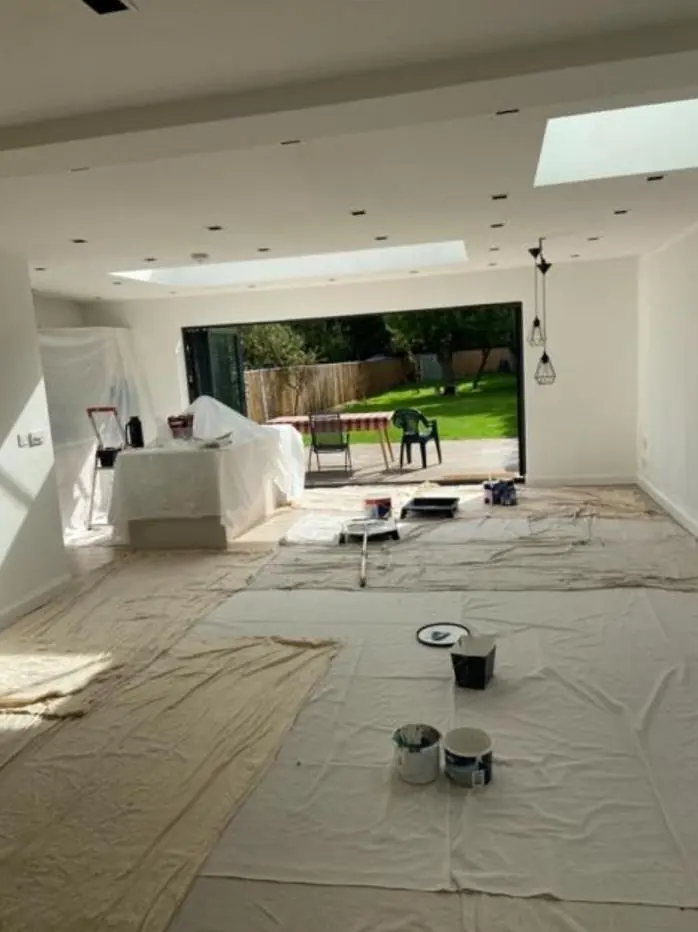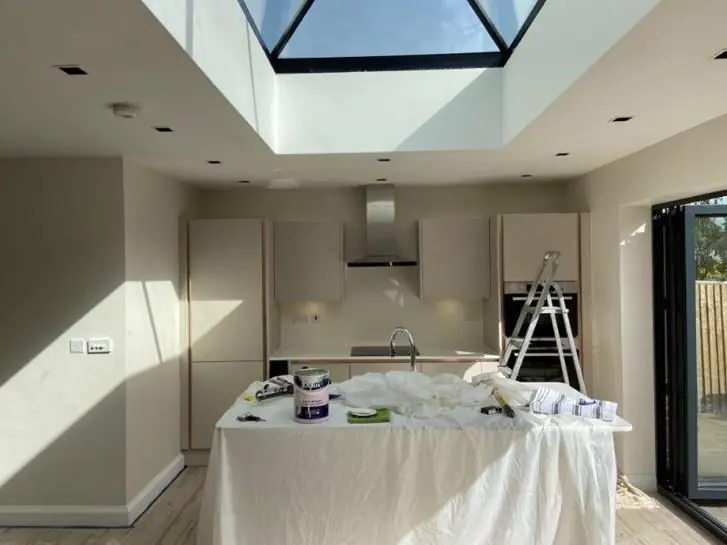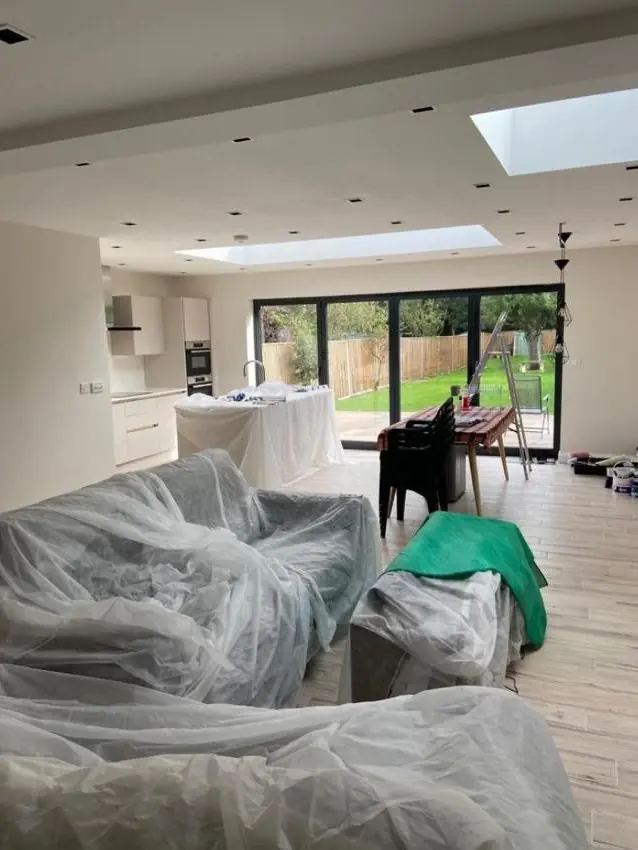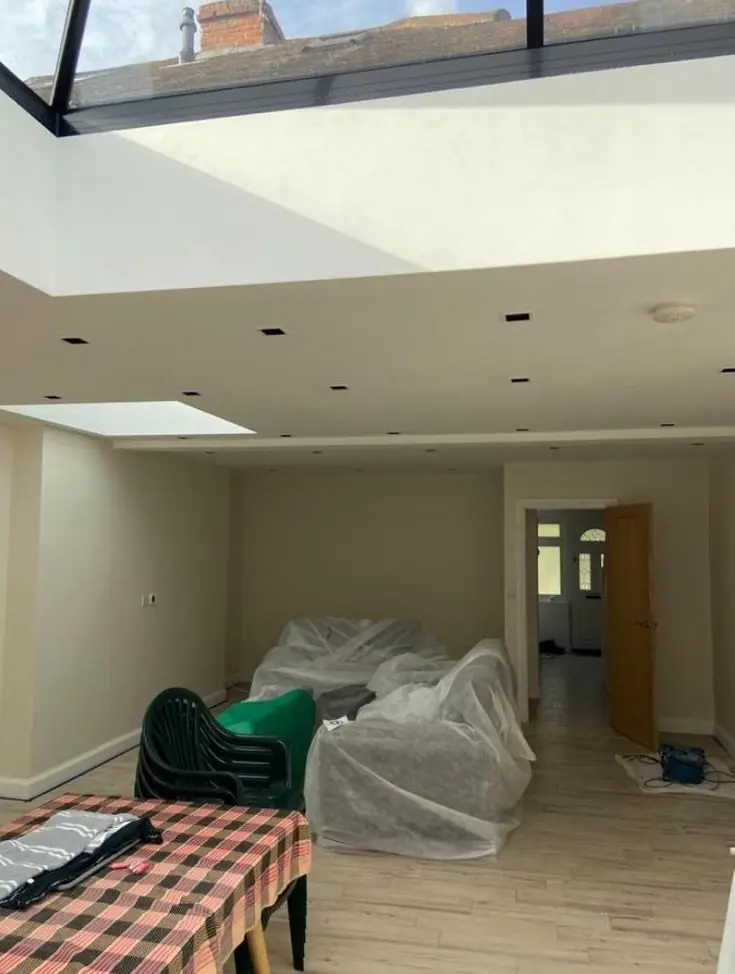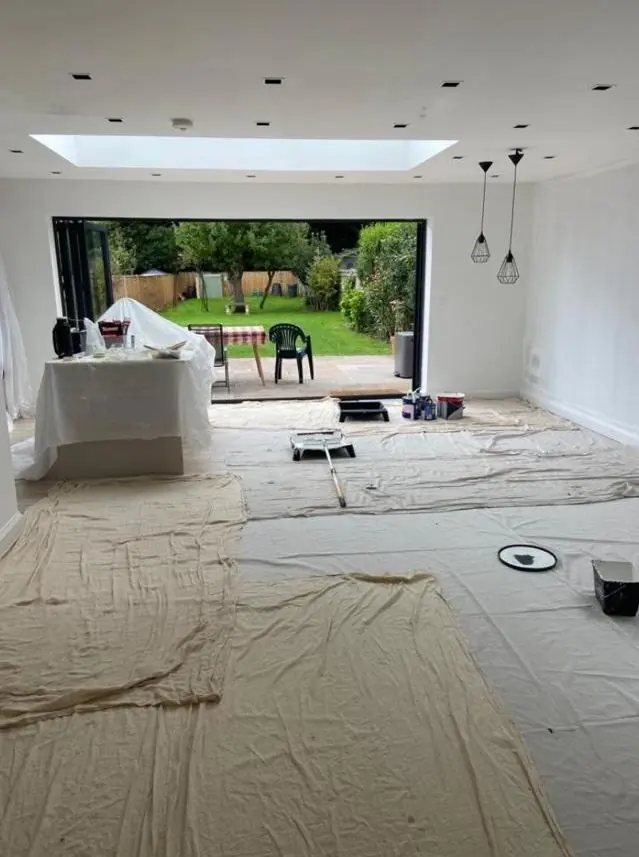
DH Painter & Decorator paints new plaster and extensions in Briar Hill, Northampton NN4. Dean is based about 1.3 miles away in Northampton and quotes free for first coats on fresh walls through to full decoration of a finished extension.
Where new plaster turns up in Briar Hill houses
Briar Hill’s houses date mainly from 1969 into the 1980s, built as an estate on the land of the old Briar Hill Farm. After fifty-odd years, owners may want textured ceilings or tired walls skimmed, or a rear extension added onto a terrace garden. Each of those leaves bare plaster that cannot simply be rolled with ordinary emulsion.
Likely new-plaster jobs on the estate include:
- Living rooms and bedrooms skimmed over old textured ceilings
- Kitchens replastered after units and tiles come out
- Single-storey rear extensions on terrace gardens
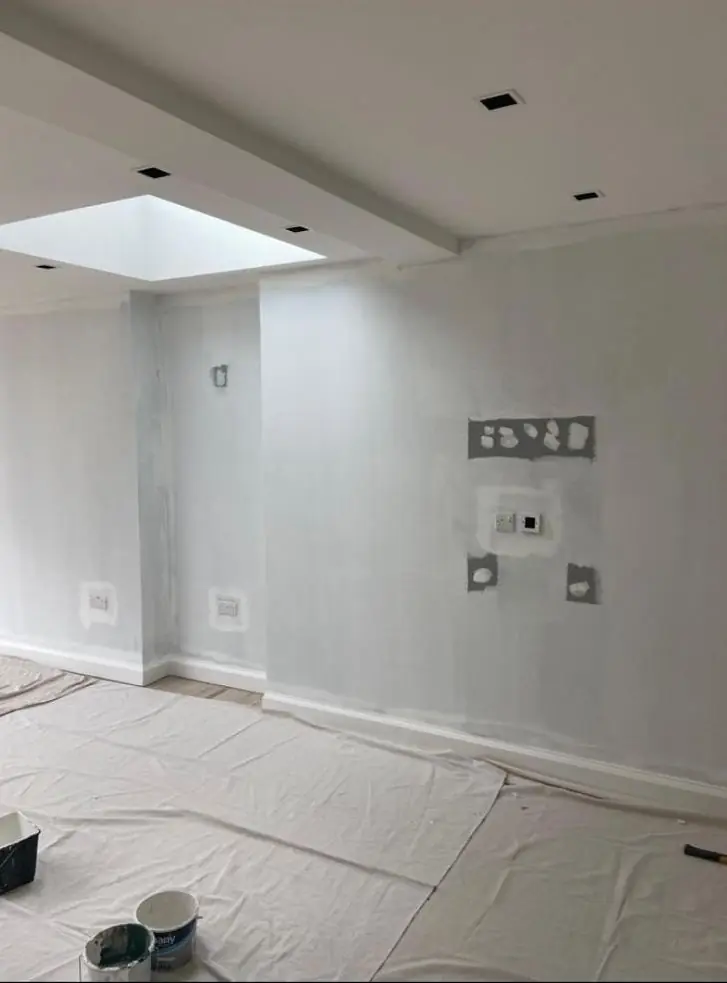
- Patch repairs after rewiring, boiler moves or new radiators
Waiting for the plaster to dry
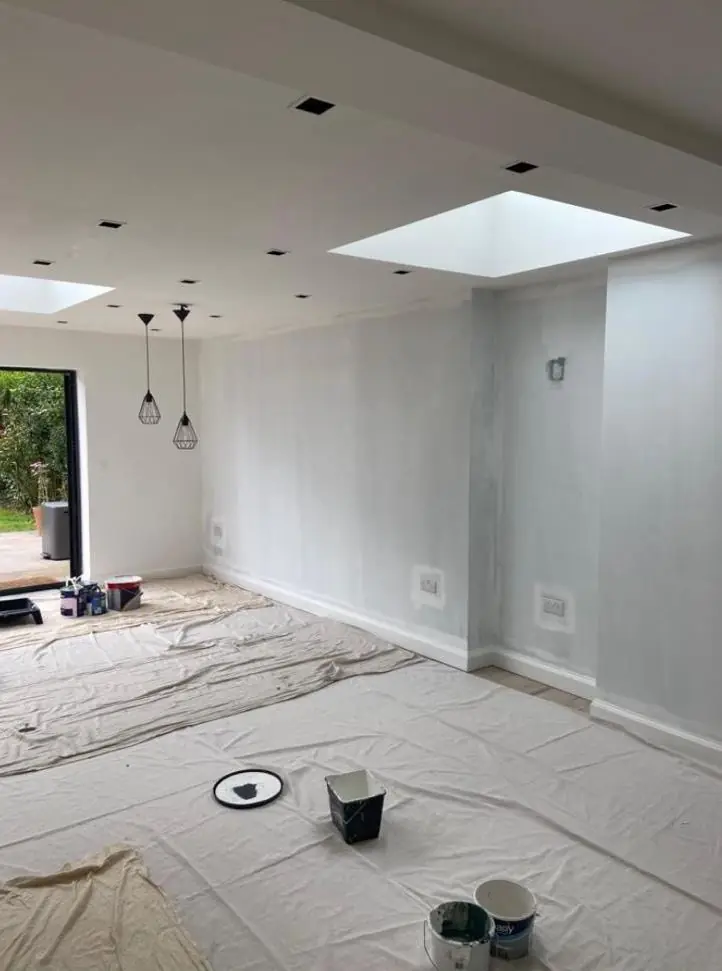
Fresh skim needs to dry right through before it is painted. It turns from dark pink to an even pale colour, and any darker patches mean moisture is still coming out. Painting too soon traps that moisture and leads to blistering or flaking. On Briar Hill this needs more patience than in some parts of Northampton. The estate sits on the north-facing slope of the Nene Valley, and rooms on the north side of a house stay cooler and get little sun, so plaster there can take noticeably longer, especially in winter. Gentle heating and an open window help; blasting the room with heaters can crack the surface. We check moisture before starting rather than going by the calendar.
Patch repairs bring their own problem. A square of fresh plaster around a new socket or a moved radiator absorbs paint very differently from the painted wall around it, so a quick coat over the top often leaves a dull patch that shows in side light. Sealing the patch first, then painting the whole wall corner to corner, keeps the sheen even. In the compact rooms of an estate terrace that usually means one full wall rather than the whole room.
The mist coat and what follows
Once dry, the plaster is sealed with a mist coat, a diluted contract matt or a dedicated new-plaster primer, which soaks in and gives the finish coats something to grip. Skip it and the topcoat sits on the surface and can peel. After the mist coat any fine cracks or nibs show up clearly, so we fill, sand and spot-prime before two full finish coats. Our guide to mist coats on new plaster explains the reasons in detail.
Extensions: timing with the builder
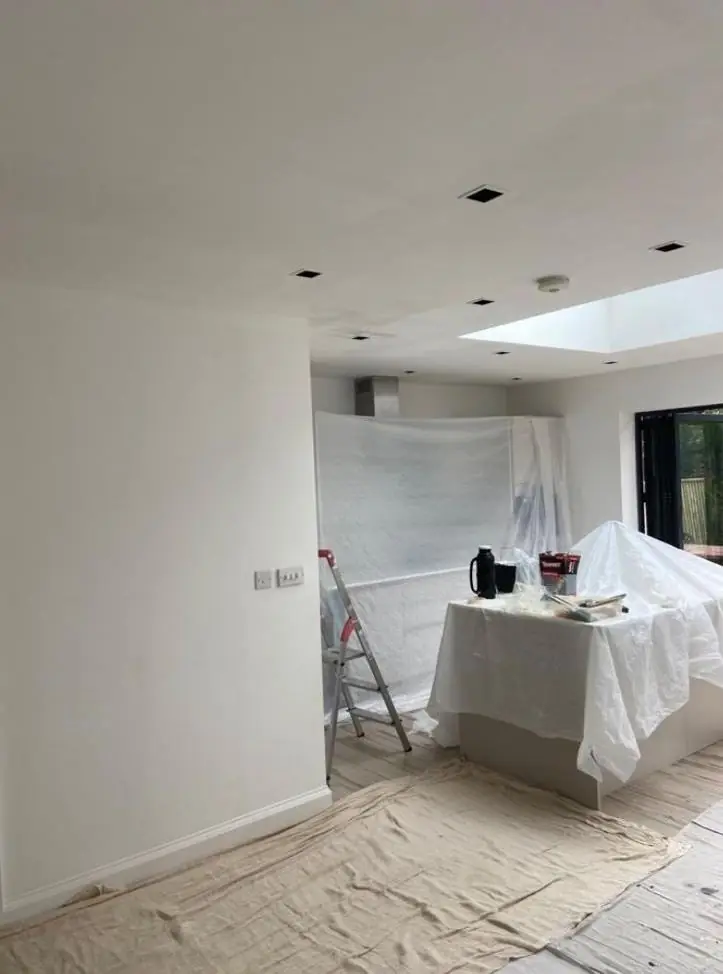
On an extension the decorating is usually the last trade in before the kitchen fitter or flooring. We can mist coat while the plaster is fresh enough to take it but before units go in, then come back to finish once worktops and splashbacks are fitted, so the final coats are not scuffed by other trades. Rear gated access on some terraces, such as on Southwood Hill, makes it easier to bring materials straight to the back of the house; on others everything comes through from the shared parking court.
Older walls are a separate question
The one building in Briar Hill that is not estate housing is Briar Hill House, the early-19th-century former farmhouse, Grade II listed. If repair work there involves lime plaster on its stone walls, standard vinyl emulsion is the wrong finish, because the wall needs to breathe. That calls for breathable mineral or lime-compatible paints and, depending on the work, a conversation with the council about listed building consent. It is a different job from a skimmed estate wall, and we would treat it that way.
For the full process, from snagging to roof lanterns, see our new plaster and extension painting page, or go back to the Briar Hill area page.
Last updated by Dean, DH Painter & Decorator.