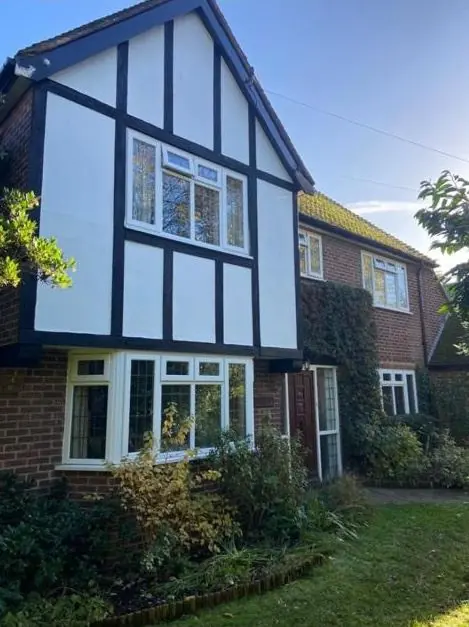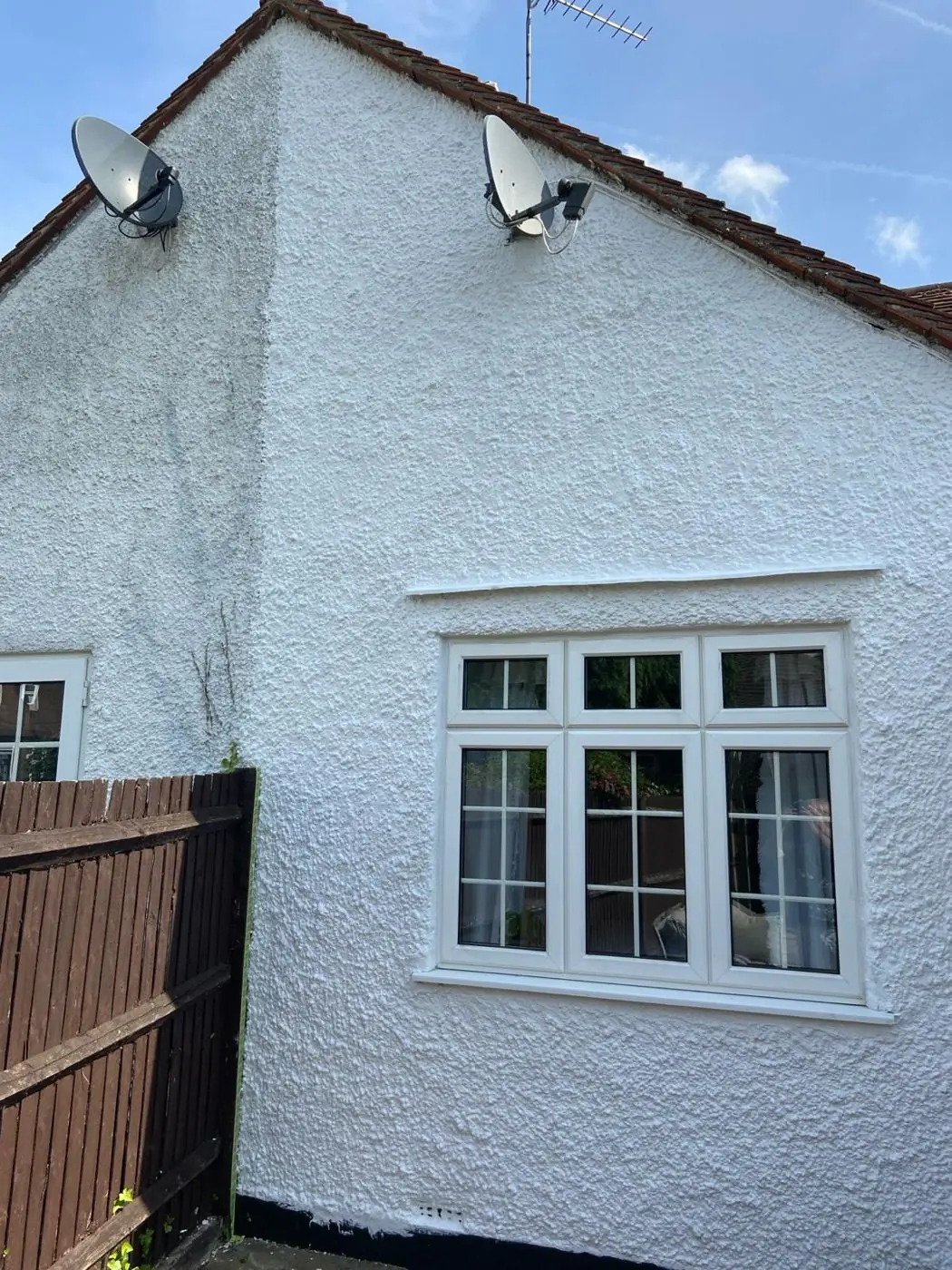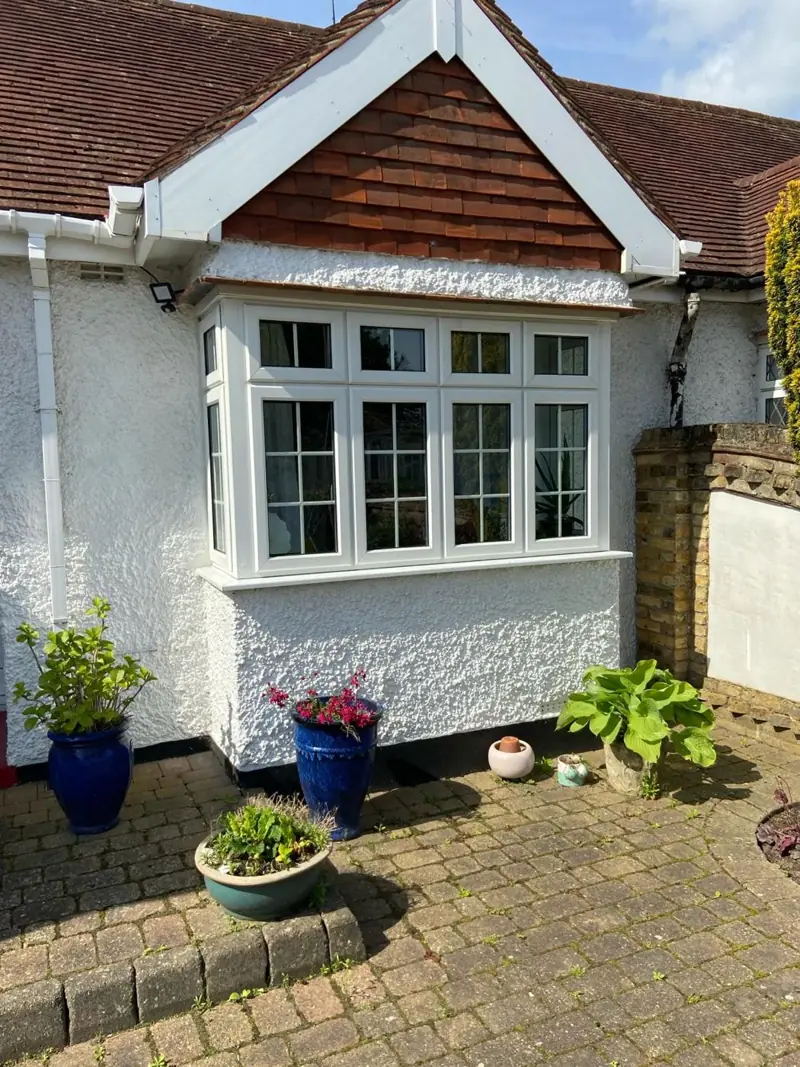
Dean paints house exteriors across Earls Barton, home to 5,387 people at the 2011 census and 6.4 miles east of Northampton. Work in the conservation area centres on painted lias stone and listed fronts, while most homes elsewhere in the village are later brick houses that take conventional exterior systems.
A village built in two very different periods
From the street, Earls Barton splits into two kinds of building. A small historic core around The Square, West Street and High Street is mostly 17th and 18th century cottages, farmhouses and former inns of coursed lias limestone. Around it, and far larger in number, are the later brick houses built as the boot and shoe trade expanded.
The two need different paint, prep and planning, so the first thing Dean does on a visit is work out which kind of building he is looking at. Often it is both, because many of the listed stone houses have later brick extensions at the rear. The general method for exterior work is set out on our exterior painting in Northampton page. This page covers what is particular to Earls Barton.
Painted stone and stucco in the conservation area
The Earls Barton Conservation Area holds 28 listed buildings. Several are described in their listings as partly painted or partly stuccoed, including Rose Cottage at 2 West Street and the Stags Head on High Street. The Old Swan on The Square is lias and brick, now painted. On fronts like these:
- Lias is a soft stone that needs to breathe, so where it is already painted we use breathable mineral or limewash-type coatings, not a standard acrylic masonry paint that holds moisture in.
- We repaint what is already painted and keep new paint off bare stone. Taking paint further across a front changes how a listed building looks.
- A change of colour or finish on a listed elevation can need listed building consent; North Northamptonshire Council should be asked before anything other than a like-for-like repaint.
Joinery on these cottages is typically casement windows under wooden lintels, sometimes with leaded lights. It is brushed by hand with flexible microporous paint, and any loose putty is dealt with before painting rather than painted over.
Later brick homes beyond the old core
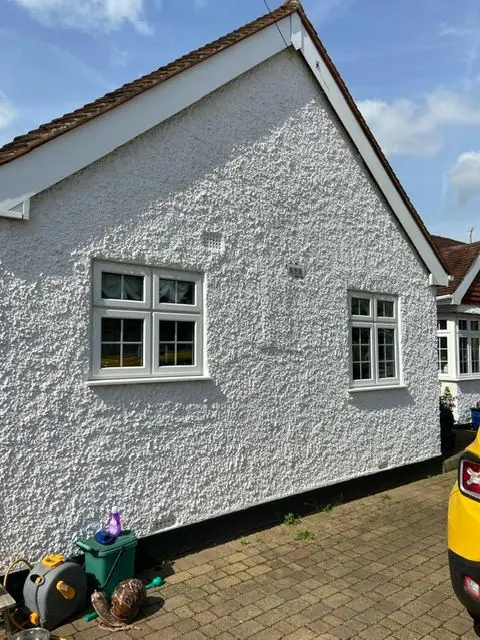
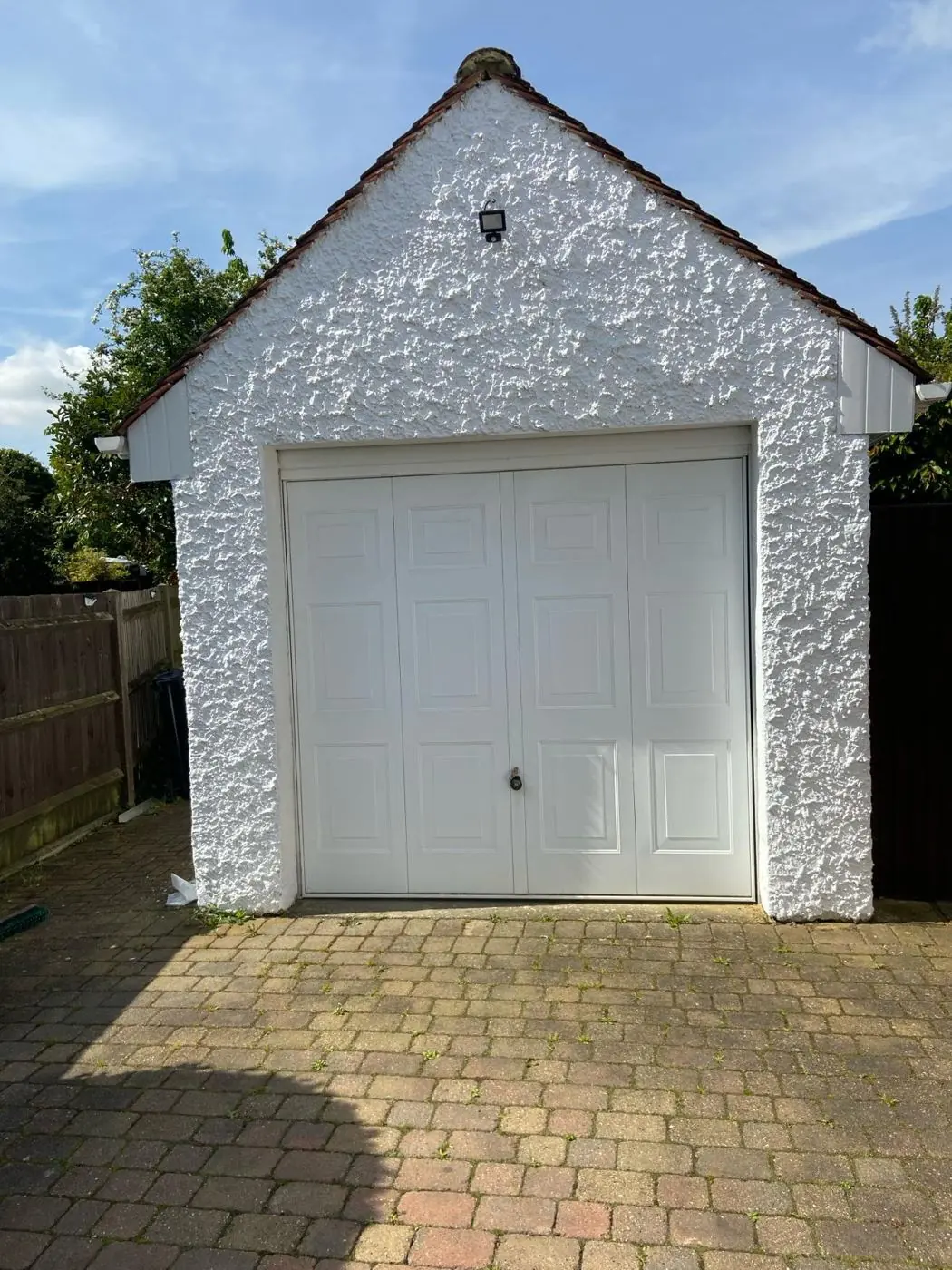
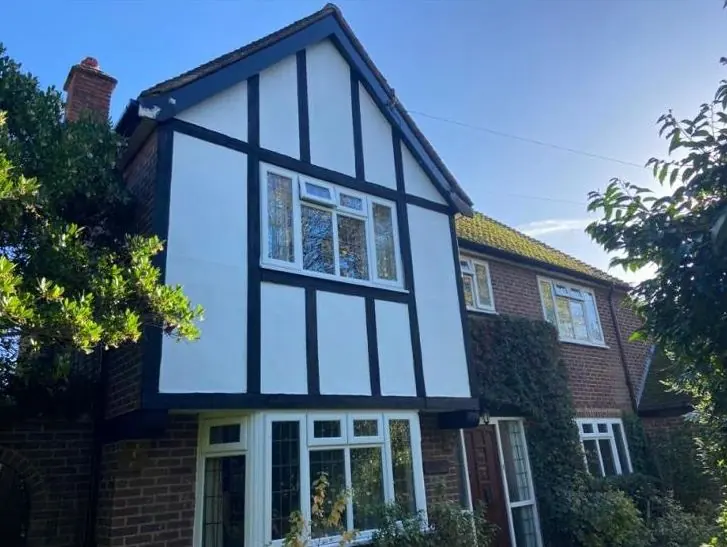
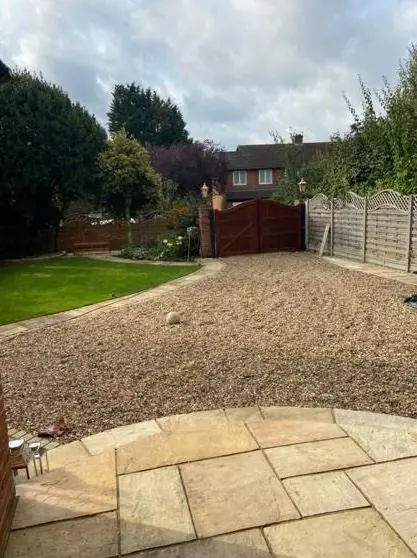
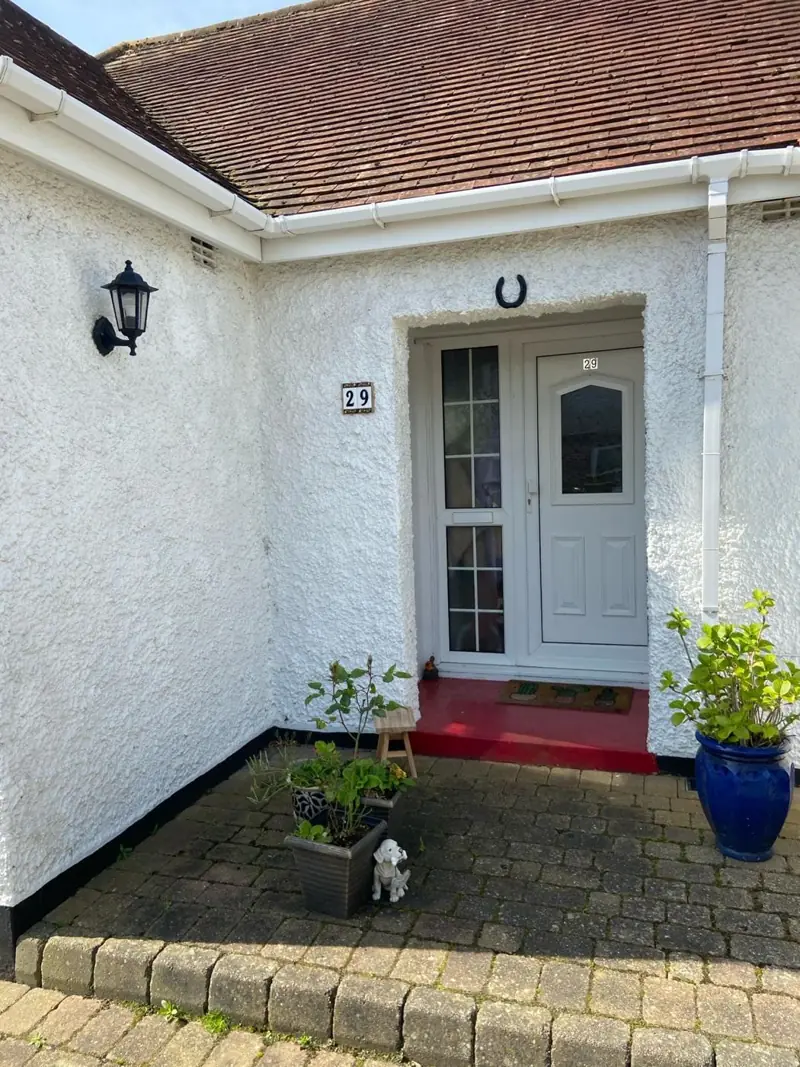
Most Earls Barton households live outside the historic streets, in brick houses with standard timber or uPVC fascias and soffits, painted or stained front doors, garden fences and gates. Here an exterior repaint is usually a planned run: roofline first, then windows and doors, then any rendered or painted masonry, then garden timber. Colour choice is much freer than in the conservation area, though it still helps to look at how a house sits beside its neighbours.
Damp low walls on the Nene valley side
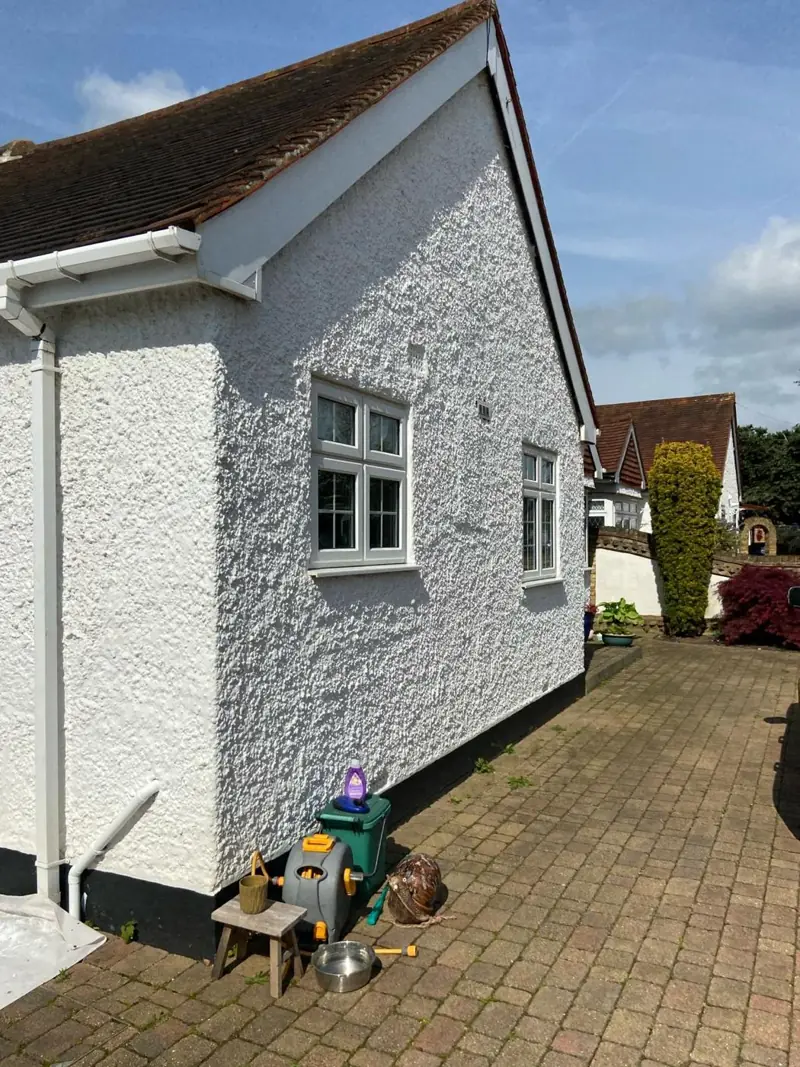
The village grew up along a spring line above the River Nene, with the valley floor to the south. Low garden walls, plinths and the bottom courses of houses on the lower ground can stay damp for long spells. Paint on those surfaces fails first, usually by blistering or lifting from the base upwards. We give low walls longer to dry before coating, choose systems that tolerate some moisture, and in spring and autumn we start work later in the day once the dew has gone. Our guide on when to paint outside in the UK explains why the calendar matters as much as the paint.
Footways, thatch and parking on The Square
In the old core many buildings stand right on the street, so ladders and towers go on or beside the footway. We keep the footway passable and put up signs. Shops, pubs and the church all sit around the small market square, which means van parking is shared with shoppers, and materials come in at quieter times of day. Thatched sections such as those on The Manor House and The Old Swan have deep eaves and nothing to lean a ladder against, so access towers are used there instead.
Our Earls Barton area page covers the other services we offer here. Dean will look at the walls, joinery and access on site and give you a written quote.
Last updated by Dean, DH Painter & Decorator.