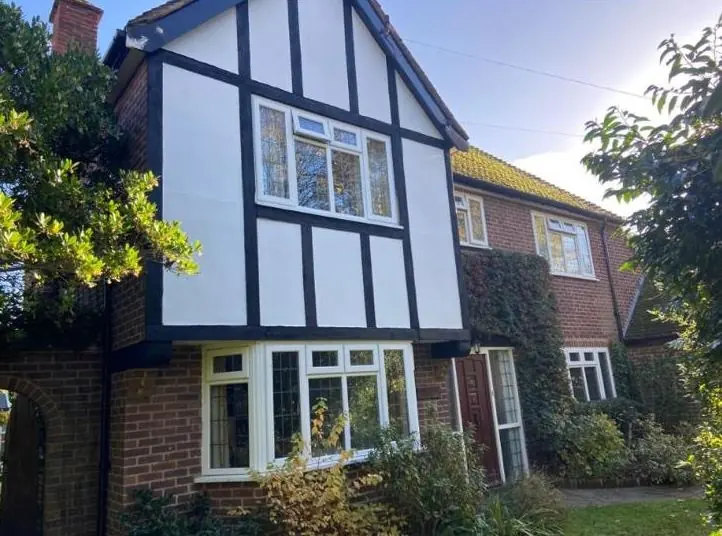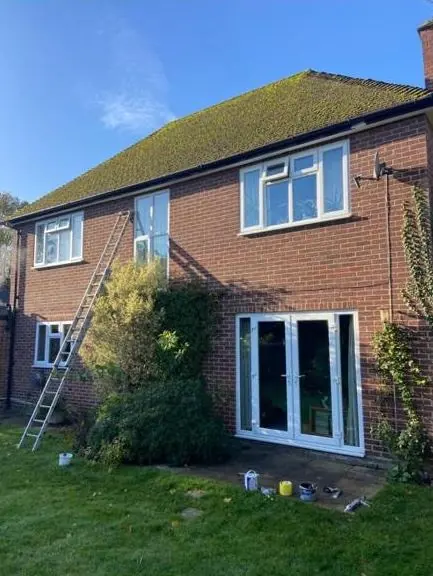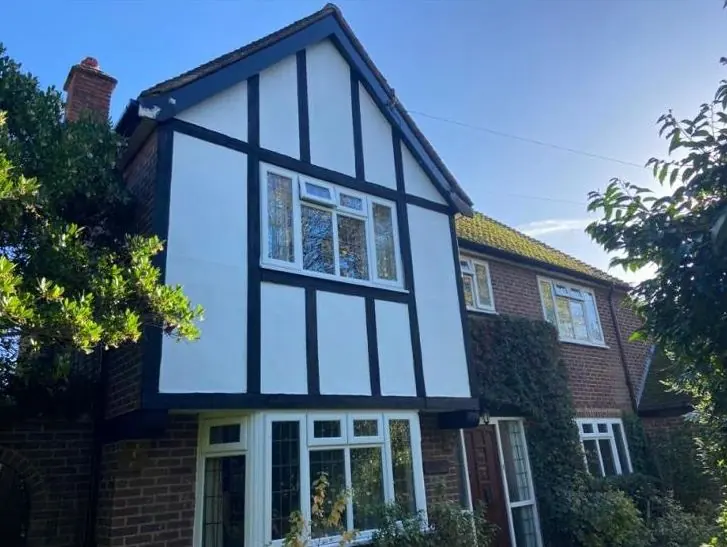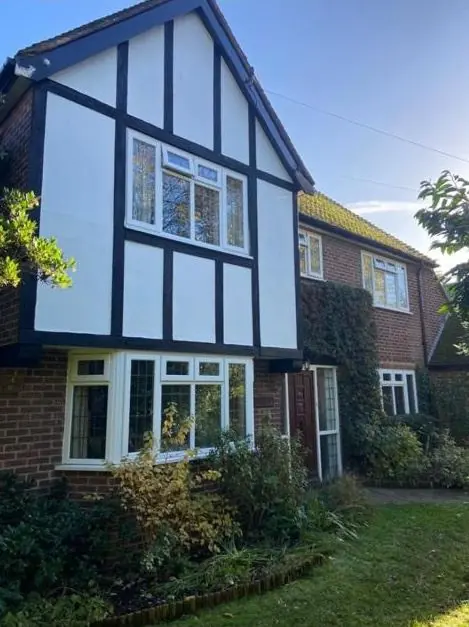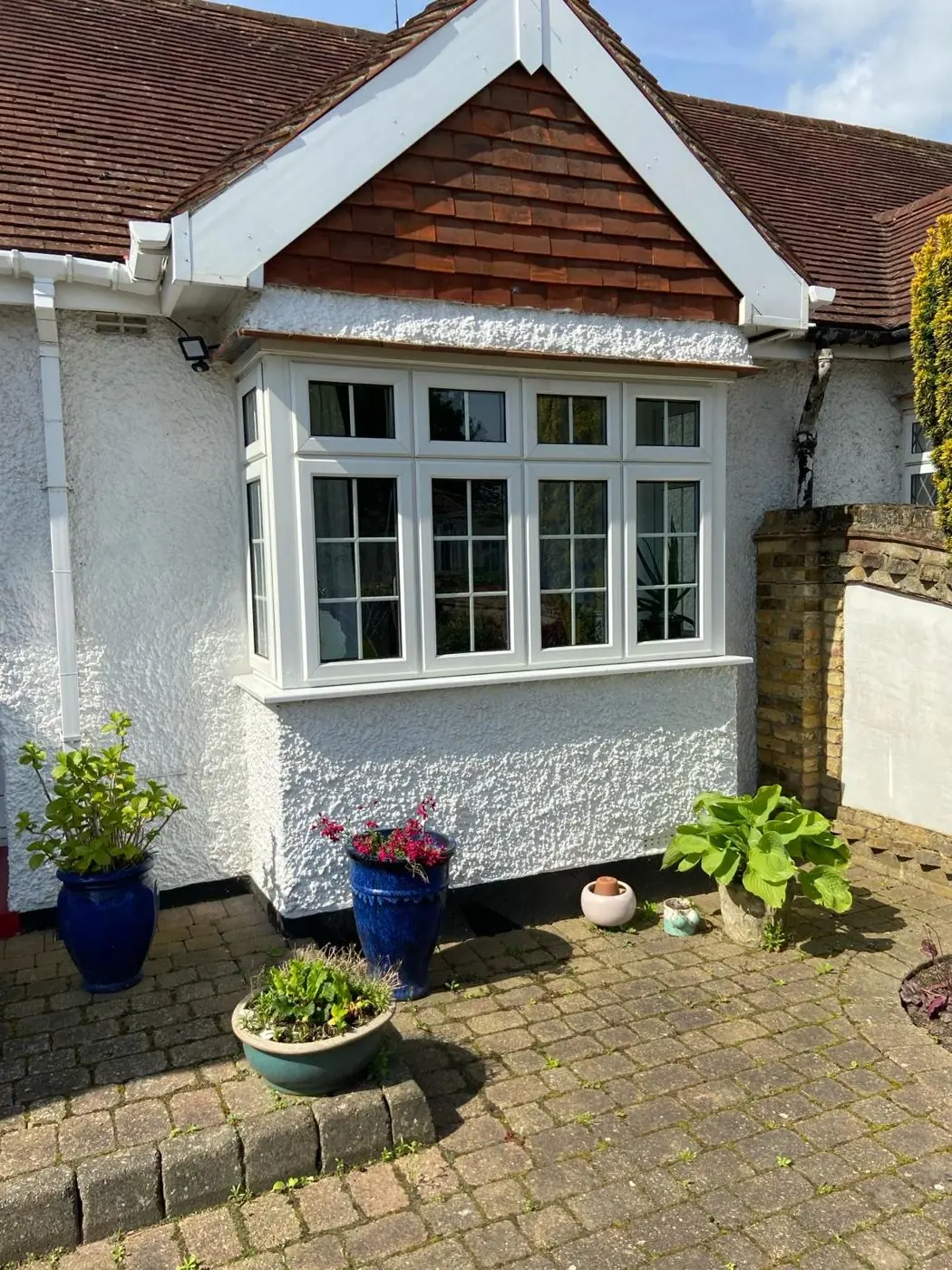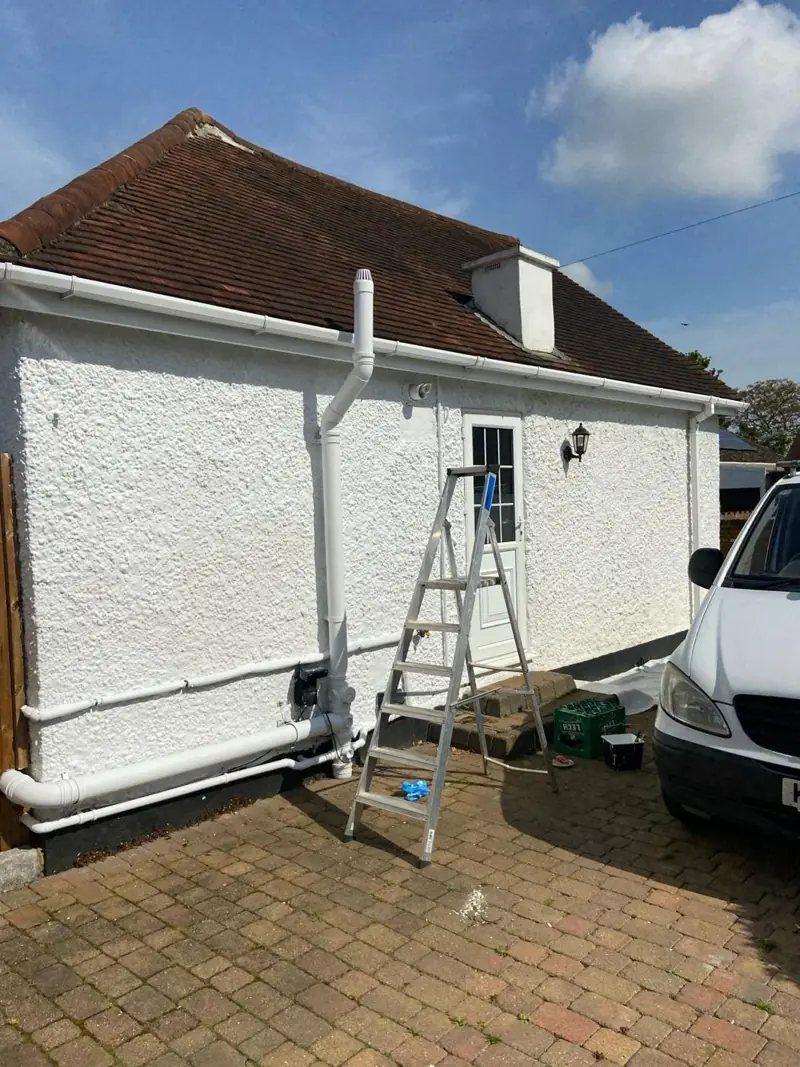
We paint render, stucco and masonry in Earls Barton, about 6.4 miles east of Northampton in the NN6 postcode. In the old core that usually means breathable coatings on partly stuccoed or painted lias, and on the later houses it means preparing and painting render with a standard masonry system.
Stucco on stone: the listed examples
Earls Barton’s historic buildings are mostly regular coursed lias limestone, and a few were stuccoed or painted, in part, long ago. The listing for the early 18th century Stags Head on High Street describes it as partly stuccoed. Rose Cottage and No. 4 West Street are partly painted. The Old Swan on The Square mixes lias and brick, now painted. On the partly coated fronts, render and paint cover part of the elevation, not all of it, and the listing descriptions record that mix.
When we repaint a front like that, the aim is to refresh the coated areas and leave the bare stone as it is. Taking paint or render across stone that has never had it changes the character of a listed building and can need listed building consent. If your house is among the listed buildings in the conservation area, speak to North Northamptonshire Council first if a change is being considered.
Why soft lias needs a breathable finish
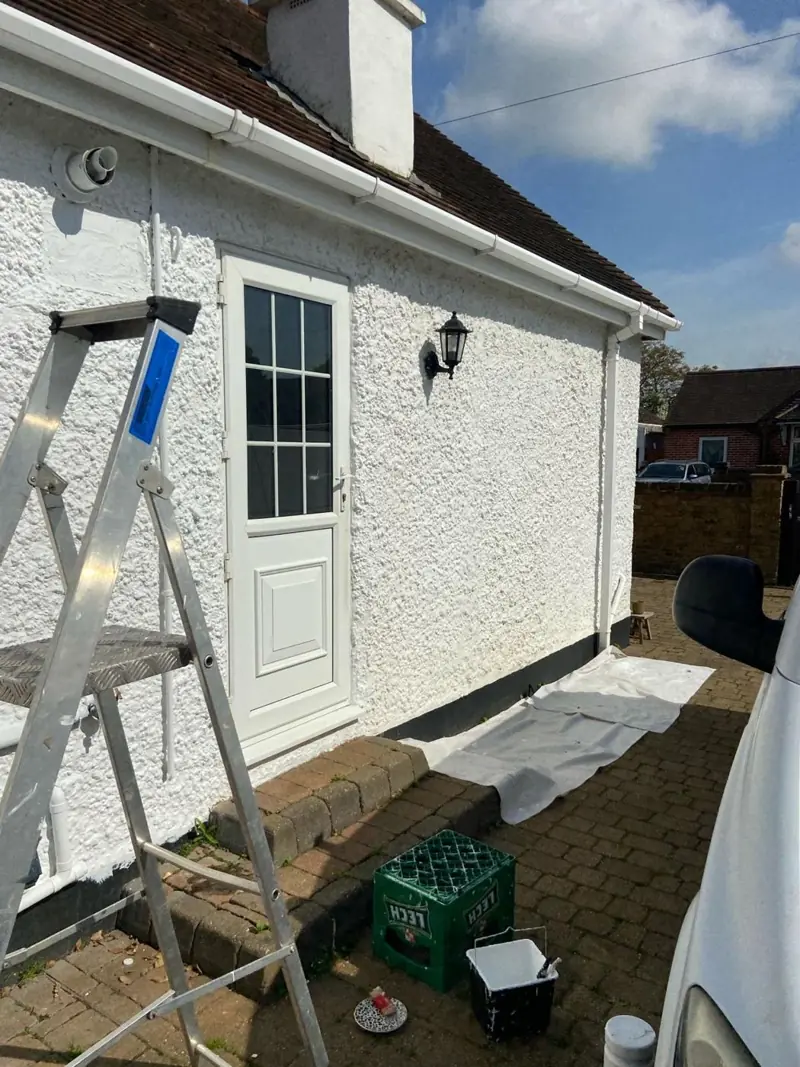
Lias is a soft limestone. Moisture moves through it and out again, and old lime-based stucco on top of it works the same way. A modern acrylic masonry paint forms a much tighter film. Applied over lias or lime stucco, it can hold water in the wall, and the usual results are blistering, powdery stone just behind the paint and damp showing on the inside face of the wall.
For painted or stuccoed lias we use breathable mineral paints or limewash-type coatings, depending on what is already on the wall. Before coating we do a small scrape and wetting test to find out whether the old finish is lime-based, mineral or modern masonry paint, because the new coat has to suit the old one. Where acrylic has already been used on soft stone and is failing, it may need to come off before a breathable system will hold.
One front, two materials
The Old Swan is a good illustration of a mixed substrate: lias and brick under the same coat of paint. Many of the village’s listed houses also have later brick rear extensions meeting the stone. The joint between the two is where cracks open and where finishes behave differently. We look for a coating that suits both materials rather than using two systems that will weather at different rates, and we treat the junction with a flexible repair before painting.
Damp plinths near the valley floor
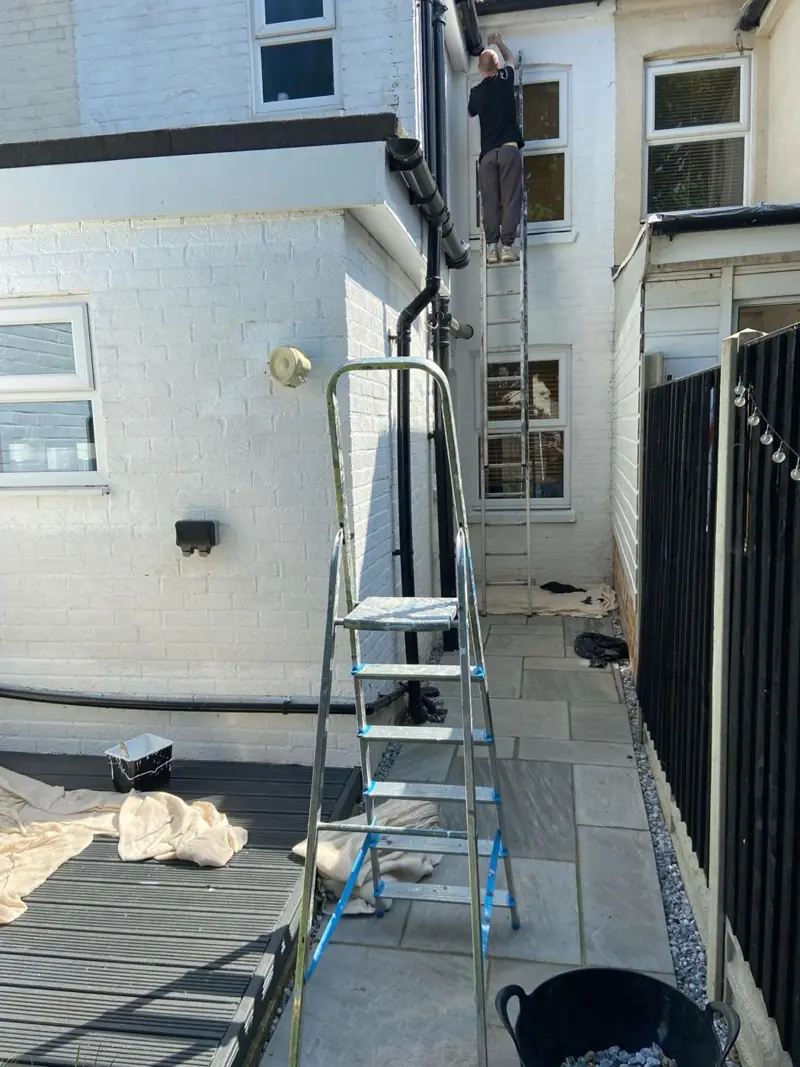
Earls Barton’s spring-line position above the Nene means walls on lower ground stay wet at the base. Plinths and the lowest metre of masonry show it first, through green growth, salts and paint lifting. Our method is to clean off growth with a biocide, let the wall dry for as long as the weather allows, and use a moisture-tolerant system. Painting a wet plinth to hide a stain only buys a few months.
Rendered walls on the later houses
Beyond the historic streets, the brick houses that make up most of Earls Barton include some with painted render or painted brick panels. These take a conventional masonry system: algae treatment, stabilising any chalky surface, filling cracks and two coats of masonry paint. Our guide to painting render and roughcast covers that process, and the main render and masonry painting page explains how a job is run from start to finish.
More about the village’s buildings is on our Earls Barton page.
Last updated by Dean, DH Painter & Decorator.