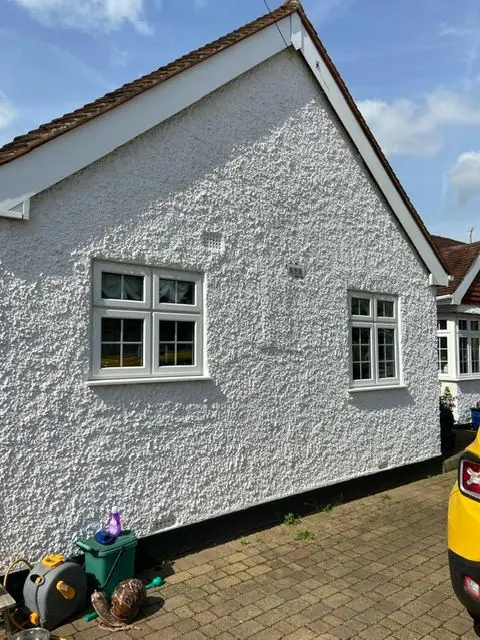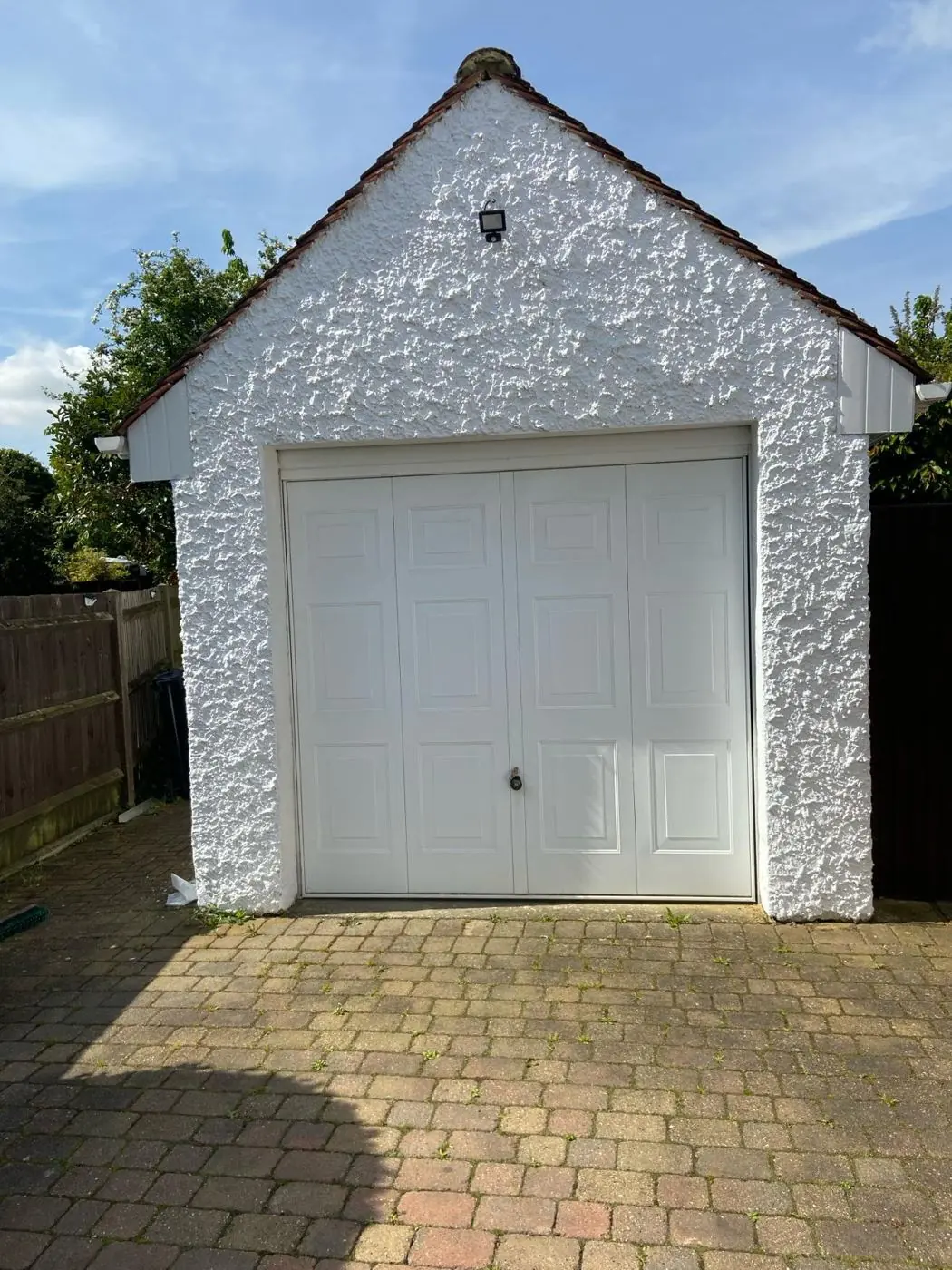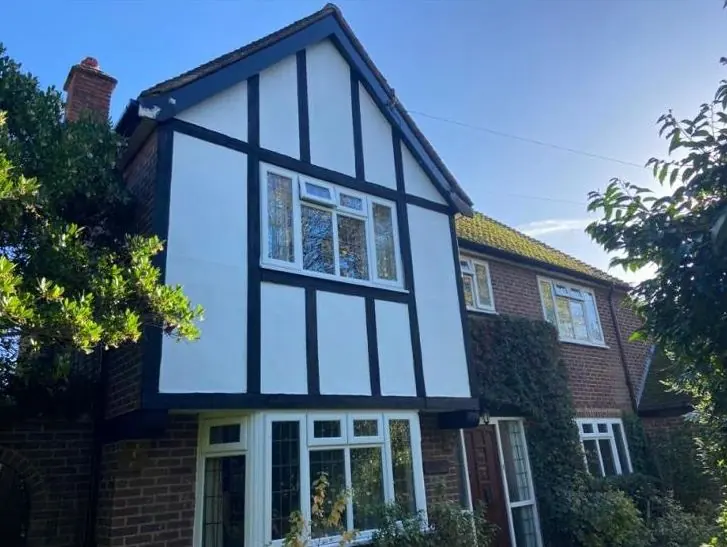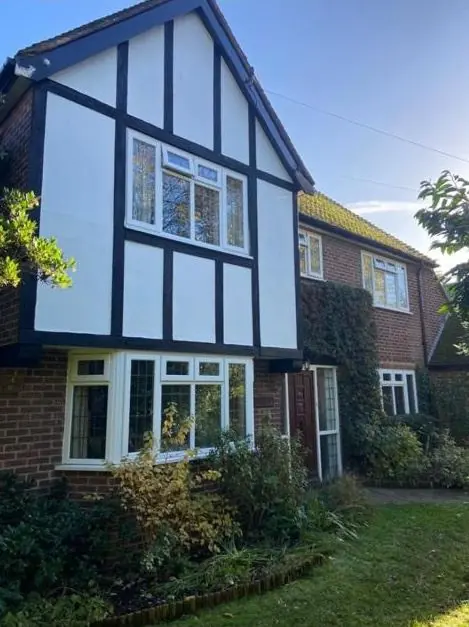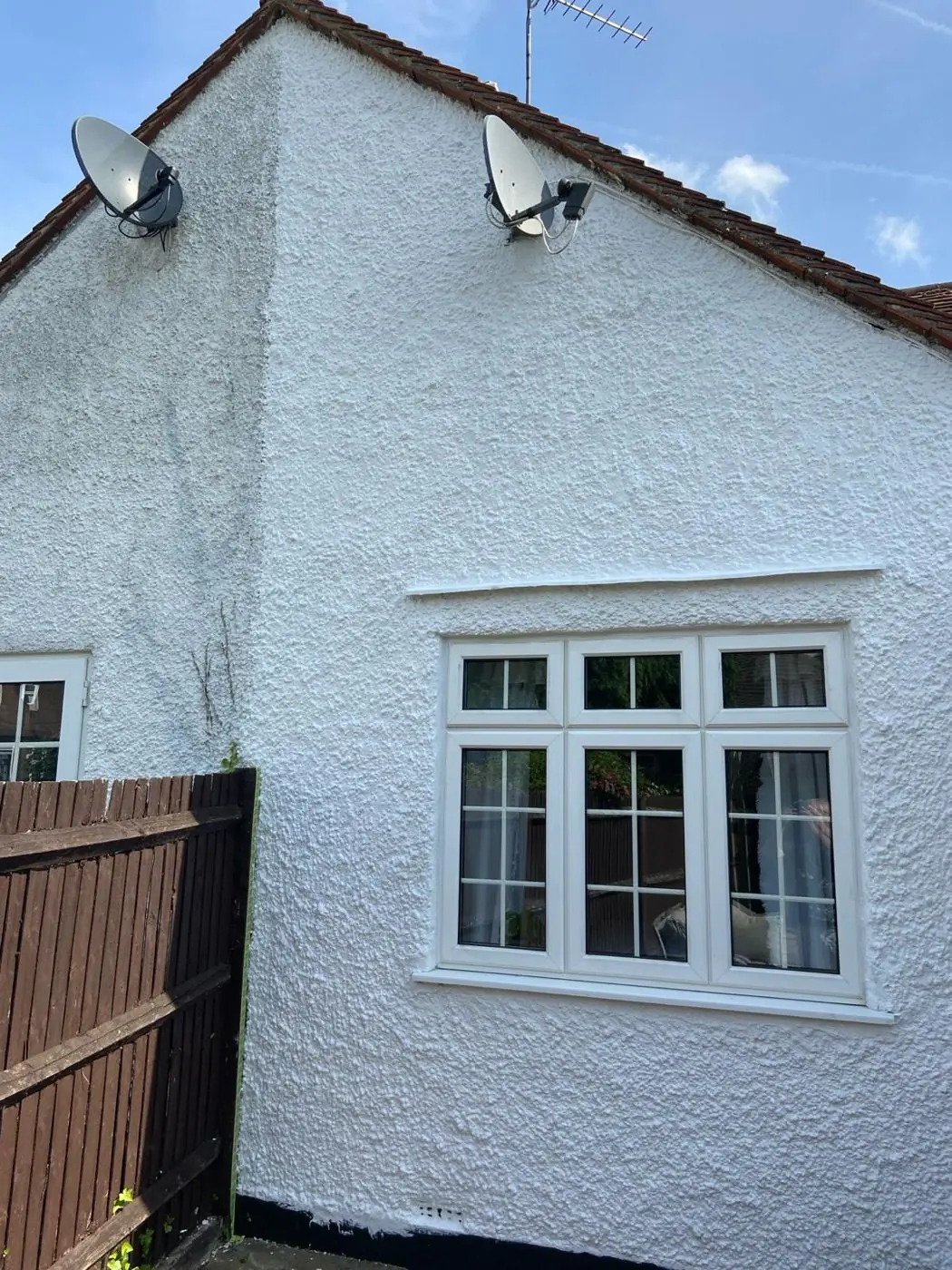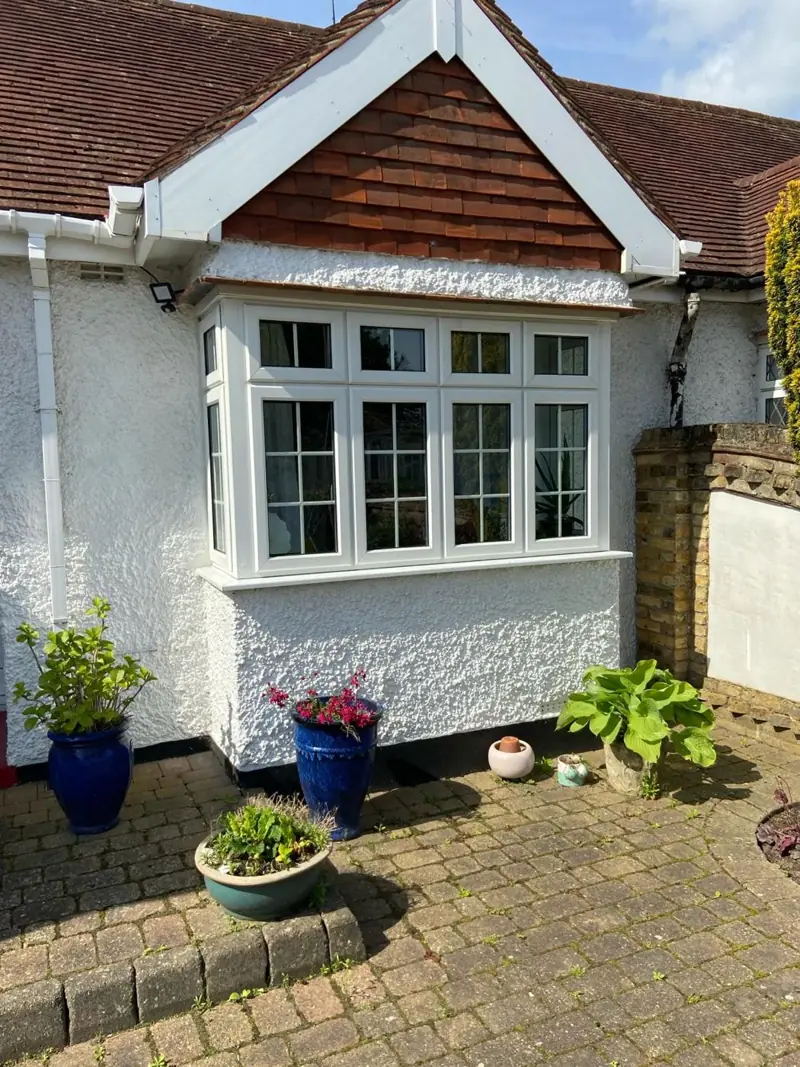
DH Painter & Decorator paints the outside of homes in Great Billing, the former estate village in NN3 about 3.9 miles east of Northampton town centre. In the conservation core Dean concentrates on timber windows, doors, bargeboards and ironwork rather than the stone itself, and on the surrounding estates on joinery, soffits and garage doors.
Two villages on one hillside
Great Billing splits neatly in two for anyone planning outside work. At its heart, stone lanes branch off the High Street, protected as one of Northampton’s smallest conservation areas at about 10 hectares. Around it, mostly to the north and east, sit the late 20th-century houses of Lady Winefride’s Walk, Cumbrae Drive, Valentine Way, Penfold Lane and the surrounding closes, built in light-coloured brick with uPVC windows. The paint, the preparation and even the way we get a ladder up differ between the two, so a quote starts with working out which half of Great Billing your house belongs to.
Dean travels out to Great Billing from Northampton, roughly 3.9 miles, and quotes each house only after a visit. The general approach to outside work is set out on our main exterior painting page; this page deals with what is particular to Great Billing.
In the stone core, the joinery does the talking
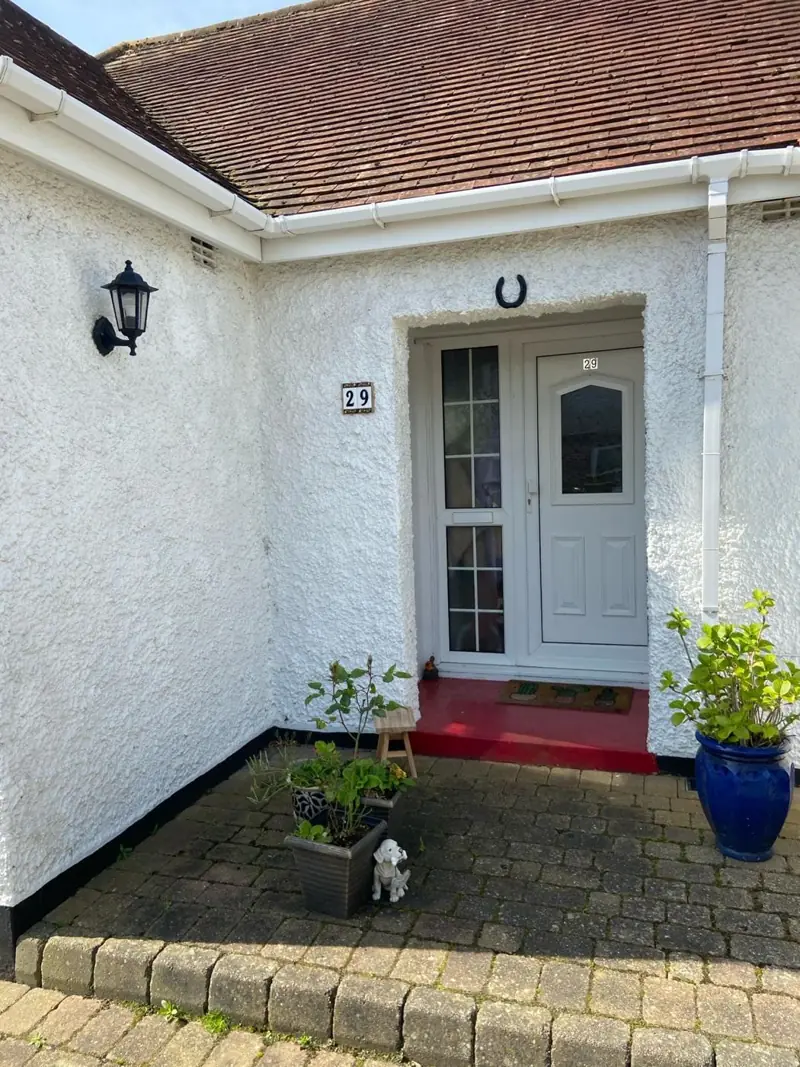
The coursed Pendle limestone and golden ironstone walls of the old village are generally left bare. Coating unpainted stone is among the changes the 2018 appraisal warns against, so exterior painting here mostly means the timber and metal set into that stone:
- Casements and sliding sashes. Original casements and sashes are worth keeping, and the appraisal says so. We cut out failed putty, consolidate soft sills and use flexible oil or alkyd paints that move with old timber.
- Doors. Ledged-and-braced cottage doors and Georgian panelled doors with fanlights, painted in colours that suit their age.
- Bargeboards. The paired estate houses E.F. Law designed in the 1860s on High Street and Church Walk have fretted bargeboards that need hand scraping and brush work in every cut-out.
- Cast-iron rainwater goods. Old iron gutters and downpipes, taken back to firm metal and primed before gloss.
Several buildings are listed, among them the Old Post Office, the Old Rectory, the Manor House and the thatched Elwes Arms. A change of colour or stripping back on a listed building may need listed building consent, so we check that before quoting rather than after.
Lanes, walls and trees: planning the work
Getting to the house is often harder than painting it. Pound Lane and Cattle Hill are narrow informal lanes, Pound Lane cottages open straight onto the lane, and Elwes Way winds tightly between stone walls. Many frontages stand at the back of the highway with no garden in front, so ladders and any tower footings go on the road edge or the verge. The verges are soft and easily rutted, so we park the van away from them and carry kit in.
Mature trees, some under Tree Preservation Orders, shade a lot of elevations. Shaded timber dries slowly, gathers leaf litter and turns green, which means a longer wash-down and a later start on cool mornings. Our ladders and boards are set to clear the canopy, since cutting any tree over 75mm in diameter inside the conservation area means giving the council six weeks’ warning. Overhead cables along Pound Lane and Church Walk also decide where ladders can go.
The estates around Great Billing Way
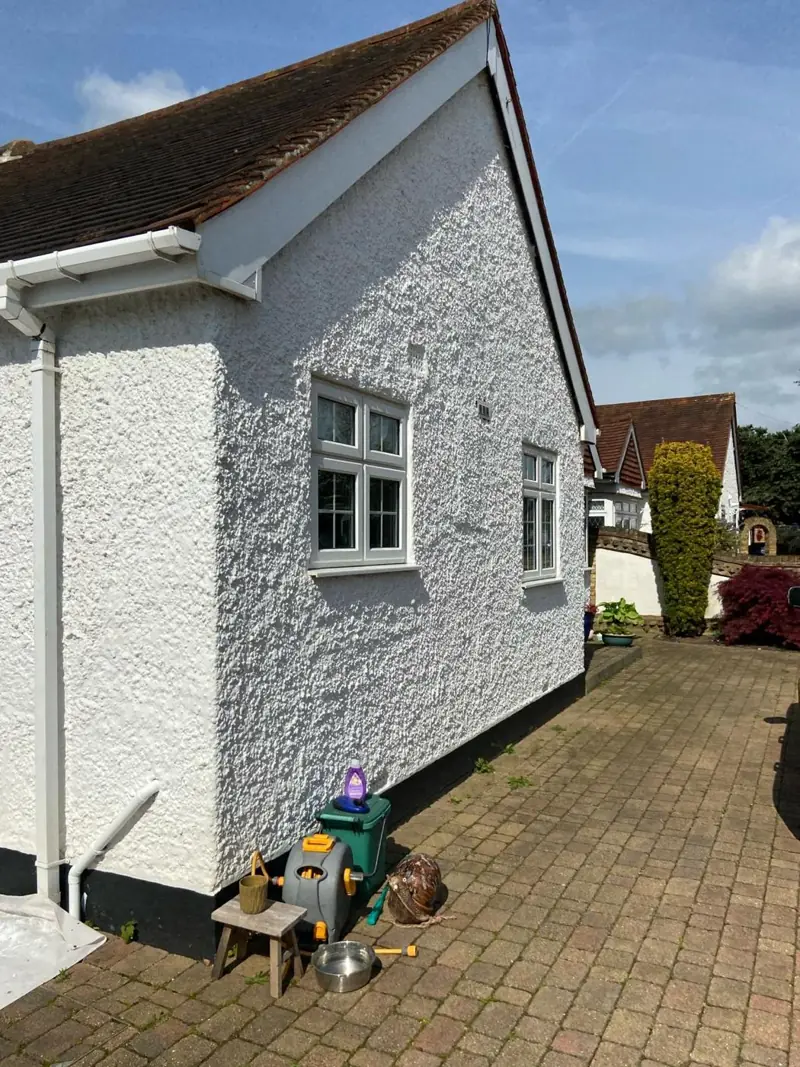
On the modern closes the job is more familiar: front doors, timber or painted soffits, garage doors and any remaining timber cladding or porches, with uPVC left alone. Where a close has fewer mature trees, south and west elevations get full sun, and their gloss tends to fade sooner than on shaded fronts. For timing, our guide to exterior painting seasons explains why we aim for settled spells between late spring and early autumn.
One house needs a category of its own: Herewyt House, the 1932 Colt house on Elwes Way, whose facade is cedar boards set between brick pilasters. Cedar like that calls for a microporous stain or an oil suited to the timber, never masonry paint or gloss.
Arranging a visit
Dean will walk round the outside with you, note which surfaces are original, check whether the building is listed and look at how the lane and trees affect access. You then get a written quote that lists each surface. For the wider picture, see painting and decorating in Great Billing.
Last updated by Dean, DH Painter & Decorator.