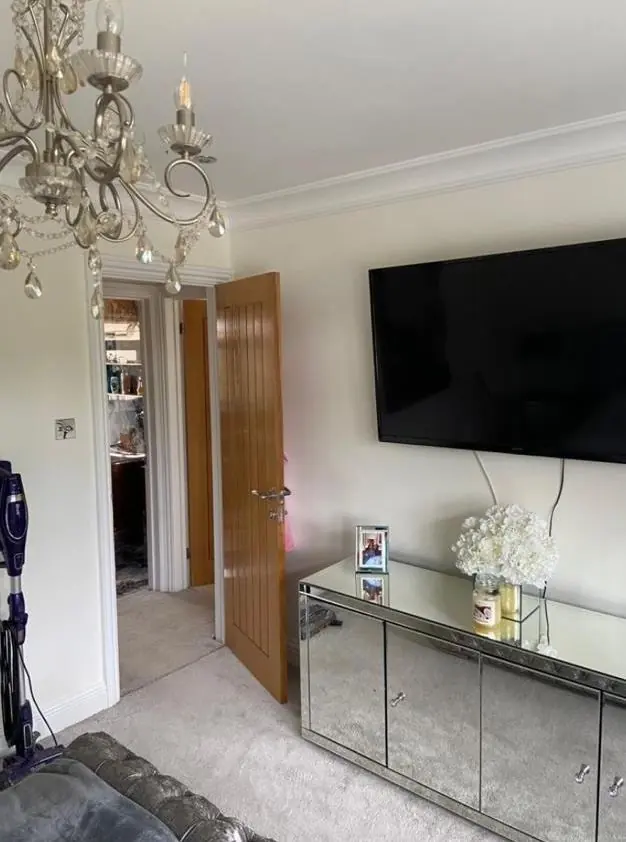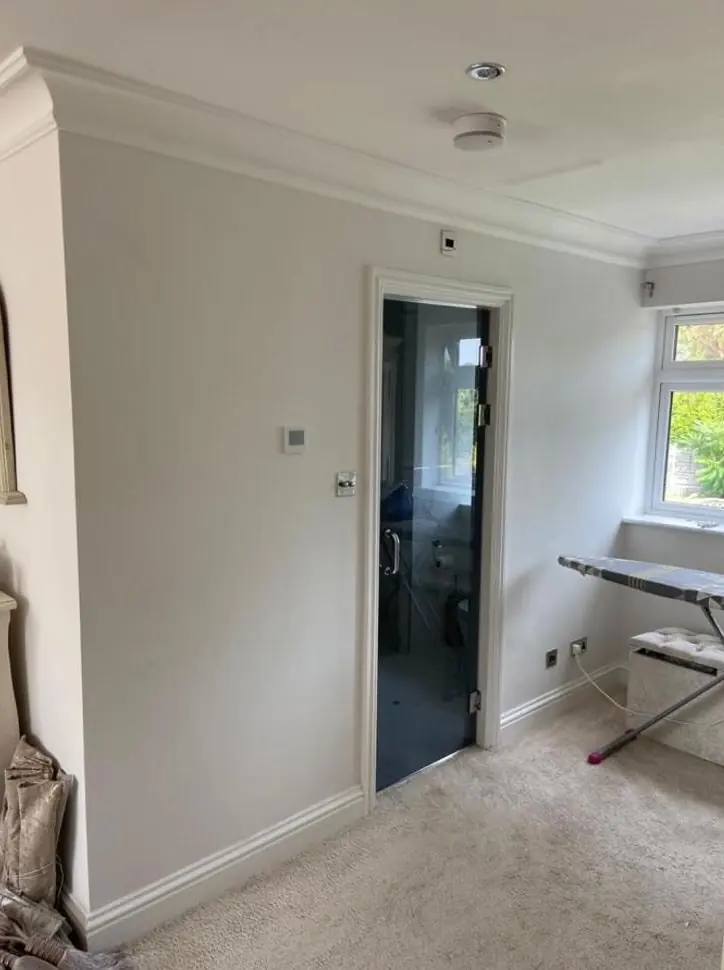
Dean gives colour and finish advice as part of decorating jobs in Earls Barton (NN6), 6.4 miles east of Northampton. In the conservation area the starting point is the lias stone, roofs and any listing; in the later houses across the rest of the village, the light in each room matters more.
Start with the stone, not the colour card
The historic part of Earls Barton is built of coursed lias limestone, with roofs of thatch, slate or plain tile and brick chimney stacks. Lias has a cool, grey-brown cast, quite different from the warmer Northamptonshire ironstone in the body of All Saints’ Church. Colours that look gentle on a chart can turn harsh against it. Brilliant white woodwork beside lias often looks stark, while softer off-whites, stone tones and muted greens or greys sit back and let the walls lead.
Thatch changes things again. Three listed buildings in the core keep thatched sections, The Manor House at 76 High Street, No. 40 on The Square and The Old Swan, and a thatched roof brings deep eaves and a brown-gold mass above the walls. Joinery colours on those buildings read against the thatch as much as the stone, which tends to favour earthy, traditional shades over anything bright.
Listed fronts, shopfronts and ironwork: ask before you change
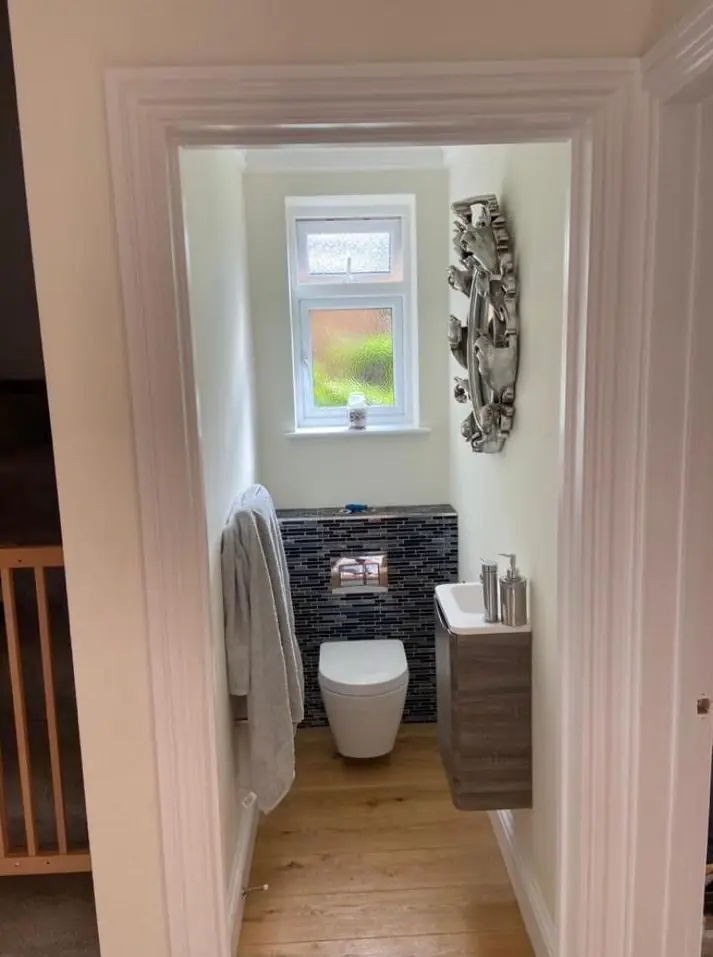
Within the conservation area around The Square, West Street and High Street, 28 buildings are listed: All Saints’ at Grade I and 27 at Grade II. Changing the colour or finish of a listed elevation, shopfront or set of railings can need listed building consent, so for anything more than repainting in the same colour, the first conversation should be with North Northamptonshire Council. Listing applies building by building, so the real question is whether your own house is on the list, not only whether it sits in the conservation area.
- Partly painted fronts such as Rose Cottage on West Street and the early 18th century Stags Head: match the existing finish and keep paint off the bare stone.
- Listed shops at The Square and High Street have 20th century timber shopfronts where traditional, planning-sensitive colours are expected.
- Historic ironwork like the churchyard railings and gates near All Saints’ is normally kept black or another traditional colour, like for like.
Dean can help you narrow down a shortlist to take to the council, but the decision is theirs, and we would always rather check than guess.
Small windows, thick walls and indoor light
Inside the 17th and 18th century cottages, light arrives through casement windows set in solid walls, often with low ceilings. Rooms like that are darker than their orientation suggests, so a pale grey that looks fine on a sample card can go flat and cold. Warmer whites and soft creams with a yellow or red undertone usually hold up better. Limewash and mineral paints, which suit these walls technically, also come in more muted palettes, and that limits the choice in a helpful way.
We test colours with large two-coat samples on more than one wall, and judge them at the time of day you use the room. Our colour and finish advice page explains how light direction and undertone affect every room, wherever it is.
The rest of the village: more freedom, different questions
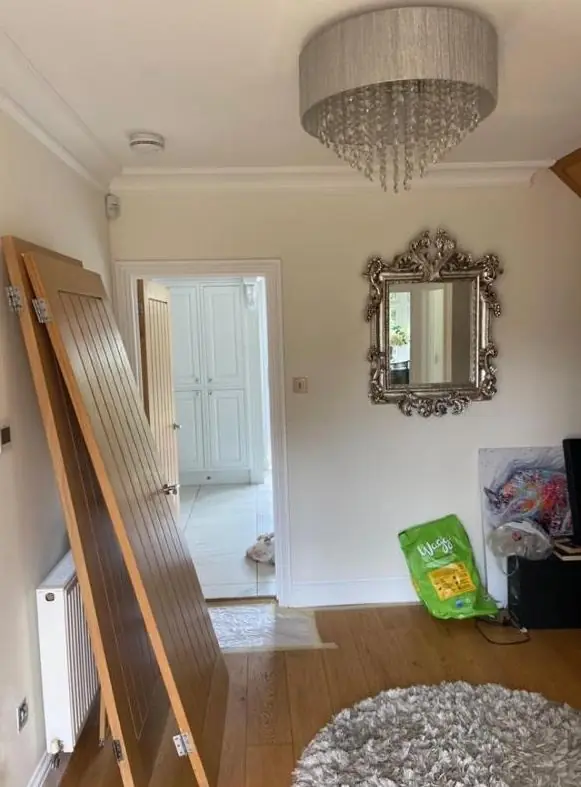
Most homes in Earls Barton sit outside the historic core, in the later brick houses built as the population climbed past 5,000. Here there is no stone to defer to and normally no consent to think about, so the questions are about flooring, kitchens, how one room flows into the next and what will still look right in ten years. If you want a stronger front door colour, an unlisted brick house away from the core leaves that choice with you.
For more on decorating across the village, see our Earls Barton area page, or read our guide to choosing a decorator before you book anyone.
Last updated by Dean, DH Painter & Decorator.