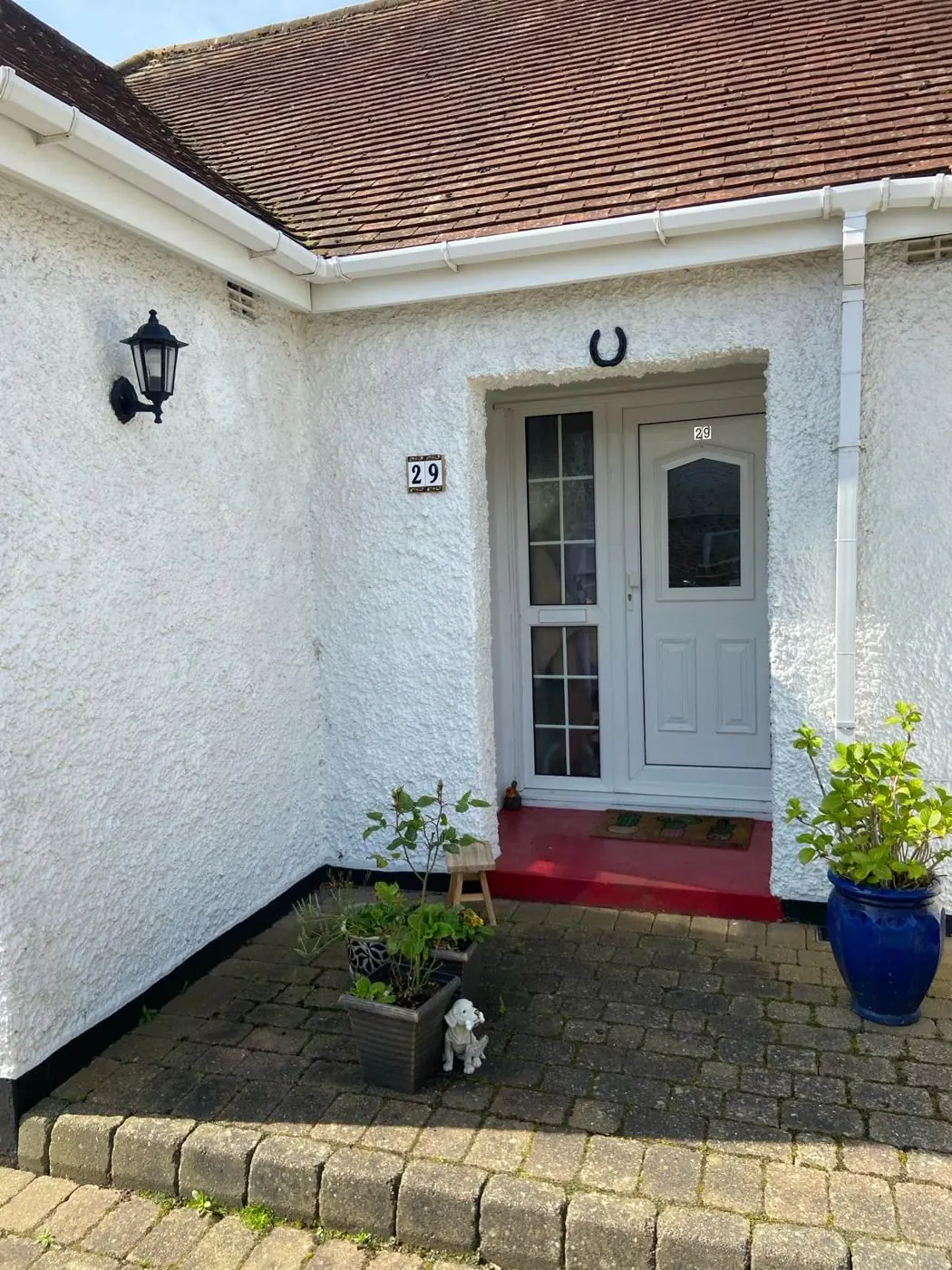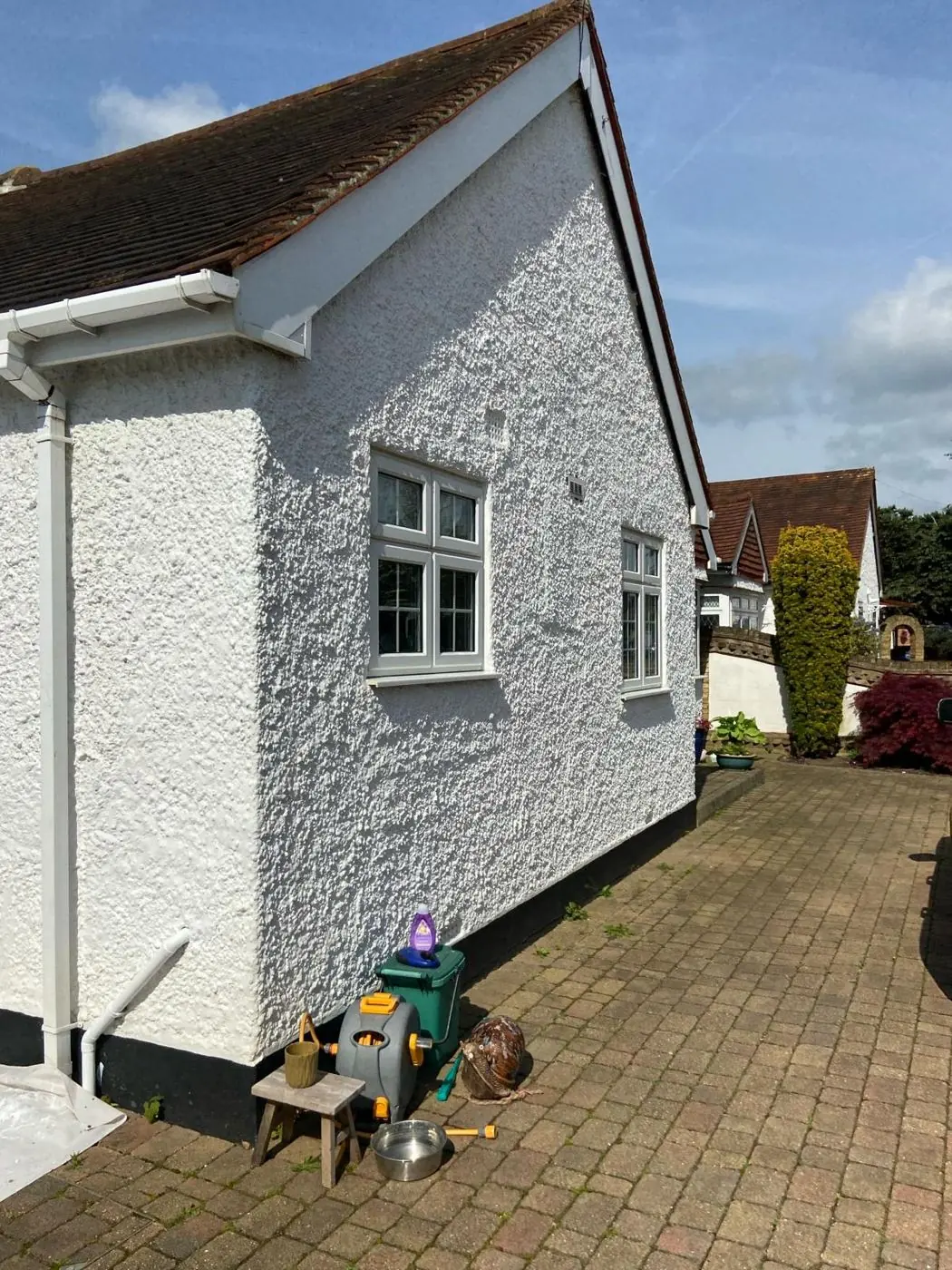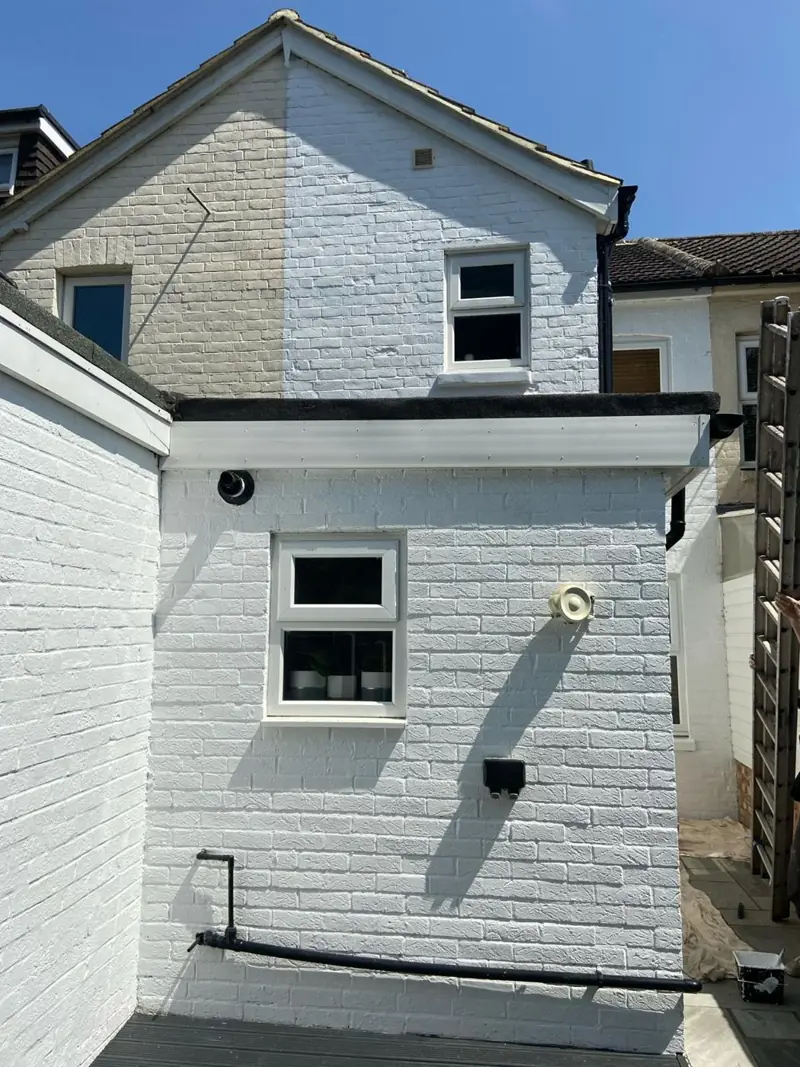
DH Painter paints timber and uPVC fascias, soffits, bargeboards and gutters in Earls Barton, NN6, which lies 6.4 miles east of Northampton. The bulk of that work is on the later brick houses, plus slate and tiled cottages in the old core; thatched roofs there have no fascias at all.
No boards under the thatch
Several listed buildings in the middle of Earls Barton are thatched, among them The Manor House at 76 High Street, The Old Swan and No. 40 The Square. A thatched roof finishes in deep eaves with no fascia board, no soffit and no gutter on that section, so on those buildings there is no roofline to paint. We mention it because owners sometimes expect a roofline quote and find that the work is really the joinery and walls below the eaves.
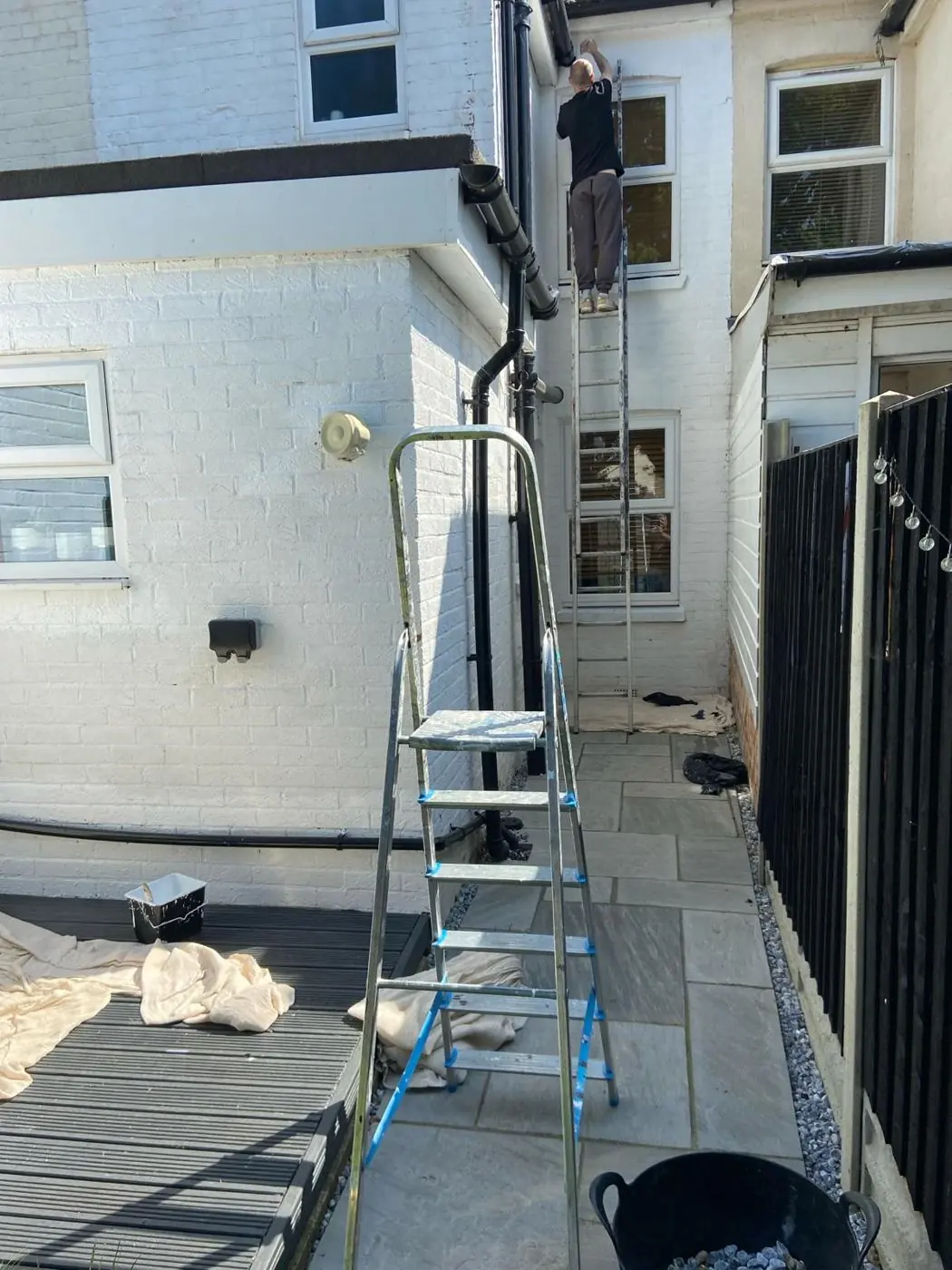
What thatch does affect is access. Nothing should lean against thatch, so if a thatched building has a slate or tiled section with boards, or walls under the eaves that need painting, we work from a tower rather than a ladder.
Slate and tiled cottages in the old core
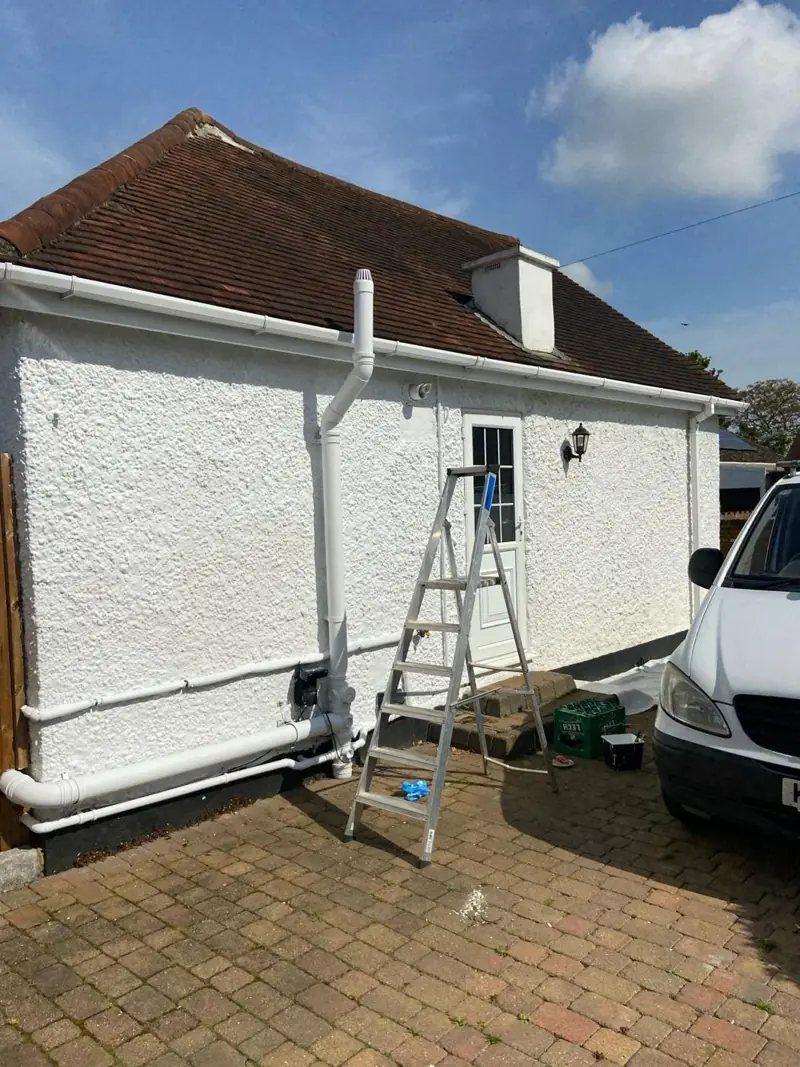
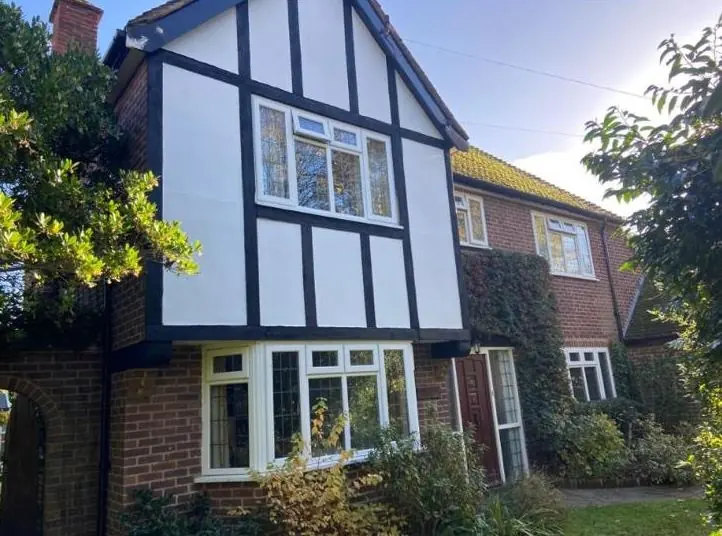
Many of the other old cottages, on streets such as West Street, London End and Park Street, have slate or later plain-tile roofs, often with ashlar gable parapets and brick chimney stacks. Where they have timber fascias or bargeboards, the boards are often old, much painted and exposed at the gable ends. We probe the ends and corners for soft timber, cut back failed paint to a sound edge and use a microporous system that copes with the movement of old wood. Repainting boards in the same colour is routine, but on a listed cottage a colour change at the eaves is worth checking with North Northamptonshire Council first.
Because these buildings stand directly on the street, the tower or ladder for a front fascia goes on the footway, and we keep a route open for people walking past.
The later village: where most rooflines are
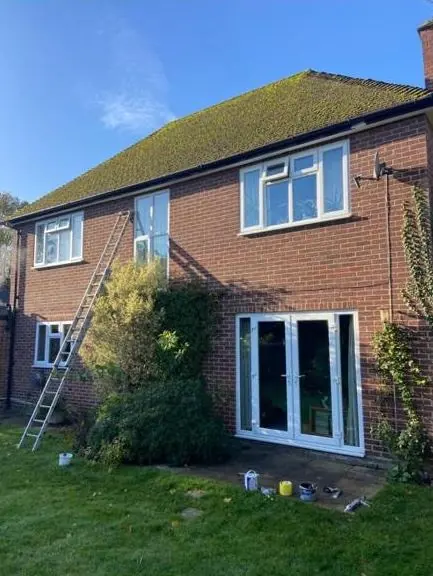
Earls Barton grew from 729 people in 1801 to 5,387 by 2011, so most homes stand outside the historic core. These later brick houses have conventional timber or uPVC fascias and soffits, and they make up most of the roofline work in the village.
| Roofline type | Where you find it in Earls Barton | What it needs |
|---|---|---|
| Thatched eaves | Manor House, Old Swan, No. 40 The Square | No fascia work; tower access for anything below |
| Old timber boards and bargeboards | Slate and tiled cottages in the core | Rot check, careful prep, microporous paint |
| Painted timber fascias and soffits | Later brick houses | Scrape, spot-prime, undercoat and gloss or satin |
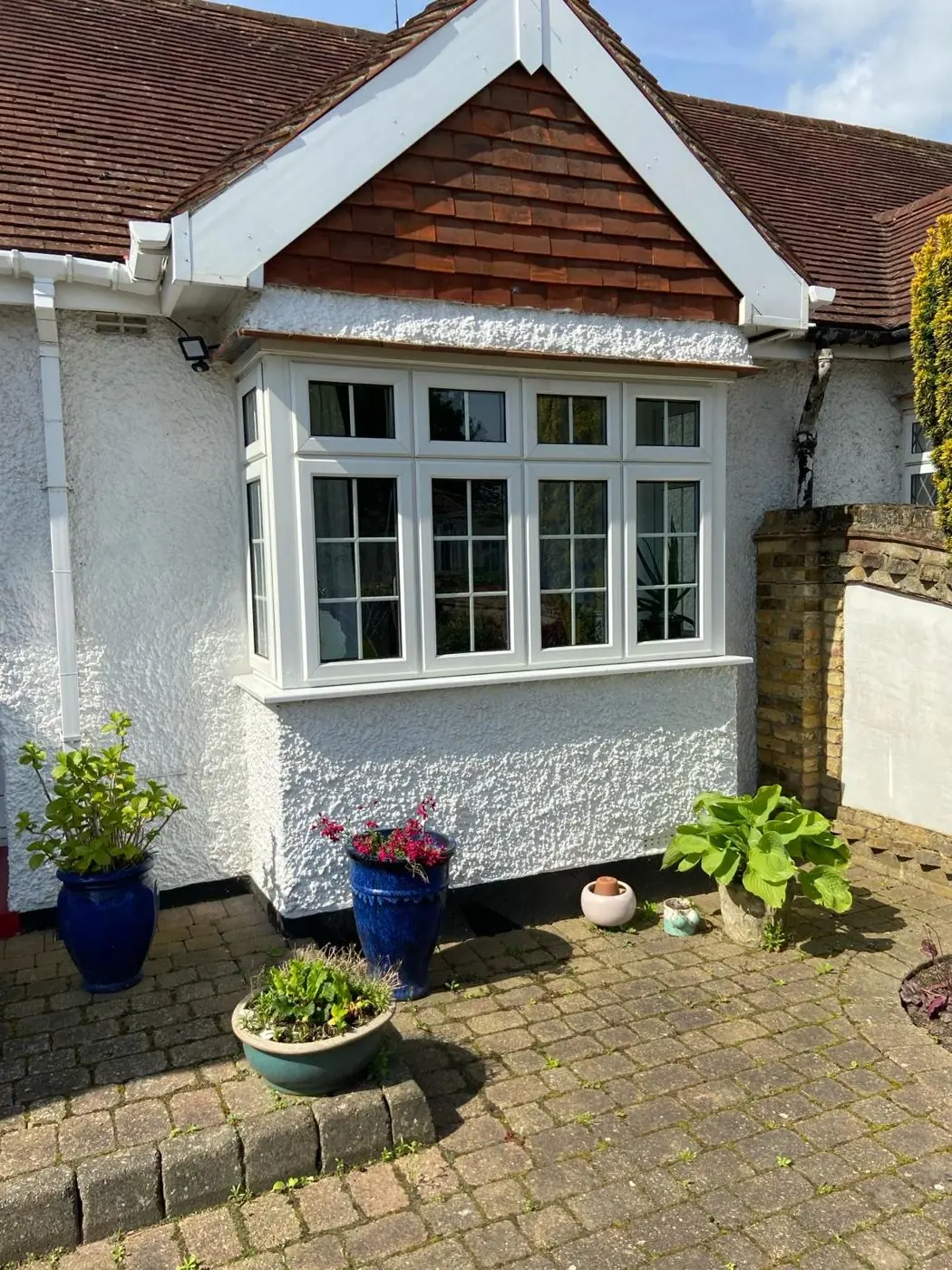
| uPVC fascias and soffits | Later and newer houses | Clean, key, suitable primer, then top coat |
Gutters, downpipes and brackets are normally done at the same time so the roofline is one colour from end to end. Where an older cottage still has cast-iron gutters, they need rust treatment and a metal primer rather than wood paint. If you are painting walls and windows as well, our exterior painting service can cover the whole house in one visit.
Wet ground, dry boards
Being on the valley side of the Nene affects roof level as well as ground level. Mornings on the lower side of the village can stay damp, and timber boards need to be dry to the touch before priming. We plan roofline work for settled spells and begin once any dew has gone. If a gutter is leaking onto a board, we point it out before painting, because new paint over wet timber will not last.
The full process, from rot checks to top coat, is on the fascia and soffit painting page. You can read more about the village on our Earls Barton area page.
Last updated by Dean, DH Painter & Decorator.