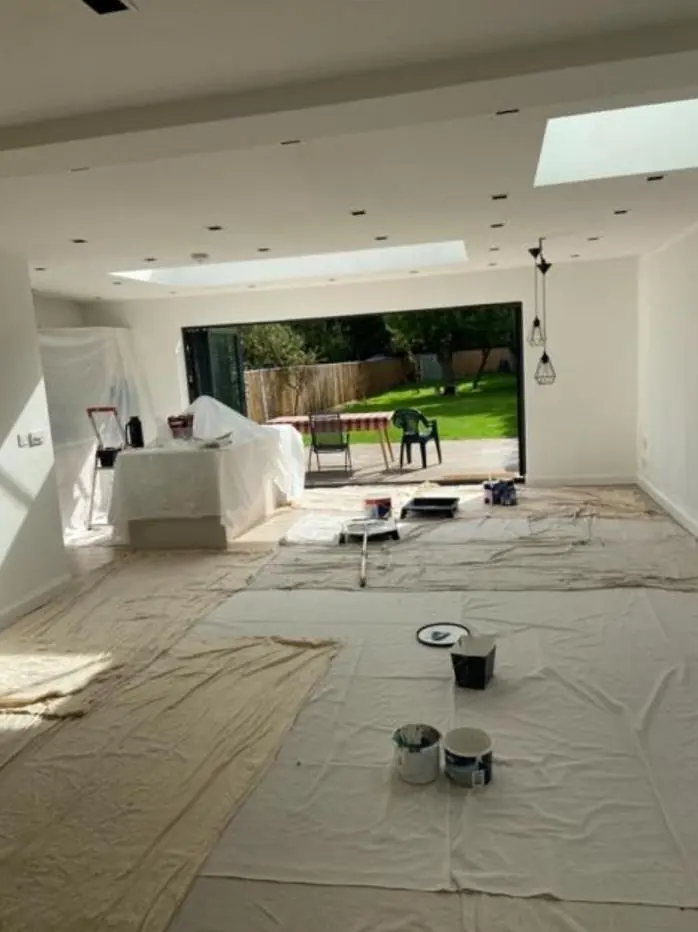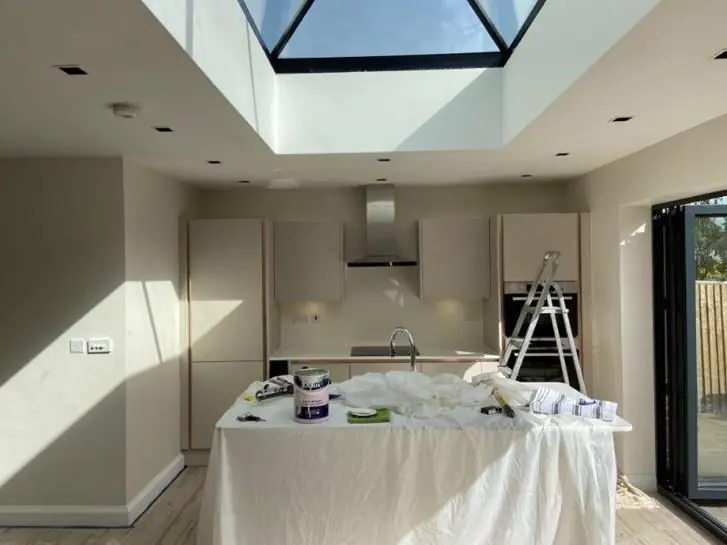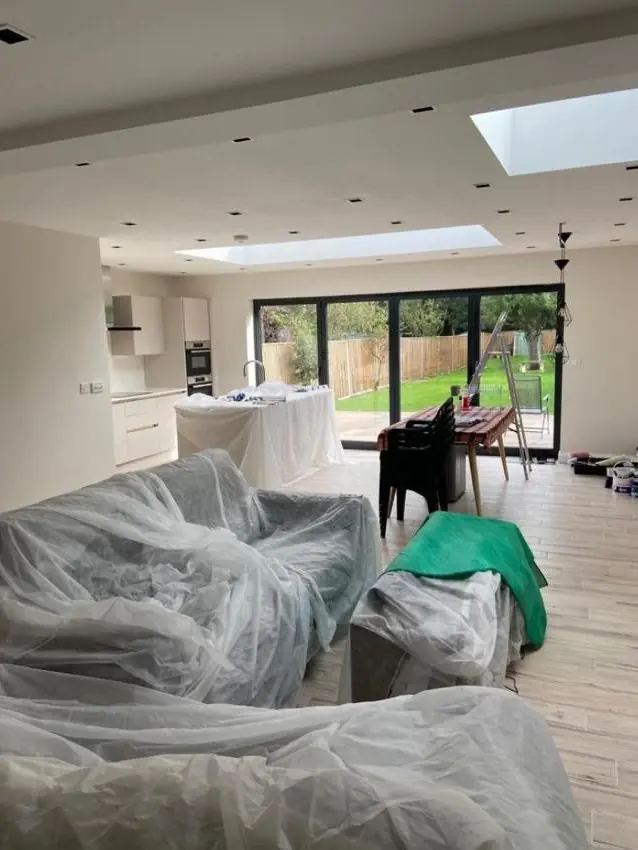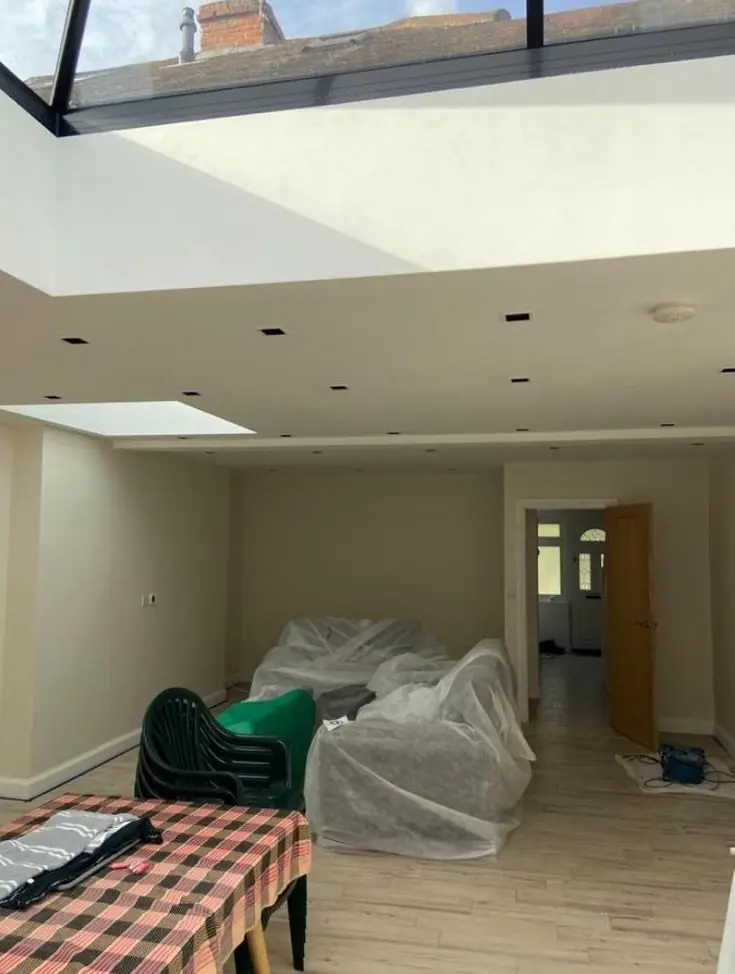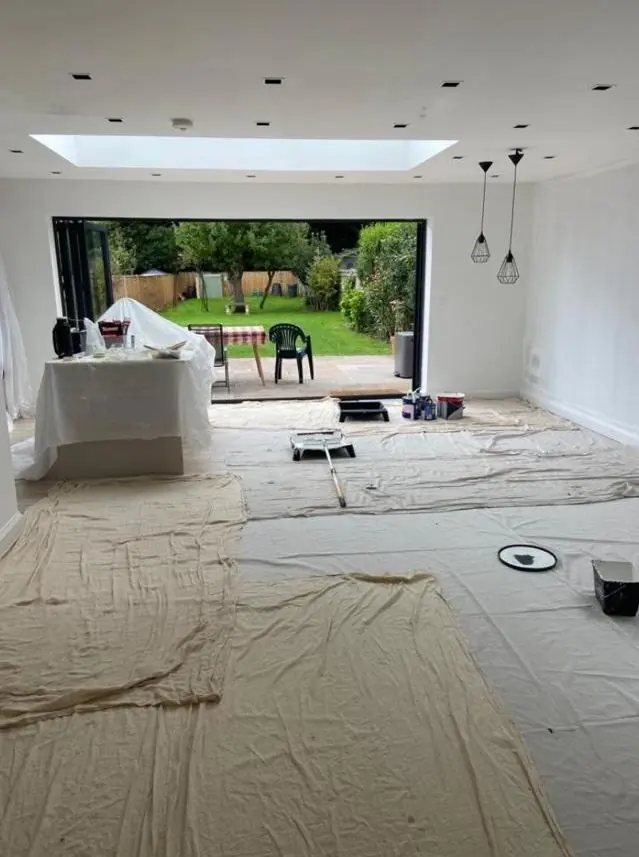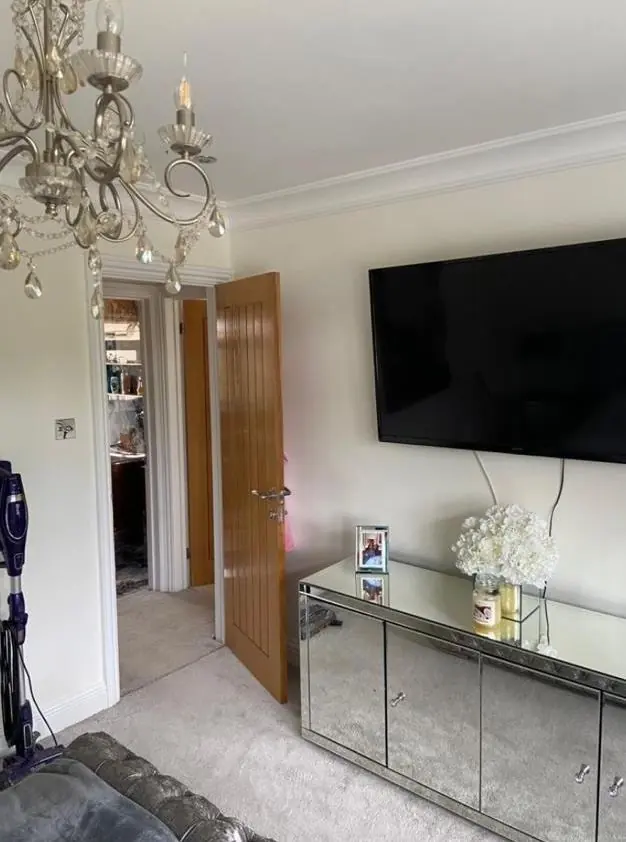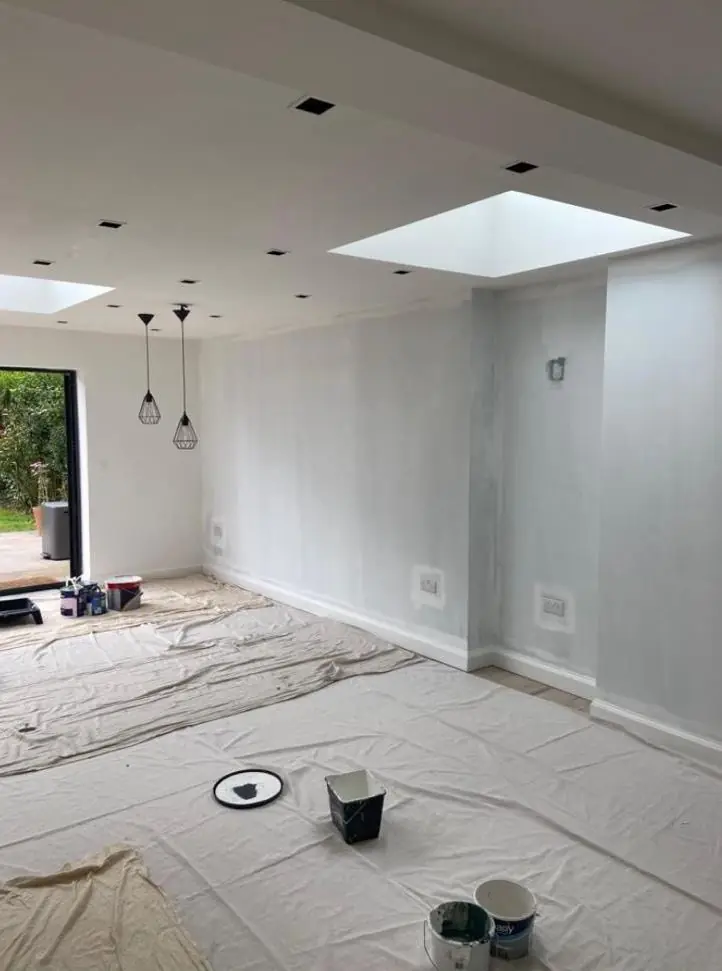
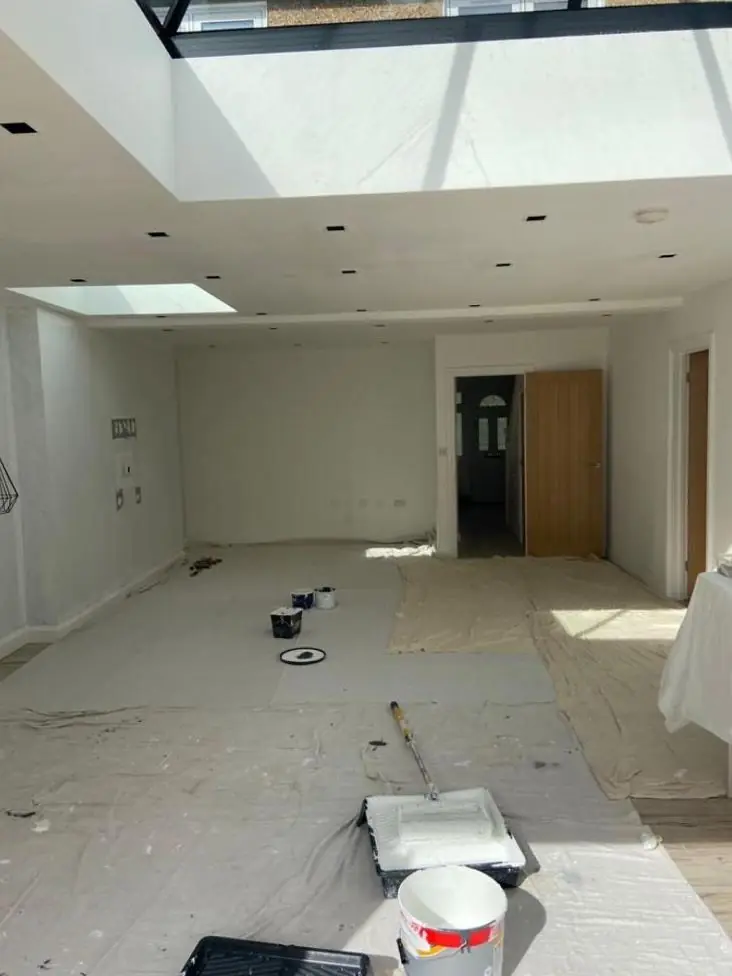
Dean decorates new plaster, extensions and re-skimmed rooms in Earls Barton, 6.4 miles east of Northampton. He checks the plaster is dry, applies mist coats and finish coats, and pays particular attention to joins where a new extension meets an older solid stone wall.
When a brick extension meets a lias house
A pattern runs through the listed houses in Earls Barton’s conservation area: a coursed lias limestone front of the 17th or 18th century, with later brick extensions added at the rear. A new kitchen or garden room added today joins the same kind of wall. The result, inside, is a room where one wall is centuries-old solid stone, possibly with lime plaster, and the next is new blockwork finished in gypsum skim.
Those two surfaces need different handling. Fresh gypsum plaster is thirsty and needs a diluted mist coat to seal it and give the finish coats something to grip. Old lime plaster on a solid wall needs to keep breathing, and a vinyl emulsion over it can trap damp. Where they meet, a new plasterer’s bead or a crack line usually marks the boundary. Dean treats each side according to what it is, then brings the finish coats across both in a colour and sheen chosen to hide the join.
Drying time on a spring-line site
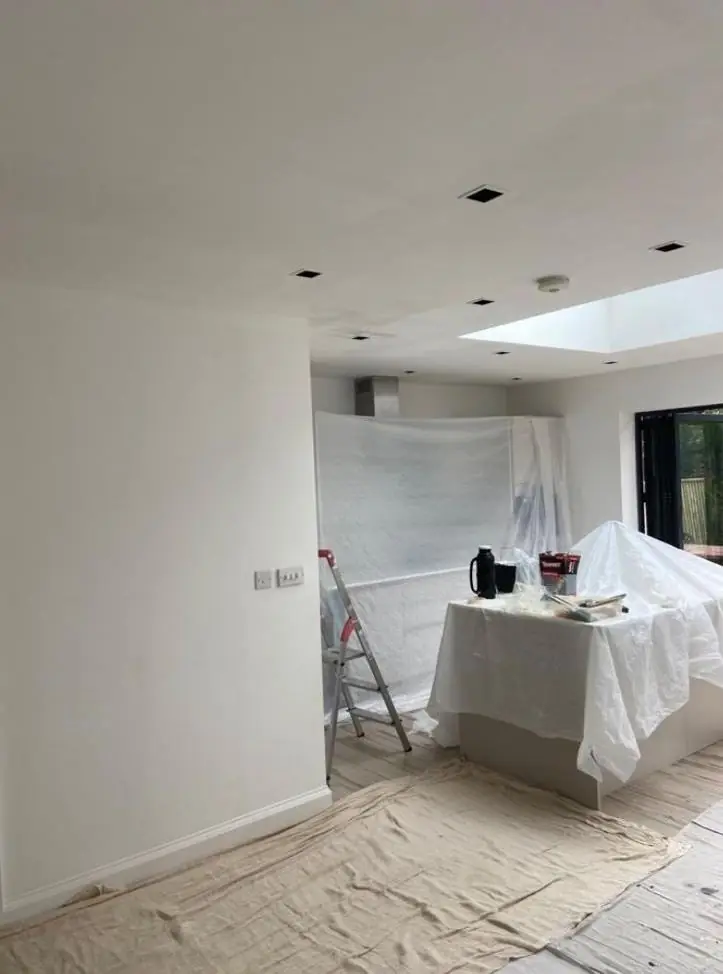
Earls Barton grew up as a spring-line settlement on the north bank of the Nene, with the valley floor below it to the south. New plaster takes weeks to dry, and a cold extension with a fresh concrete slab on damp-prone ground near the valley can take longer. Paint applied too soon traps moisture and shows later as bubbling, flaking or patchy colour.
Before any paint goes on we check the plaster across the whole room: the colour should be an even light pink with no dark patches in corners, reveals or the low parts of walls, and behind where radiators will sit. If a section is still dark we say so and come back, rather than painting over it to keep the diary moving. Keeping the heating moderate and a window cracked open usually helps more than blasting the room with heat, which can crack a fresh skim. Our guide to painting new plaster and mist coats explains what to look for.
New rooms in the later village
Most of Earls Barton’s housing is the brick-built village that spread out around the old core, and here extension work is simpler on paper: modern walls, gypsum skim throughout, new softwood skirtings and doors. The decorating still has a fixed order. Mist coat on walls and ceilings, then filling and caulking whatever the mist coat shows up, then two finish coats, then knotting, priming and painting the new joinery.
Where the extension opens through into the existing house, the old room usually needs at least a fresh coat so the colours match. If you are re-skimming an older room in the same house, the same mist coat process applies to that ceiling or wall too.
Listed houses: check before the decorating starts
With 28 listed buildings inside the conservation area, some Earls Barton extensions are attached to listed houses. The building work itself should already have been agreed with the council, but decorating can touch the historic fabric too. Painting newly exposed stone, covering original plaster or changing the finish on a historic wall inside a listed building can need its own consent from North Northamptonshire Council. It is worth confirming what was agreed before we start, and Dean will keep paint to the new work unless you have the go-ahead.
For the full process from mist coat to final snagging, see our main new plaster and extension painting page, or visit the Earls Barton area page for other decorating in the village.
Last updated by Dean, DH Painter & Decorator.