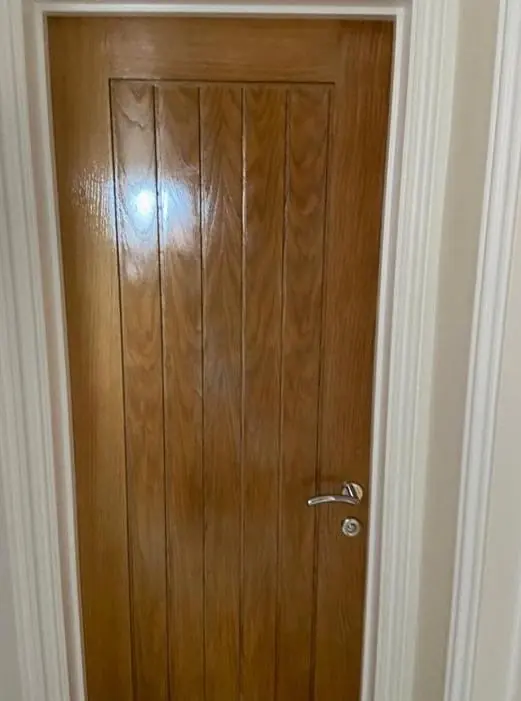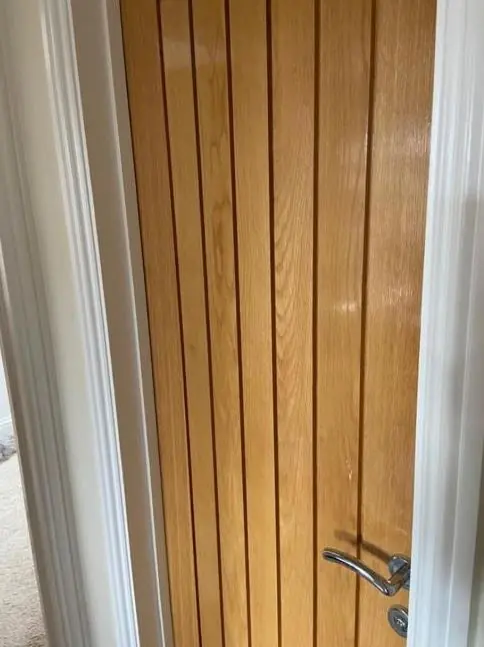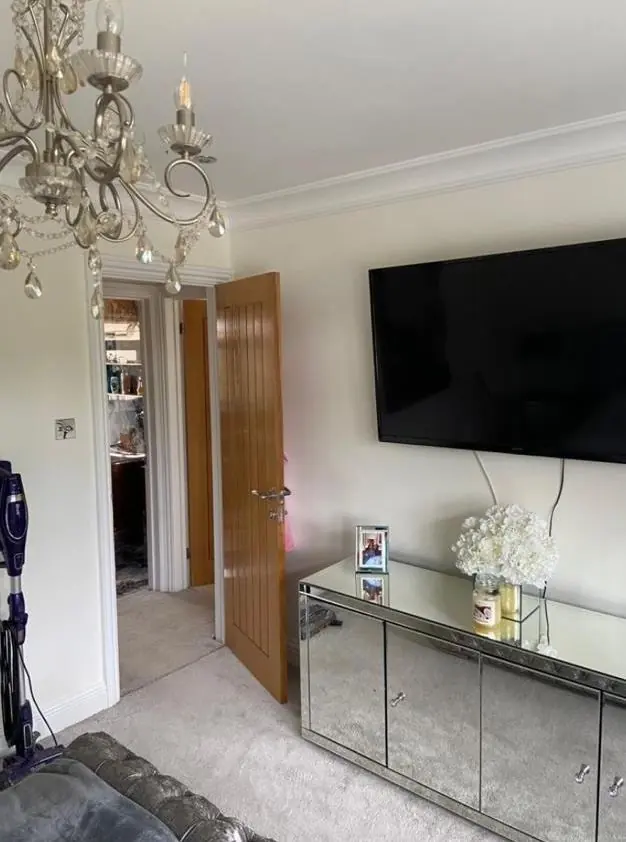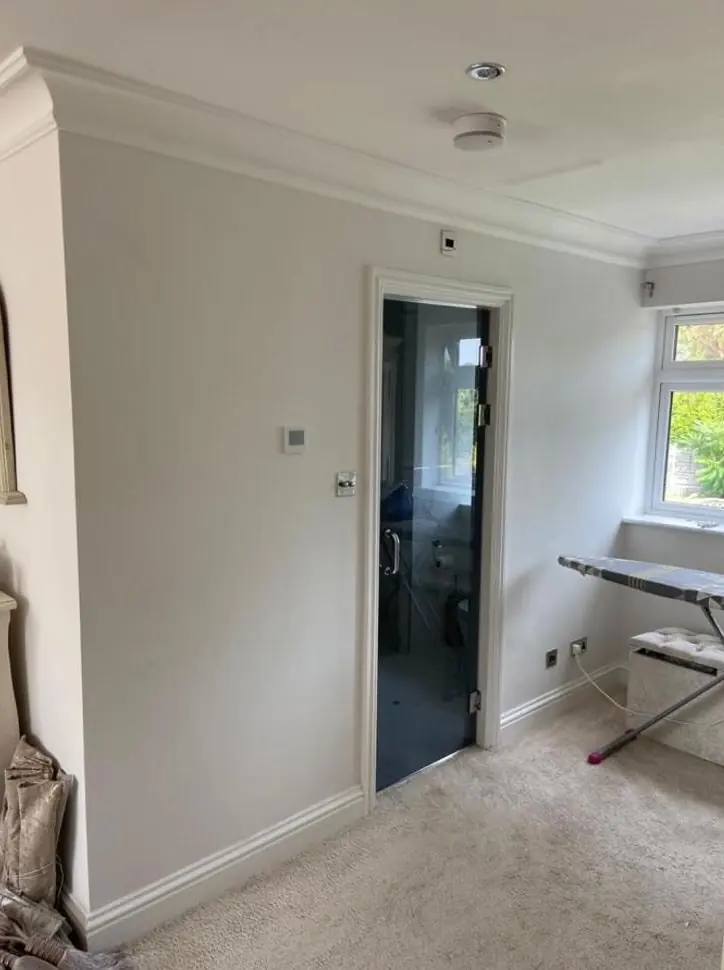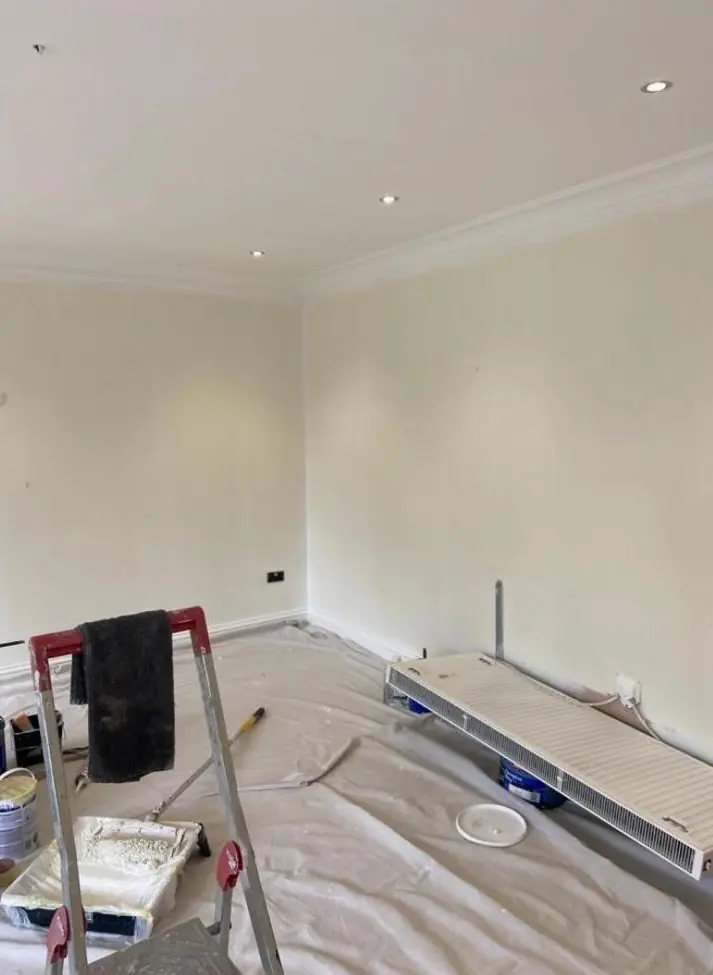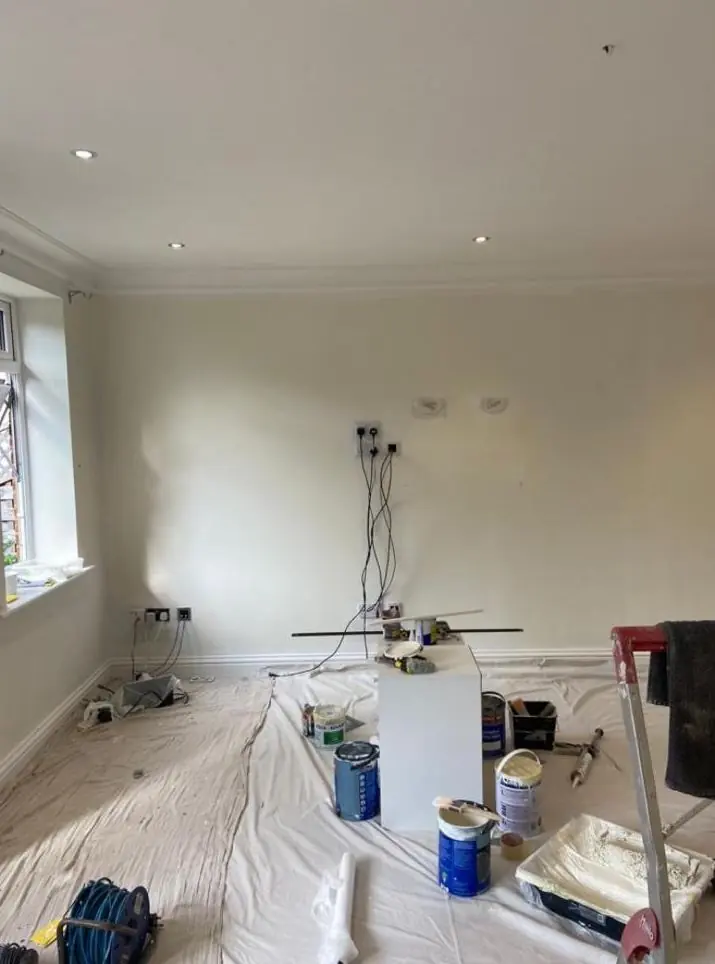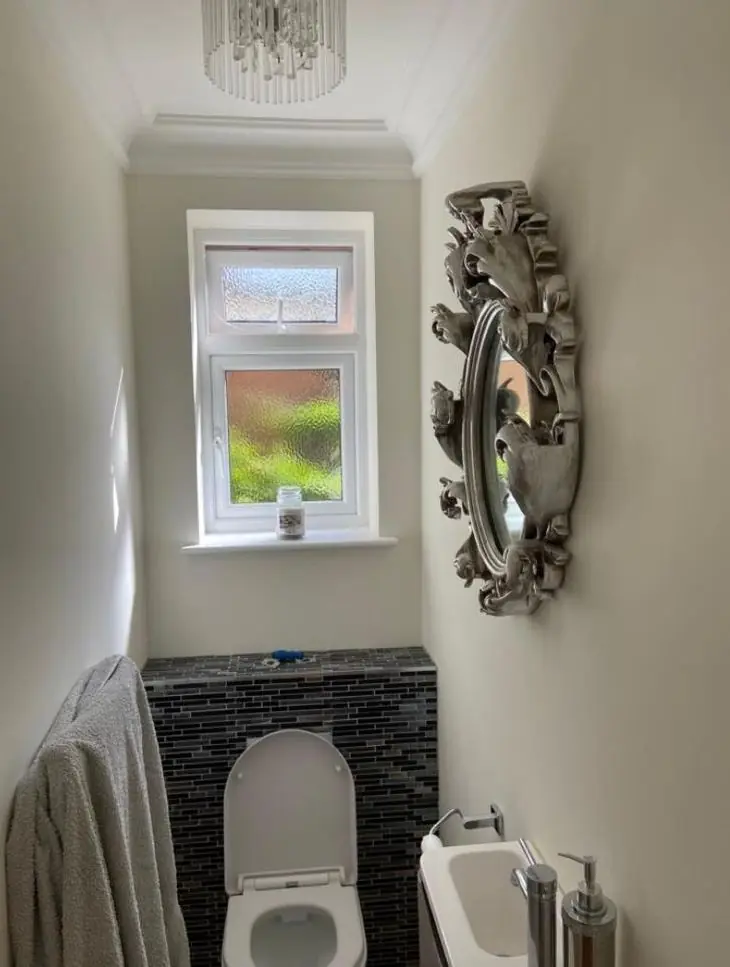
Dean applies decorative finishes in Earls Barton, the shoemaking village 6.4 miles east of Northampton. In the old lias houses that usually means limewash and traditional colours; in converted chapels, pubs and offices it means large walls and period detail; in later homes, feature walls and panelling.
Limewash where the walls want it
In Earls Barton the most useful decorative finish is also the oldest. Lime-based coatings suit the 17th and 18th century lias limestone cottages around West Street, The Square and London End, because they let solid walls breathe on a spring-line site where lower walls can hold damp. Limewash goes on thin, in several coats, and dries to a soft, slightly uneven depth of colour that changes with the light. It is not a flat modern finish, and that is the point. Colours are earthy by nature, from chalky whites and ochres to soft greys, and they weather gently rather than peeling, so a tired limewashed wall is refreshed with another coat, not stripped.
Limewash does not stick to modern emulsion, so on a wall that has been painted in vinyl it either means taking the old paint back or choosing a mineral paint that gives a similar look. Dean tests the existing surface first and explains which route makes sense. Inside a listed building, check with North Northamptonshire Council before removing historic finishes, as listing covers interiors too.
Chapels, offices and pubs: the big rooms
Earls Barton has an unusual run of converted and character buildings. Offices fill the former St Anselm’s Catholic church, a children’s nursery uses the former Baptist church, the Methodist church stands on Broad Street, and the pubs include The Old Swan, the Stags Head and the Saxon Tavern, once a Lloyds bank. Buildings like these have high ceilings, tall windows and wall areas far larger than a house.
On walls of that size, decorative work is about restraint. Common approaches include:
- A two-tone split with a deeper colour to dado height, which hides wear in busy public rooms and breaks up a tall wall.
- Picking out mouldings, window surrounds or panelling in a contrasting heritage shade.
- Deep traditional colours on a single end wall to give a long room a focus.
For a pub or nursery, the finish also has to be washable and hard-wearing, so the decorative layer goes over a durable base. For businesses, timing matters as much as the colour, and we plan around opening hours where we can.
Picking out glazing bars and historic detail
Look at the old school building that is now the Parish Church Hall: its mullioned stone windows carry cast-iron glazing bars in a diamond pattern, while The Manor House on High Street has leaded lights. That kind of detail is never sprayed. It is cut in by hand with a fine brush, using a metal primer suited to old iron, and often picked out in a single traditional colour so the pattern reads clearly against the glass. The same patience applies to panelled doors and fire surrounds inside the older houses, where several coats of past paint can blur the mouldings and need careful rubbing back first.
Feature walls in the later village
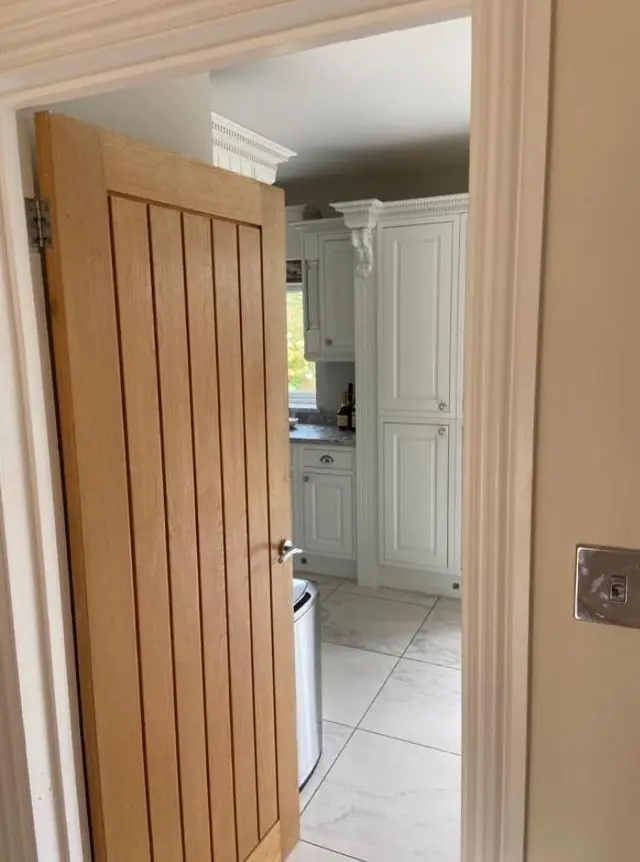
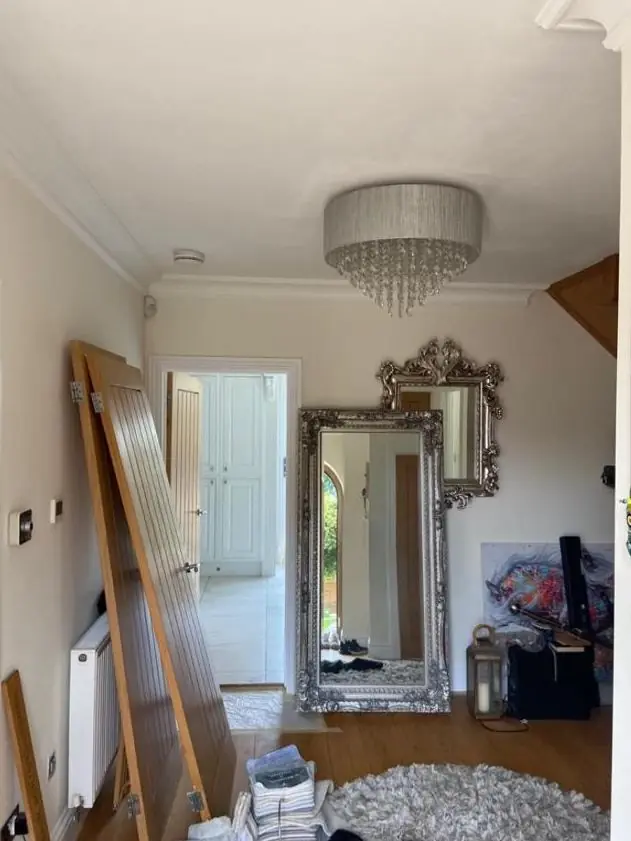
Most houses in Earls Barton were built after the old core, as the shoe village grew. In those homes, decorative finishes are about choice rather than conservation: a hand-cut two-tone wall, new MDF panelling in a hallway made to look built-in, or a chimney breast in a deep heritage green. Our main decorative finishes page walks through how we prepare and apply each type, and if you are unsure which colours will work, our colour and finish advice helps you decide before a tin is opened.
For everything else we cover in the village, visit our Earls Barton area page.
Last updated by Dean, DH Painter & Decorator.