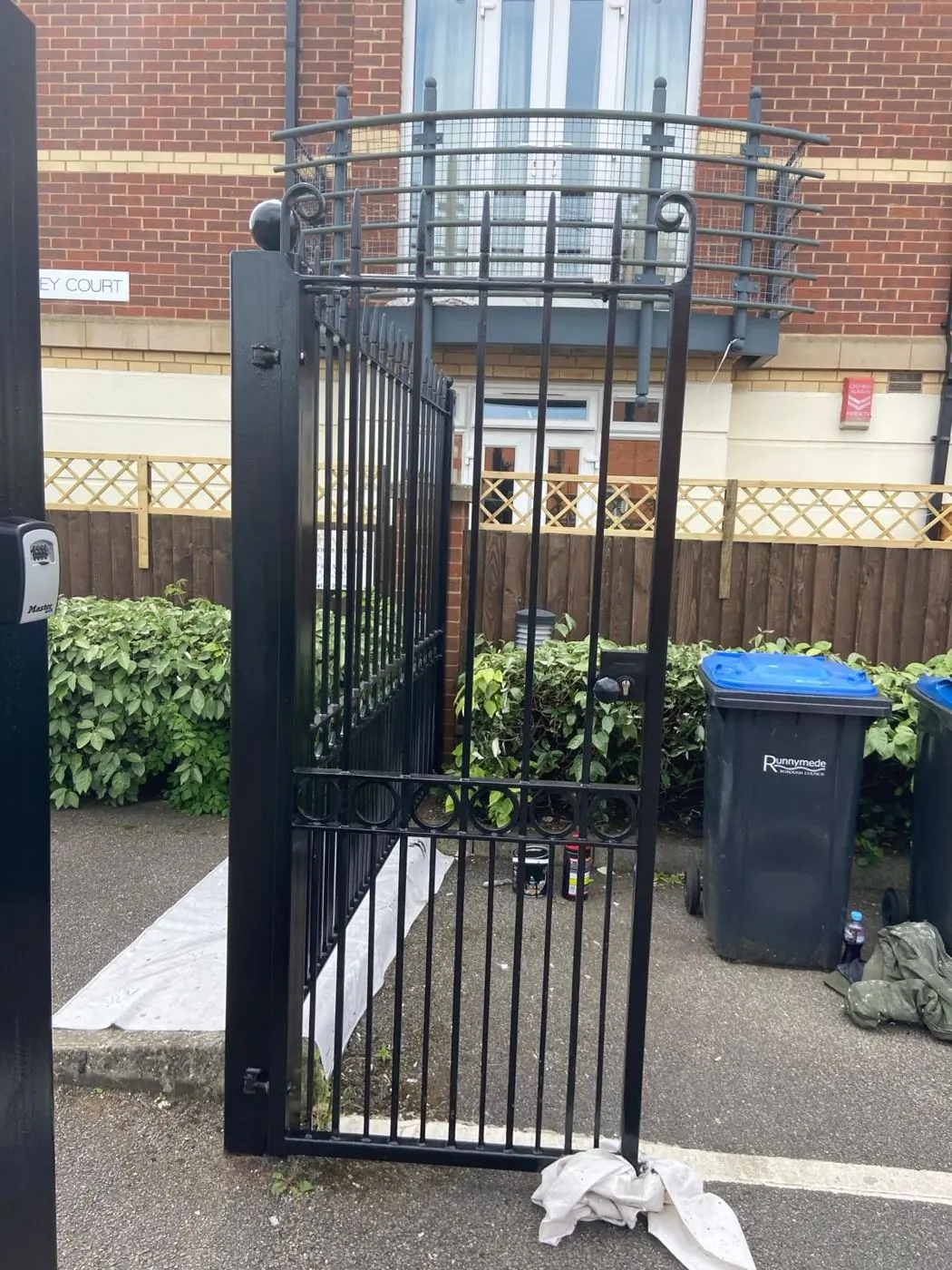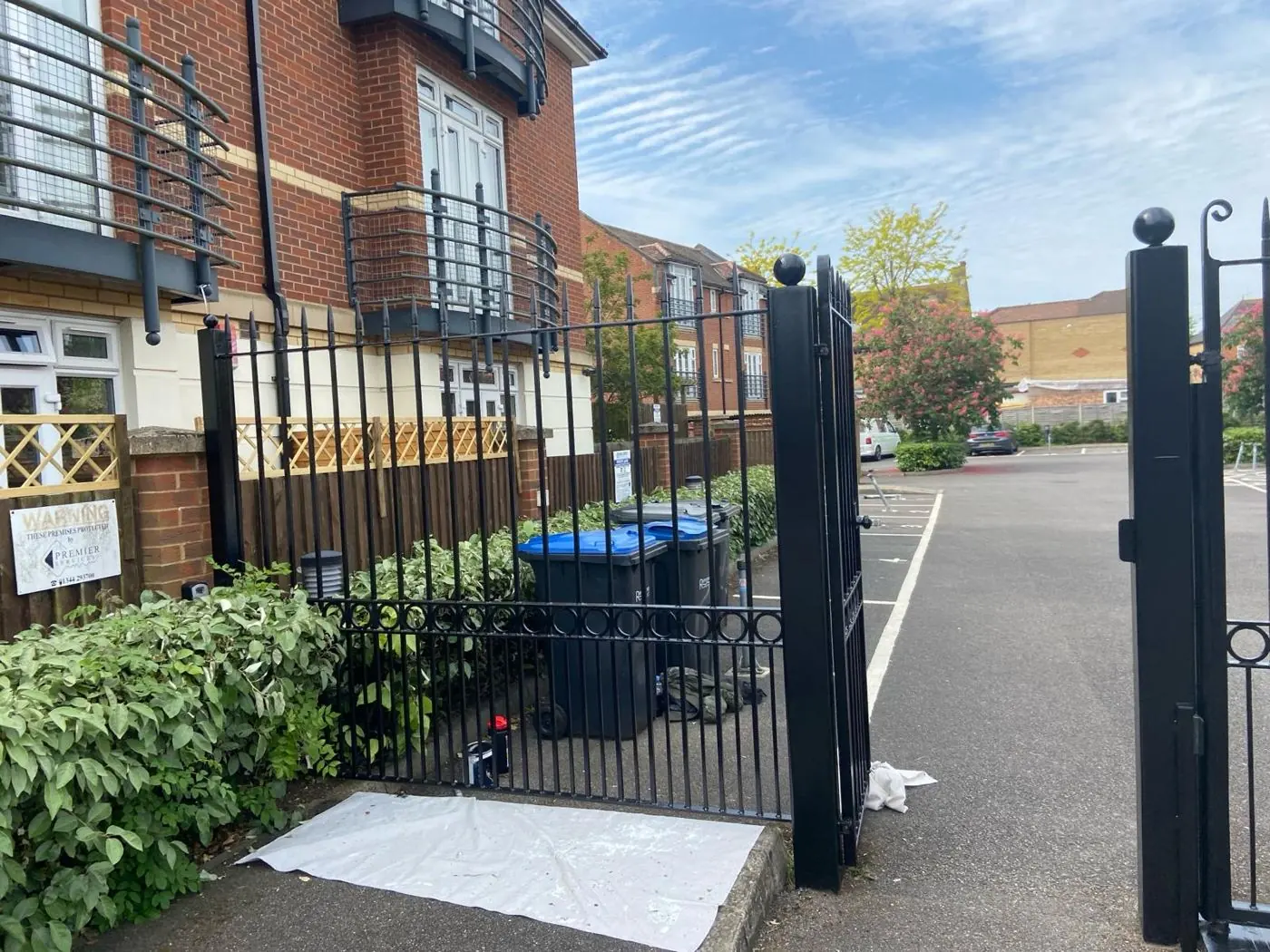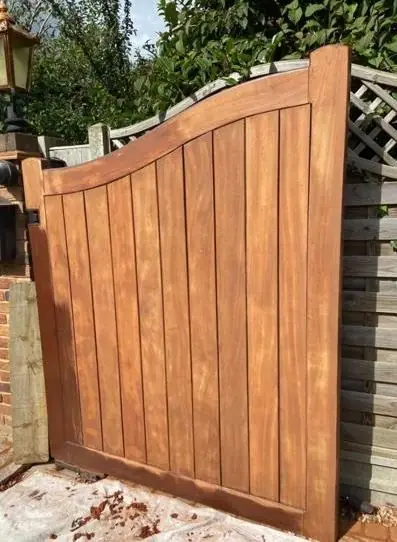
We stain and paint garden fences, posts and timber gates in Earls Barton, 6.4 miles east of Northampton in NN6. The work is mostly at the later brick houses and on properties toward the rural edges of the village, where damp from the valley side affects how timber takes a finish.
Where the fencing is
Most of the timber fencing in Earls Barton is around the later houses, which hold most of the village’s 5,000-plus residents. In the historic streets around The Square many buildings stand right on the footway, so front boundaries are walls and railings rather than panels. Fence and gate work is mainly in back gardens, along side passages and on the boundaries where the village meets fields toward the Nene valley.
Fences on those outer boundaries tend to get the most weather. They take driving rain and low winter sun from open ground, and they dry out more quickly in summer than a panel sheltered between two gardens. That usually shows as faded, silvery boards on the outer faces and greener boards near the base.
Spring-line ground and the bottom of the fence
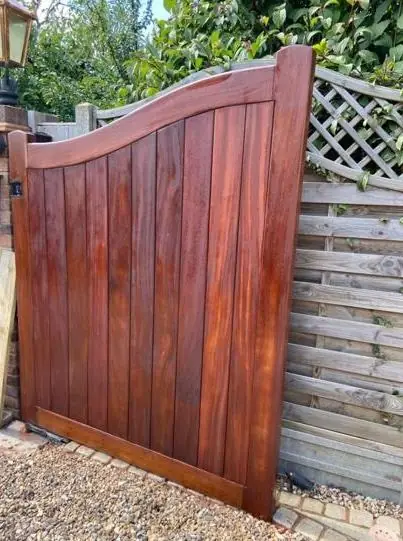
Earls Barton sits on the spring line above the river, and on lower ground the soil around posts and gravel boards can stay wet for long periods. The bottom of a fence is where finishes fail first: algae, darkened timber and stain that never seems to dry. Before staining we:
- clear soil, leaves and plant growth back from the gravel boards so they can dry,
- treat green growth and leave it to work before brushing it off,
- wait for a dry spell long enough for the lower timber to dry, not just the top rails,
- work stain into the end grain at the base of boards and posts, where water gets in.
On ground that stays particularly wet, Dean may suggest a more breathable stain than a thick film-forming one, because a film over damp timber tends to peel.
Stain or paint for a village garden?
Both work, and in Earls Barton the setting usually decides. On boundaries that look out over fields toward the Nene, natural browns and greens sit quietly against hedges and fade evenly. In an enclosed garden behind one of the later brick houses, only the neighbours see it, so darker or bolder colours are fine. Stain soaks in and wears away gradually, which suits damp lower boards; opaque fence paint evens out boards that have weathered unevenly on an exposed edge.
New pressure-treated panels are a special case. They hold a lot of moisture, so they generally need time to dry before any finish goes on. The main fence and gate staining page explains timing and products in more detail.
Timber gates near the old core
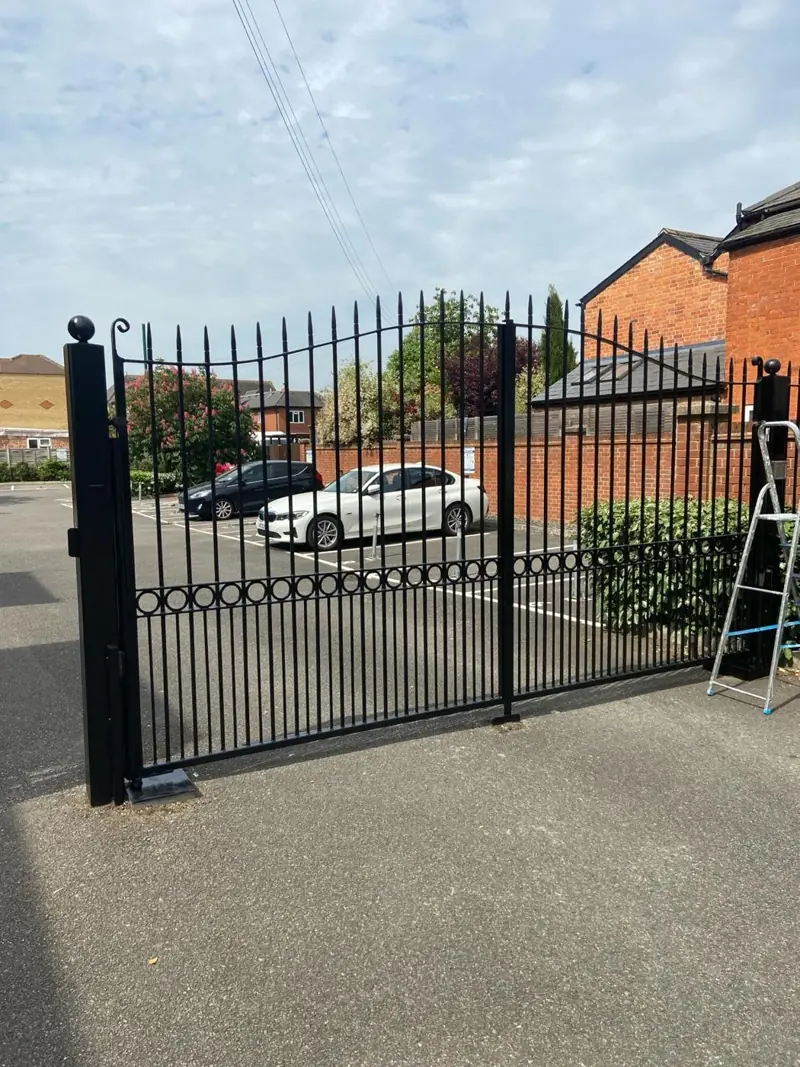
Where a timber gate stands between stone walls or piers near the listed lias buildings of the old core, it is a small detail with a big effect on the street. If a property is listed, changing a gate’s colour may need consent from North Northamptonshire Council, so a like-for-like recoat is the simple option. Hardwood gates that have been left to go grey can usually be brought back with cleaning and a light sand before an oil or stain. We also check the hinges, the latch and the bottom rail, where water collects, and ease any gate that has dropped and started to drag on the path, since a dragging gate wears through new stain within weeks.
Neighbours and timing
Many fences behind the later houses are shared boundaries, so we only stain the neighbour’s side if they agree. Staining needs dry timber and settled weather, which in the valley usually means late spring to early autumn. Our seasonal guide to exterior painting explains why, and it applies to fences as much as to walls. Our Earls Barton page lists everything else we do in the village.
Last updated by Dean, DH Painter & Decorator.