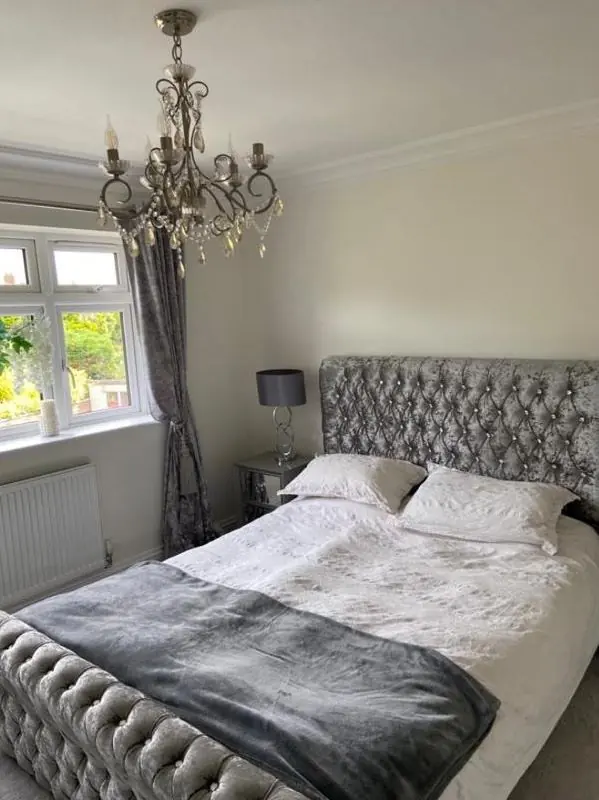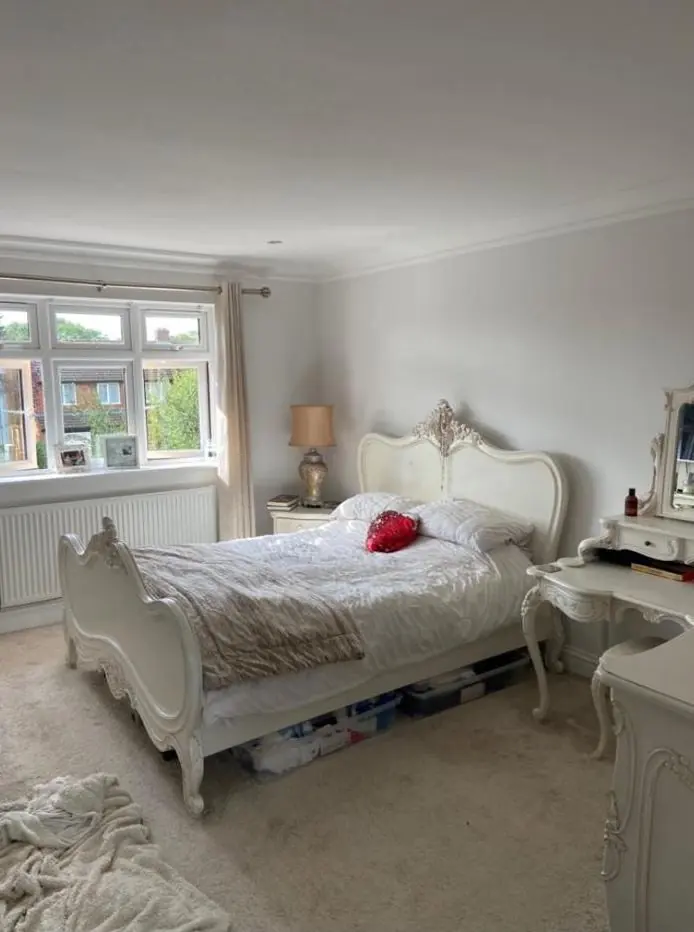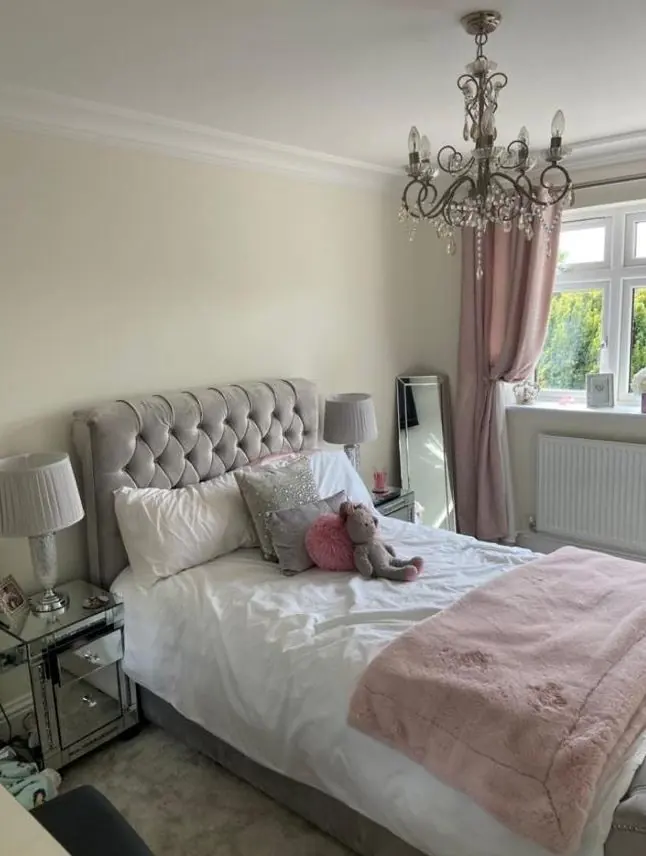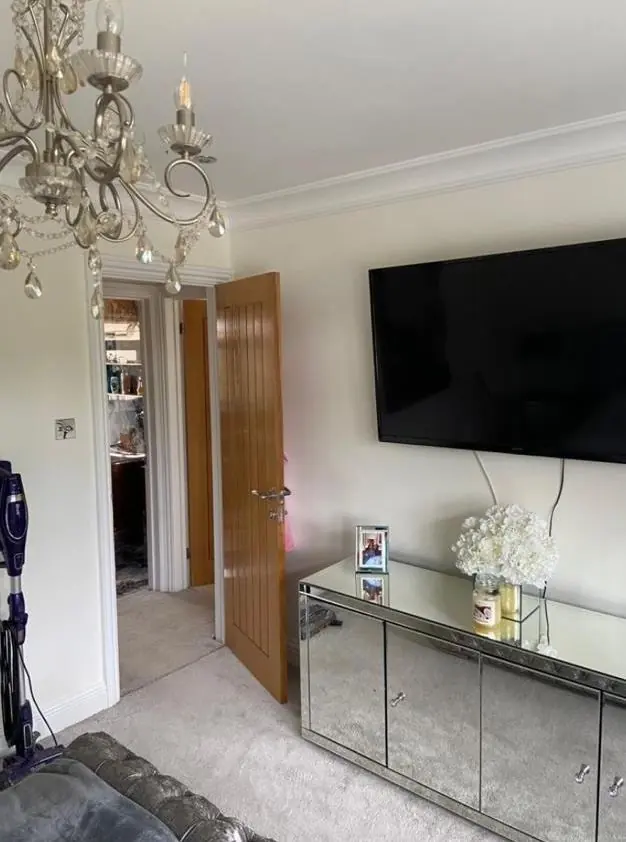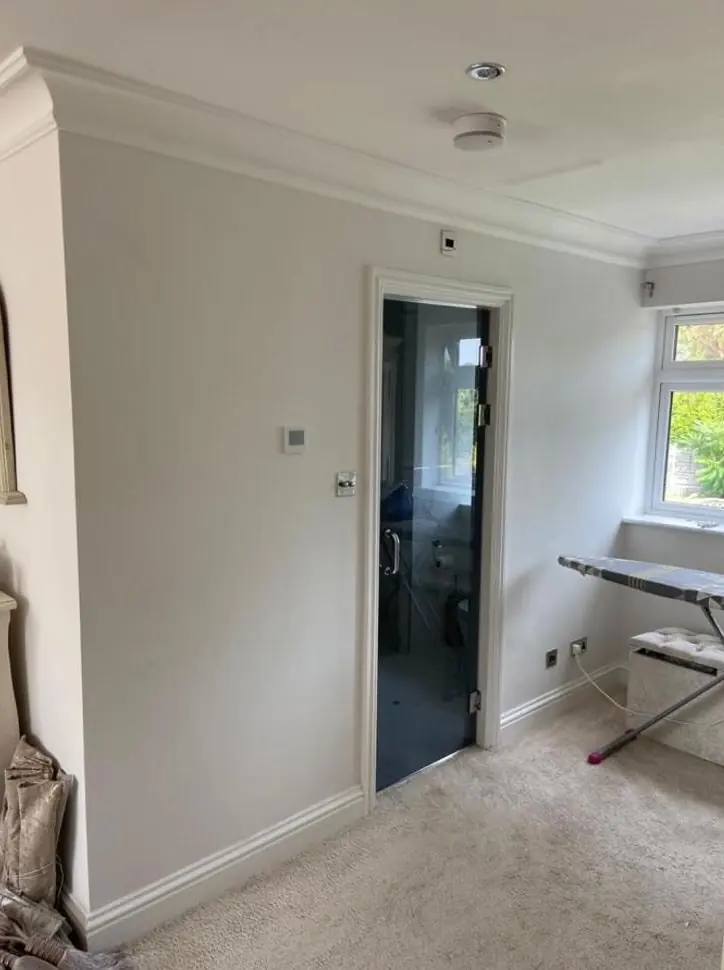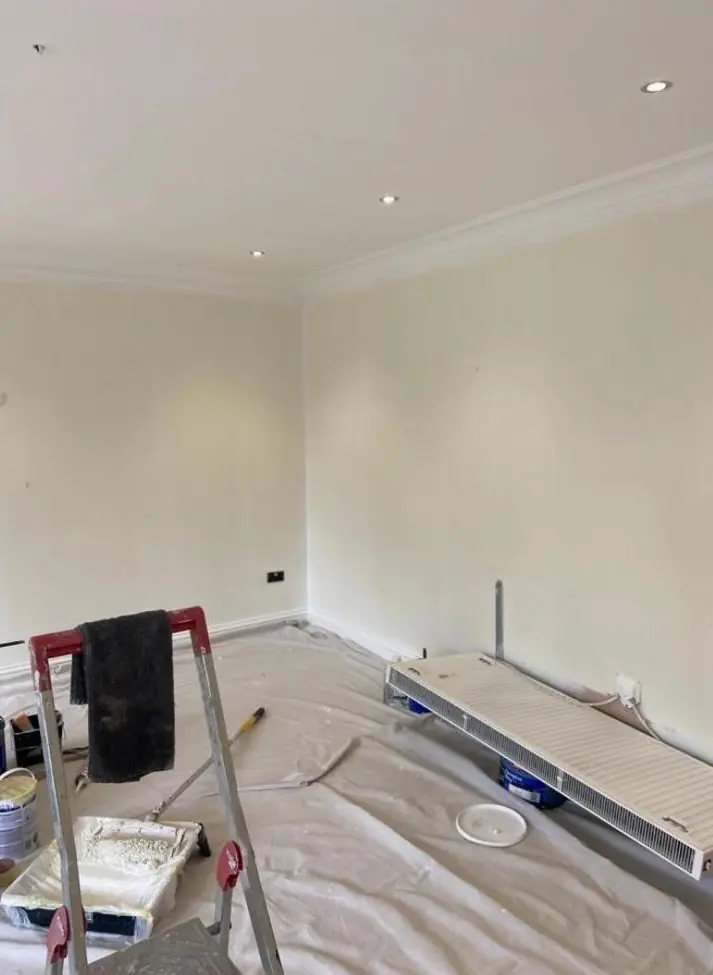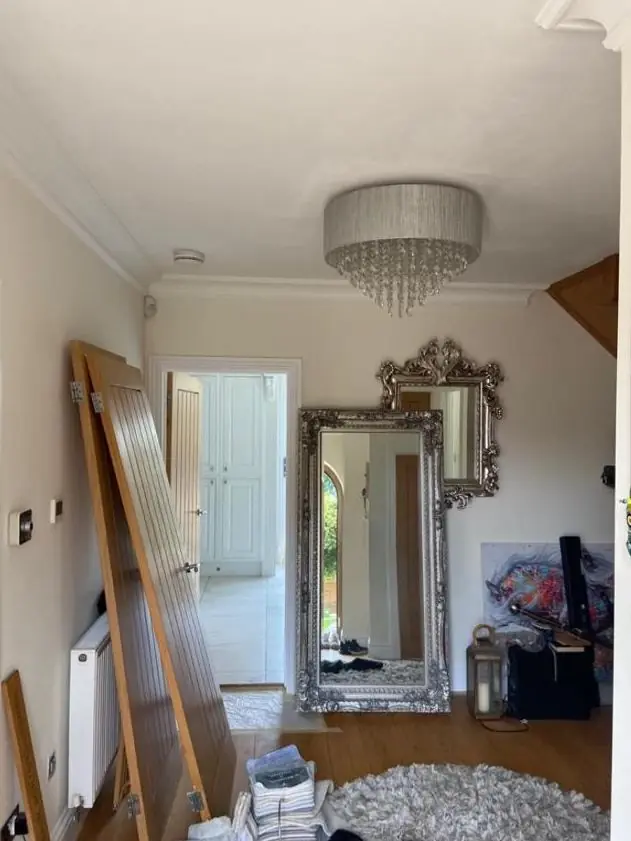
Dean paints the inside of homes in Earls Barton, the NN6 village on the north bank of the Nene about 6.4 miles east of Northampton town centre. The work runs from 17th and 18th century lias limestone cottages in the conservation area to the later brick houses where most of the village now lives.
Two villages under one name
Earls Barton had 729 people in 1801 and 5,387 by 2011. That growth decides how a room here gets painted. The old core around The Square, West Street, High Street and London End is made up of cottages, farmhouses and former inns in coursed lias limestone, mostly dating from the 17th and 18th centuries. Around them, and making up the larger share of the village, are the brick houses built as the shoe trade drew more people in. Before Dean prices a room he works out which of the two he is standing in, because the paint, the preparation and the time on site all change with it.
In the later brick houses, interior painting is ordinary good practice: fill, sand, seal stains, two finish coats, crisp cutting in. Our main interior painting page covers that process step by step, so this page concentrates on what is particular to Earls Barton.
Lias walls, lime plaster and the problem with vinyl emulsion
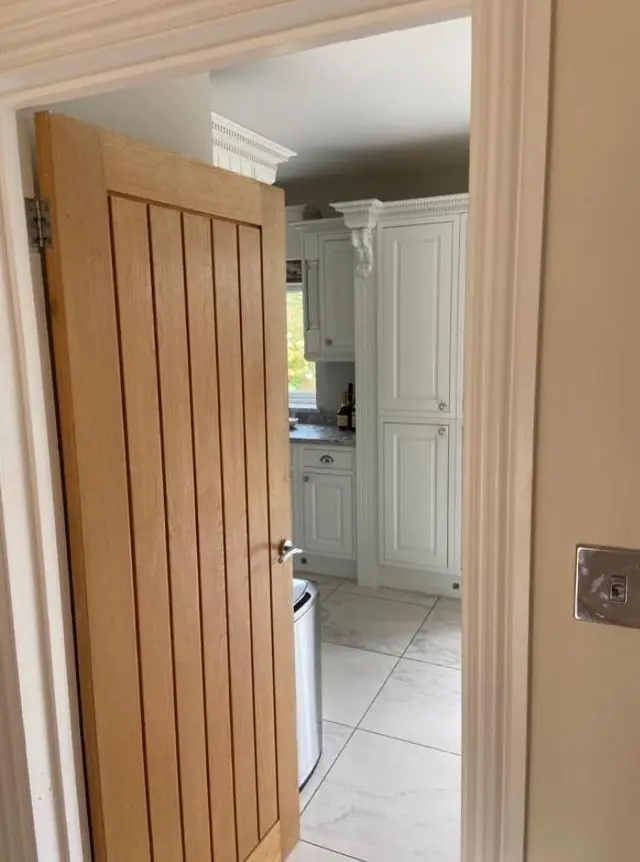
The stone cottages have solid walls with no cavity, and the older ones are often finished inside in lime plaster. A solid lias wall takes on moisture and gives it back, and the village sits on a spring line on the Nene valley side, so the lower parts of these walls can be damp-prone. Roll a vinyl emulsion over lime plaster and that moisture is held behind a plastic film. Months later it shows as blistering, flaking or a brown tidemark a foot or so above the skirting.
For these rooms we use breathable paints: clay or mineral emulsions, or limewash where a wall already carries one. Where a past decorator has put modern paint over lime, we check how well it is holding. Sound, thin layers can sometimes be painted over with a breathable product. Thick, failing layers are better taken back, and we will say which it is before you commit, not halfway through the job.
Where the back extension meets the stone front
Many of the listed houses in the core have later brick extensions at the rear. Inside, that means one house can hold two different wall types, sometimes in the same room where a kitchen runs through from old to new. The stone front wants a breathable finish. The brick-built extension, especially if newly plastered, wants a mist coat and a conventional emulsion. Painting both in one product either starves the old wall of air or underperforms on the new one.
We treat the junction as a deliberate break: matching colour across both, but changing the product at a corner, a beam or a door frame so the change is invisible. If the extension is fresh plaster, our guide to painting new plaster with a mist coat explains why we wait for it to dry before any colour goes on.
Listed interiors and low cottage rooms
The Earls Barton Conservation Area contains 28 listed buildings, among them The Manor House on High Street, Rose Cottage on West Street and the former Fox and Hounds at 40 High Street. Listing covers the inside of a building as well as the outside, so on a listed house it pays to ask North Northamptonshire Council before stripping historic finishes or changing the character of a room. Like-for-like redecoration is usually straightforward, but the check costs nothing and avoids an awkward letter later.
Inside the 18th century cottages, rooms are often small, with low ceilings and casement windows set under wooden lintels. Walls are rarely flat or plumb, and we don’t try to fill that character out of them. What does need care is the woodwork: old timber lintels and window boards move with the seasons and need a flexible, microporous paint rather than a hard gloss that cracks along the grain.
- Older lias cottages: breathable paints, careful testing of existing coatings, hand-brushed woodwork.
- Later brick houses: standard emulsions and satin or eggshell woodwork, quicker to turn round.
- Mixed houses: two systems, one colour scheme.
Everything else Dean covers locally is on our Earls Barton area page. We work from our Northampton base, around 6.4 miles to the west, and every job starts with a visit and a written quote.
Last updated by Dean, DH Painter & Decorator.