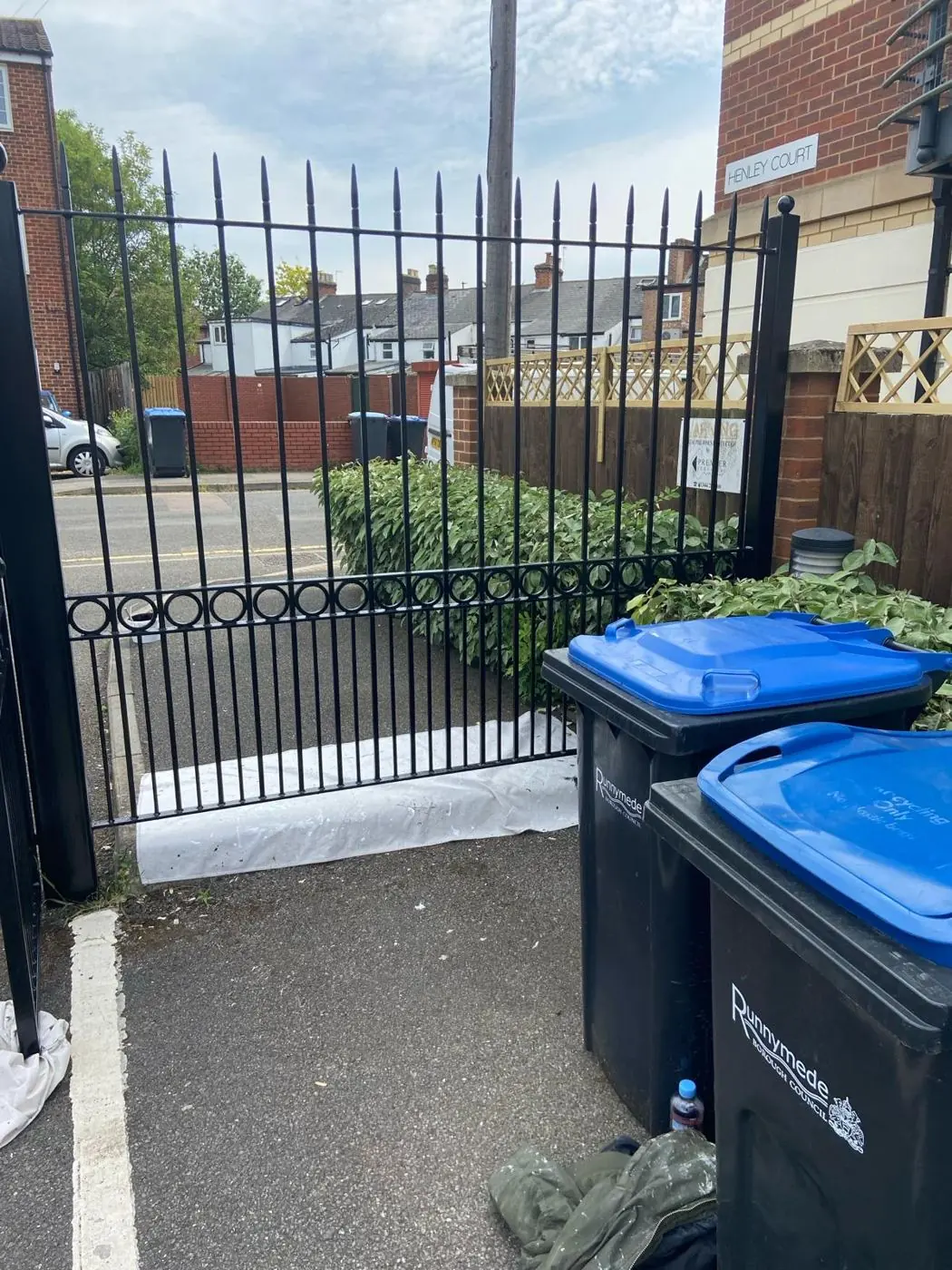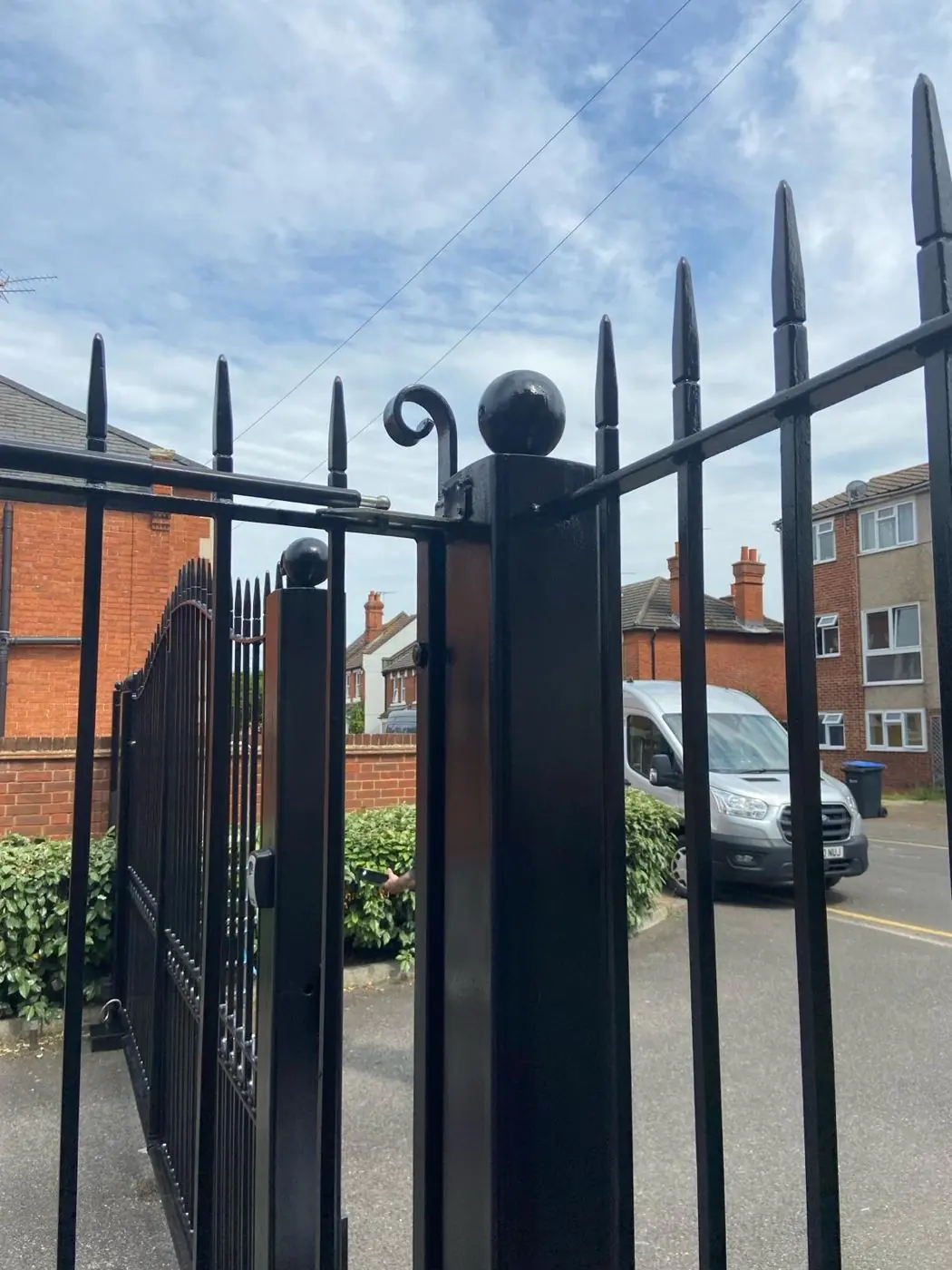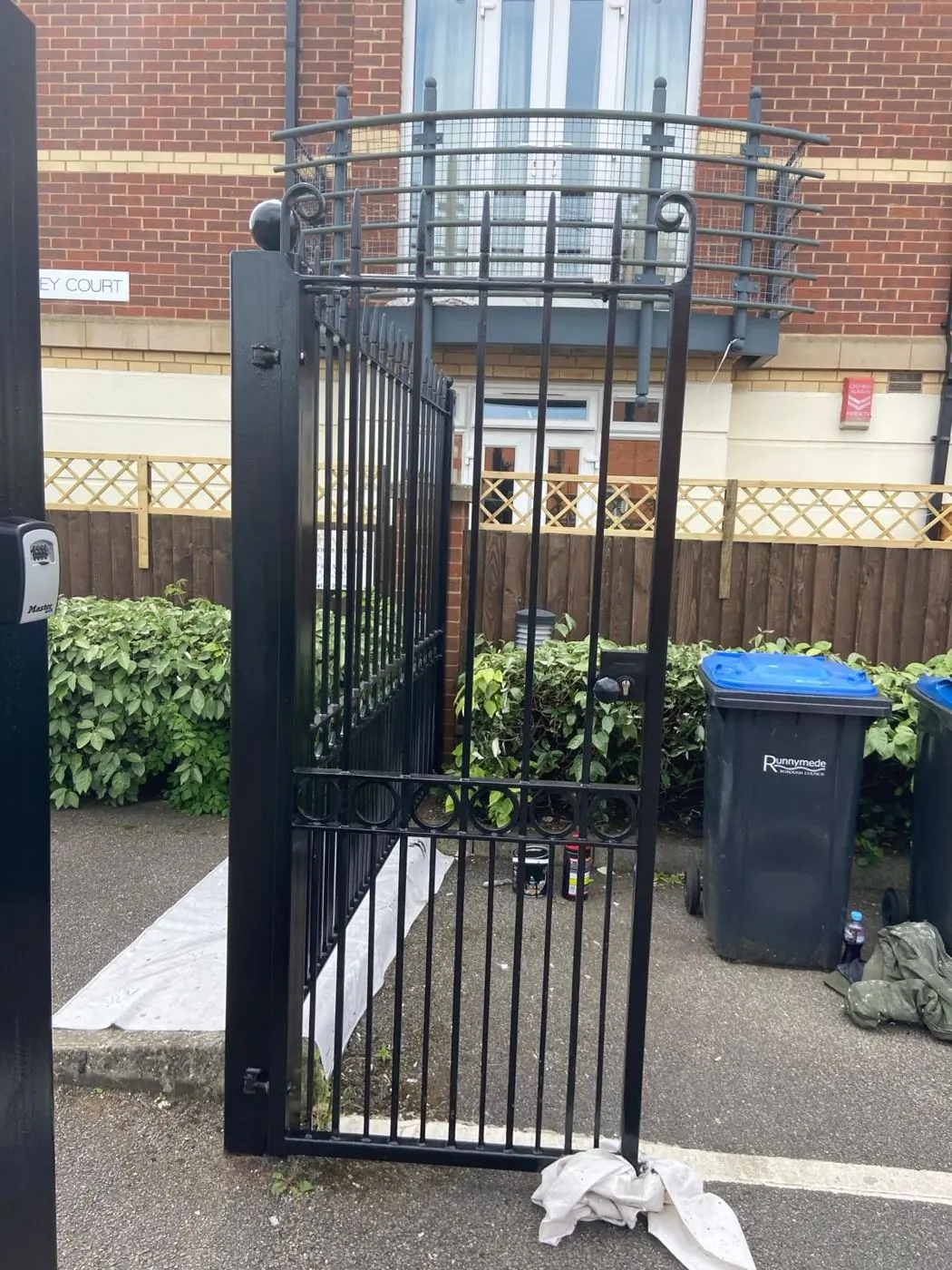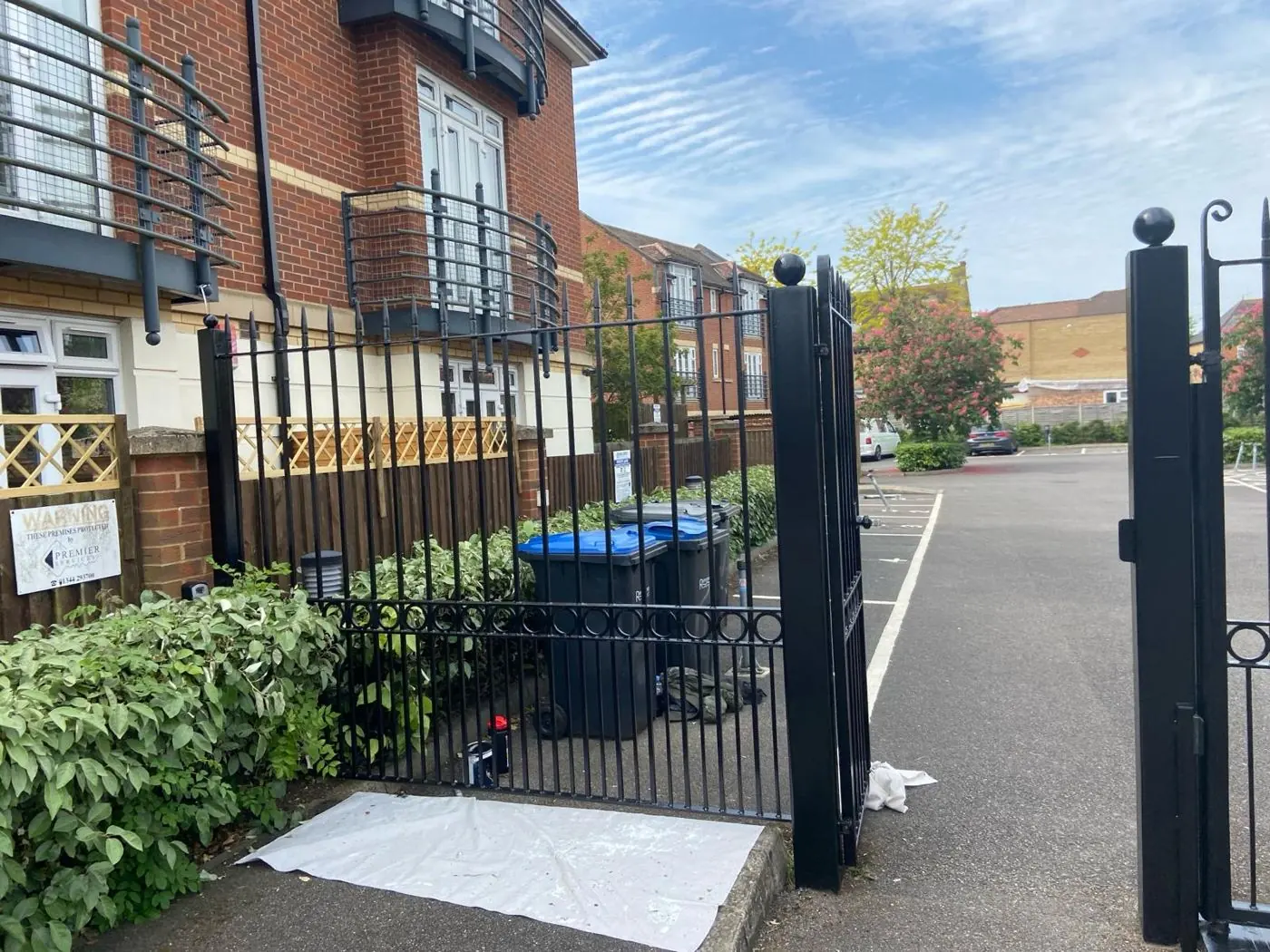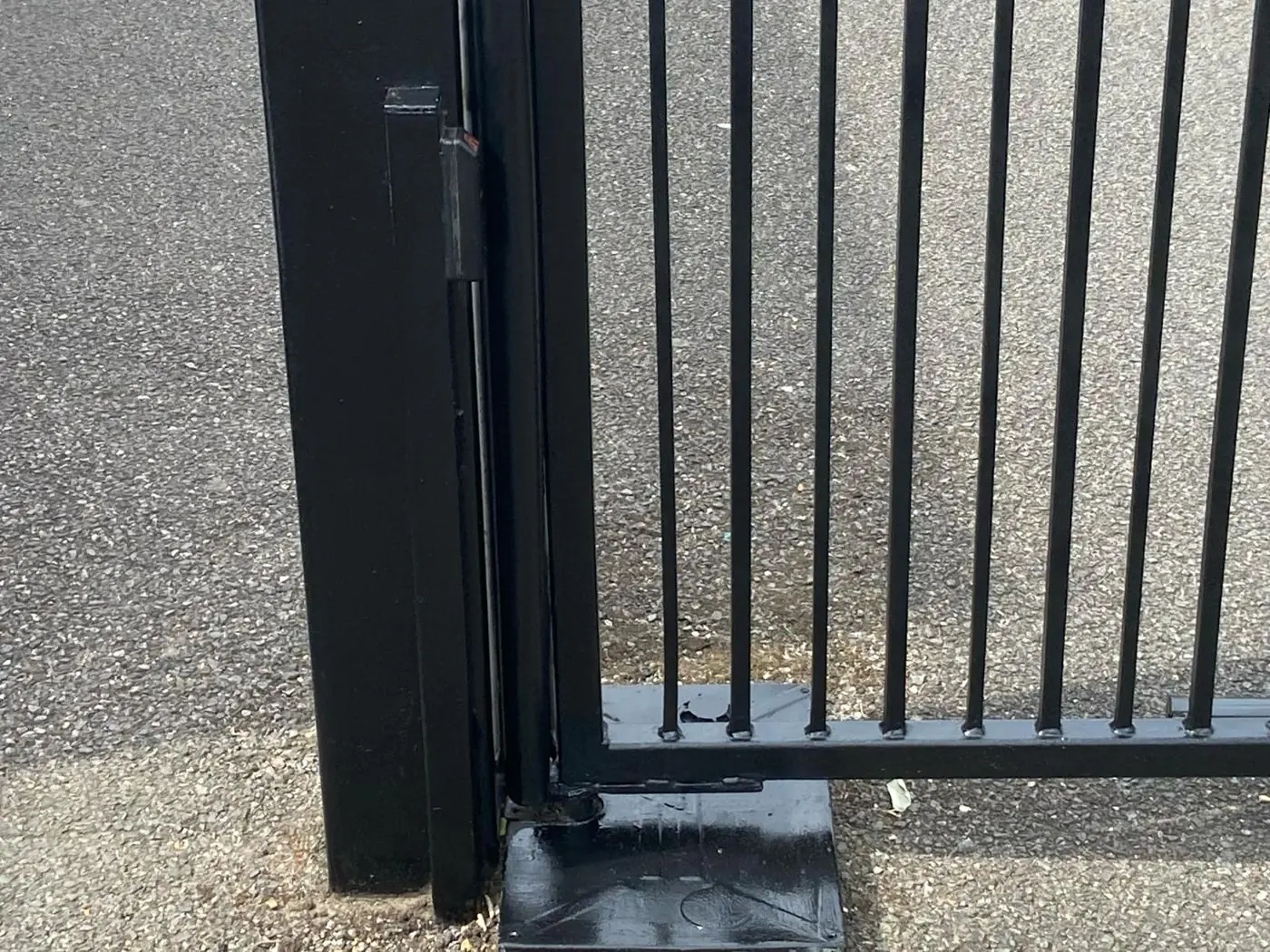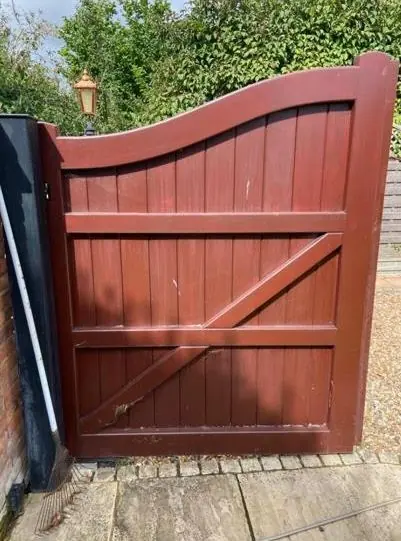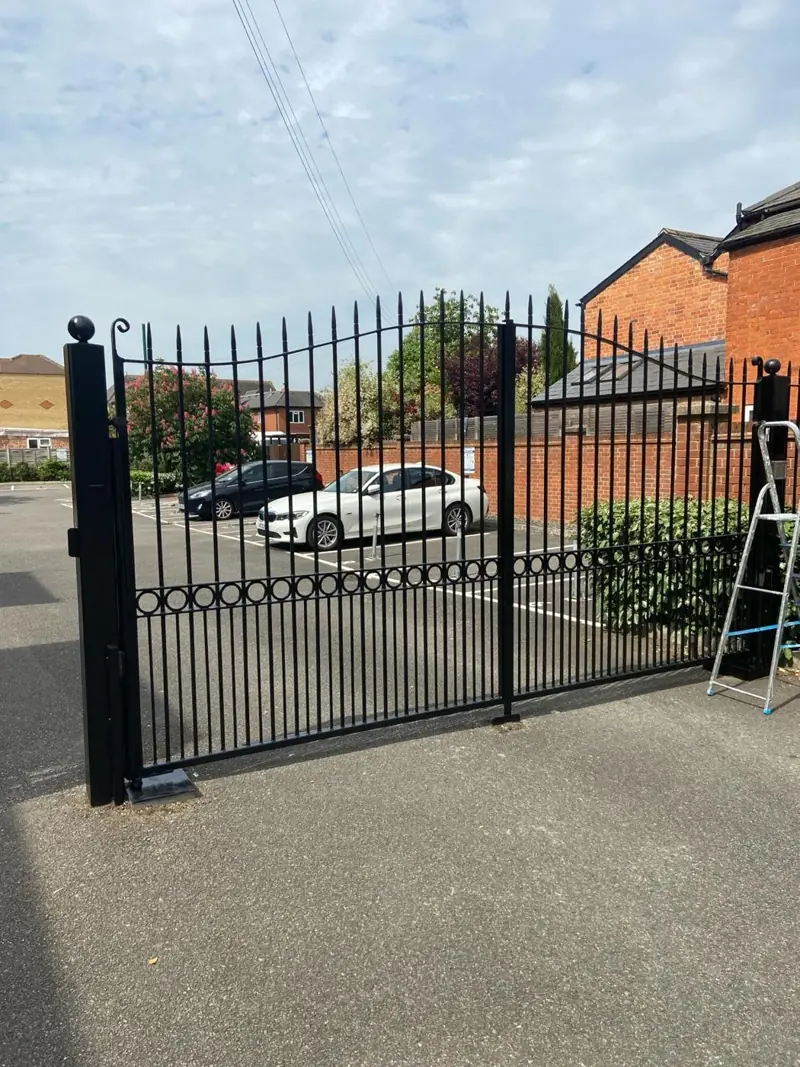
Dean paints metal gates, railings and other external ironwork in Earls Barton, NN6, roughly 6.4 miles east of central Northampton. Historic ironwork in the conservation area is repainted like for like in traditional colours, while domestic gates and railings on later homes take standard rust treatment and metal paint systems.
What historic ironwork in the village tells us
The most prominent metalwork in Earls Barton is listed. The wall, gates, gatepiers and railings about 40 metres south and west of All Saints’ Church are Grade II listed in their own right, and The Manor House on High Street has gatepiers of its own. Ironwork like this sets the expectation for the surrounding streets: black or another traditional colour, repainted like for like, with the detail kept crisp and not blurred by thick paint.
If railings or a gate belong to a listed building, or form part of its setting, changing the colour may need consent. With 28 listed buildings around The Square, West Street and High Street, ask North Northamptonshire Council before choosing anything other than a repeat of the existing colour.
Cast iron in windows as well as gates
Not all of the village’s ironwork is at ground level. Cast iron also survives in windows, most visibly the diamond-pattern glazing bars of the Parish Church Hall, and these are painted by hand. Each bar is cleaned back, primed with a metal primer and cut in by brush, because spraying would coat the glass and miss the edges where rust starts. The same care applies to small cast-iron details elsewhere, such as finials and decorative panels, which are brittle and need cleaning without heavy impact.
Rust where iron meets stone
Where railings or gate hinges are set straight into lias copings or piers, rust at the fixing makes the iron expand, and that can crack the stone around it. Before painting we:
- scrape and wire-brush loose paint and rust back to firm metal, paying most attention to the bases and fixings;
- use a rust-inhibiting primer suited to the metal where it has pitted;
- seal the joint between iron and stone so water does not sit there;
- avoid getting paint on the stone itself, because on soft lias it is hard to remove and stands out.
Railings on the low walls nearer the valley floor stay damp for longer, so those bases rust first. We allow extra drying time before priming.
Driveway gates and railings on later houses
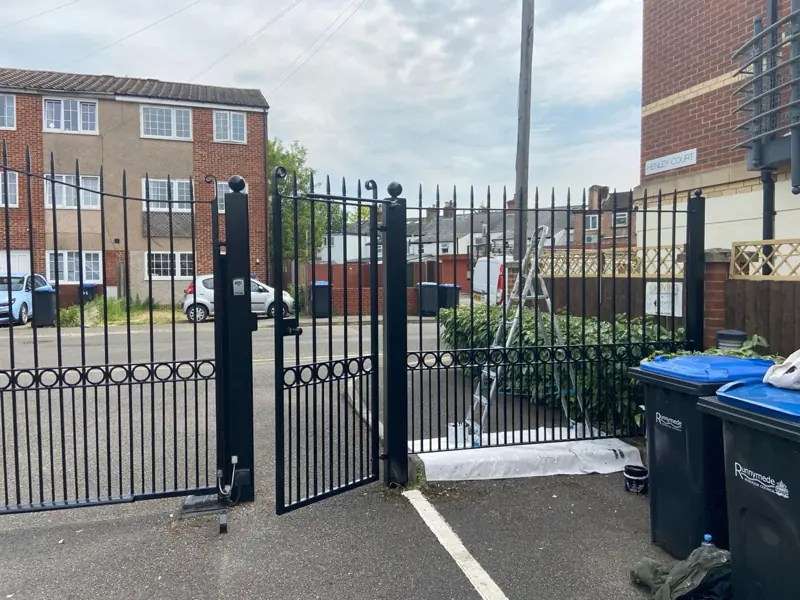
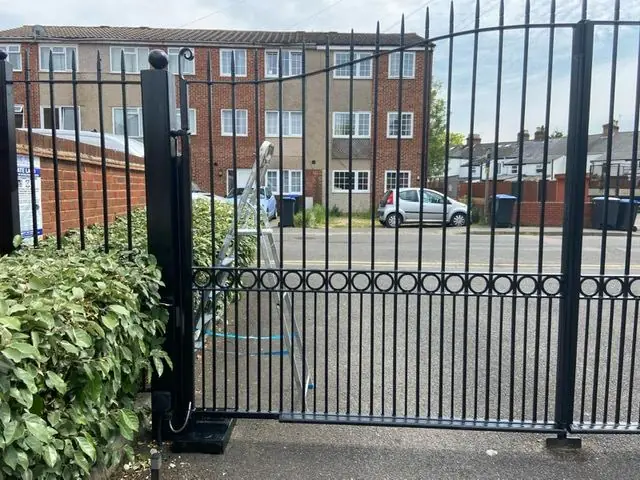
Away from the conservation area, metal gates on the later brick houses are typically fabricated mild steel driveway or side gates, simple railings or galvanised steel. Mild steel rusts quickly once its coating breaks. Galvanised steel needs a primer made for zinc, otherwise ordinary paint peels off in sheets. Colour is much freer away from the conservation area, although black, dark green and anthracite still suit most brick fronts. Our main metal gate and railing painting page explains how each metal is identified and primed.
Working on a street-front
Railings in the old core often run along the footway, so we mask the pavement, keep a route clear and put out wet paint signs. We usually paint railings in sections, so a gate can still be used by the end of the day. Where a gate is the only way into a property, we paint it early so the coat is touch dry before we leave, and wedge it open with a note until it can be closed safely. For colour suggestions to go with lias and thatch, see our colour and finish advice, and for the village overall our Earls Barton area page.
Last updated by Dean, DH Painter & Decorator.