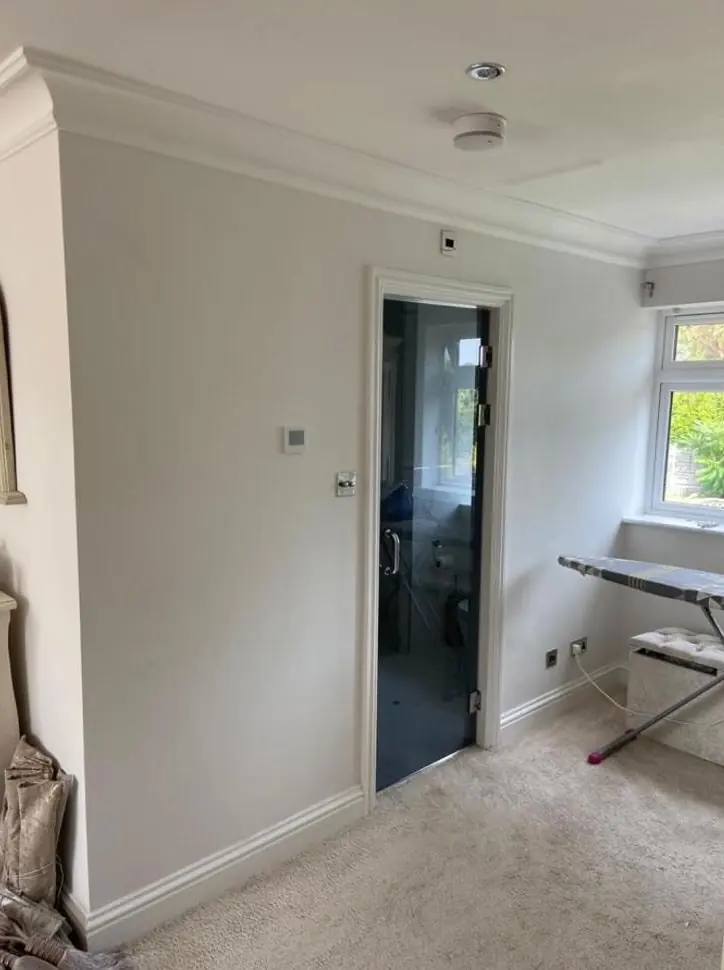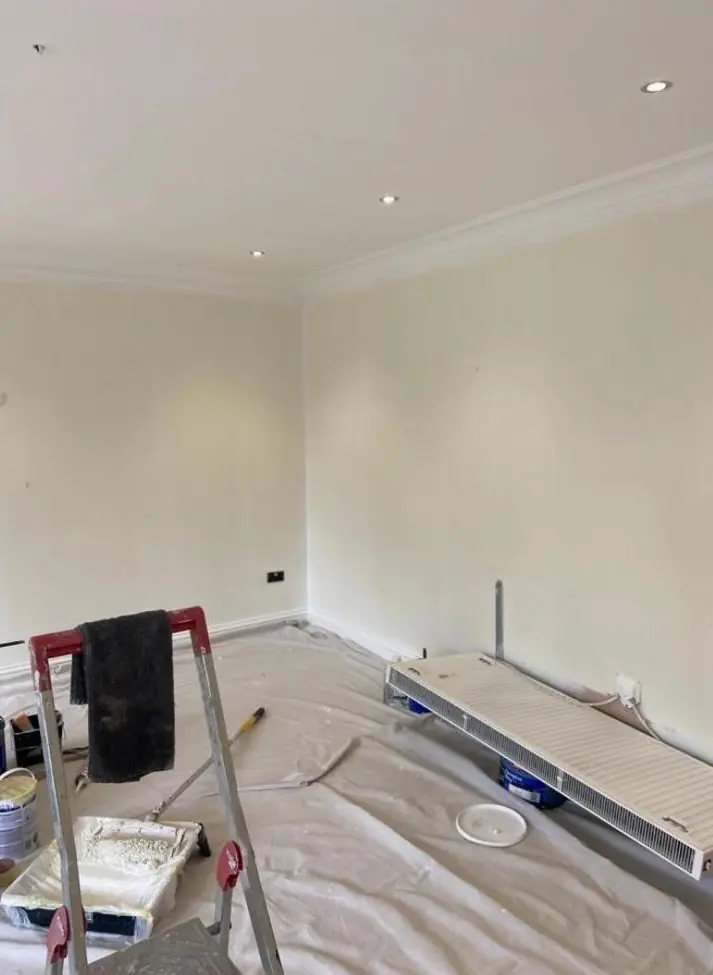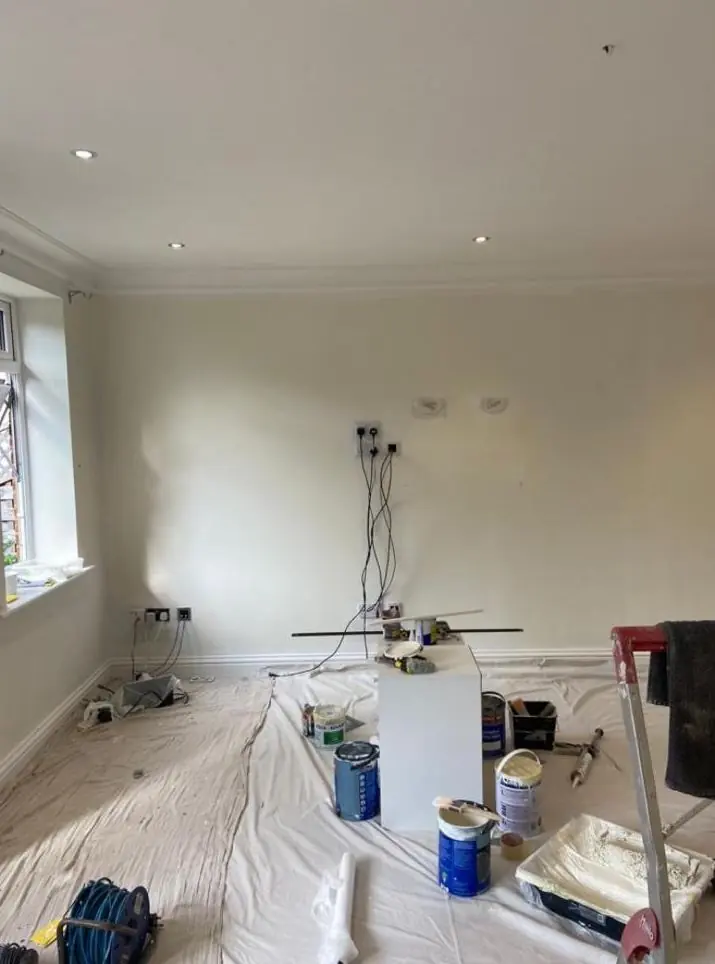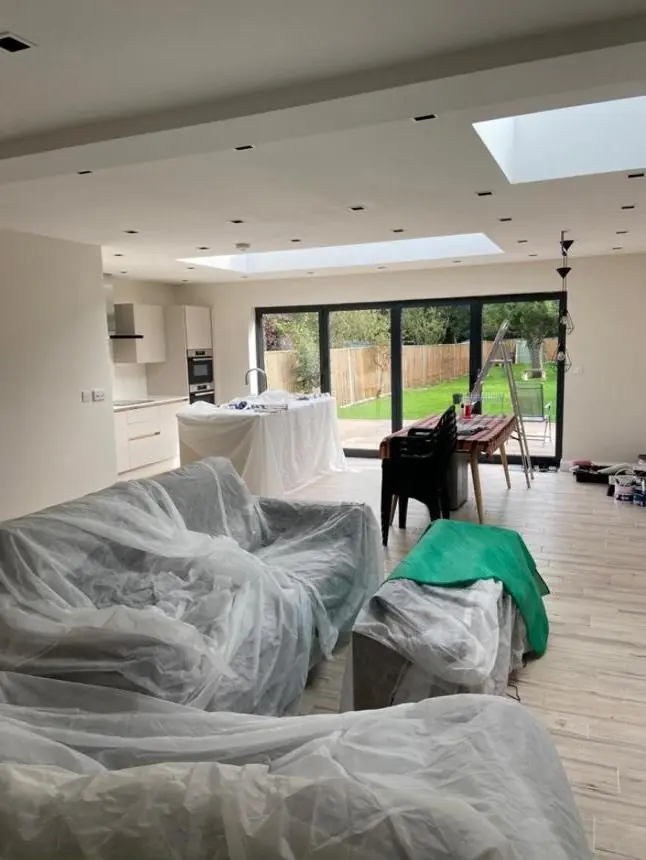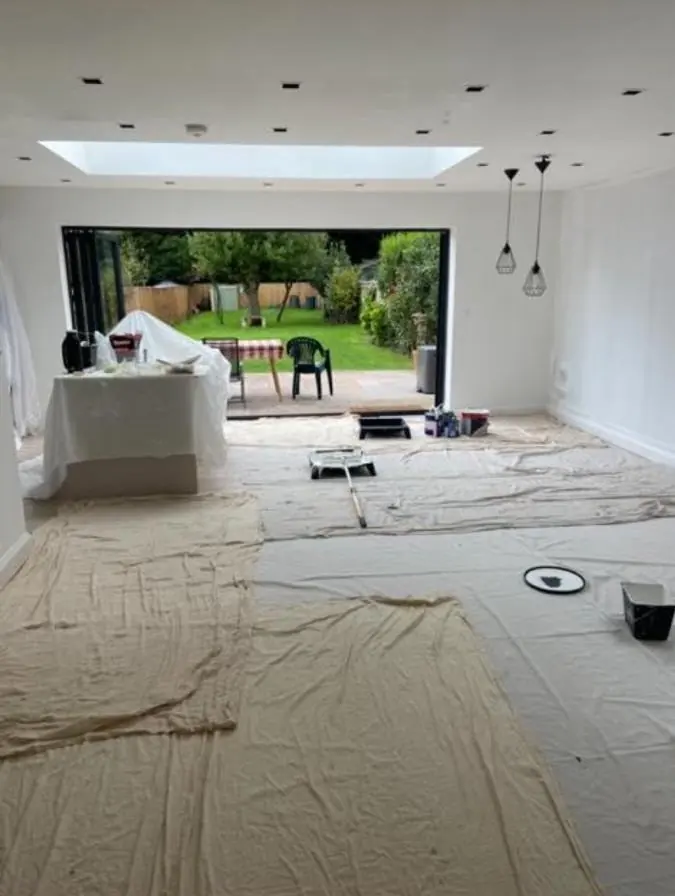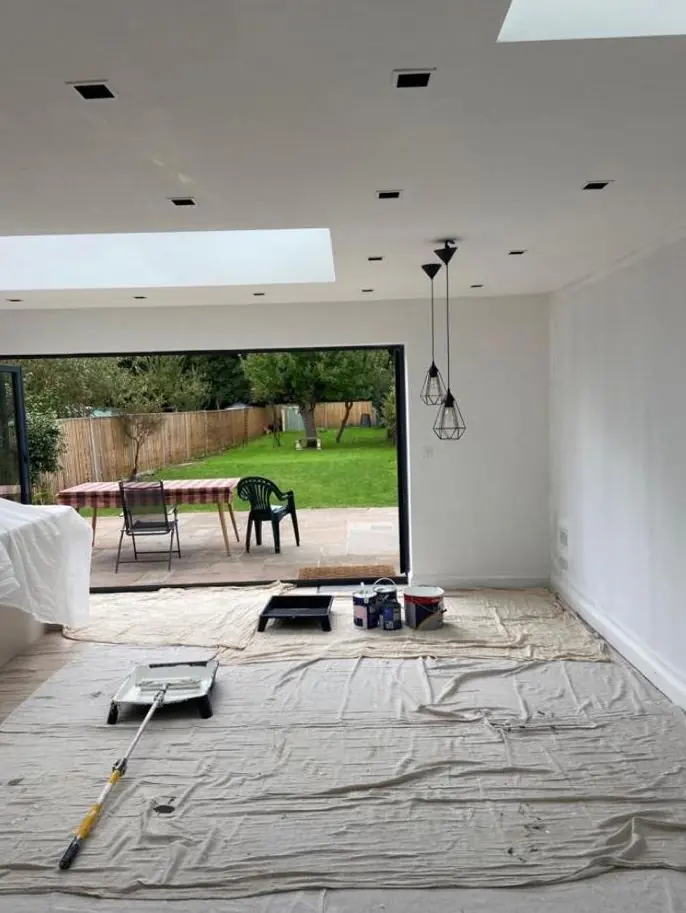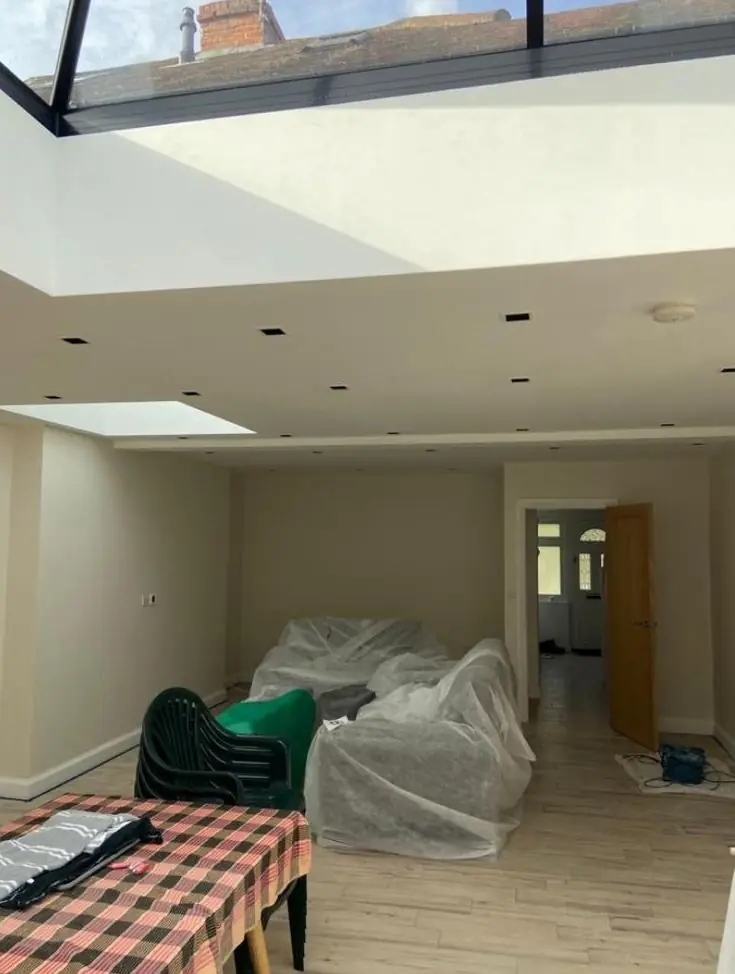
Dean paints newly plastered walls, extensions and conversions in Great Billing, NN3, roughly 3.9 miles east of Northampton town centre. Here new plaster comes in two forms: modern gypsum in extensions and infill houses, and lime plaster in converted barns and outbuildings, and the two need different first coats.
Gypsum or lime: find out first
The first thing we ask about fresh plaster in Great Billing is what it is made of, because the village has both kinds. Newer infill at Old Carpenters Close and Convent Gardens, and extensions on the houses around Great Billing Way, will normally be finished in modern gypsum. The converted farm buildings, and conversions like the stable block and coach house of the old Hall on Church Walk, often have lime plaster on thick stone walls. A gypsum skim and a lime finish look similar when dry, but they behave very differently under paint.
Your plasterer or builder will know what was used. If they are not on hand, we can usually tell from colour, hardness and the wall behind it.
Modern gypsum in extensions and infill houses
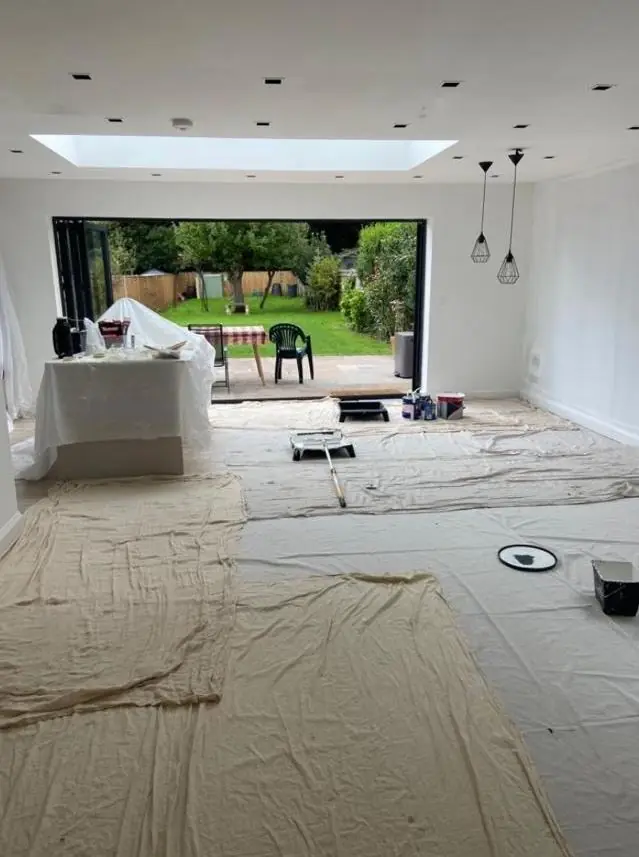
Gypsum plaster is thirsty. Put full-strength emulsion straight on it and the paint skins on the surface before it bonds, then peels in sheets later. The fix is a mist coat, a thinned first coat that soaks in and gives the next coats something to grip. Our guide to painting new plaster covers drying times and mixes in detail. In a Great Billing extension, the practical points are:
- Drying time: a skim on board typically needs a few weeks; a backing coat on block takes longer. Pink to pale and even is the sign it is ready.
- Kitchens and garden rooms: new extensions often go on the south or garden side. A south-facing room with large glazing warms the plaster unevenly, so some areas dry before others. We check the whole room, not just one wall.
- Snagging: trowel marks, nail pops on board joints and cracks along beads show up once the mist coat is on, and we fill and sand them before the finish coats.
Lime plaster in barns and older conversions
Great Billing’s converted barns and outbuildings have thick stone walls and exposed timbers. When they are repaired or replastered in lime, the wall is designed to take in and release moisture. A standard acrylic or vinyl emulsion slows that down and can lead to damp patches, blistering or flaking. On lime we use a breathable system instead, such as a mineral paint or a clay or limewash-compatible emulsion, often thinned for the first coat in the same spirit as a mist coat.
Lime also cures more slowly than gypsum, so the wait before painting is usually longer, and it pays to keep heating gentle while it carbonates. In rooms with exposed beams, we cut in carefully against the timber so the new paint does not creep onto old oak.
Working alongside your builder
New plaster work usually comes at the end of a build. On the closes and cul-de-sacs around the conservation area, parking is often shared with the builder’s vehicles and a skip, and on lanes like Elwes Way or Cattle Hill there is barely room for one van. We agree a start date with you and the builder so we arrive after the plaster is dry and before the kitchen fitter or flooring goes in, when possible. That keeps us from painting around new units.
If the walls have already been mist-coated by someone else, we check the bond before adding finish coats. See the main new plaster and extension painting page for what a full extension job includes, or our Great Billing area page for other work in the village.
Last updated by Dean, DH Painter & Decorator.