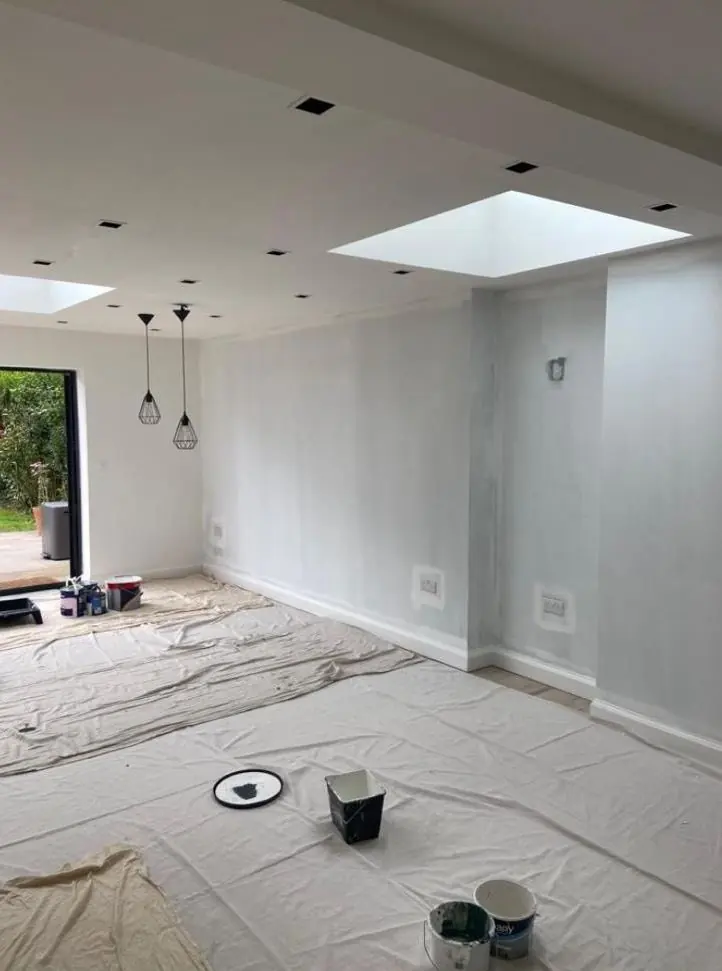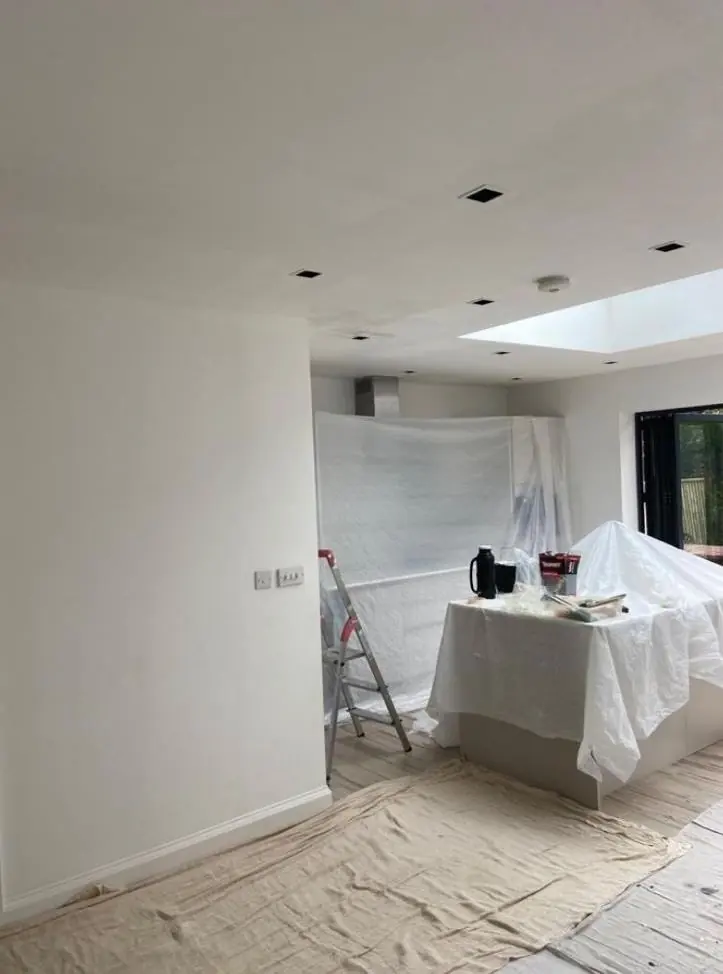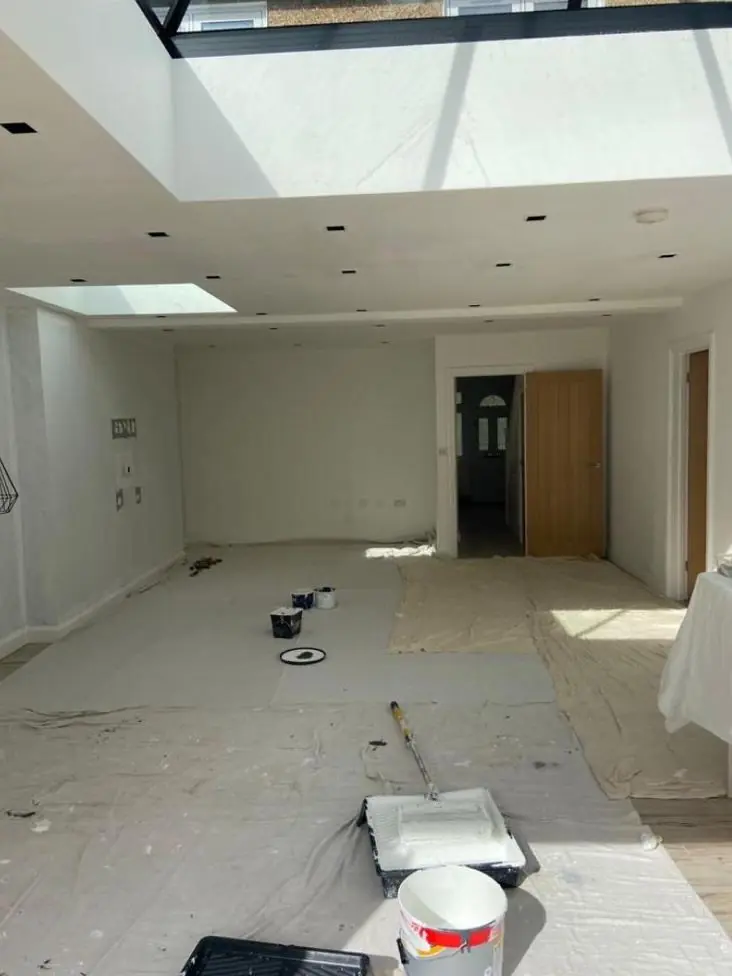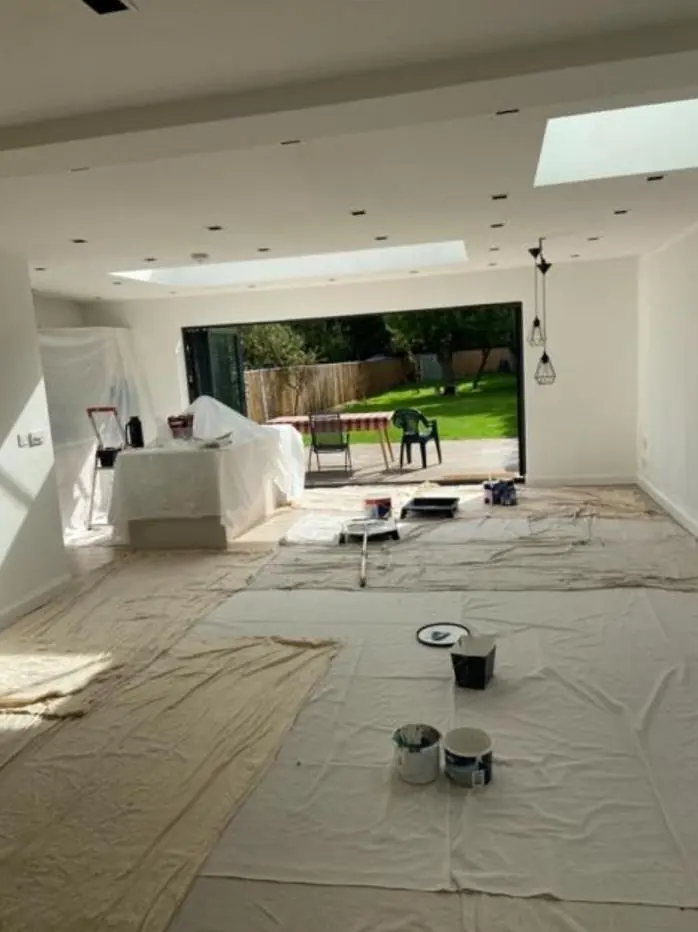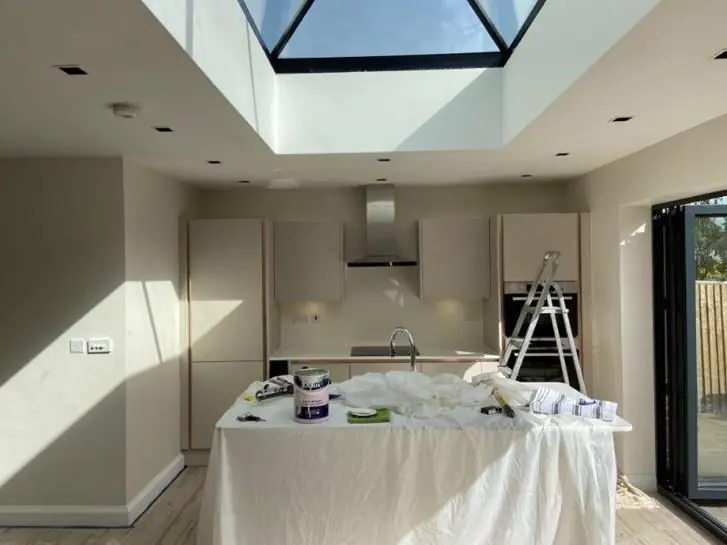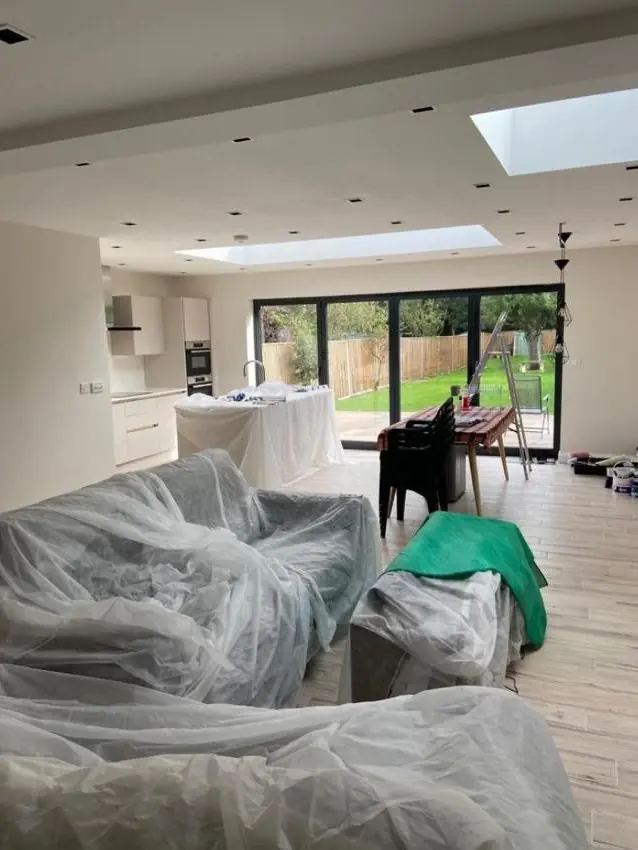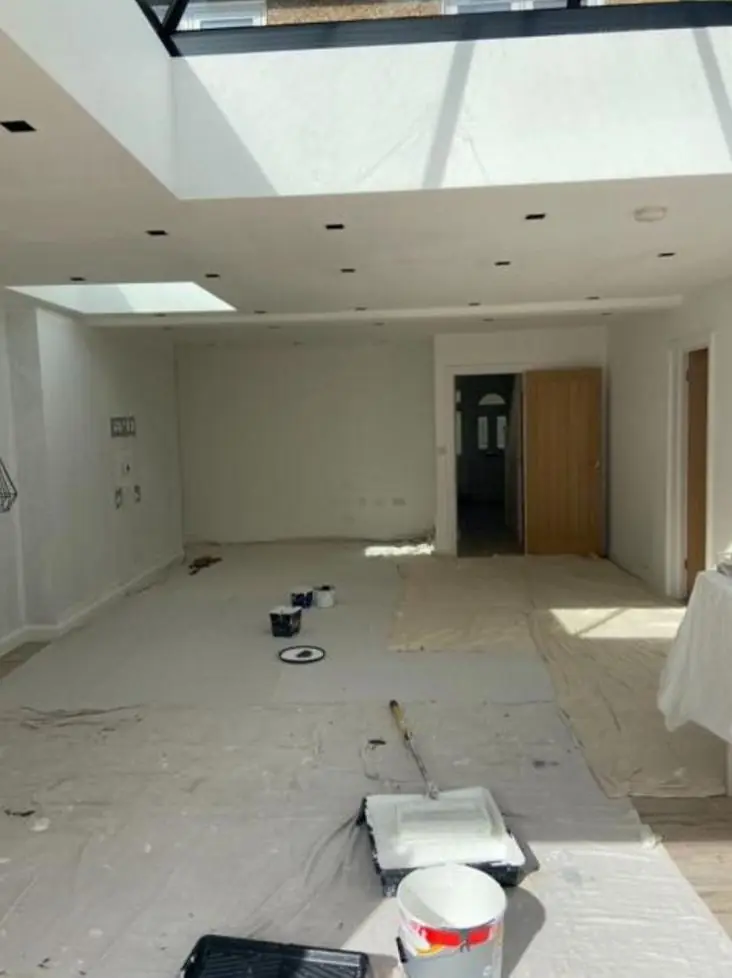
Dean decorates new plaster in Bellinge (NN3 9), which lies 3.5 miles east of Northampton town centre. On this 1970s-80s estate that is mostly re-skimmed rooms after repairs, walls patched between tenancies and the occasional extension, each needing a proper mist coat before finish colours go on.
Where the fresh plaster comes from on this estate
Bellinge’s houses are now forty to fifty years old. Northampton Development Corporation built them in the 1970s and 80s, and the TCPA’s review of the eastern estates notes that some need significant renewal. Inside, that usually shows up as tired or cracked wall surfaces. Once a plasterer has re-skimmed a room, replaced a ceiling after a leak or made good around a new kitchen or bathroom, the bare plaster needs decorating, and that is the stage we take on.
There is also a steady source of patched plaster in rented homes. In the core estate area, the 2021 Census counts 164 social-rented and 141 private-rented households. Between tenancies, removed shelving, holes and damaged corners are often repaired with patches of fresh plaster, which then sit next to old painted walls. Patches like that need careful sealing, or they show through as dull blotches under the new emulsion.
Extensions on the estate’s semis and detached houses
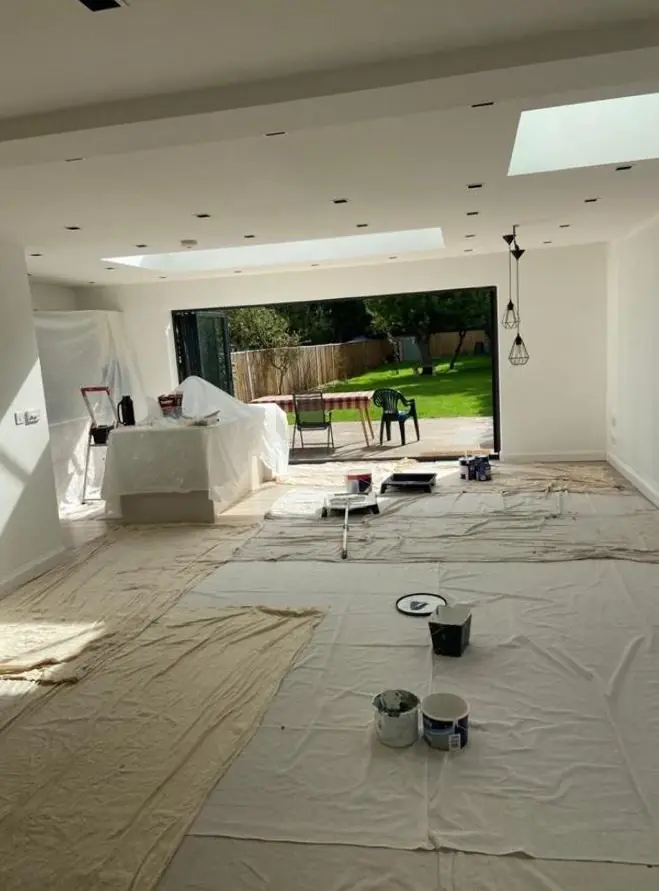
The compact terraces in Bellinge’s courts rarely have much room to build out. Extensions are more likely on the semi-detached and detached houses, especially towards the north-east of the estate, where the Census counts more of them (237 detached and 195 semis in that area). A single-storey kitchen or living-room extension gives us a set of all-new surfaces: walls, ceiling, window reveals, new MDF or softwood skirtings and architraves, and the join where new plaster meets the original house.
That join needs care. The original 1970s-80s walls usually carry many coats of emulsion, while the new plaster is bare. We mist coat the new work, fill and caulk any hairline crack at the junction once it is sealed, and then carry the finish colour across both so the room reads as one space. If your builder is still on site, we can fit the decorating around their snagging list. New window boards and door linings fitted in an extension are often bare softwood or MDF, and we want them knotted and primed before the finish coats, so it helps to know early which joinery is staying unpainted for us to finish.
Our sequence from bare plaster to finished wall
- Drying check. We look for an even, pale colour across every wall. Dark patches mean moisture, and painting over them traps it.
- Mist coat. A thinned, breathable contract matt soaks into the plaster and seals it. Vinyl paints are kept off bare plaster because they can peel.
- Snagging. The mist coat shows up trowel marks, nibs and small cracks, which are filled and sanded.
- Finish coats. Two coats of your chosen emulsion. In a rented home or a busy kitchen, a scrubbable finish is worth having.
- New joinery. MDF and timber are sealed, knotted, primed and given satin or gloss.
The mist coat guide explains the mixing ratios and drying times, and the main new plaster page covers the full service.
Practical points for a Bellinge job
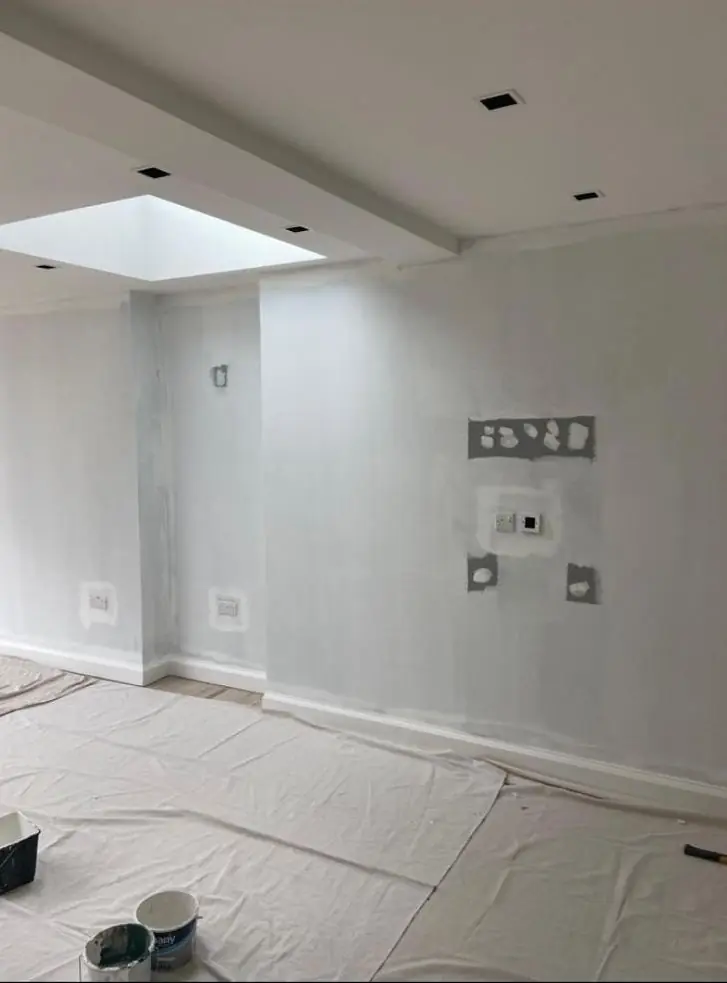
Unlike Great Billing to the north-east, the estate carries no heritage designation, so decorating an extension comes with no colour or material restrictions. Access is the more practical question. Many houses in the courts face footpaths rather than roads, so tins, dust sheets and any tower for a vaulted or lantern ceiling are carried in from shared parking. If a skip or the builder’s materials are already taking up space in the court, tell us when you book and we will plan our arrival around them. You can find more about decorating on the estate on our Bellinge page.
Last updated by Dean, DH Painter & Decorator.