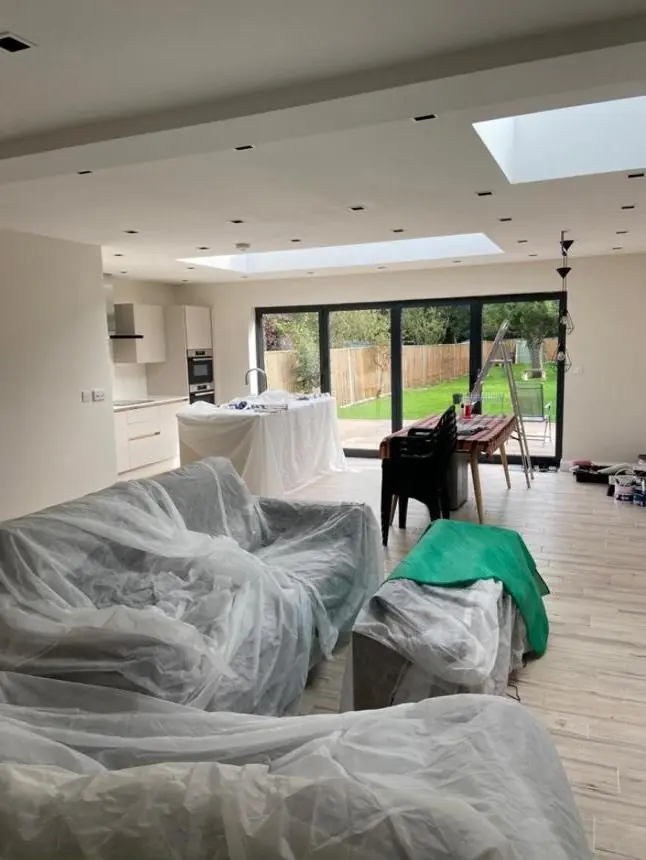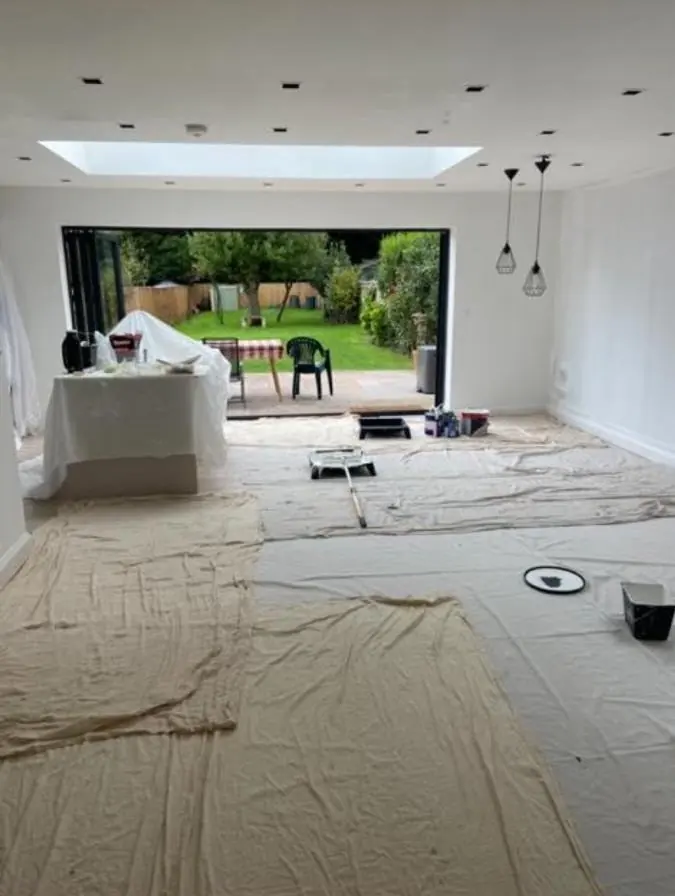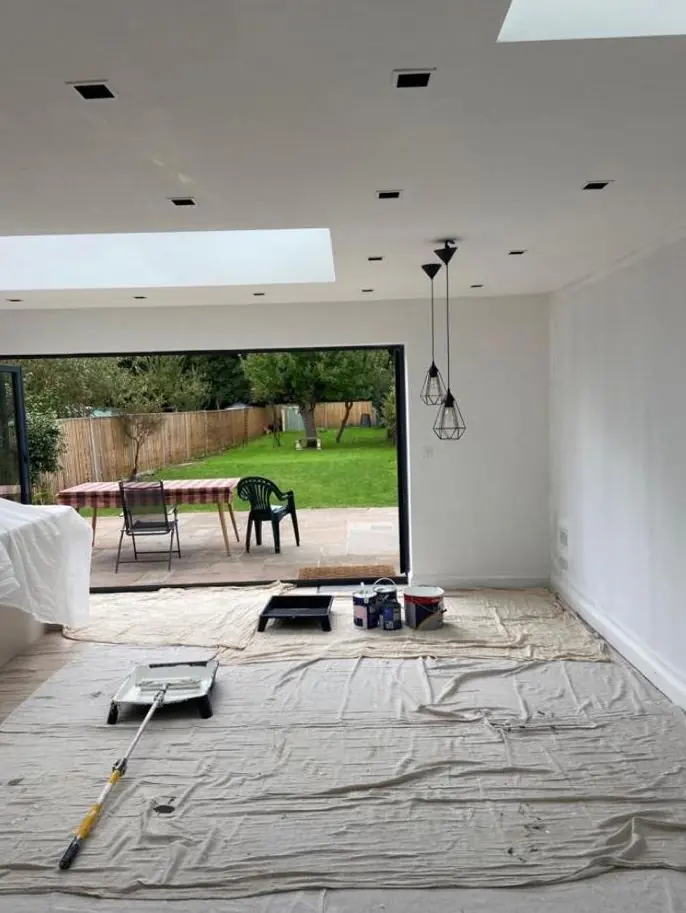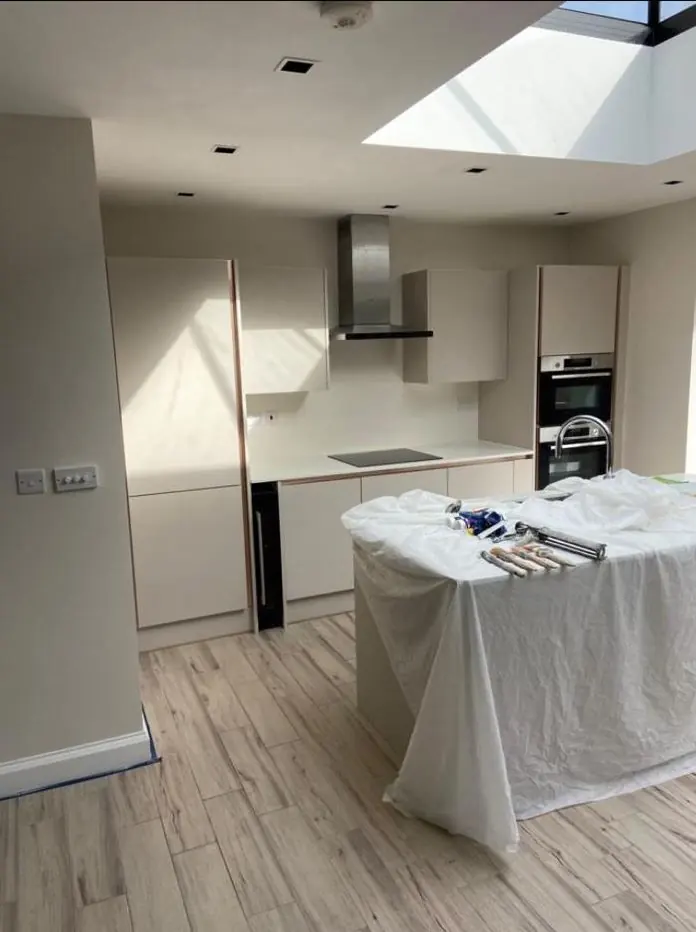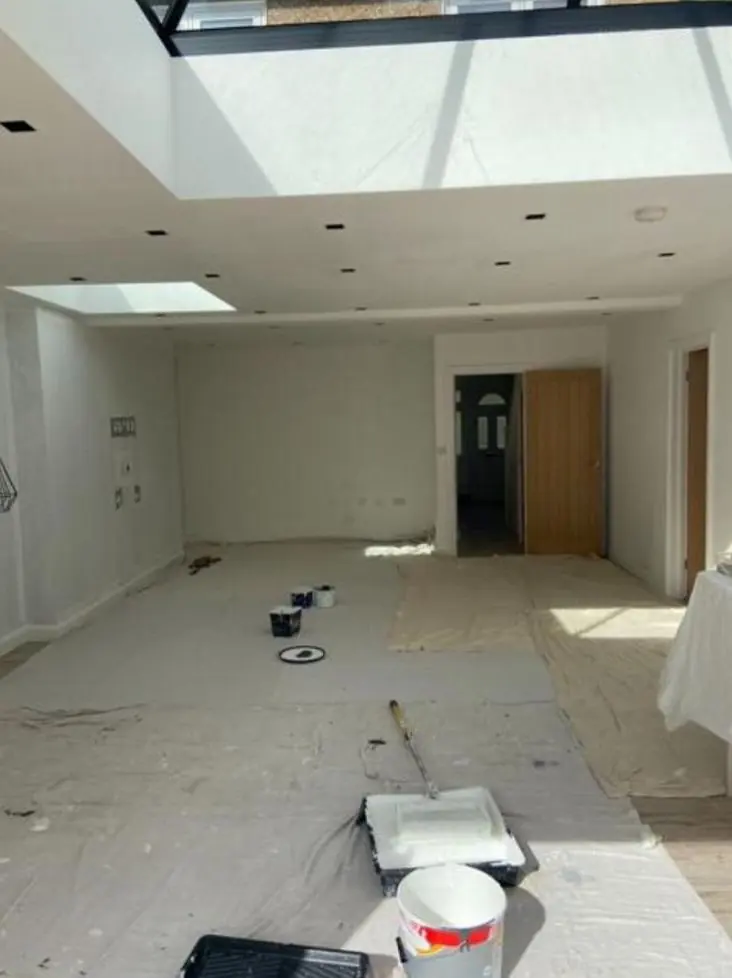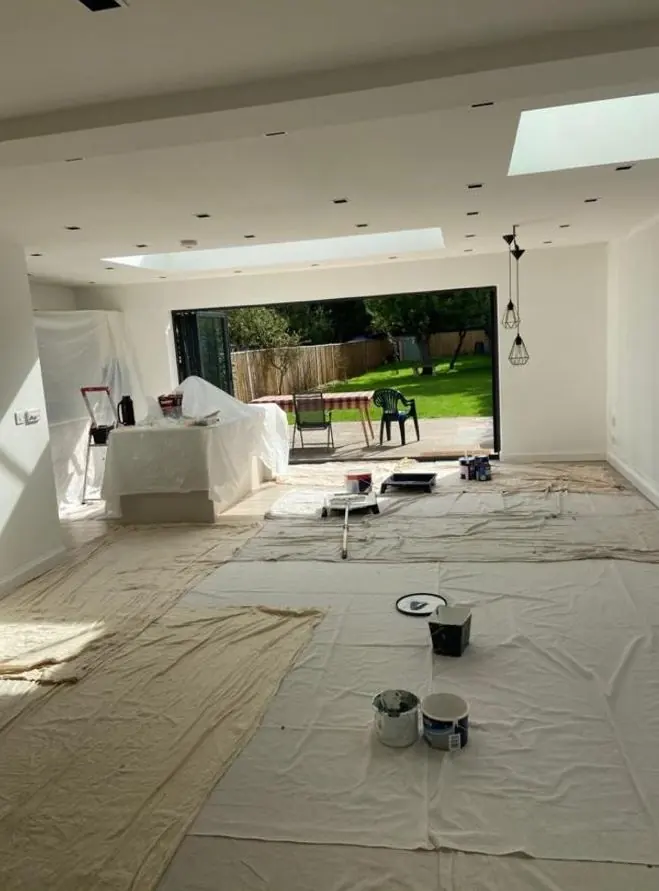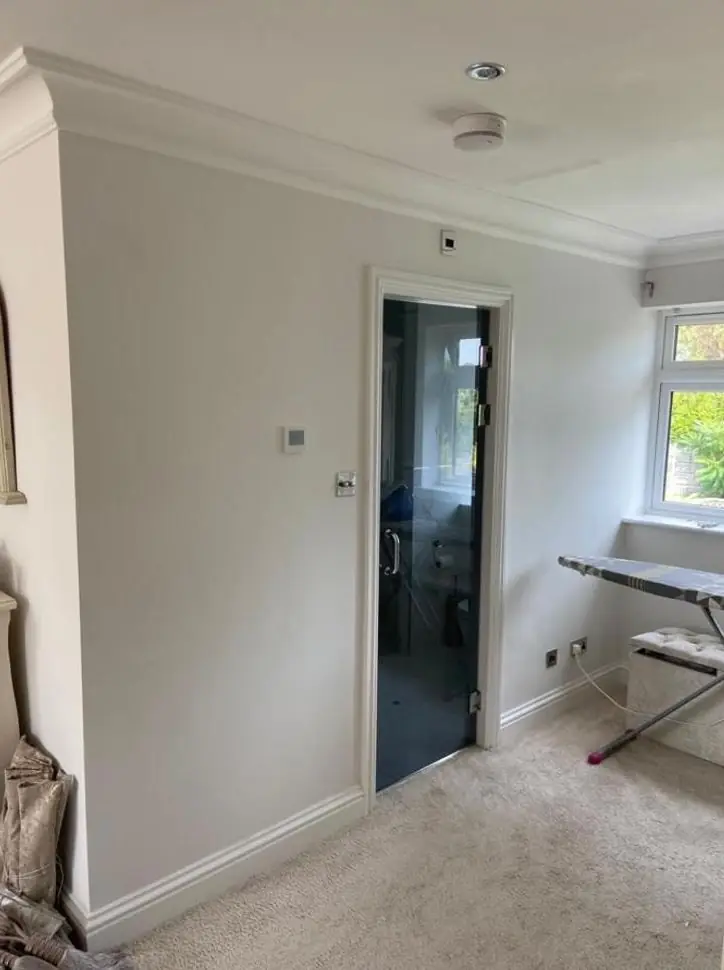
We decorate new plaster, re-skimmed rooms and extensions in Ecton once your builder or plasterer has finished. The village is about 4.9 miles north-east of Northampton, and because much of its older housing is lias and ironstone with lime plaster, the joins between new and old work need more thought than on a modern estate.
Where gypsum skim meets lime plaster
Ecton’s historic core is mostly late 17th and 18th century stone: coursed lias, ironstone and golden-brown limestone. The original interiors of those houses were finished in lime plaster, and some still are. When an extension, a knocked-through wall or a patch repair is skimmed in modern gypsum, the result is two plasters side by side with different suction, different drying behaviour and different tolerance of moisture.
For the new gypsum, a thinned emulsion mist coat is normally right. For the lime side, a vinyl emulsion can seal moisture into the wall, which in a stone house tends to blister and flake before long. Where the two meet, we:
- find the line between old and new before priming, by touch and by how the surface takes water
- use a breathable, lime-compatible paint over the old plaster and carry it across the join where needed so the wall reads as one
- leave cracks along the join until the new plaster has dried, then fill with a flexible filler
- keep the finish sheen consistent so the patch does not show in raking light from a cottage window
Our mist coat guide explains the basic process for new gypsum. The Ecton-specific part is knowing when not to use it on the older walls.
Extensions under Neighbourhood Plan Policy 7
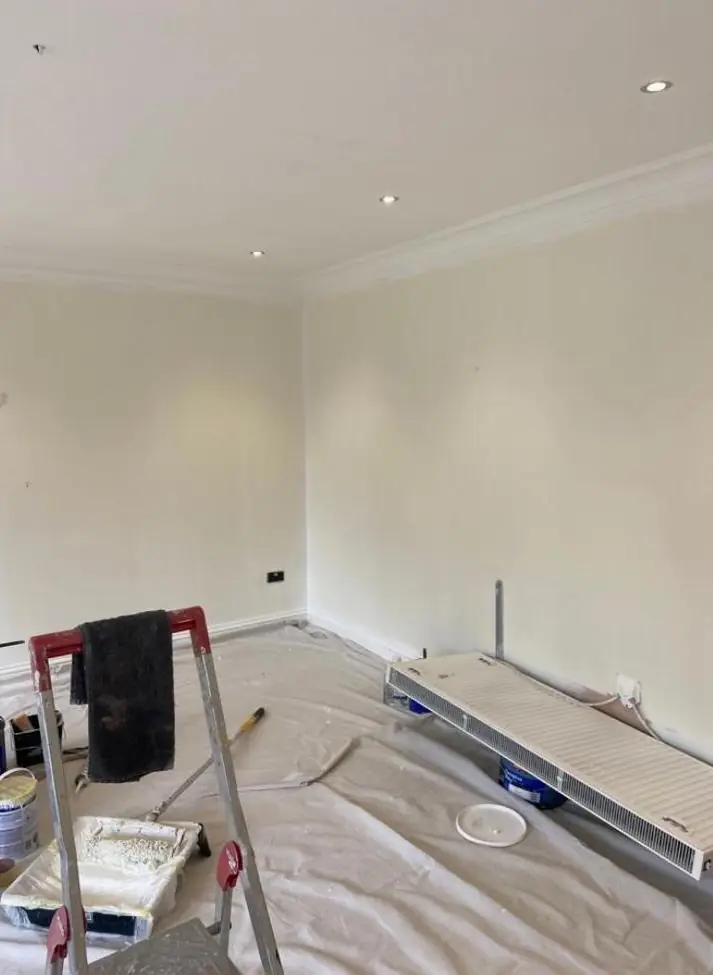
The Ecton Neighbourhood Plan, adopted in 2021, requires development in the conservation area to use traditional materials and fenestration and to keep the stone walls and the railings associated with Ecton Hall. The 2018 appraisal discourages uPVC and concrete roof tiles. In practice, an extension to a High Street house is likely to come with painted timber windows and doors rather than factory-finished plastic.
That affects our part of the job. New softwood casements, frames, skirtings and doors arrive bare or only primed, and they need knotting, priming, undercoat and finish before the room is usable. Exterior joinery on the south and west sides takes harder weathering on Ecton’s open valley slope, so we pay extra attention to end grain and the bottom rails of new doors there. Where a listed building is involved, the paint system on new work may be part of what the council approved, so ask your builder or architect what was specified.
Drying time on a spring-fed slope
Lias clay under Northamptonshire sandstone gives Ecton natural springs on the valley slopes south of the village, and many older cottages are built directly onto the footpath. Both point to ground-floor walls that take longer to dry after plastering, especially on the street side and in winter. A skim that looks pale and even at the surface can still be damp behind. We check with a moisture meter before the first coat rather than going by the calendar, and we would rather come back a week later than seal wet plaster.
Re-skims in the 20th-century houses
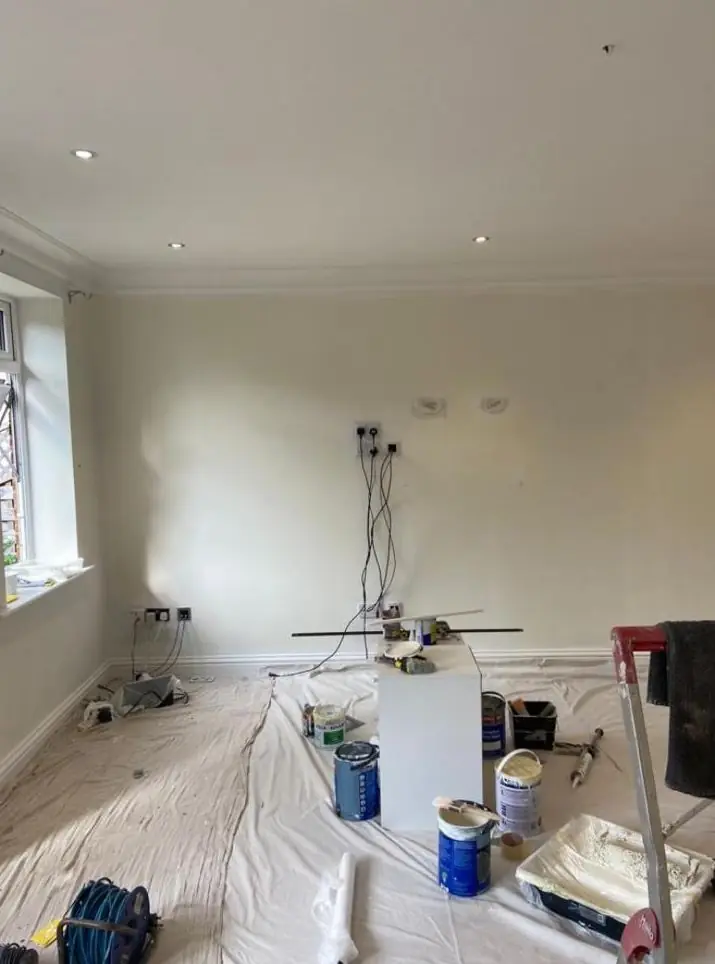
Not every job in Ecton involves old stone. The Church View bungalows and the brick semis lining West Street and Northampton Road were built in the ordinary 20th-century way, so a re-skim over plasterboard or a new rear extension follows the normal sequence: dry, mist coat, fill and sand, two finish coats. These are straightforward and quicker to turn round.
The full method, including new woodwork and how we work alongside builders, is on our new plaster and extension painting page. The Ecton area page covers our other work in the village.
Last updated by Dean, DH Painter & Decorator.