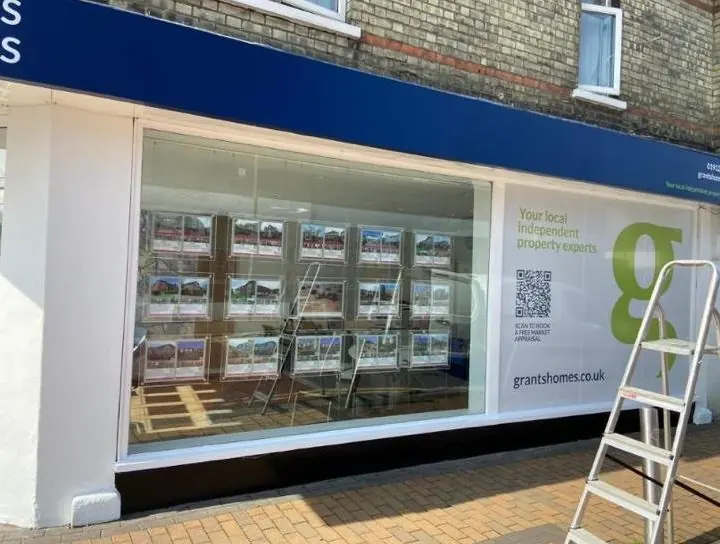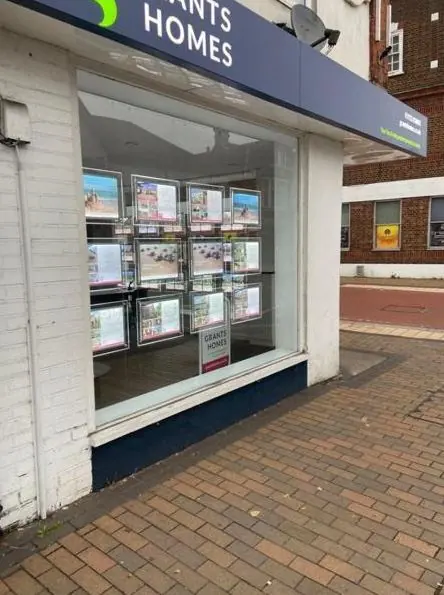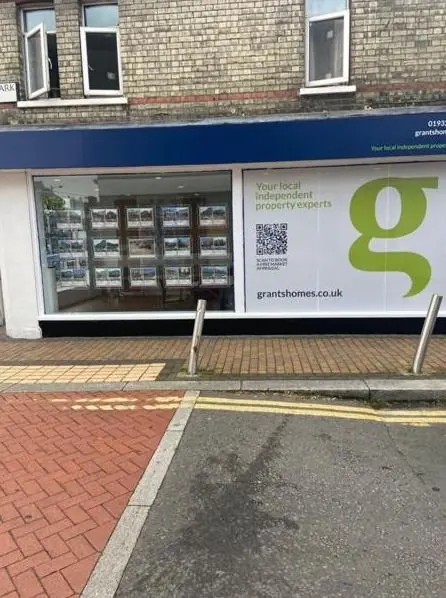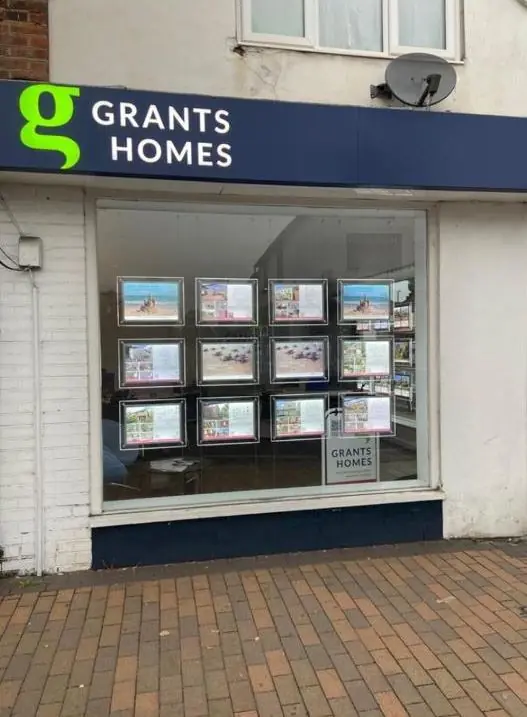
We paint shopfronts and business frontages in Flore, the NN7 village about 6.7 miles west of Northampton. Its commercial premises are few: the shop and post office on the green at the top of Sutton Street, the RE coffee and refill shop, the White Hart pub and a garage showroom, plus heritage frontages such as the former grocer's at 46 High Street.
A village centre, not a parade
Flore does not have a row of shops. It has a handful of premises spread around the junction of the High Street, Sutton Street and Brockhall Road, each a different kind of building:
- The post office and village shop, a modern building on the triangular green where Sutton Street starts.
- Flore RE, a coffee and refill shop on Sutton Street, where frontages sit on very narrow pavements.
- The White Hart pub near the Brockhall Road and Sutton Street crossroads.
- A 20th-century garage forecourt with a showroom close by.
Other premises in the village, including the day nursery, Millennium Hall and the halls belonging to the church and chapel, have painted doors and windows rather than shopfronts; those are covered by our commercial painting work. On each of the four frontages above, the elements to paint differ: fascia board and signage panel, window frames, stall riser, doors, and for the pub, its doors, windows and sign boards.
The old grocer’s front at 46 High Street
The conservation appraisal singles out one frontage in particular: the former grocer’s shop at No. 46 High Street, now a dwelling, whose decorative shopfront it says should be preserved. It is a useful reminder that in Flore a shopfront can outlive the shop. A historic timber front like this is repainted the way old joinery is: careful hand preparation, filling and splicing where the timber has decayed, keeping mouldings and decorative details crisp rather than clogging them with filler, and a finish that respects the original look. If you own a former shop building in the village with its frontage still in place, we would treat it this way too.
Colour inside the conservation area
Where premises fall inside the 2018 Flore Conservation Area, the appraisal’s view is that traditional joinery should be white or a muted colour based on the originals, and it comments that the modern convenience shop jars with the buildings around it. For a business that means a strong corporate colour may not be welcome, while a deep green, grey, dark blue or off-white with clear lettering usually sits well against ironstone and red brick. Former inns such as the Royal Oak, now a home, and the Old Bakers Arms are Grade II listed, a reminder that old trading buildings here often carry listed status; on any listed building a colour change may need consent. Signage itself is a separate matter from paint and may have its own consent rules.
Working while you trade

A village shop or pub cannot really close for a repaint, and Sutton Street gives little space to work. We agree times with the business first: the entrance done at the start or end of the day so shoppers always get in, the fascia done early before deliveries and footfall build, and wet paint signs wherever someone might brush past on a narrow pavement. The forecourt at the garage gives more room, but vehicle movements still need keeping clear. Weather matters too, as fascia boards and signage need dry days, so we keep a spare day in hand and tell you early if the forecast pushes the start back.
For more on how shopfront jobs are run, see our main shopfront painting page; the Flore area page describes the village and its buildings, and the cost guide explains what shapes a quote.
Last updated by Dean, DH Painter & Decorator.