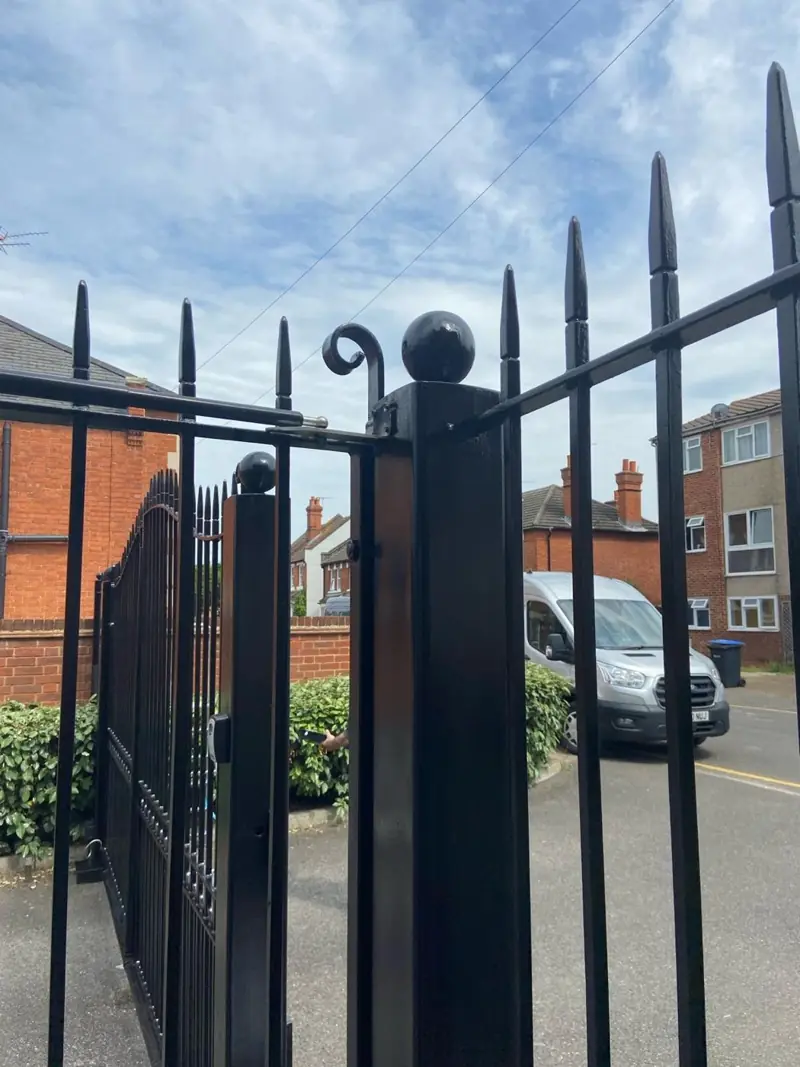
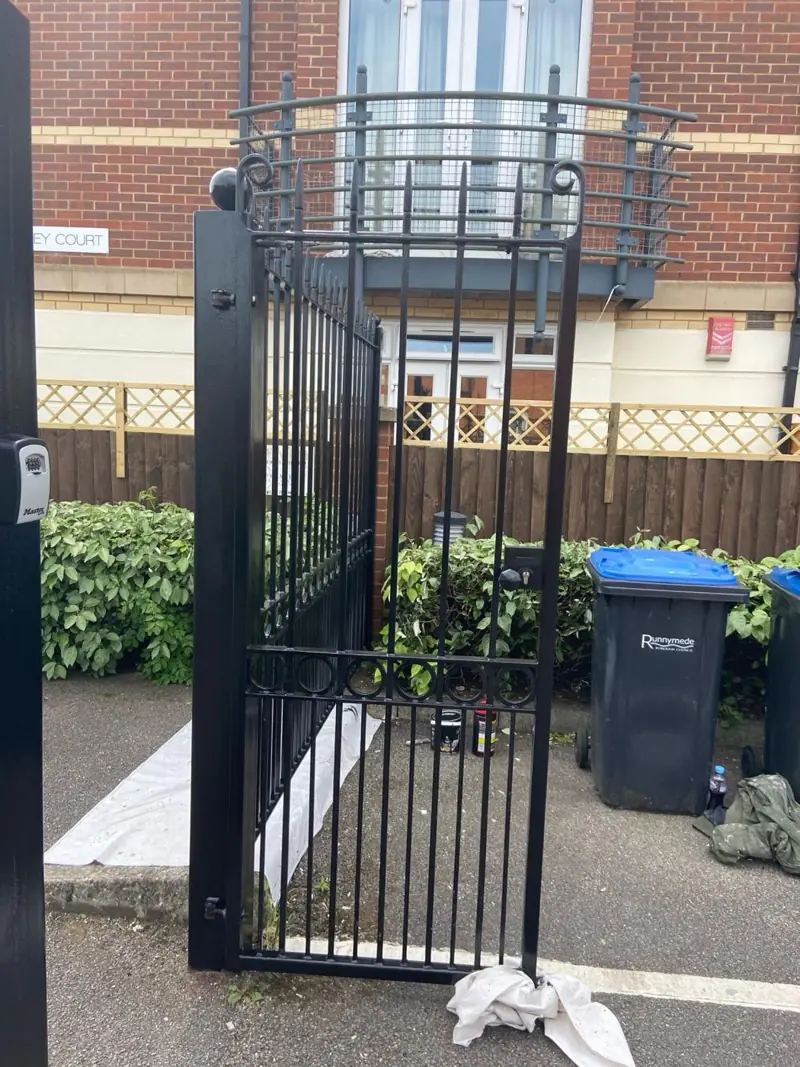
Dean paints metal gates, railings and other ironwork in Flore, NN7, about 6.7 miles west of Northampton. The village's metalwork includes iron railings around the chapel burial ground, by the orchard north of 43 High Street and on Russell Rise, decorative Victorian porches on the High Street and corrugated tin outbuilding roofs.
A short survey of Flore’s ironwork
Flore is not a village of long railed terraces; many older houses sit right on the lane with no front garden to enclose. But the ironwork it does have is varied, and each piece needs a slightly different approach:
| Metalwork | Where in Flore | What it usually needs |
|---|---|---|
| Iron railings | Around the chapel burial ground, the orchard north of 43 High Street, Russell Rise | Rust removal to sound metal, metal primer, two coats of enamel |
| Metal-framed porches | Decorative Victorian examples on the High Street | Hand preparation of fine detail, rust-inhibiting primer, enamel |
| Corrugated tin roofs | Outbuildings, and cottages where thatch was replaced | Wire brushing, rust treatment, a coating made for sheet metal roofs |
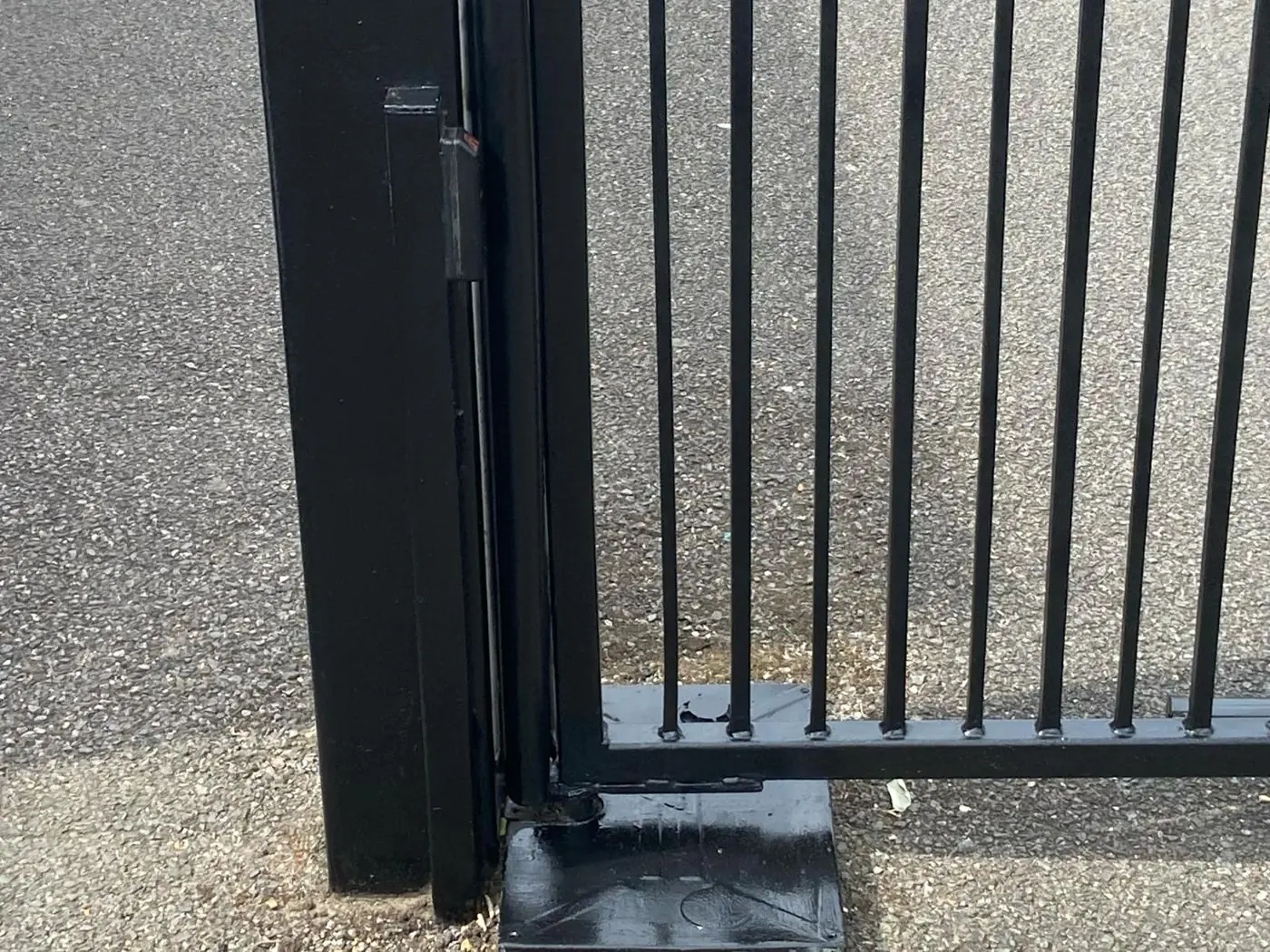
| Modern steel gates | Any driveway gates on the 20th-century and newer streets | Spot rust repair; galvanised primer if the steel is galvanised |
Victorian porches on the High Street
The painted porches the conservation appraisal mentions include decorative metal-framed Victorian ones on the High Street. These combine thin iron sections, scrolls and joints where water collects. Rust starts at those joints and at the feet. We clean them by hand with scrapers, wire brushes and abrasive pads, because power tools can bend fine sections, then prime bare metal the same day and finish in enamel. Colour should stay muted: the appraisal expects porches and shutters, where painted, to be white or a sensitive traditional shade. If the house is one of the roughly 45 listed entries in the parish, a change of colour is worth checking before work starts.
Railings by a road: repaint, do not remove
In the Flore Conservation Area, demolishing walls, gates or railings over one metre high next to a highway needs permission. For a householder with tired roadside ironwork, that makes careful repair and repainting the sensible option. Rusted railings often look worse than they are; once loose scale and old paint are off, the bars underneath are usually sound. Where a bar has rusted through at the base, or the lead or mortar fixing has cracked the stone it is set into, we point that out so a metal fabricator or mason can deal with it before we paint.
Tin roofs over old outbuildings
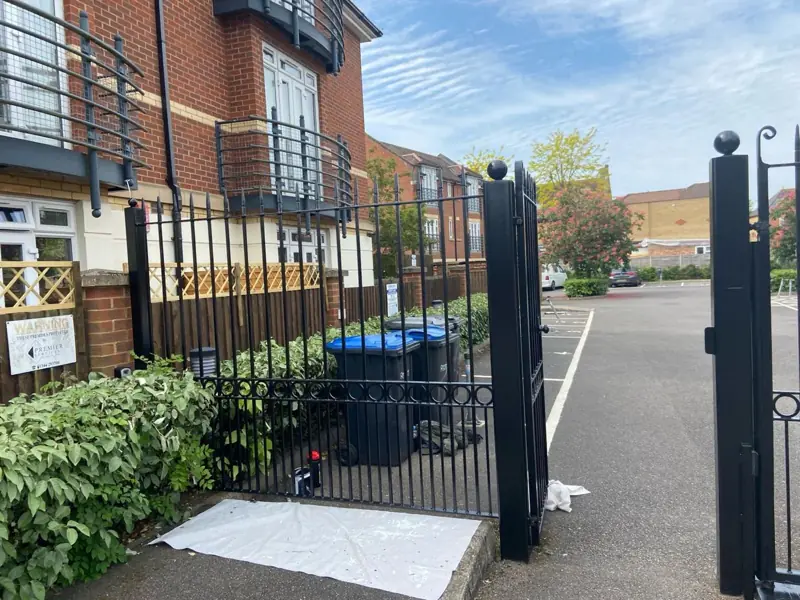
Some Flore cottages lost their thatch and were re-roofed in corrugated tin, and the same sheeting covers outbuildings around the village. Rust usually starts at the overlaps, fixings and bottom edges. These roofs need safe access first, as fragile sheets should never be walked on, and then rust treatment and a coating suited to sheet metal. Outbuilding roofs under the village’s many trees will need a clean before anything else, because leaf debris holds water against the sheets.
Getting to the work
Several of these pieces sit on lanes with narrow or no pavements, so we plan where to park, how to keep paint off passers-by and how to section off the work while coats dry. Wet enamel next to a footpath gets signs and, where needed, a barrier. Gloss enamel also stays tacky for longer in cool, damp air, so in the shaded lanes we allow extra drying time between coats rather than rushing the second one on. More detail on identifying wrought iron, cast iron, mild steel and galvanised steel is on our main metal gate and railing painting page, and the Flore area page sets the ironwork in the context of the village’s houses.
Last updated by Dean, DH Painter & Decorator.