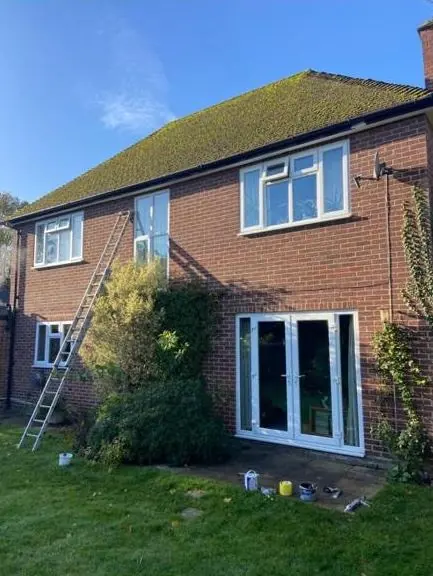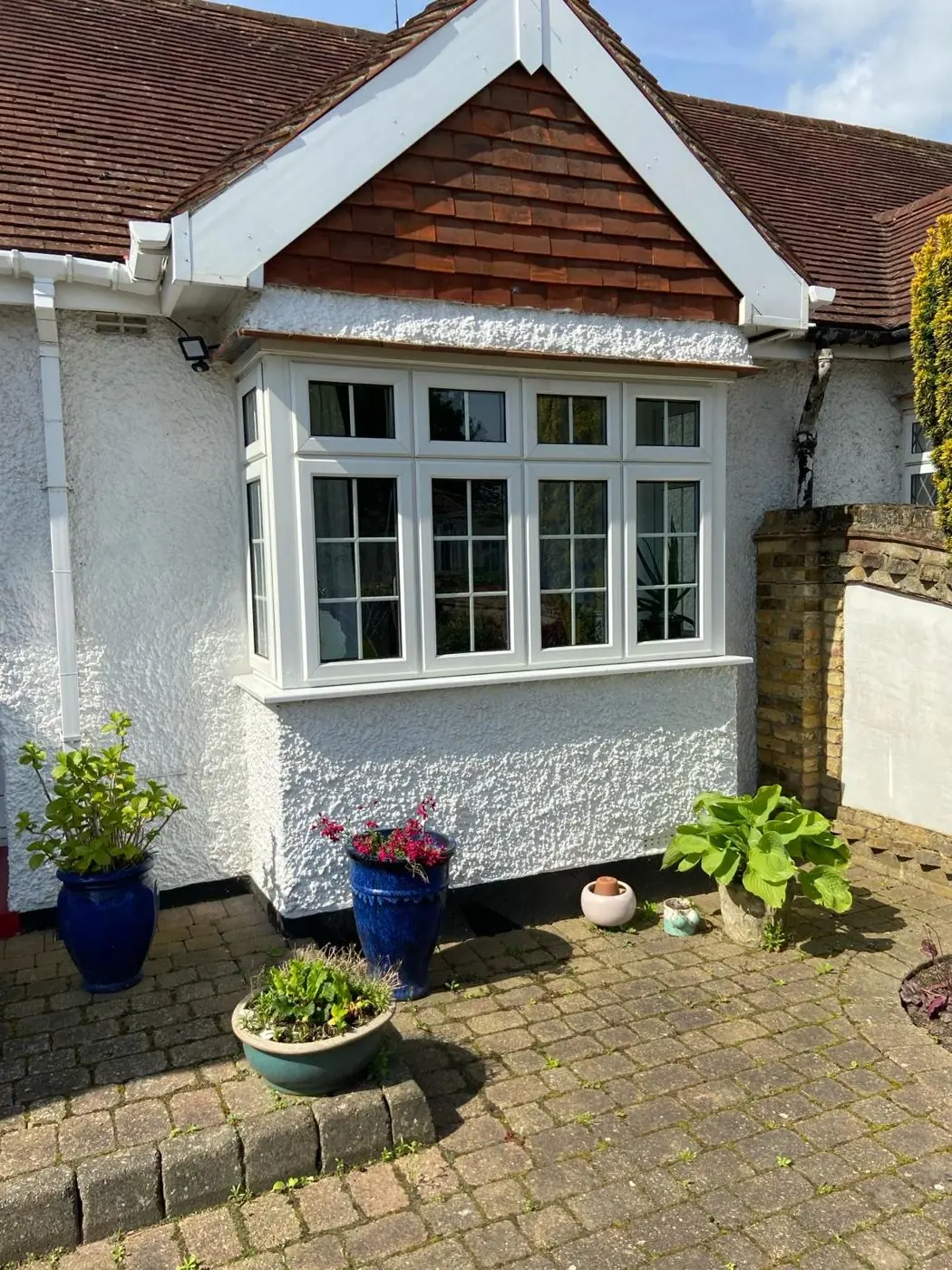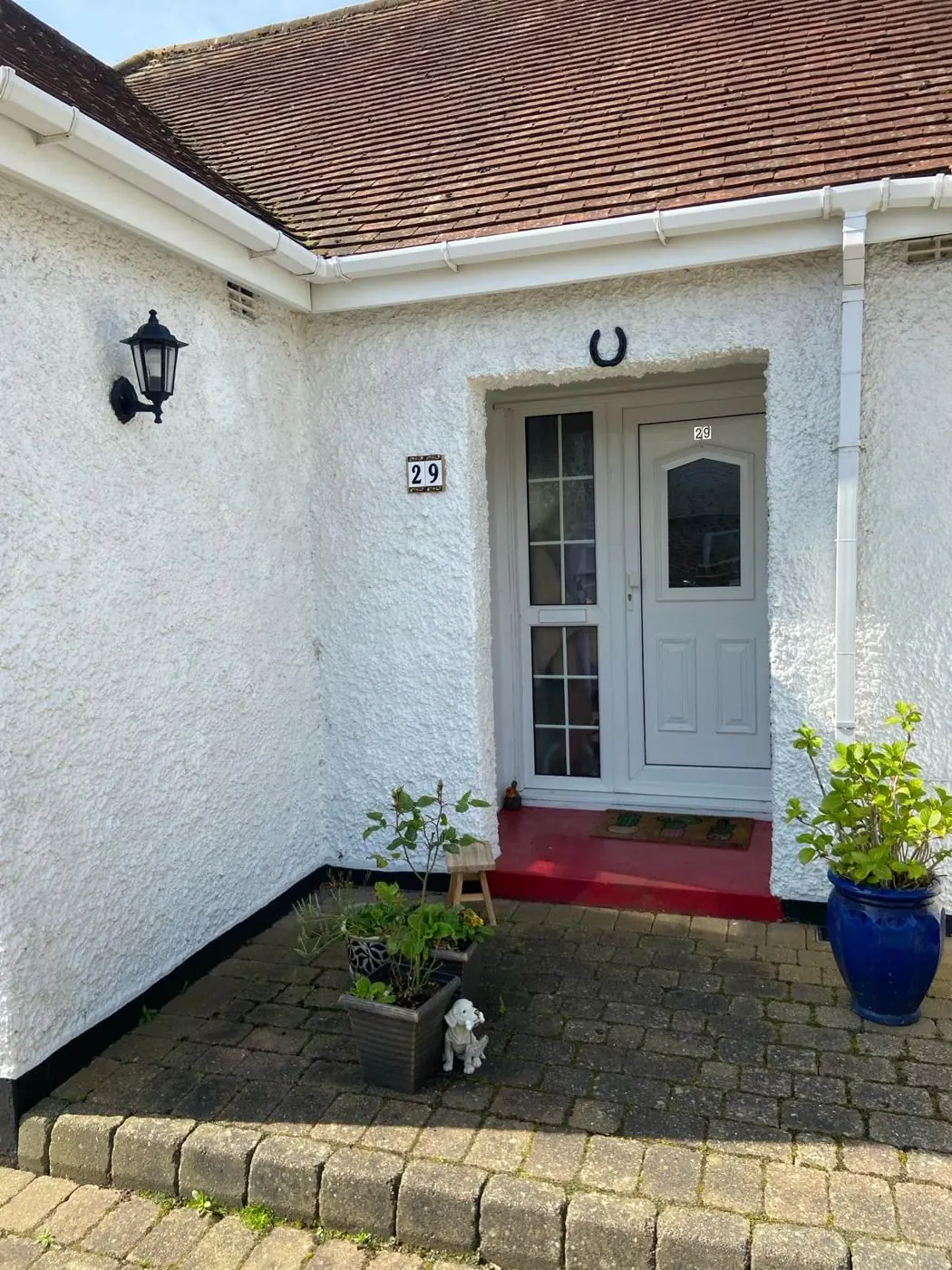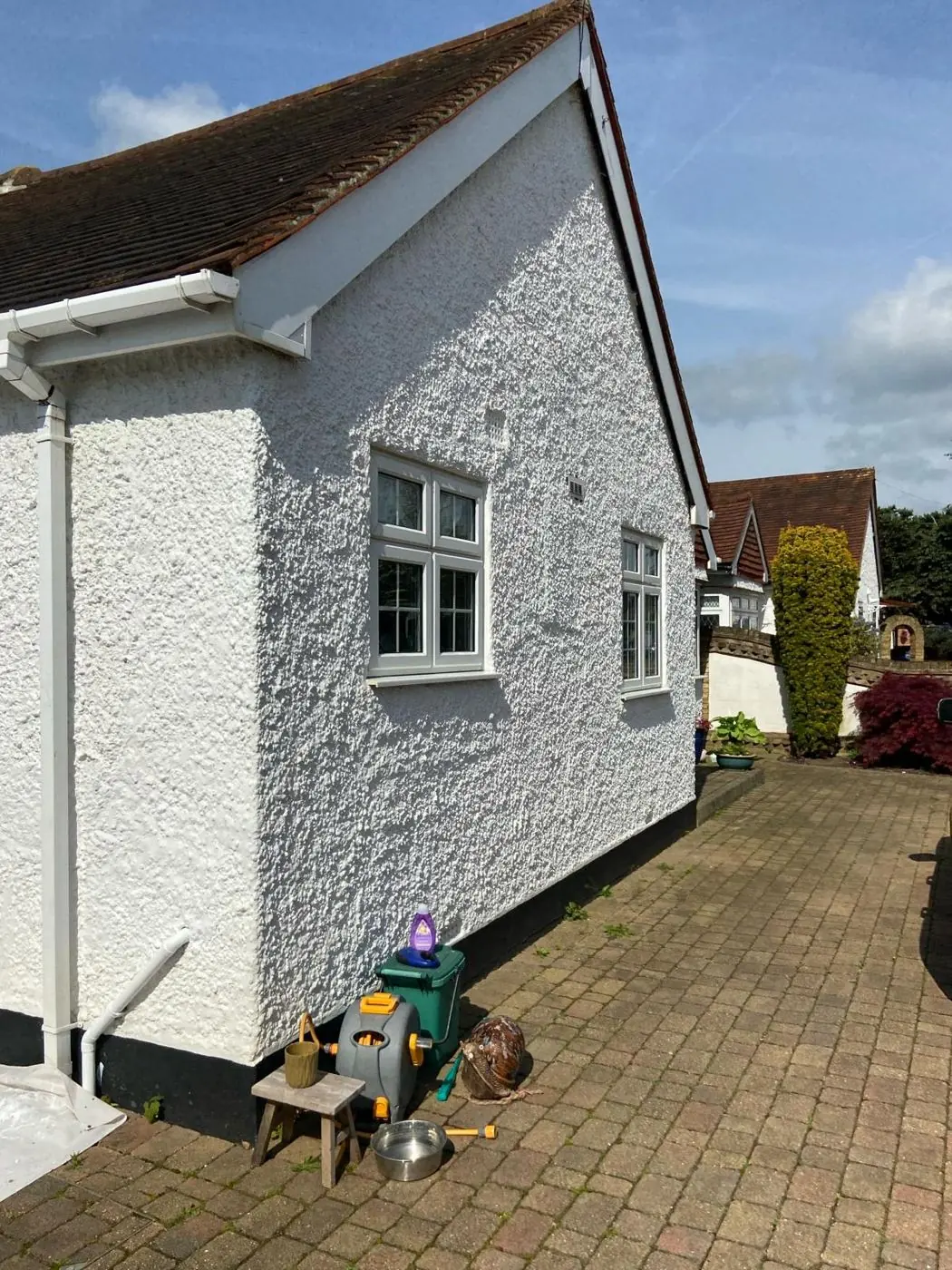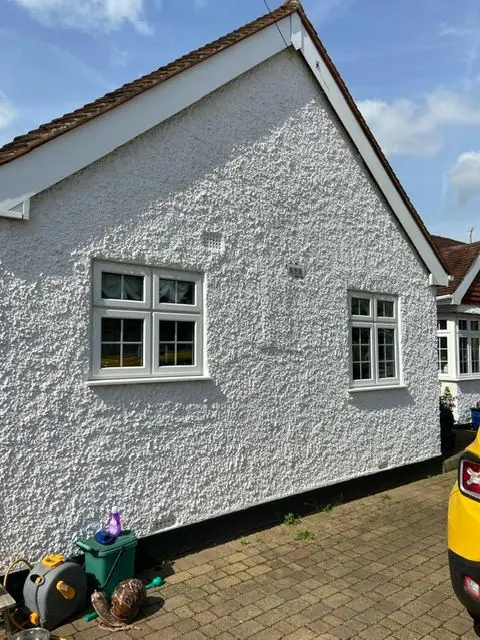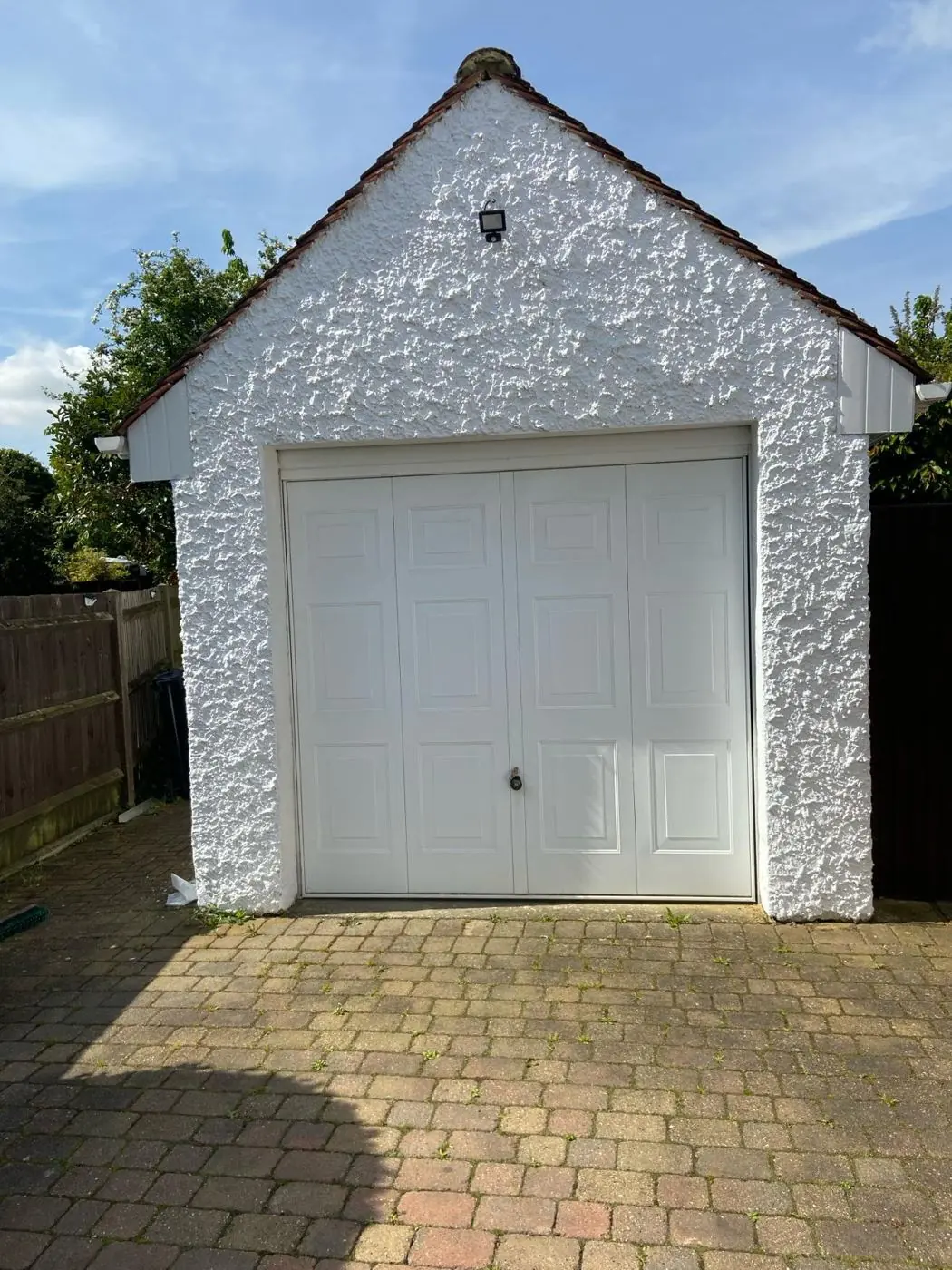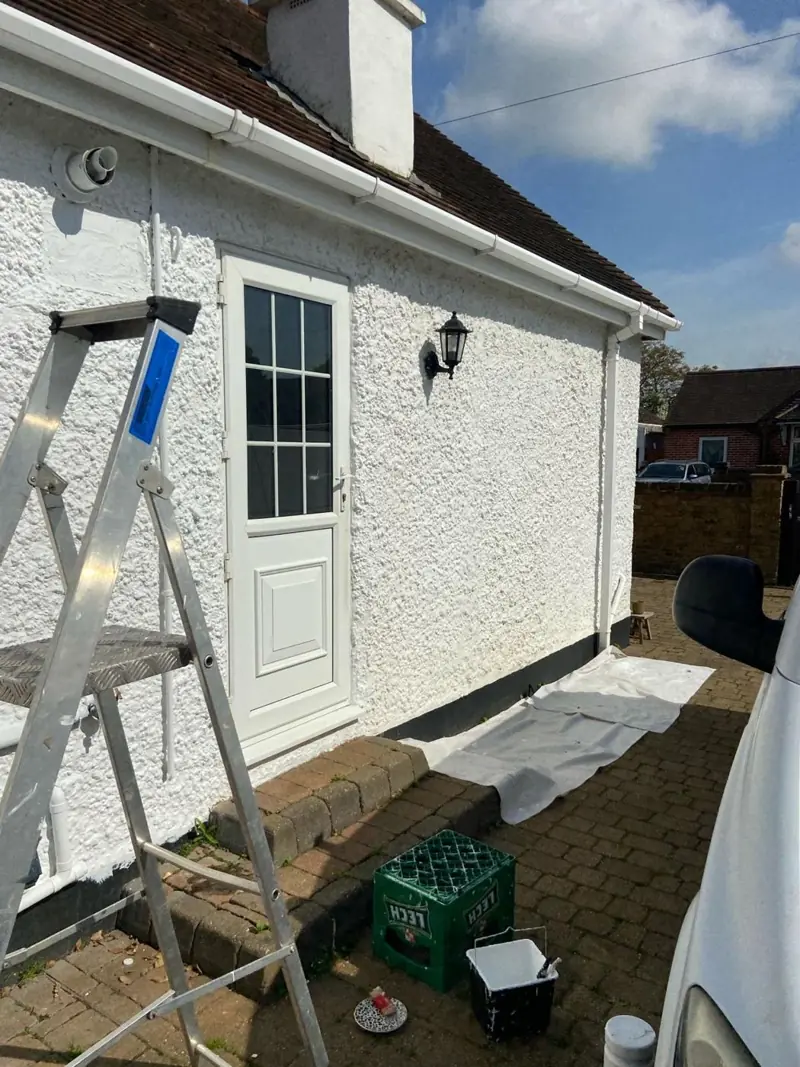
Dean paints fascias, soffits and bargeboards in Flore, NN7, around 6.7 miles west of Northampton. The old village brings steep gables, timber bargeboards and three-storey houses on lanes without pavements; the 20th-century and newer homes to the north have simpler, lower rooflines.
Two kinds of roofline in one village
Flore’s eaves split neatly by age. In the historic core, the yeoman farmhouses of around 1690 to 1720, the Georgian and Victorian houses on The Green and Sutton Street, and the brick farmhouses along the High Street have steep roofs in slate, plain tile or, on some cottages, thatch. Their timber is the bargeboards on gable ends and the boards at the eaves, often with many layers of old paint. Some of the brick houses carry dentil courses, where the brickwork itself forms the eaves detail and there is little or no fascia board to paint.
North of the High Street, the 1920s Brockhall Road houses, 1930s Crescent, 1950s Collins Hill and later homes on Nether Lane and Russell Rise have conventional fascias and soffits, some timber, some already replaced. The one-storey properties on Russell Rise and the buff brick bungalows in The Orchard cul-de-sac off Kings Lane are the easiest rooflines in the village to reach.
Height on The Green, and nowhere to put a ladder
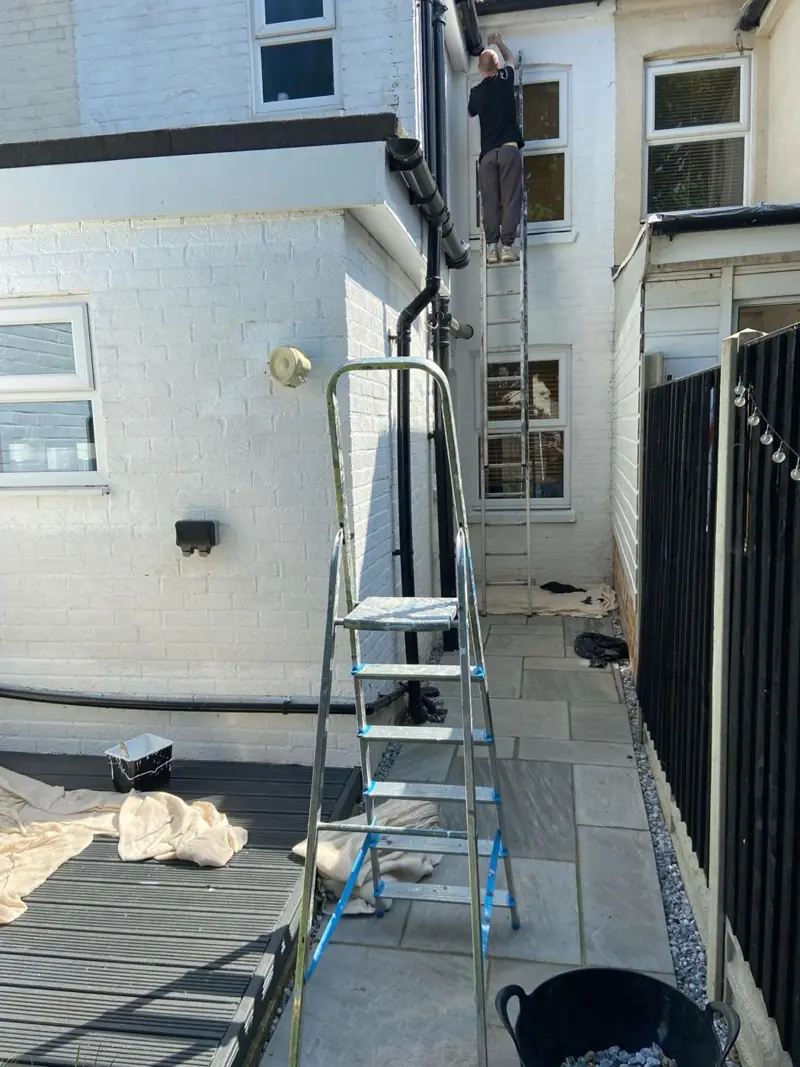
The difficult jobs are on the tall houses. The Green has three-storey stone and brick houses on a narrow, steep lane with no pavements, and the three-storey farmhouses carry tall gable ends. A ladder footed on a slope, at the edge of a road, beside a building’s corner is not a safe way to paint a bargeboard. For these we usually price a tower or scaffold, and work out on the site visit where it can stand, how it is protected from passing cars and how long it needs to be up. Kings Lane and Sutton Street raise the same question at a smaller scale.
Where a house has a thatched roof, the eaves are a different case altogether, and we keep any work clear of the thatch itself.
Eaves under trees and orchards
Flore sits only about 1.5 miles from M1 Junction 16, yet its rooflines are hemmed in by protected trees and orchards near The Hollies and north of the old timber yard. Overhanging trees drop leaf litter into gutters and keep the eaves shaded and damp, so boards grow algae and paint fails sooner on the north and shaded faces. A Flore roofline job usually starts with clearing debris from the top of the board, a biocide wash and time to dry. Where a TPO tree overhangs, the tower is positioned around the branches rather than the branches around the tower.
Bargeboards: repair before paint
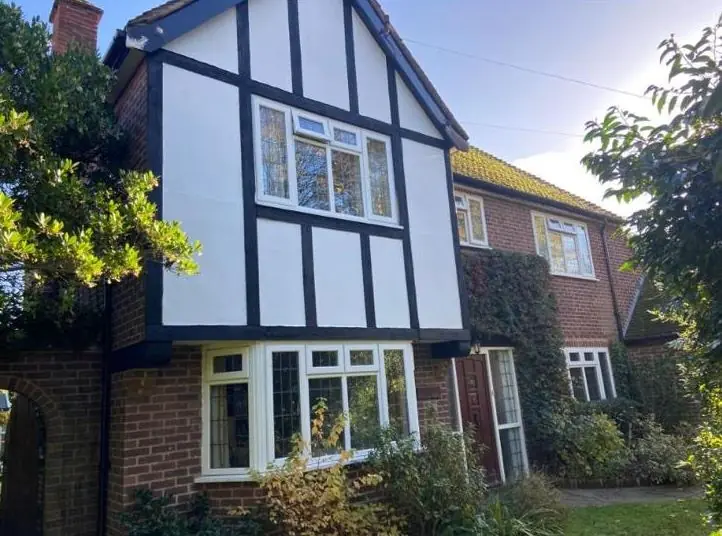
Old timber bargeboards on ironstone gables tend to rot at the bottom ends, where water runs off the verge, and at joints. The sequence on these is:
- Scrape and sand back failing paint, keeping any moulded or shaped edge intact.
- Cut out soft wood and fill or splice; badly rotted boards go to a joiner for replacement in timber.
- Prime bare wood straight away, then undercoat and two top coats of exterior gloss or satin.
Keeping these in timber fits the conservation appraisal’s general preference for repairing original timber joinery over replacing it. White is the usual colour for joinery here, though a darker shade on a bargeboard can suit some stone gables; check any colour change on a listed building first.
The trade detail on primers, plastic fascias and paint systems is on our main fascia and soffit painting page, and the Flore area page sets out where each type of house is in the village.
Last updated by Dean, DH Painter & Decorator.