Painter & decorator covering Northampton and surrounding areas

Render and Masonry Painting in Flore

Limewash for Flore's white cottages, breathable coatings near cob and stone, and standard masonry paint only where modern render sits outside the old core.

  • Over 30 years experience
  • Free quotes & advice
  • Fully insured & trained
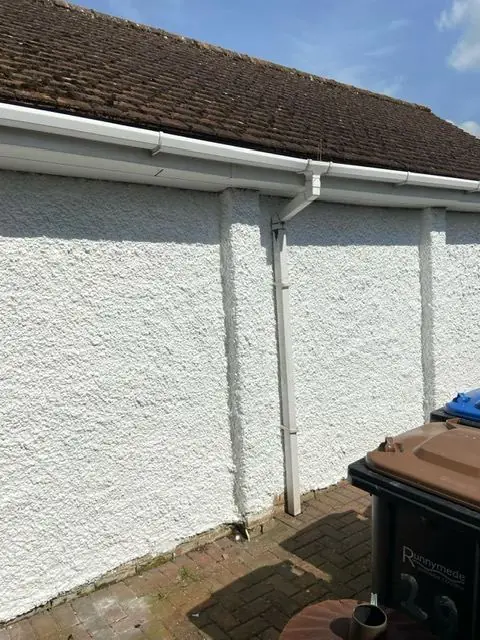
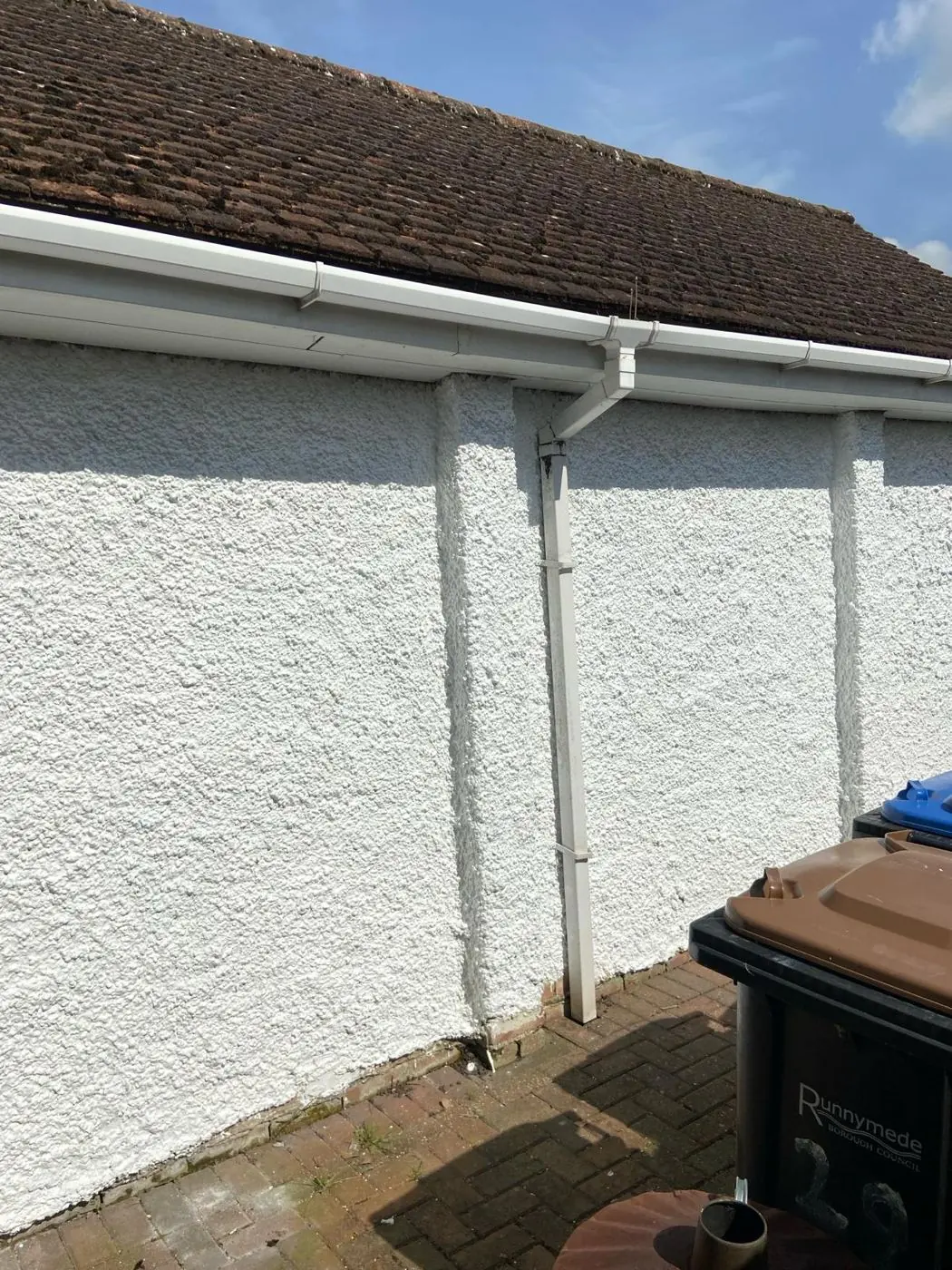
Long pebbledash wall repainted bright white beneath white guttering and a tiled roof

We paint render and masonry in Flore, about 6.7 miles west of Northampton in NN7. Inside the 2018 conservation area the work is mostly limewashing or mineral-painting the white lime-rendered and whitewashed cottages; acrylic masonry paint is kept for modern rendered houses beyond the boundary.

Most Flore walls should stay unpainted

This is a page that starts by saying no. The bulk of the historic village is coursed ironstone, marlstone and some Blisworth limestone, laid in lime mortar, with local red brick from the Georgian and Victorian rebuilding. Those walls were built to take in damp and dry it out again. A coat of standard masonry paint seals the face, holds moisture behind it and blisters within a few winters, taking stone face with it. The conservation area appraisal also prizes the colour of the bare stone. If someone suggests painting or rendering over an ironstone front in Flore, the honest answer is that it harms the wall, and cladding with render in the conservation area needs planning permission in any case.

Where a stone wall is genuinely failing, with eroded joints or crumbling faces, that is a repointing or masonry job for a specialist in lime, not something paint will hide.

Keeping the white cottages white
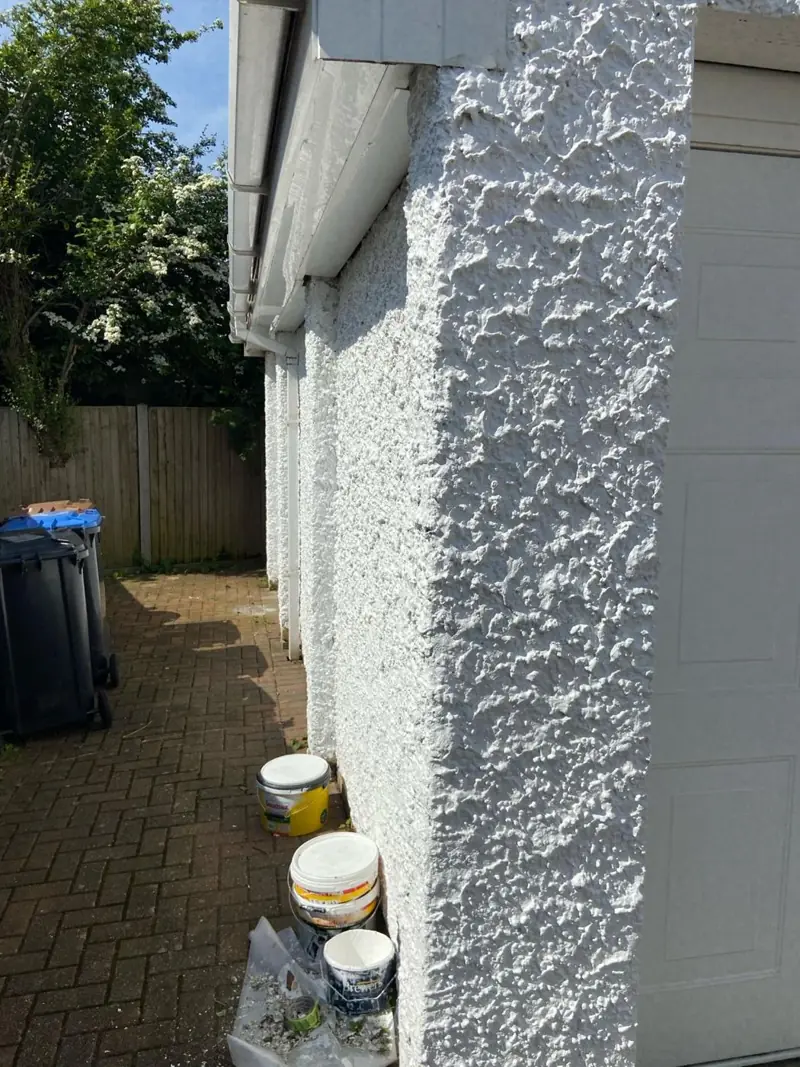
Close-up of heavy roughcast render on a corner painted white, paint tubs at its base

The exception is the group of cottages that have always been white. The appraisal notes that lime render in Flore is universally coloured white, and the listing entries describe whitewashed ironstone rubble at Adams Cottage on Kings Lane and a white-painted thatched cottage at Marsh Cottage. Refreshing walls like these means matching what is already there:

  • Brushing down loose, powdery limewash and any algae, rather than pressure washing soft lime.
  • Damping the wall so the new coat does not dry too fast.
  • Several thin coats of limewash, or a breathable mineral paint where the surface already carries one, in white.
  • Protecting thatch eaves, timber lintels and old window frames as we go.

Limewash looks chalky and slightly uneven when finished, which is the point. It is the finish these cottages were given, and it lets the wall breathe. With 44 Grade II entries and one Grade II* in the parish, we confirm listed status before any change of finish.

Cob: rare, protected, and specialist first

Flore still has cob, which is rare and protected here. Oldways on The Green is a cob house, and the boundary wall south of No. 24 Sutton Street is a Grade II listed cob wall of the late 18th or early 19th century. Cob is earth, and it fails fast if it is sealed or kept wet. Any coating on it must be lime-based. If the base is eroding, or water is getting in from the top, the wall needs a specialist before a painter touches it, and we will say so rather than coat over the problem.

Damp at the bottom of the hill
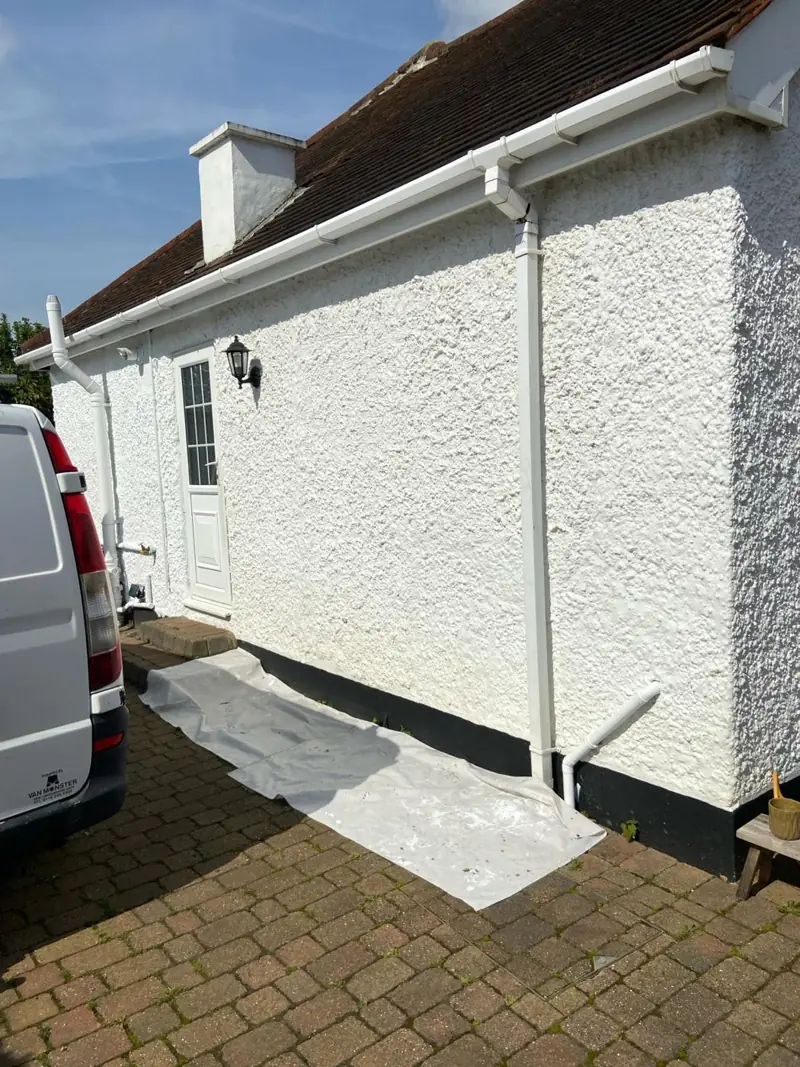
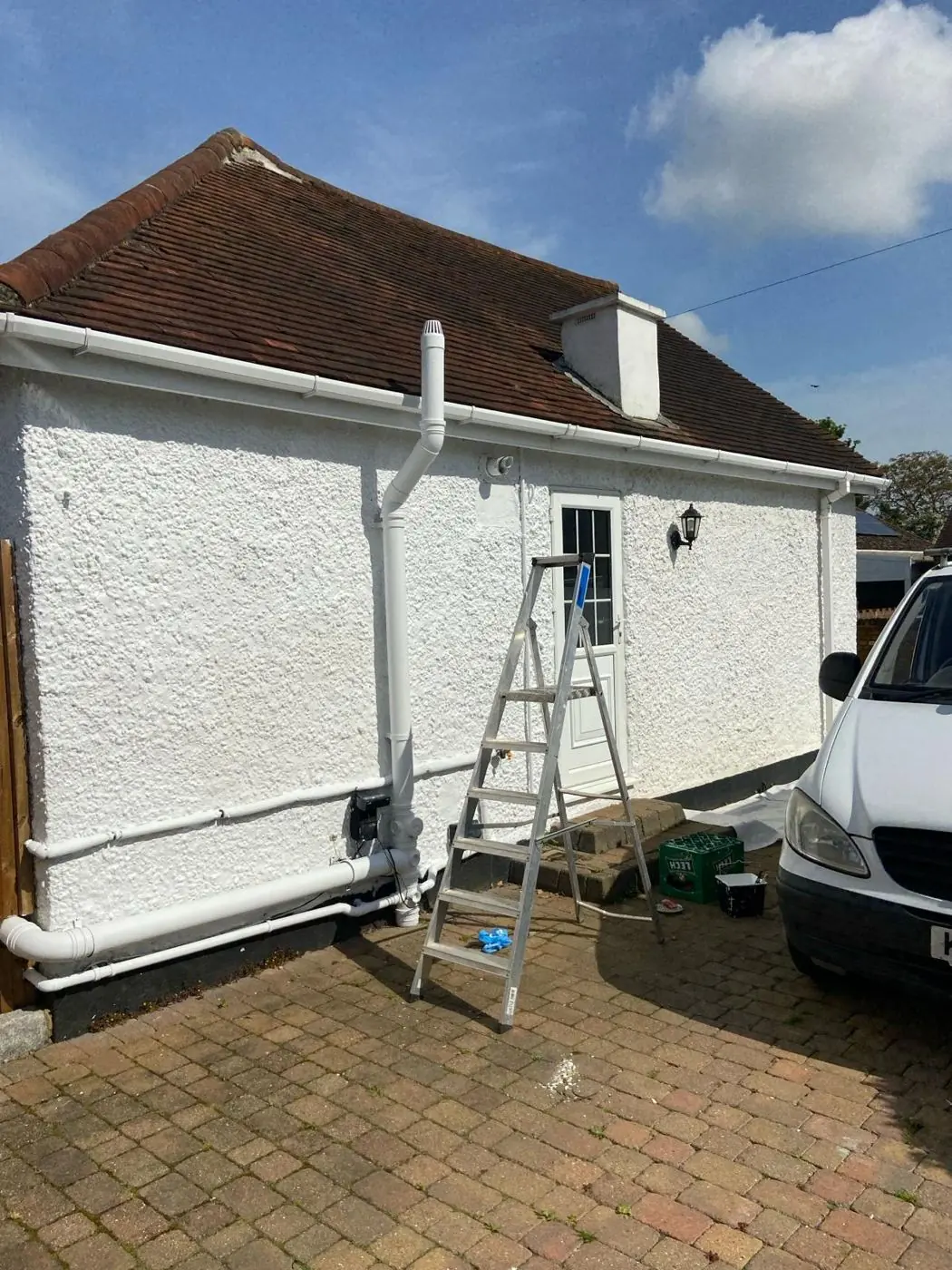
Bungalow side elevation in fresh white masonry paint with a black plinth, dust sheet down

The village sits on a south-facing slope that runs down to the River Nene floodplain, and the pasture south of Nether Lane is mostly floodplain. Rendered plinths and base courses on the lower lanes, including the foot of Chapel Street, can hold moisture. We test with a meter before painting low walls and leave a wet base course to dry rather than trap the damp.

Modern render north of the High Street

Rendered panels on the 20th-century houses along Brockhall Road, The Crescent and Collins Hill, and render on the newer homes at the northern edge, are a normal masonry job: fungicidal wash, crack repair, stabiliser on chalky areas and two coats of a quality masonry paint. Our main render and masonry painting page sets out that process, the guide to painting render and roughcast covers textured finishes, and the Flore area page gives the wider picture of the village.

Last updated by Dean, DH Painter & Decorator.
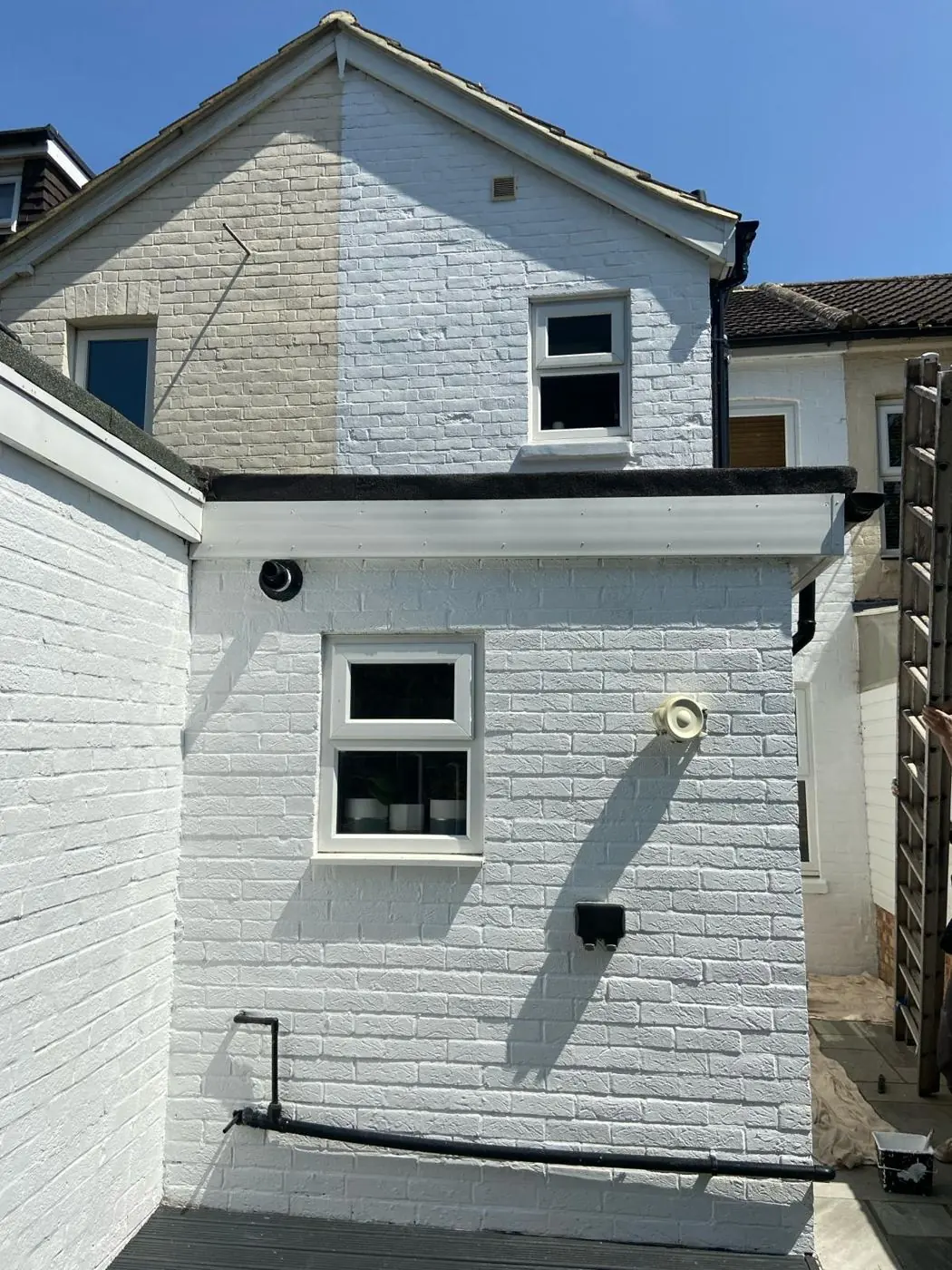
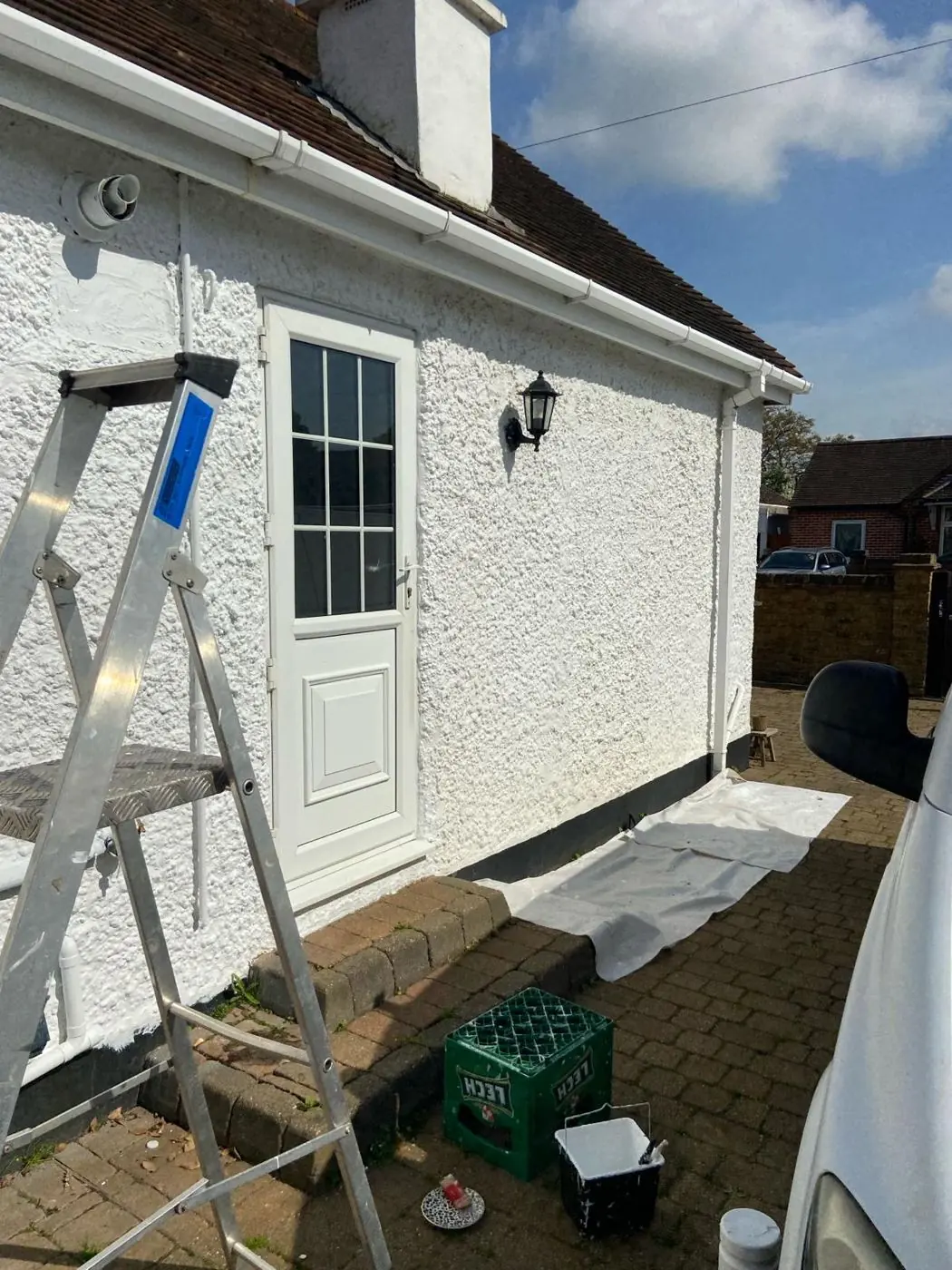
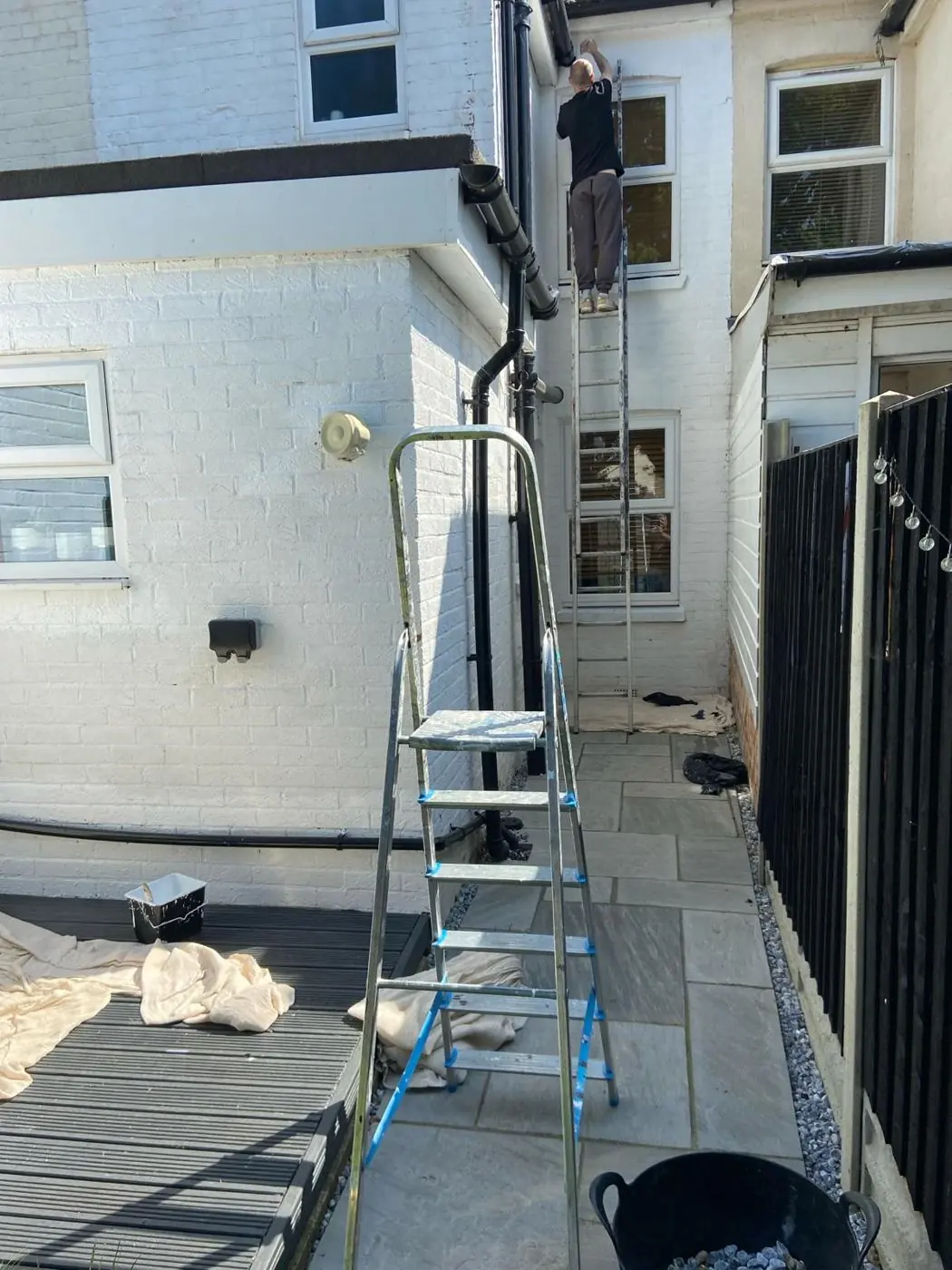
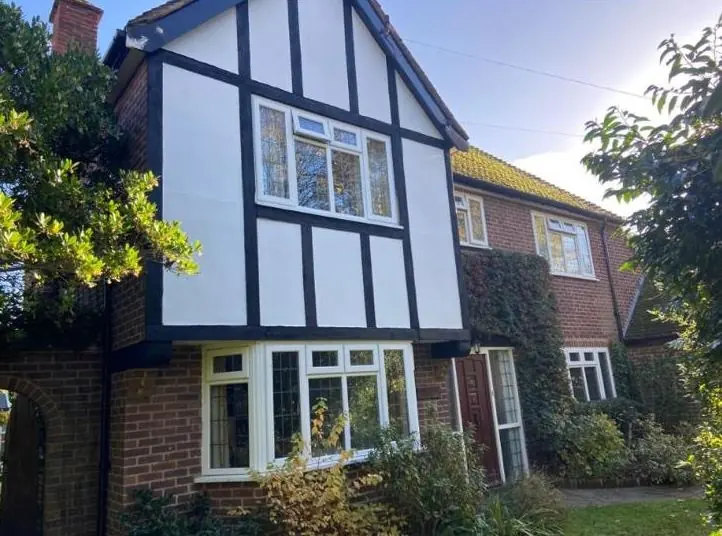
Bungalow side elevation in fresh white masonry paint, wheelie bins alongside Gable end half done, grey brick on one side, fresh white masonry paint on the other Bungalow side wall in roughcast render repainted white, stepladder still in place Bungalow side door surrounded by white render being repainted, ladder and dust sheet mid-job Narrow side return with white-painted brickwork, decorator on a ladder at the upper windows Tudor-style gable with black timbers and white panels repainted by a Northampton decorator

Render & masonry painting in Flore: your questions answered

Can't see your question? Call us on 07539 779 036 and we'll happily talk it through.

What should I use on a whitewashed cottage in Flore?

Limewash, or a breathable mineral paint if that is what the wall already carries. Flore's lime-rendered and whitewashed cottages are traditionally white, and the stone and cob behind them need to dry out. Acrylic masonry paint seals the surface, traps moisture and peels. We brush off loose material, dampen the wall and build up thin coats so the finish matches the existing white.

Can my cob wall in Flore be painted?

Only with a lime-based, breathable coating, and only once the wall is sound. Flore has rare cob, including Oldways on The Green and a listed cob wall on Sutton Street. If the base is eroding or water is getting in at the top, a cob or lime specialist should look at it first. Painting over the damage would only hide it while the wall gets worse.

Would rendering over my stone house stop damp?

Usually not, and in the Flore Conservation Area cladding a building with render needs planning permission. Cement render on lime-mortared ironstone tends to trap water and cause more damp. The damp usually comes from blocked gutters, high ground levels or failed pointing. We can say what we see on the walls, but a building surveyor or lime specialist is the right person to diagnose it.

Is masonry paint fine on my Nether Lane house?

Generally yes. The later 20th-century houses on Nether Lane are brick-built, outside the conservation constraints, and any rendered sections take standard masonry systems. Because the lane is near the floodplain at the foot of the village, we check moisture at the base of walls before painting, and we treat any algae first. The rest follows the usual wash, repair, stabilise and two-coat routine.

What customers say about Dean

Most of our work comes from recommendations and returning customers. These are real reviews from customers after the job was finished, in their own words.

More customer reviews

After completing my gates I was then assured Dean was more than competent to repaint the inside of my property from top to bottom. It’s a large 4 bedroom house and was done to a very high standard. Once again I would highly recommend him.

Customer review Gates, then a full four-bedroom interior

I contacted Dean to get the outside of the house painted; the house is all roughcast render. He has done a fantastic job; the house is looking brand new. The same he did for our garage, painted our bedrooms x2, did extra jobs for us like skirtings and door frames, and painted even our gates. I could not recommend him enough; he is attentive, smiling, always on time, and nothing too much; I am so happy with what Dean has done; he went above and beyond. I have recommended him to all my friends and family.

Read full review
Customer review Roughcast render, garage, bedrooms and gates

Dean did a great job for a good price i'd be very happy to recommend him always on time polite and friendly.

Customer review Painting and decorating

Start your project

Get a free painting and decorating quote

Tell us a little about the job and we'll arrange a visit to look at it properly. Quotes and advice are always free, with no obligation.

What happens next

  1. We get back to you to arrange a convenient time to visit.
  2. Free visit. We look at the job and talk through colours, finishes and any repairs.
  3. Written quote. A clear price covering preparation, materials and the finish we agreed.

Request a free quote

Please enter your name.

Please check your email address.

Please enter a valid phone number.

Prefer to talk? Call 07539 779 036.

Call 07539 779 036Call nowFree quote