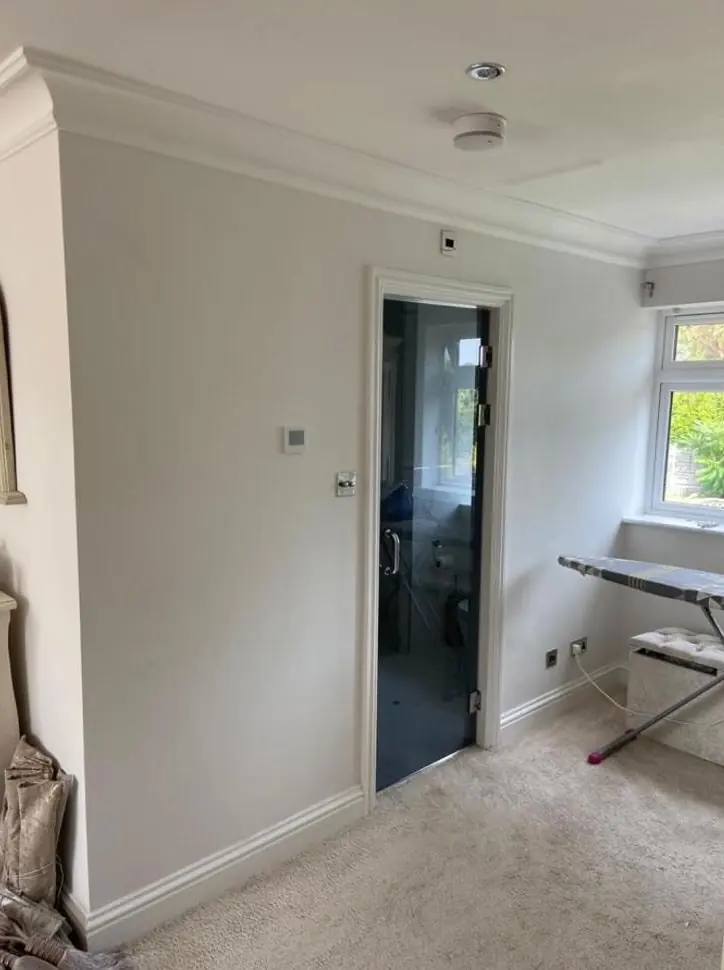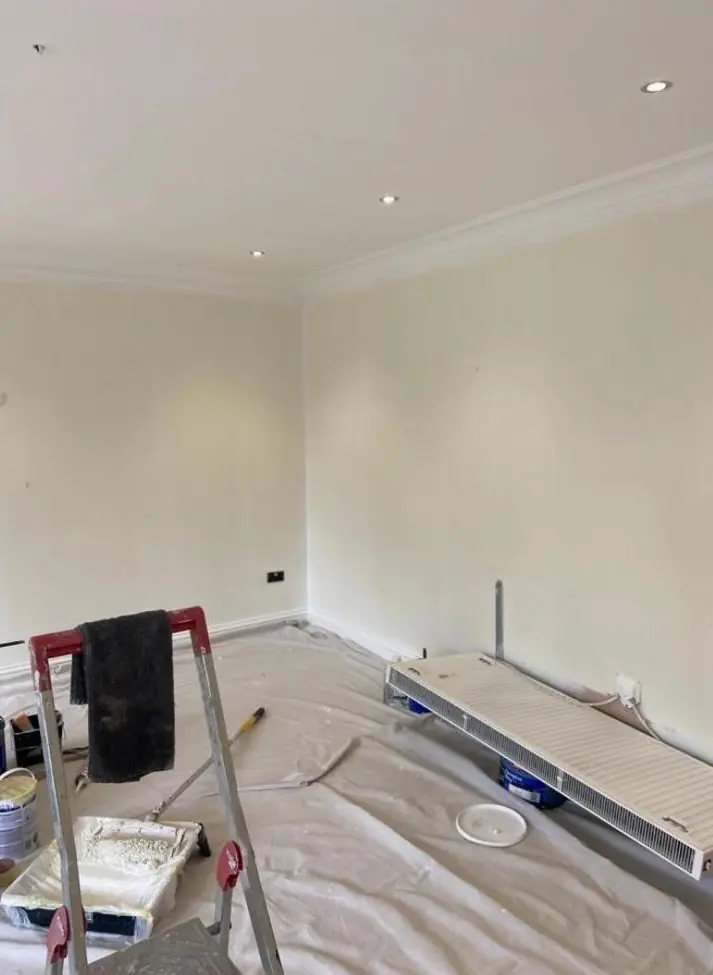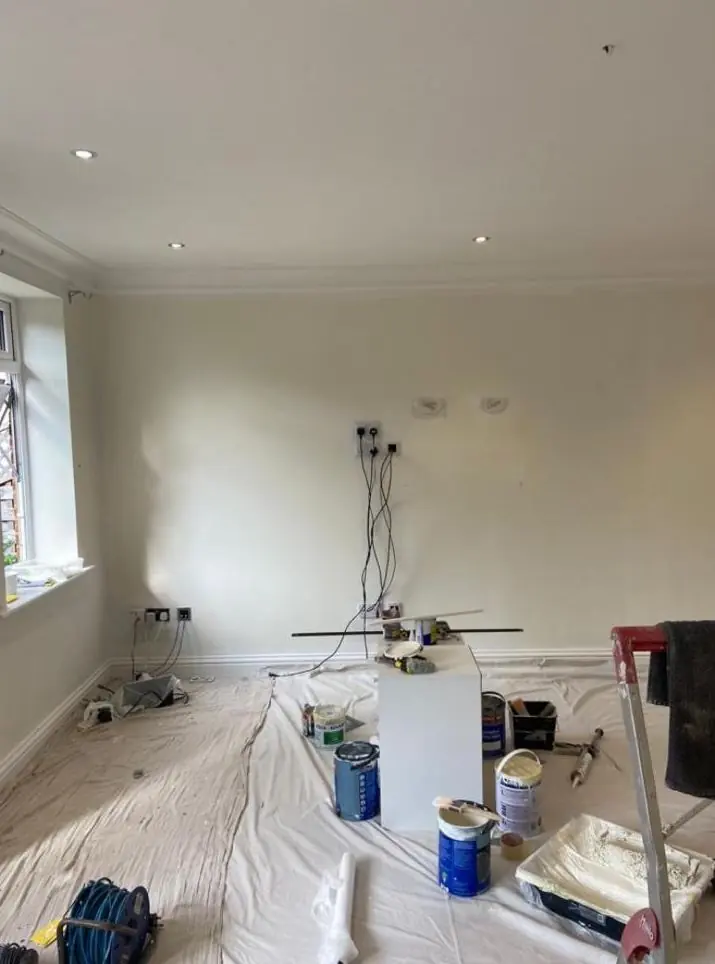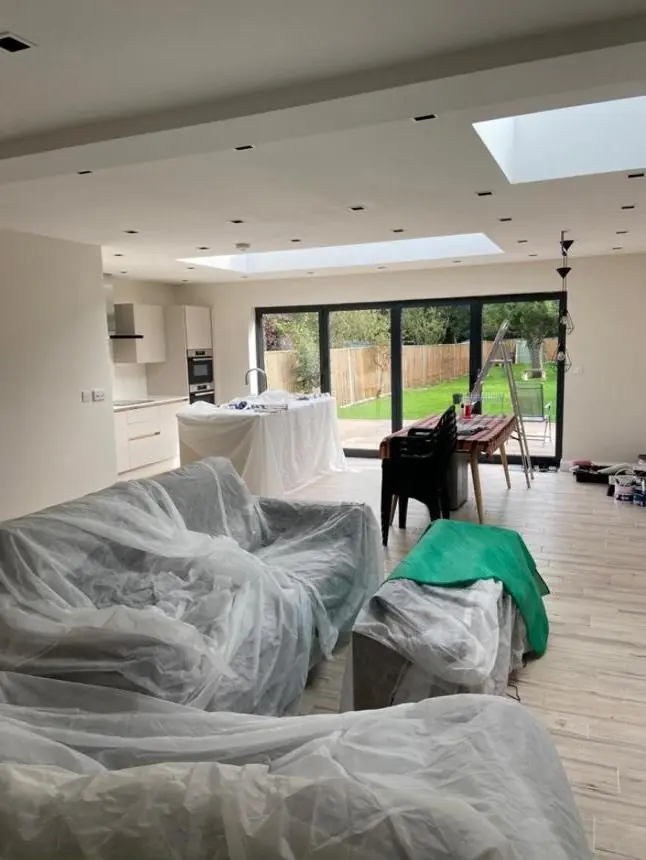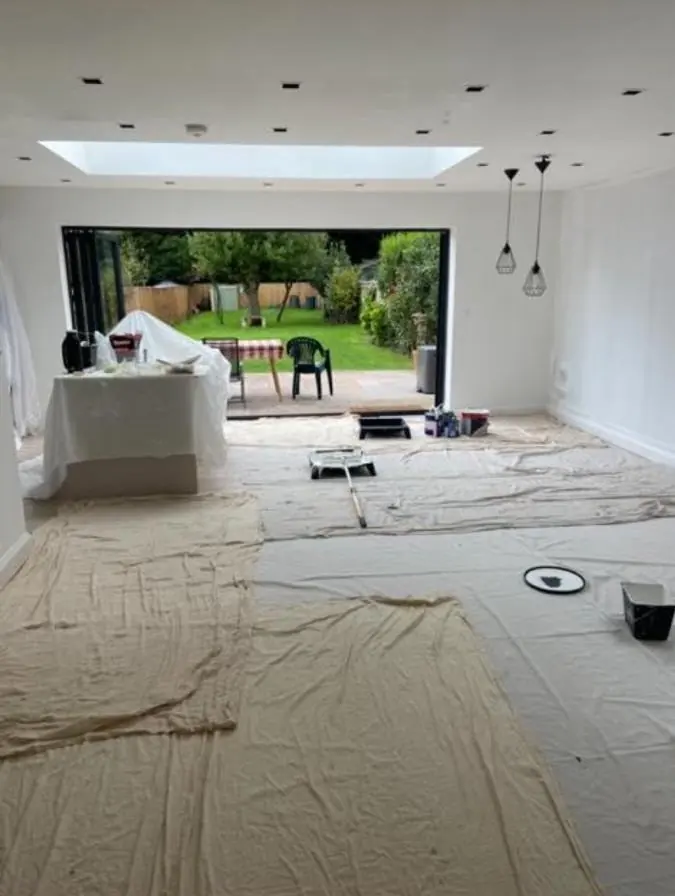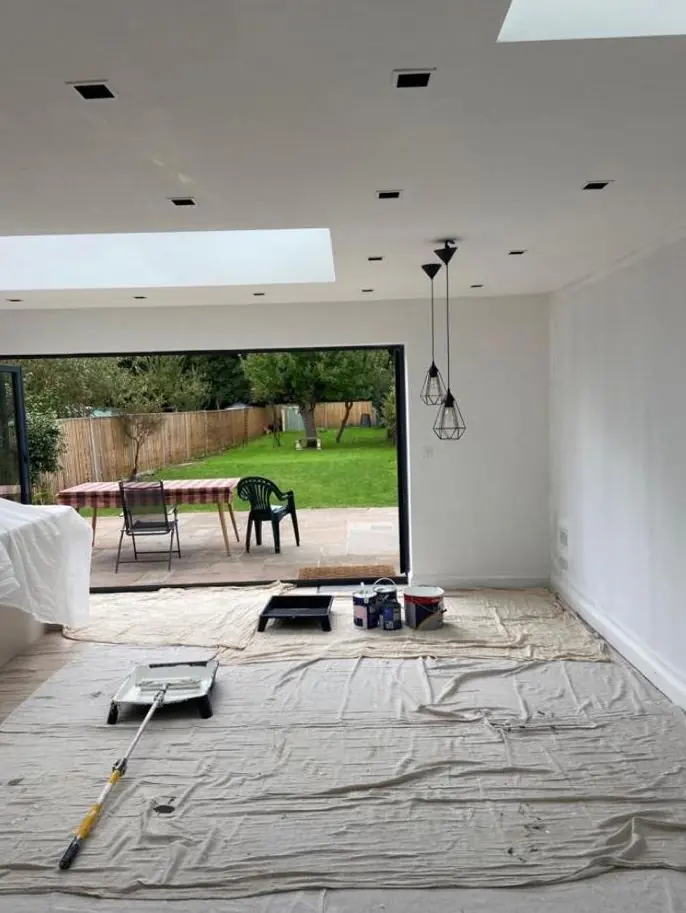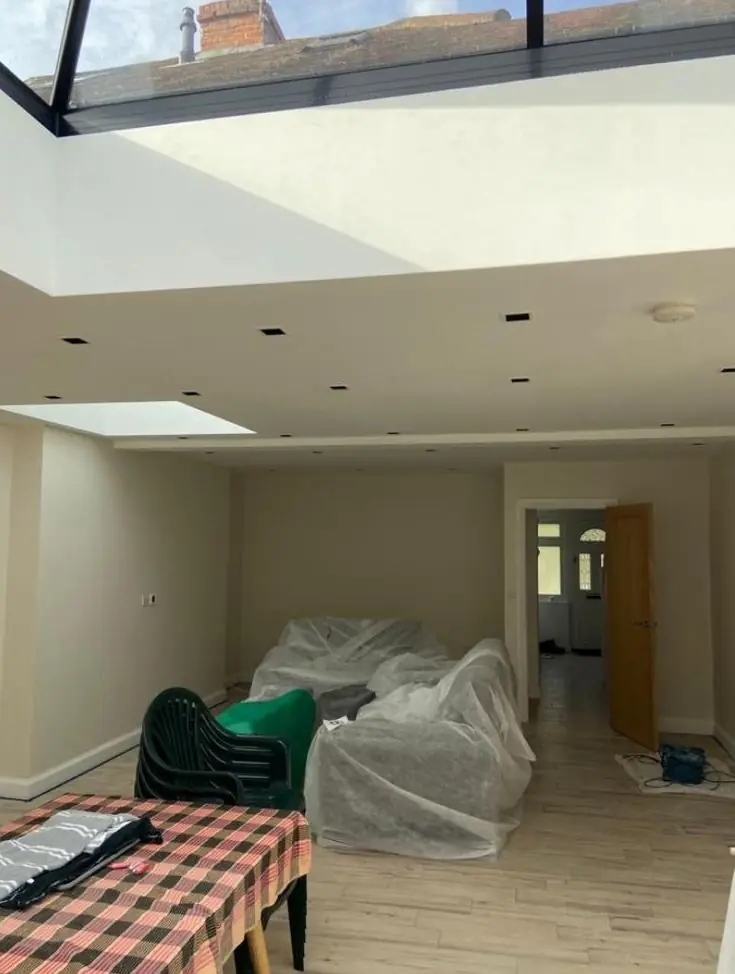
Dean decorates new plaster, extensions and replastered rooms in Flore, around 6.7 miles west of Northampton. The work splits between new-build homes on the northern side of the village and additions to older ironstone and brick houses, where new gypsum often sits beside old lime plaster.
New homes on old farmland
When the Flore Conservation Area appraisal was written in 2018 it recorded new estates being built on the northern side of the village, on land that had been open farmland. There is also infill along the High Street, including a stone and brick development approved under reference DA/2016/0456. Homes like these arrive with fresh plaster that has often only had a single contract coat of paint. Hairline cracks appear as the timber and plaster settle during the first year or two, and the first proper redecoration is the point at which they get dealt with.
For a first repaint on one of these houses we fill and sand the settlement cracks at ceiling lines and around door frames, check whether the builder’s coat has sealed the plaster properly, and add a mist coat wherever bare or chalky patches show. Then the finish colour goes on. The steps for sealing fresh plaster are set out in our mist coat guide.
Where modern plaster meets lime
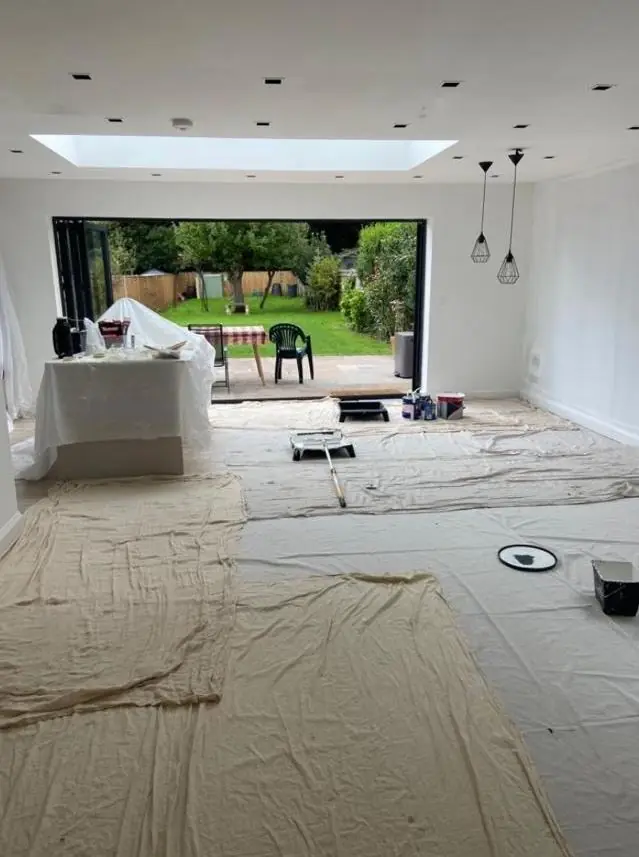
Flore’s historic core is built of coursed marlstone and Northamptonshire ironstone, brick and in places cob, much of it laid in lime mortar. Inside, older walls are commonly finished in lime plaster. When someone extends or re-plasters part of a house like this, they often end up with two very different surfaces side by side:
- New gypsum plaster in the extension or the re-skimmed room, which needs a diluted mist coat and then ordinary emulsion.
- Existing lime plaster in the old part of the house, which must stay breathable and should not be sealed under vinyl paint.
- New lime plaster, if a specialist has repaired the old walls in kind, which can take weeks longer to cure than gypsum and needs a breathable finish.
We choose paint for each surface separately and plan the join so the colour matches across both, even though the products underneath differ.
Extensions in the conservation area
Within the Flore Conservation Area, side extensions and larger rear extensions need planning permission, and the appraisal expects new work to respect the materials of the original building. By the time we arrive, those decisions have been made. What still falls to us is the joinery and paint that people see: new timber windows in the white the village expects, doors in muted shades, and external timber that sits comfortably against ironstone. If the house is listed, any change to its finishes may need listed building consent, so it helps to know what the approval covers.
Damp, slope and drying times
The village sits on a south-facing hillside that drops steeply towards the River Nene floodplain, and the land south of Nether Lane is mostly floodplain. Lower plots and the foot of Chapel Street can hold more moisture at ground level. New plaster in a ground-floor extension in that part of Flore may take longer to dry out than the plasterer’s estimate, particularly in winter. We check moisture readings at skirting height before sealing anything and would rather come back a week later than trap damp under the paint. Heavy tree cover around Flore Park and the old orchards can also keep rooms cool and slow drying on the shaded side of a house.
Booking us after the builder
We are happy to take over once the plasterer and joiner have finished, covering the walls and ceilings and the new MDF or timber skirtings, architraves and doors. The full process, from drying checks to snagging, is on our new plaster and extension painting page, and the Flore area page shows which parts of the village are old core and which are new.
Last updated by Dean, DH Painter & Decorator.