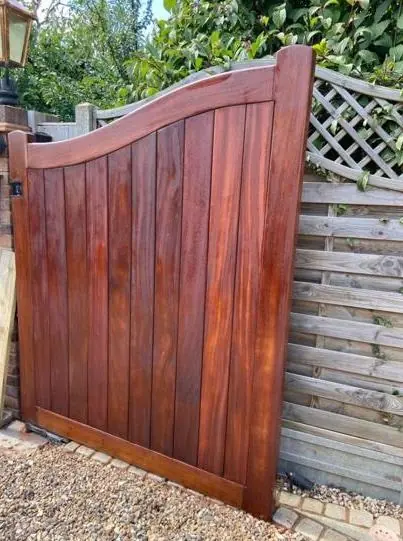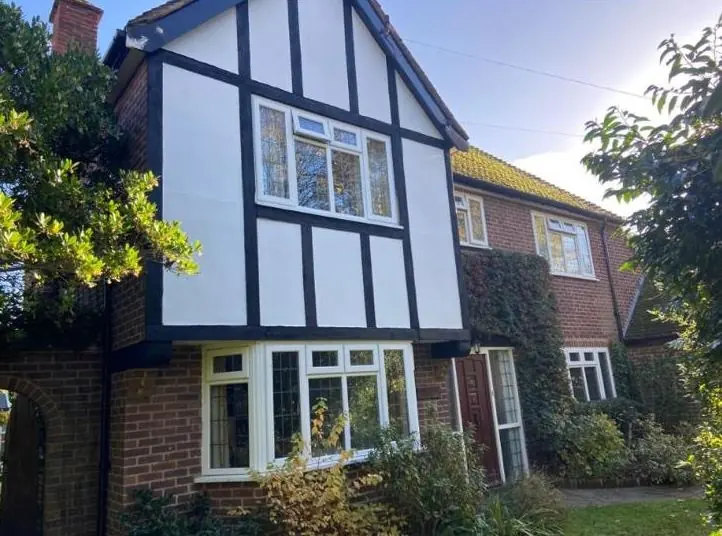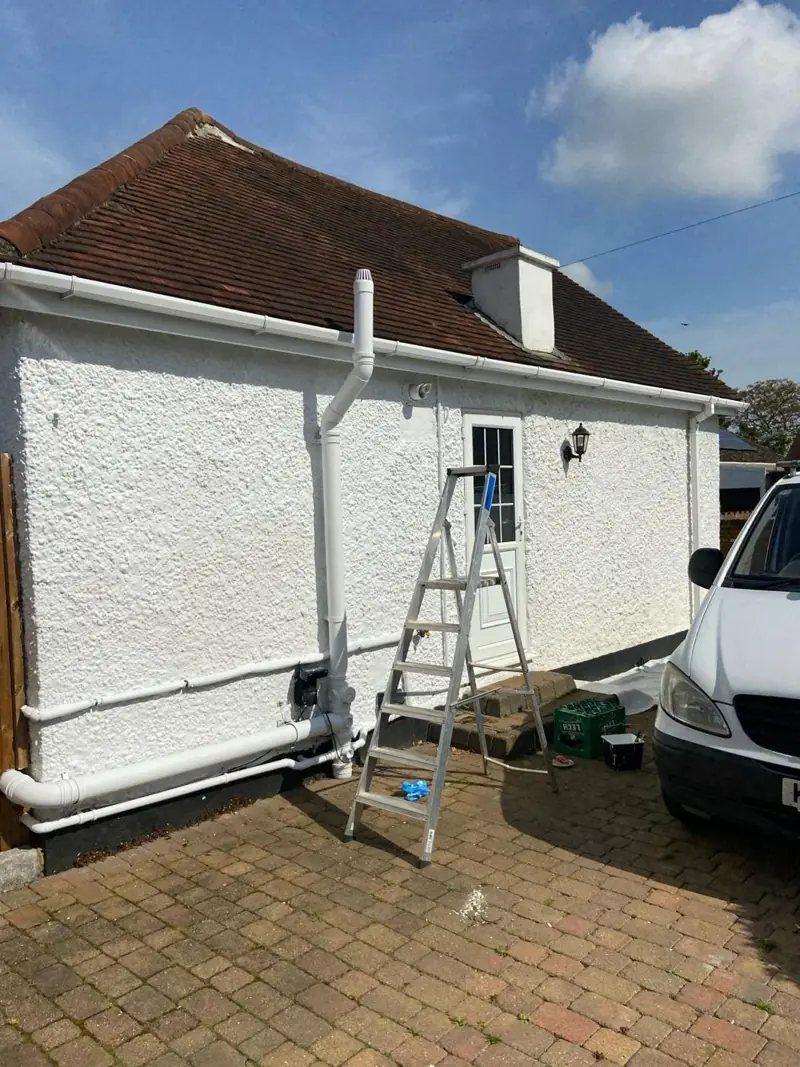
Dean paints house exteriors in Flore, the NN7 hillside village about 6.7 miles west of Northampton town centre. In the historic core that usually means timber windows, doors and white lime-washed walls rather than the bare ironstone; on Brockhall Road, The Crescent, Collins Hill and the newer northern estates it can be the whole outside of the house.
What actually gets painted on a Flore frontage
Walk down any of the lanes that drop from the High Street towards the Nene and most of the walling is unpainted: coursed marlstone, deep orange Northamptonshire ironstone, some paler Blisworth limestone and local red brick laid in Flemish bond. The 2018 Flore Conservation Area appraisal values that stone for its colour, so painting it is the wrong answer, and it would trap moisture in walls pointed with lime mortar.
The exterior work in the old village is therefore the timber and the few walls that were always meant to be white:
- Georgian six-over-six and Victorian two-over-two sashes, plus timber casements under timber lintels.
- Six-panel Georgian and four-panel Victorian front doors, which the appraisal describes as painted in traditional muted colours.
- Painted shutters and porches, including the decorative Victorian metal-framed porches on the High Street.
- White lime-rendered or whitewashed cottages, such as Marsh Cottage on Kings Lane, which need limewash or a breathable mineral paint, never a plastic masonry coating.
Our Flore area page covers the village’s building periods in more detail.
Repair first: what the appraisal expects of old windows
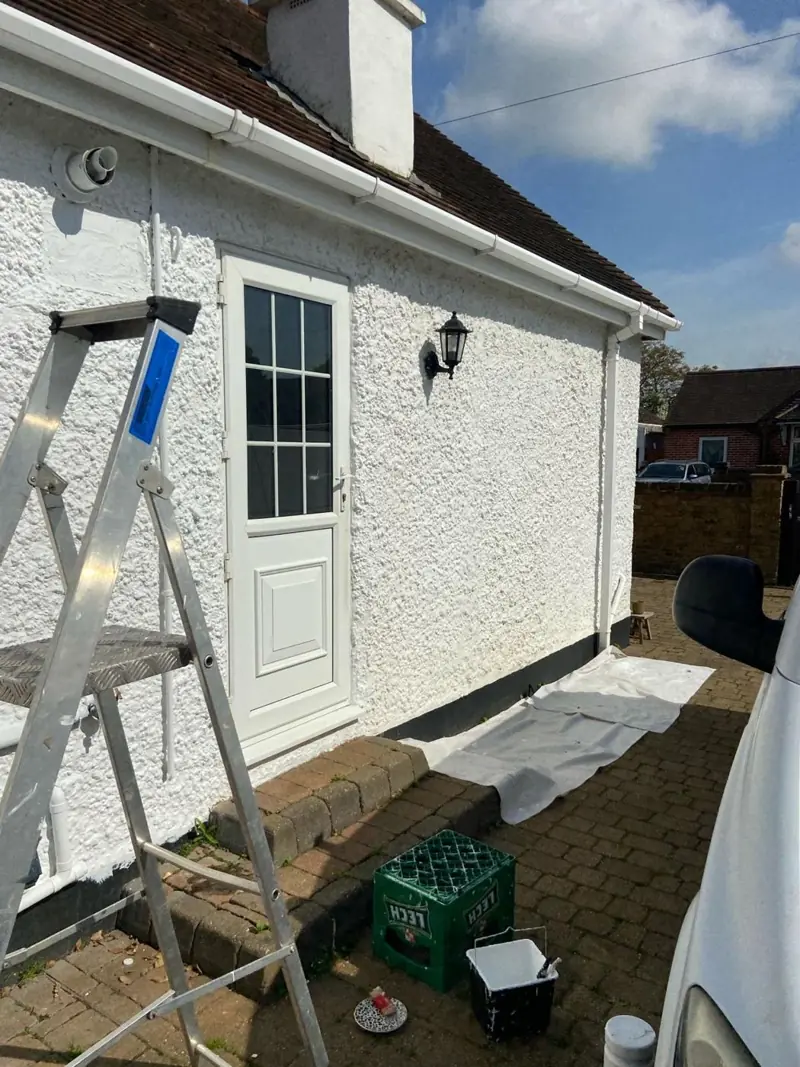
Flore’s appraisal steers replacements towards timber sashes or timber or metal casements in white or an original-based colour, and treats uPVC as generally unacceptable. In practice that makes Flore a village where old sashes are kept going. Our job on them is careful: soft or rotten timber is cut out and filled or spliced, loose putty is replaced, bare wood is primed the same day it is exposed, and the white top coat is a joinery paint that will move with old softwood. With around 45 listed entries in the parish, from The Hollies and The Croft to Capell House on The Green, we check listed status before anyone changes a colour or strips a historic finish, because that may need listed building consent.
Scaffold towers on a lane with no pavement
Flore’s houses sit one plot deep, with front walls right on the road. There is no footway at all on The Green, which climbs steeply and narrowly. Kings Lane pinches between walls beside The Hollies and The Croft, and Sutton Street has very narrow pavements with terraced cottages whose rear gardens you barely see. Three-storey stone and brick houses on The Green add height on top of that.
So before a date is fixed, Dean walks the frontage and works out where a tower or scaffold can stand, where a van can wait without blocking a lane, and whether neighbours need warning. Mature orchards and the many protected trees mean branches cannot simply be cut back to make room; TPO trees stay as they are and the access is planned round them. Shaded elevations under those trees also tend to carry algae, so a biocide wash is often the first day’s work.
Brockhall Road, Collins Hill and the new estates
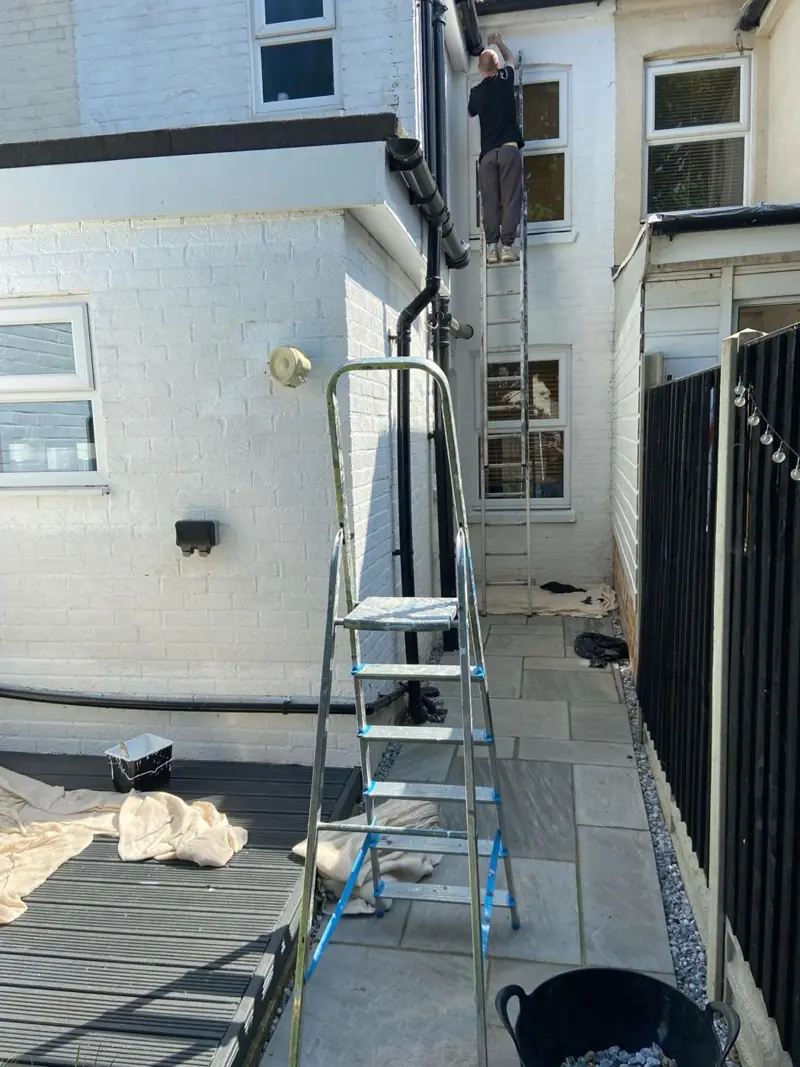
Uphill of the old A45 line, the inter-war and post-war houses of Brockhall Road, The Crescent and Collins Hill, plus the later council-built homes on Nether Lane, are plain brick and sit outside most conservation constraints. Here an exterior repaint can take in windows, doors, fascias, any rendered panels and garden timber in a single visit. The newer homes on the former farmland at the northern edge are usually on their first repaint, where the builder’s thin finish on timber and render is starting to fade.
For houses at the foot of Chapel Street or along Nether Lane, close to the floodplain pasture, we take moisture readings at plinth level before painting anything near the ground. Trade detail on preparation and paint systems is on our main exterior painting page, and our exterior painting seasons guide explains why spring and summer bookings fill first, which matters on Flore’s shaded lanes where drying days are fewer.
Last updated by Dean, DH Painter & Decorator.