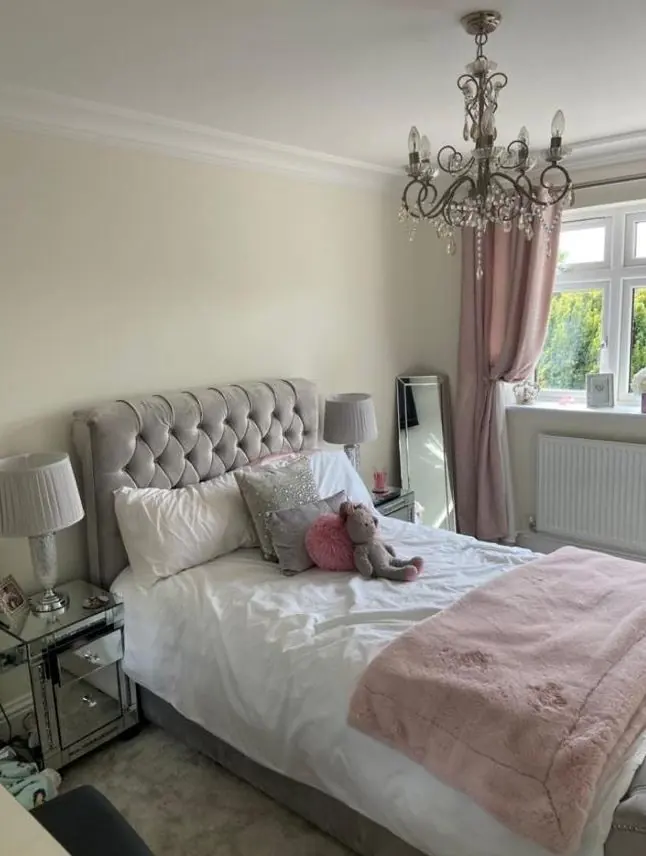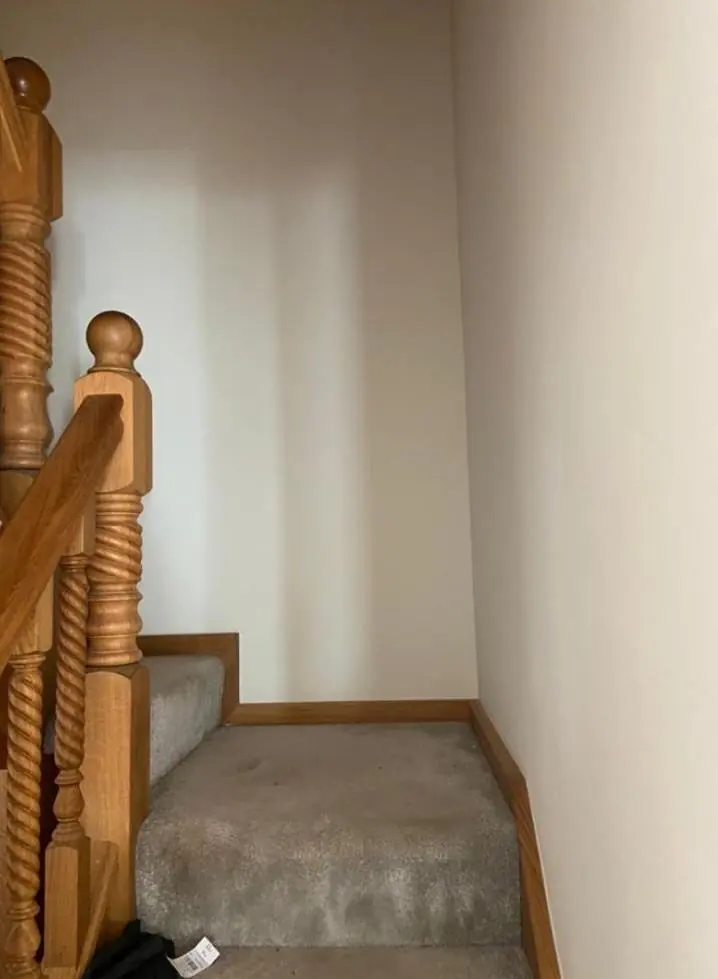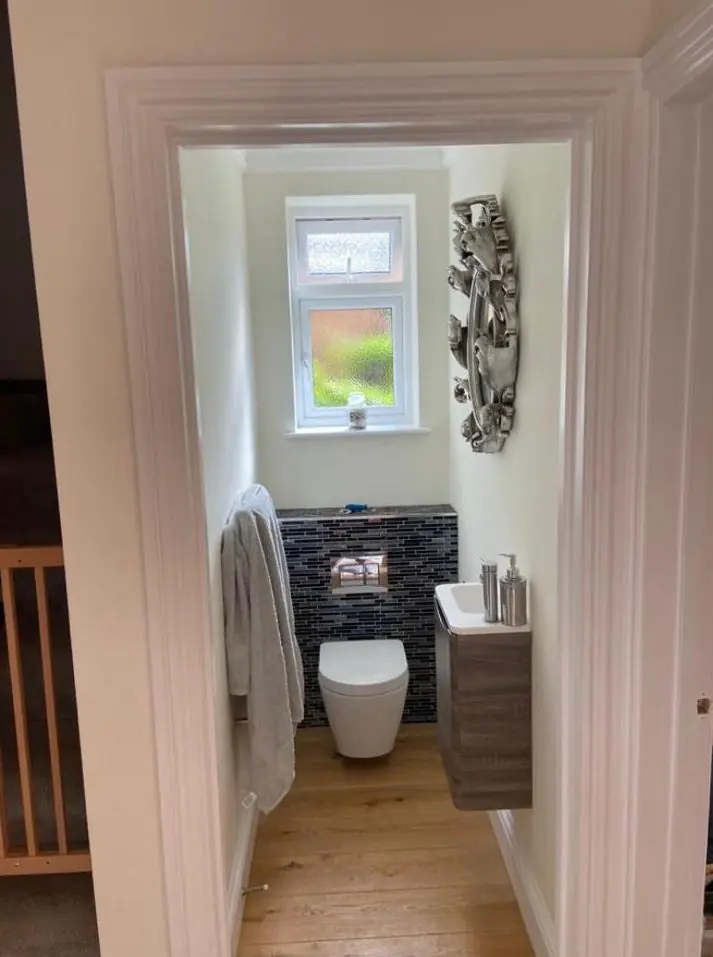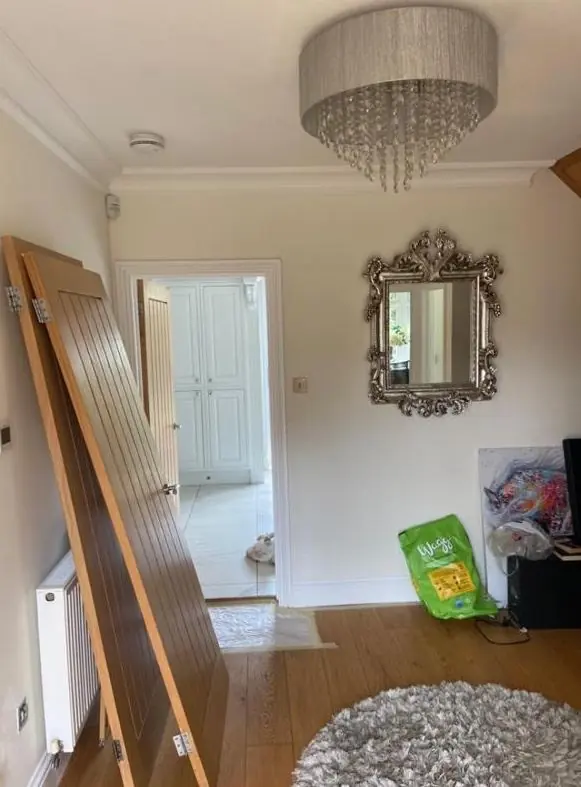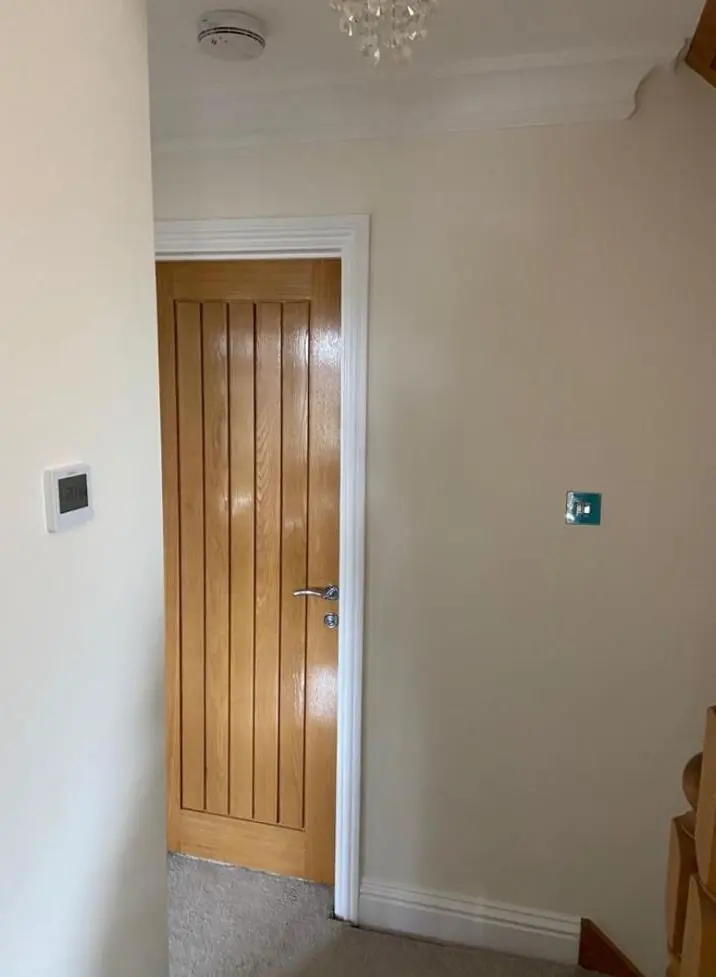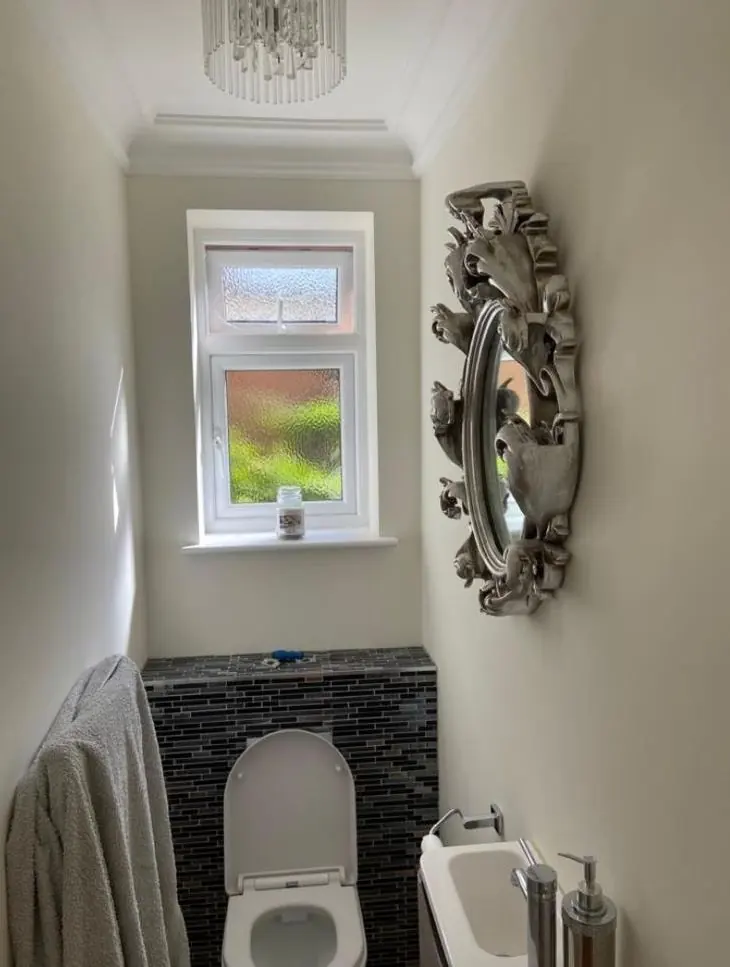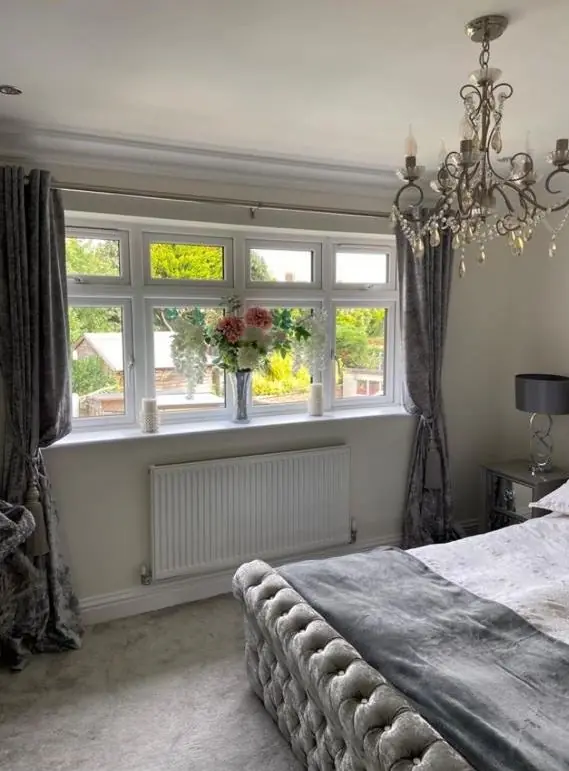
DH Painter & Decorator hangs wallpaper and lining paper in Flore, NN7, about 6.7 miles west of Northampton town centre. In the village's 17th and 18th century cottages and farmhouses that usually means lining the uneven lime plaster first; in the 20th-century houses north of the High Street the walls are flatter and the job is more straightforward.
Why old Flore walls want lining paper first
The cottages and farmhouses in Flore’s historic core, many built between 1690 and 1720 for yeoman farmers, have lime-plastered walls over ironstone, marlstone and in places cob. Those walls are soft, rarely flat, and often bow outwards between window openings. Hang a modern wallpaper straight onto that and every hollow shows as a shadow. Seams also open where the paper bridges a dip.
On these walls we nearly always hang lining paper first, often cross-lined (horizontally) so its joints never line up with the seams of the finishing paper. That gives a consistent, absorbent base, evens out small surface variations and takes up some of the wall’s movement. It won’t make a bowed wall flat, and we won’t pretend otherwise. What it does is give the finishing paper an even surface to grip and a clean line to butt against.
Lime plaster also needs gentle handling when old paper comes off. Steaming too long softens it, and scraping too hard tears the face. We test a small area first, then work slowly. Any loose plaster we find gets filled with a compatible lime-based filler rather than a hard gypsum one.
Choosing a paper for a room that isn’t square
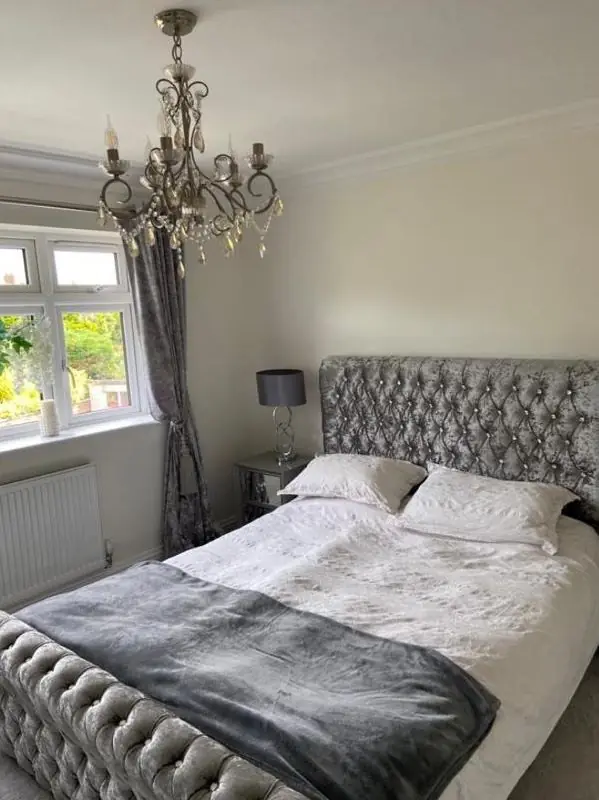
In a one-room-deep farmhouse, walls lean, corners wander and ceilings dip. A large repeat with a strong horizontal element will make that obvious, because the pattern runs off true at the ceiling line within a couple of lengths. Smaller, random-match or loosely drawn patterns hide it far better. Plain textured papers sit somewhere in between.
- Small or random patterns: forgiving on out-of-true walls; the usual choice for the old cottages on Kings Lane, The Green and Sutton Street.
- Large straight-match designs: better kept for the flatter walls of the inter-war and post-war houses.
- Breathable papers and pastes: worth considering on solid stone walls, where vinyl-faced papers can trap moisture.
We set the first drop from a plumb line at the most visible point in the room, usually facing the door or over the fireplace, so any drift ends up in a corner people don’t look at.
North of the High Street: Brockhall Road to the new estates
Brockhall Road, The Crescent and Collins Hill, built between the 1920s and 1950s, have flatter plaster, so feature walls and full rooms in bold patterns are realistic there. The usual work is stripping several generations of old paper, some of it painted over, and making good what’s underneath. The later local authority houses on Nether Lane and the bungalows on The Orchard are similar.
In the new homes on the village’s northern edge, the issue is timing rather than flatness. New plaster has to dry out fully and be sized or primed before paper goes on, or the paste can’t grip properly and seams lift. If you’ve just moved in, it’s usually worth living with painted walls through the first year.
Damp low walls and where not to paper
Flore sits on a steep south-facing slope that runs down to the Nene floodplain. Ground-floor rooms down on Nether Lane or near the bottom of Chapel Street can carry some damp at skirting level. Before hanging paper on any ground-floor wall in the older houses, we take moisture readings. A damp wall can stain the paper, defeat the paste or grow mould behind it. If the reading is high, we’ll say so, and lime-based paint may be the better finish for that wall.
The wallpaper hanging page covers our stripping and hanging process step by step. For painting and decorating across the rest of the village, see the Flore area page.
Last updated by Dean, DH Painter & Decorator.