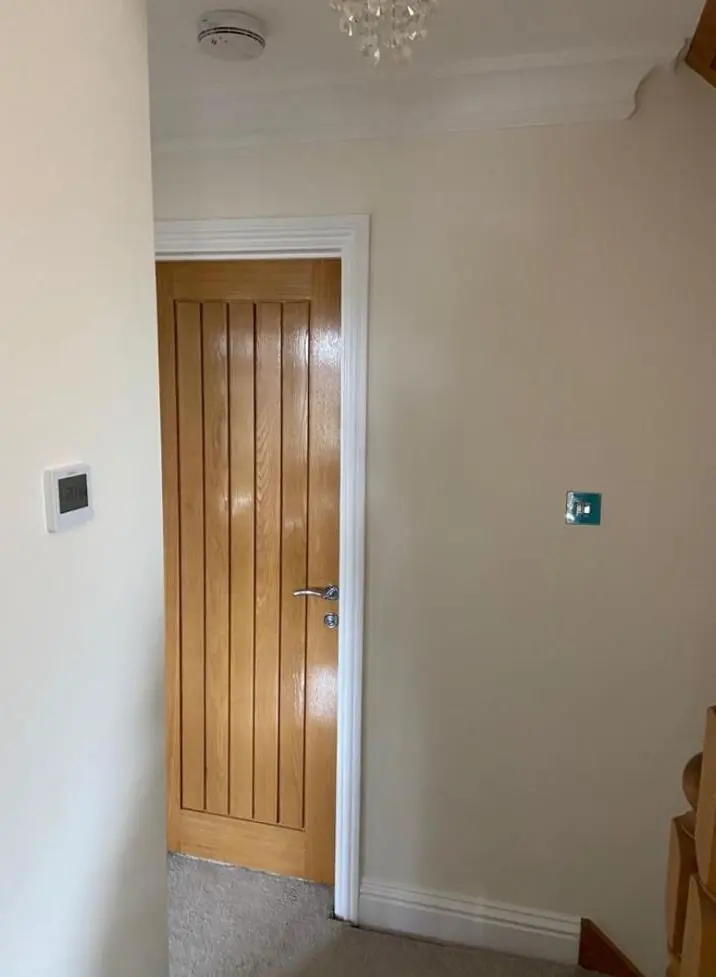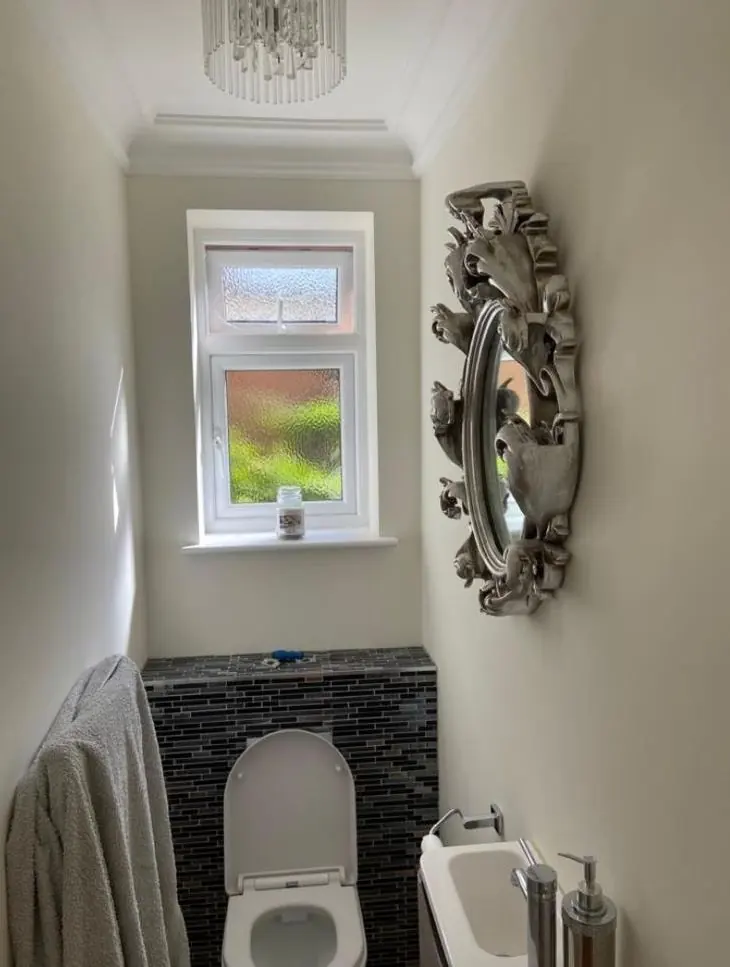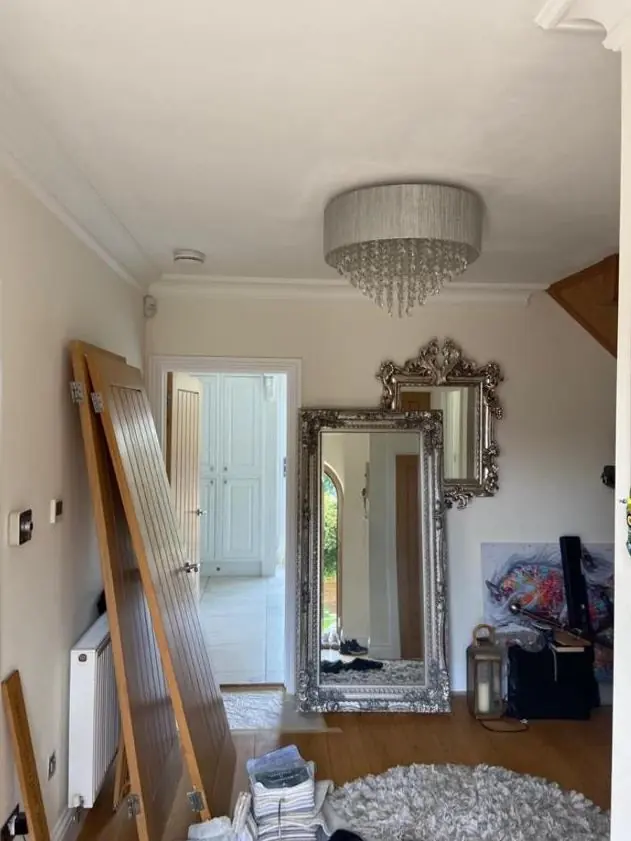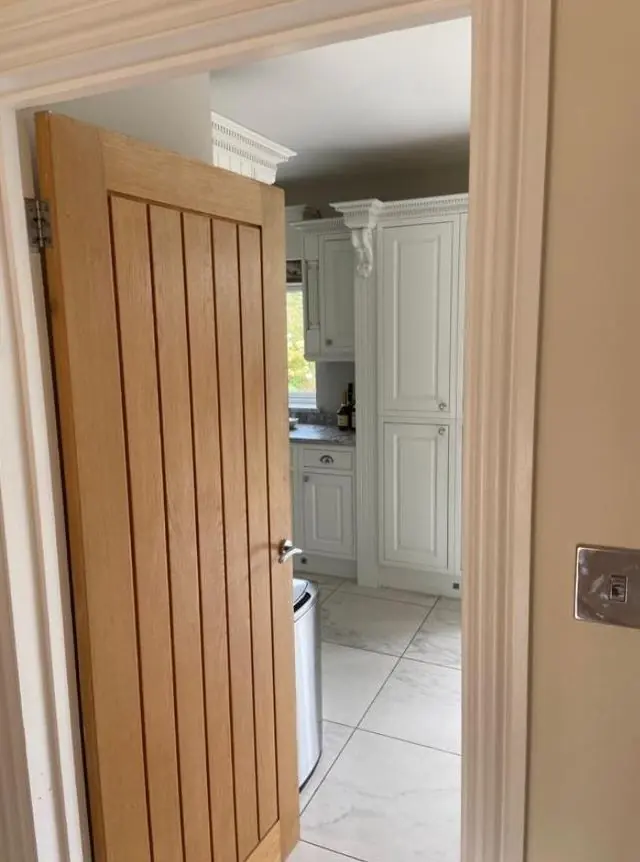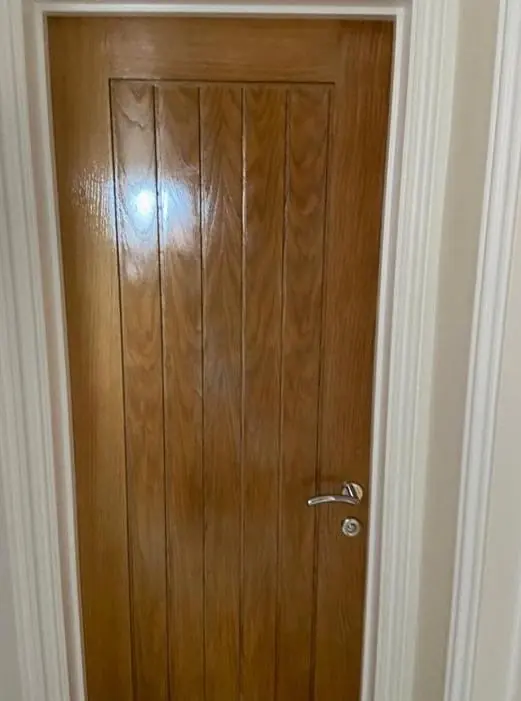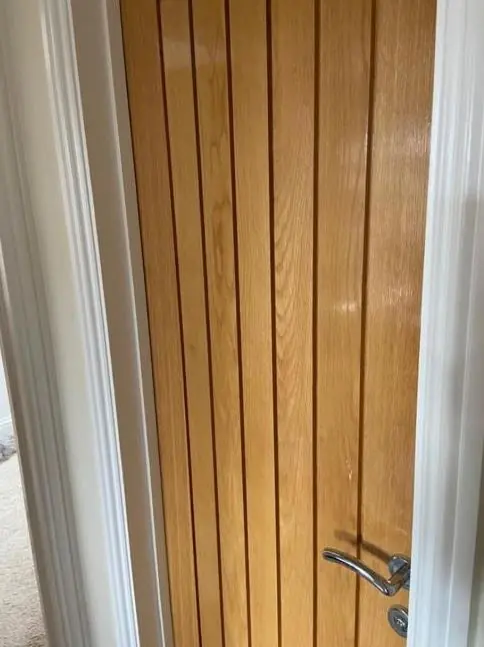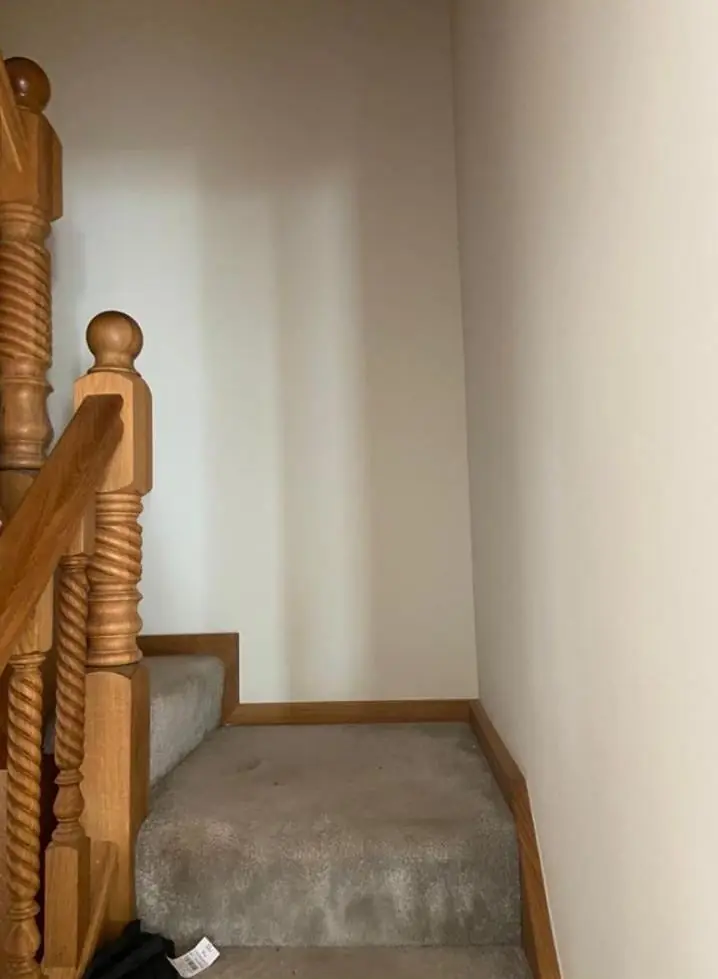
DH Painter & Decorator provides decorative paint finishes in Flore, NN7, 6.7 miles west of Northampton town centre. In the conservation area that usually means careful heritage detailing on doorcases, fanlights and panelled joinery; in the 20th-century and new homes north of the High Street it means feature walls, painted panelling and picked-out mouldings.
Georgian doorcases, fanlights and entablatures
Flore grew along an 18th-century turnpike, and the village once had seven beer houses. Several of the Georgian buildings from that era, including former pubs, still have fanlights over the door and timber entablatures above them. Grander houses such as Flore House on The Avenue and Capell House on The Green, both Grade II listed, belong to the same tradition of careful detailing.
Decorative work here is quieter than the word suggests. It’s mostly about precision: crisp lines where a moulding changes plane, glazing bars on a fanlight cut in without paint on the glass, and the right sheen on each part. The conservation appraisal expects white windows and muted door colours, so the craft is in how those colours are applied rather than in loud contrasts. A cornice on a door entablature might be picked out in a slightly different white from the frieze below, which is barely visible close up but gives the doorway depth from across the lane.
- Old paint on 18th and 19th century joinery may contain lead, so we test before sanding and use wet methods or chemical stripping where it’s present.
- Built-up layers that blur mouldings can be carefully removed to sharpen the profile, but on a listed building stripping historic finishes may need consent first.
- We use paints suited to old softwood that has moved for two centuries, rather than hard modern coatings that crack.
Limewash as a finish in its own right
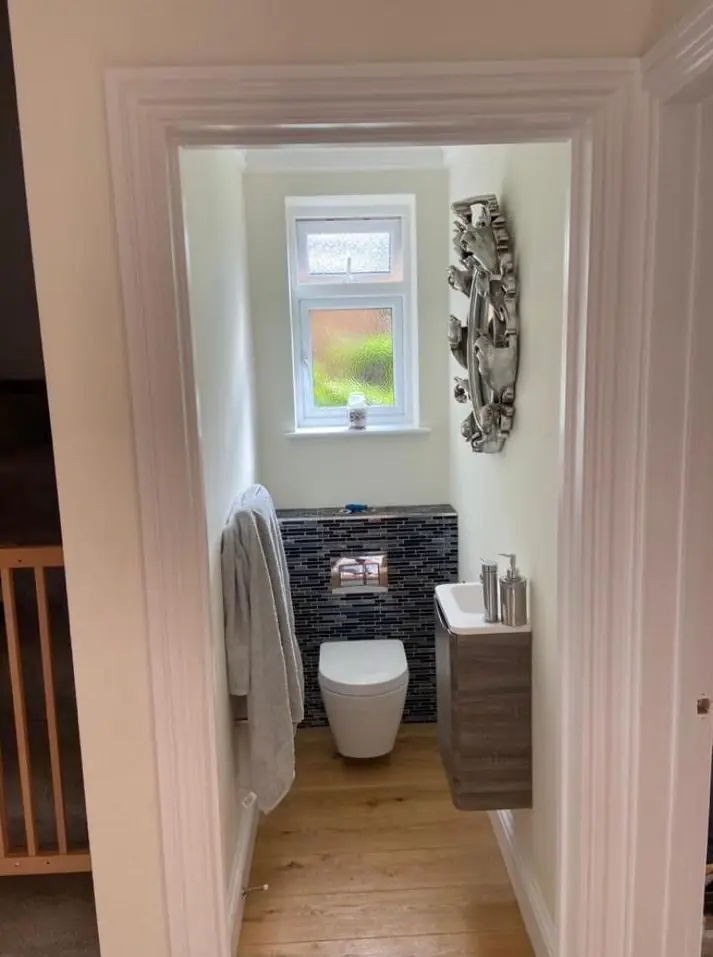
Lime render in Flore is white throughout, and some cottages, such as Adams Cottage on Kings Lane and Marsh Cottage, are whitewashed or painted white over stone, brick and cob. Limewash has a soft, slightly uneven depth that modern masonry paint can’t copy. It is applied thinly, in several coats, onto a damped surface, and it cures slowly by drawing carbon dioxide from the air.
Inside the older houses, limewash also suits plastered walls and ceilings where you want a period character rather than a flat modern finish. It’s breathable, which matters on solid ironstone and cob walls. It does rub off on clothes if you lean on it, so we keep it to surfaces that aren’t touched often. The rare cob walls in the village need specialist care; if a wall is eroding, it needs a cob specialist before any decorator touches it.
Feature walls in the newer houses
North of the High Street the houses are plainer: the inter-war semis of Brockhall Road and The Crescent, Collins Hill’s post-war brick, and the new estates on the village’s northern edge. There is no conservation constraint on interiors there, and decorative finishes give plain rooms some character.
| Finish | Where it tends to suit in Flore |
|---|---|
| Painted panelling (new MDF or existing) | Hallways and dining rooms in the inter-war and post-war houses |
| Two-tone or half-height walls | Bedrooms and studies in the new homes, where walls are flat and square |
| Picked-out cornice, dado and picture rails | Older rooms that kept their mouldings |
| Colour-washed or limewashed walls | Cottages in the conservation area with lime plaster |
Fresh plaster in the new homes needs a mist coat and time to dry before any decorative scheme goes on, and the first repaint cycle is a sensible moment to add one.
Planning the work around old buildings and narrow lanes
Most of the decorative exterior work in Flore sits on frontages built straight onto the road, often on lanes without pavements, such as The Green and parts of Kings Lane. Fine detailing on a doorcase needs a steady platform and dry weather, so we plan steps or a small tower where they won’t block traffic and wait for a settled spell. Heavy tree cover means some frontages stay damp for longer, so we check the timber is dry before starting.
The decorative finishes page explains our faux effects and panelling work in detail. For how Flore’s stone, cob and brick houses differ, see the Flore area page.
Last updated by Dean, DH Painter & Decorator.