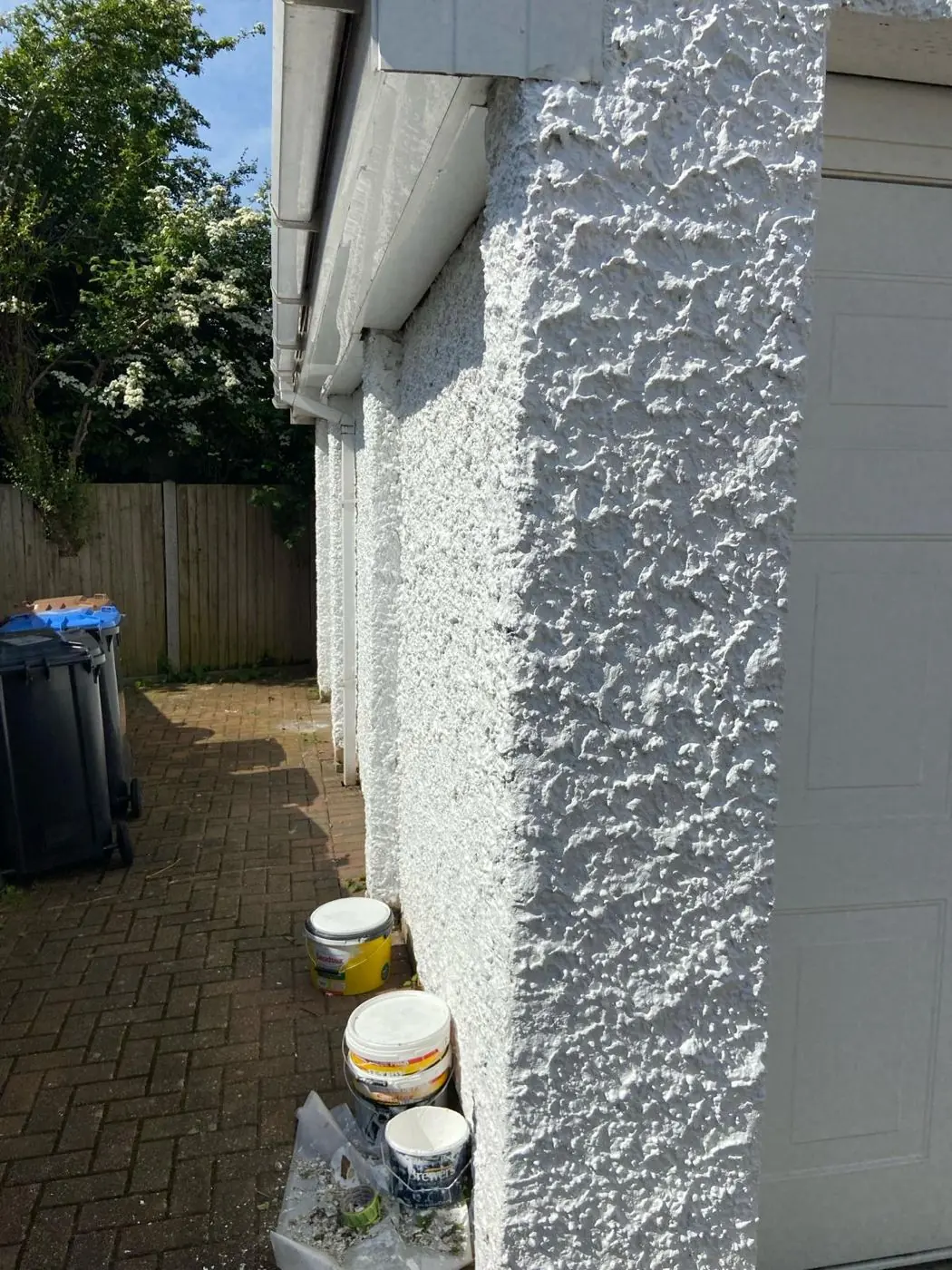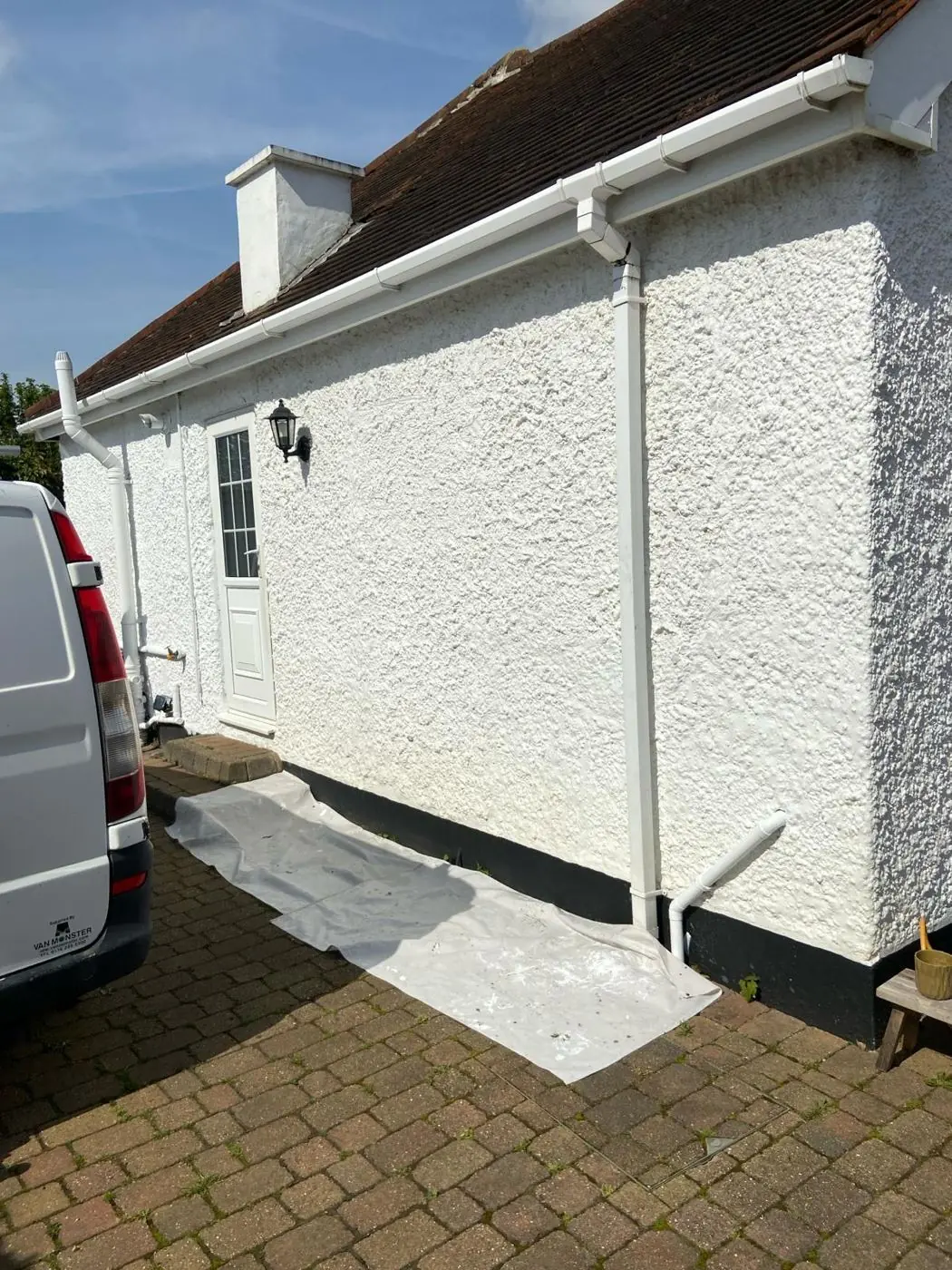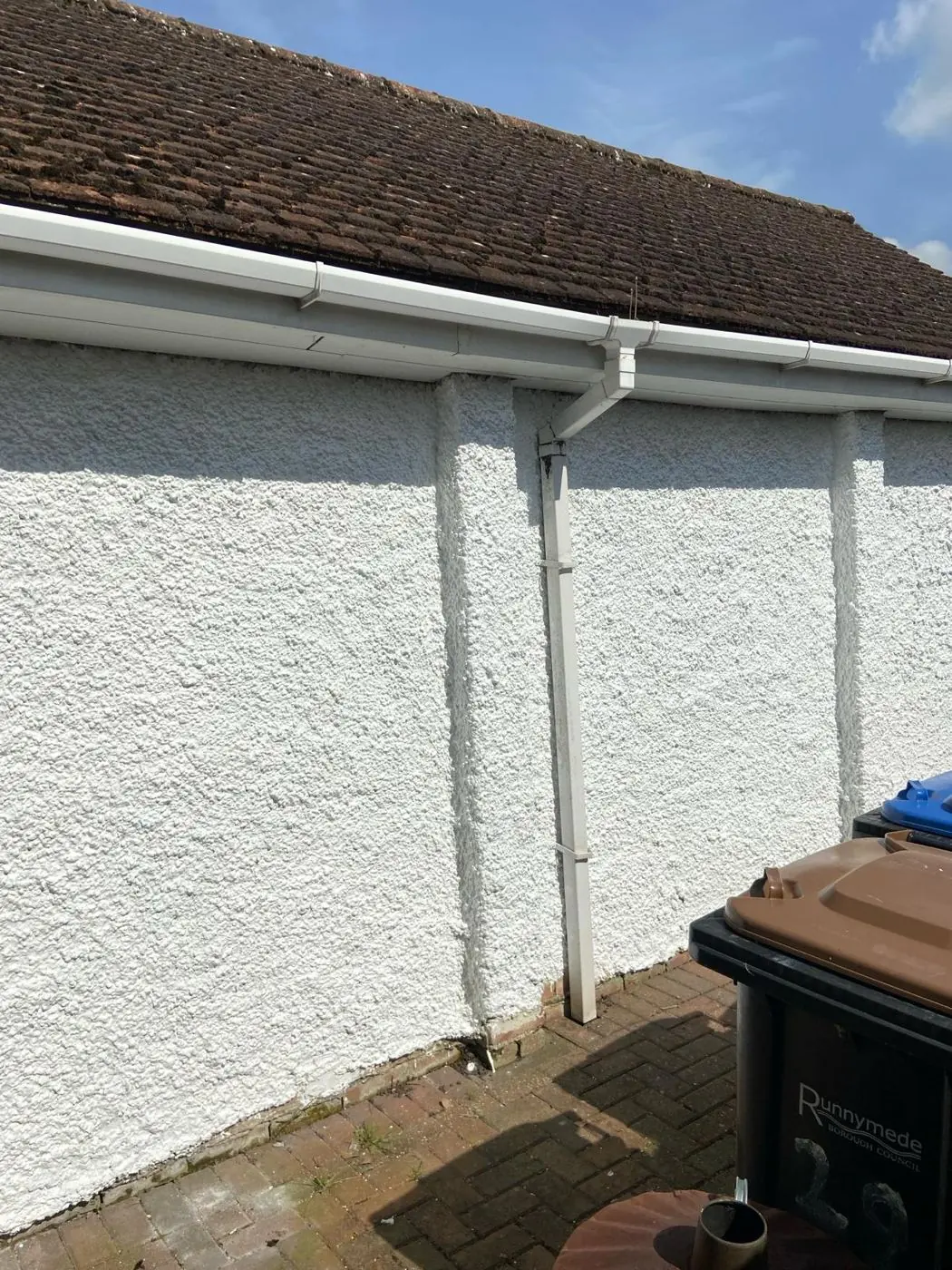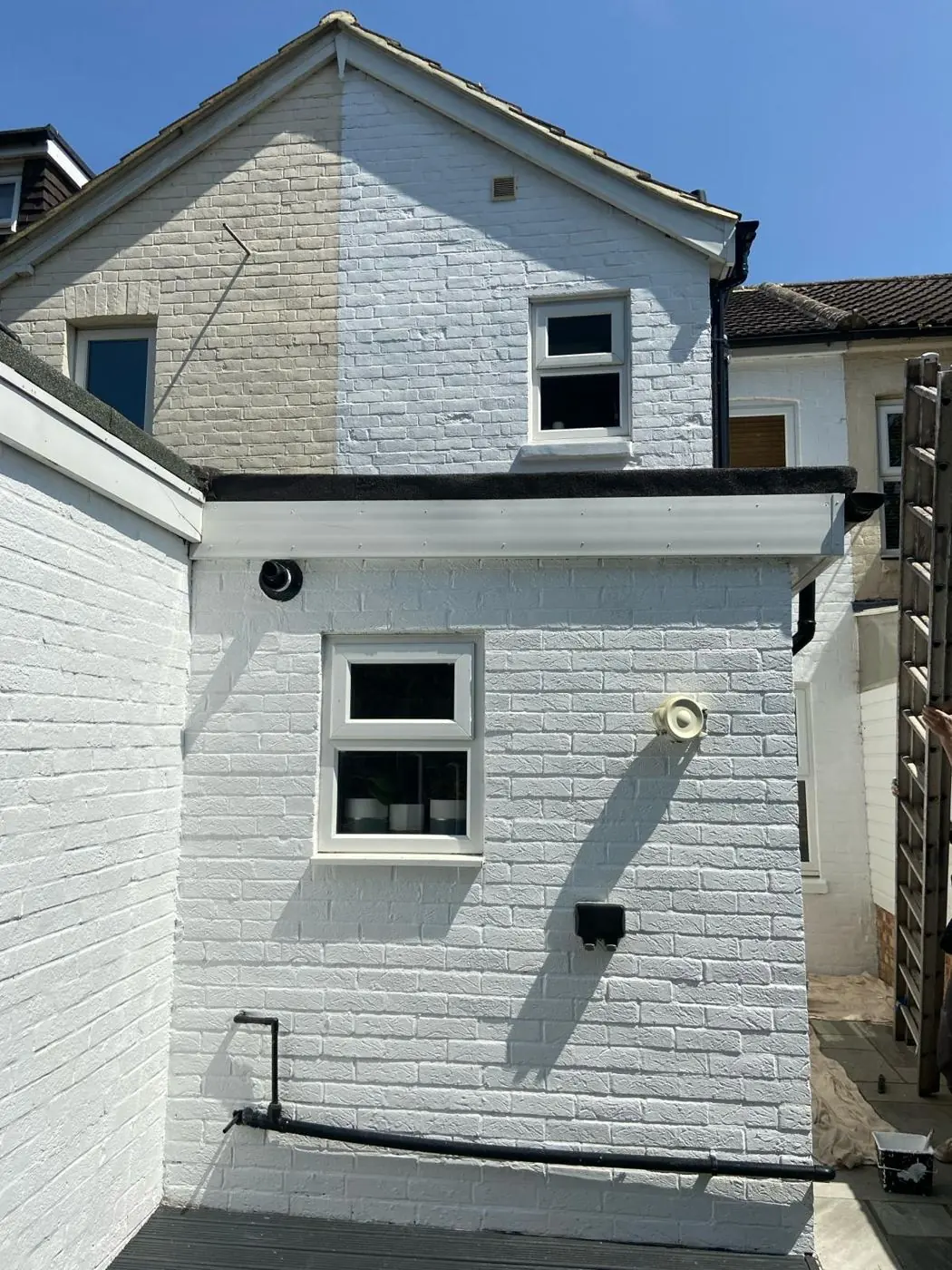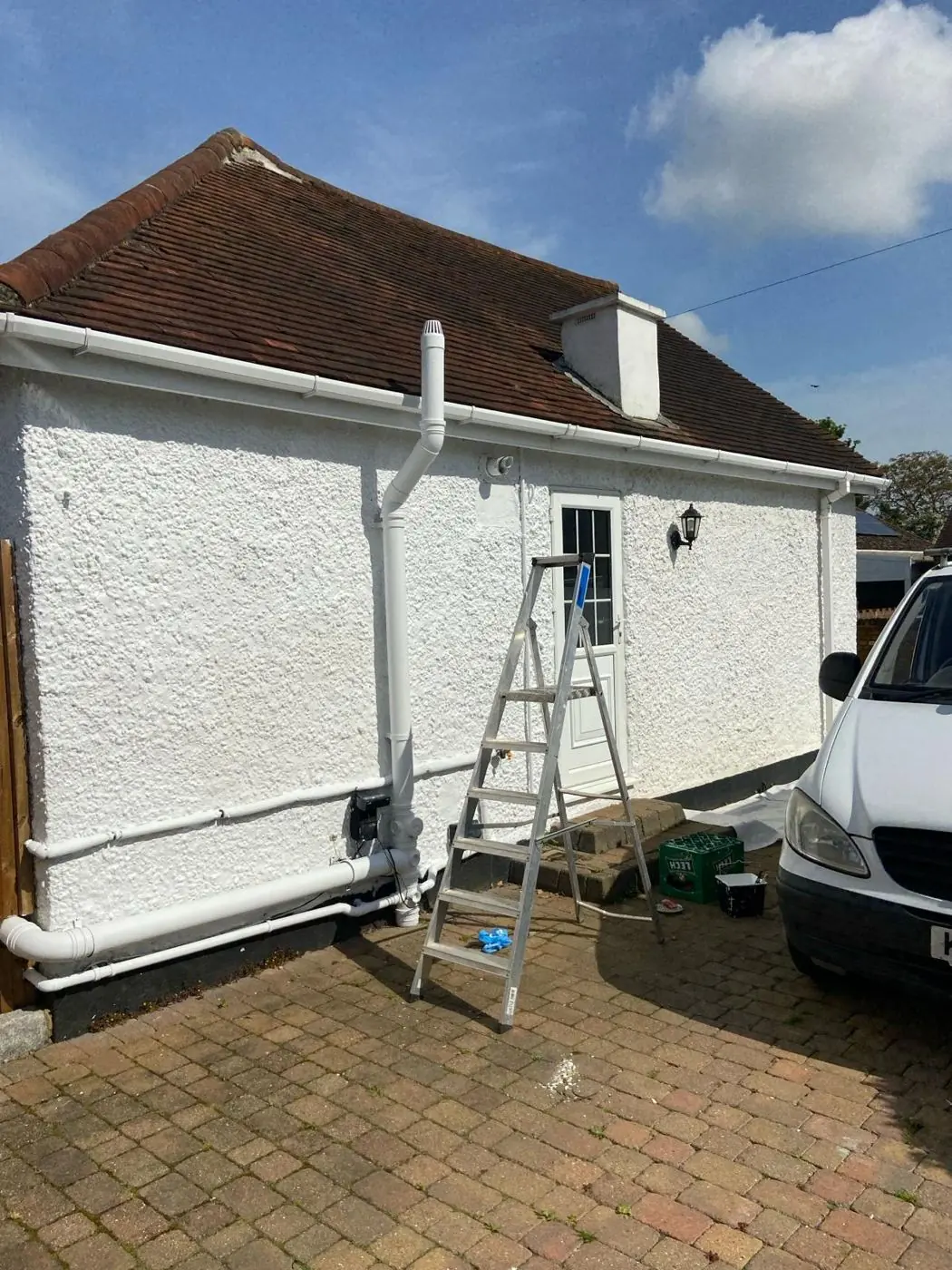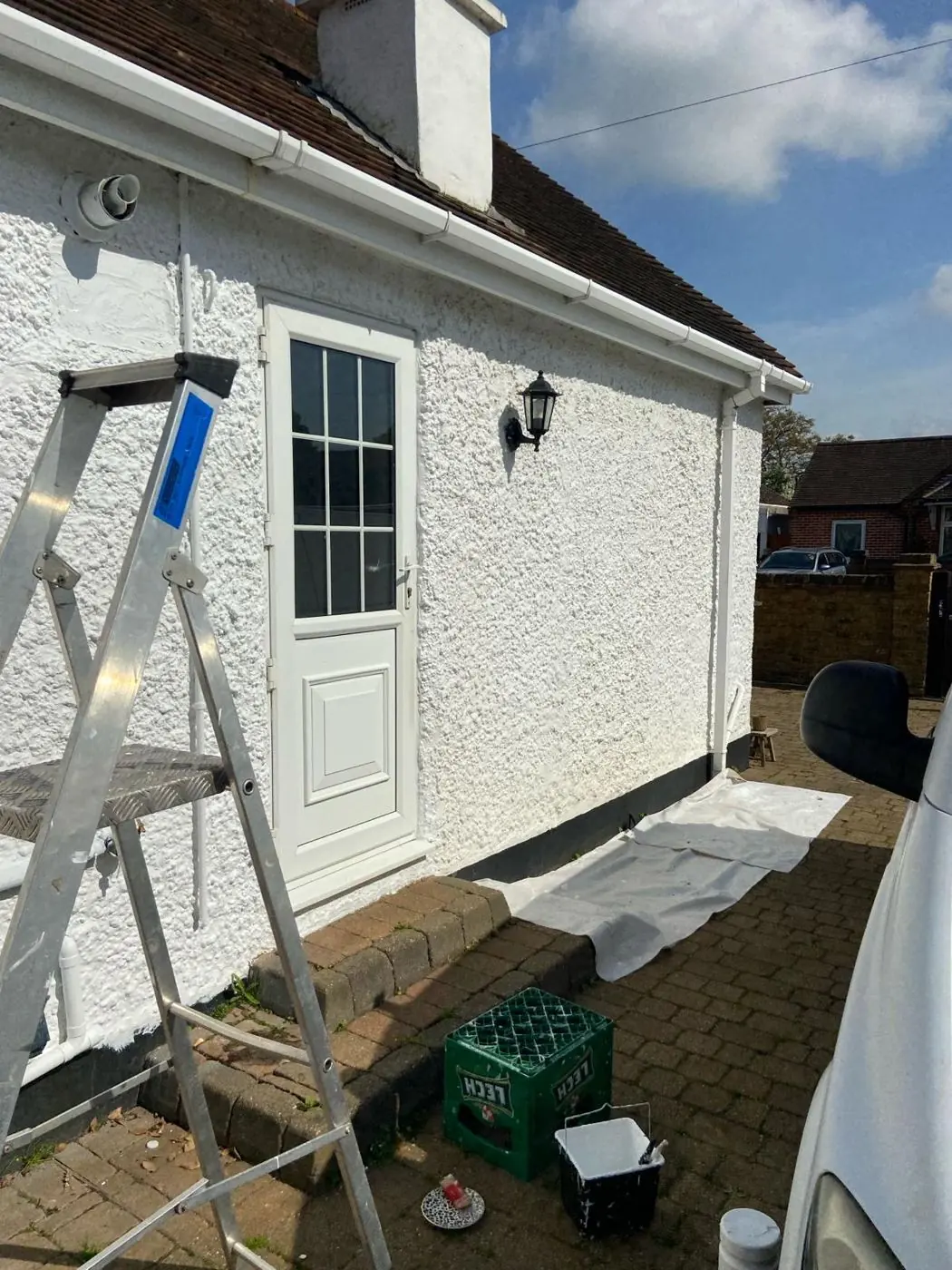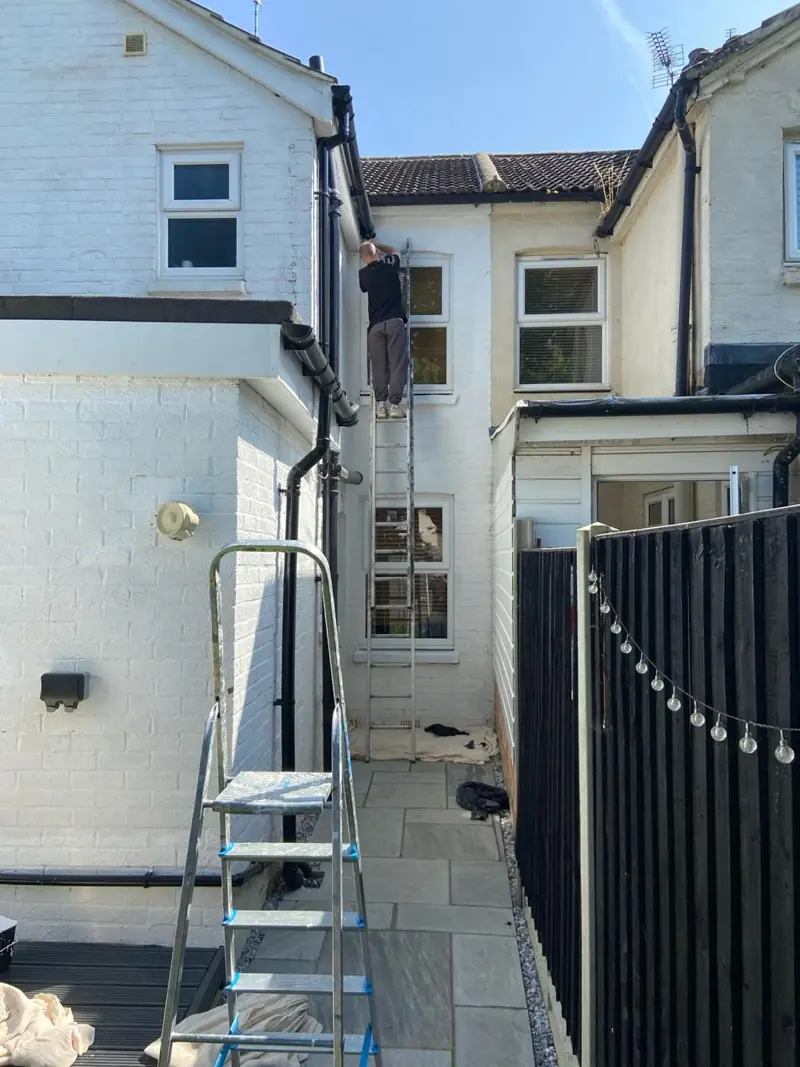
DH Painter & Decorator paints fascias, soffits, bargeboards and dormers in Wootton, NN4, about 2.4 miles south of Northampton town centre. Dean prices each roofline after seeing its height, the timber condition and where a ladder or tower can stand.
Dormers, parapets and steep pitches in the old village
Rooflines in Wootton’s conservation area were never designed around a neat run of fascia board. Many of the cottages on High Street, Green Lane and Church Hill are one storey with attic dormers, or two storeys under steep roofs that once carried thatch and now have Welsh slate, clay pantiles or concrete pantiles. Gables often rise into raised parapets, so the timber you can paint is in short, awkward lengths: dormer cheeks and fronts, small bargeboards, the odd eaves board, and the joinery where a dormer meets the slope.
That makes the work slow rather than big. A dormer set into a steep pitch can’t be reached comfortably from a ladder leaning on the roof, so we often work from a ladder stood on the ground with a stand-off, or from a small tower where the ground allows. Each piece needs scraping, filling and priming by hand, and on old timber we use microporous or linseed-type paints that flex with the wood. If a cottage is listed, keep to the existing colour unless the council has agreed a change.
Estate fascias reaching their next repaint
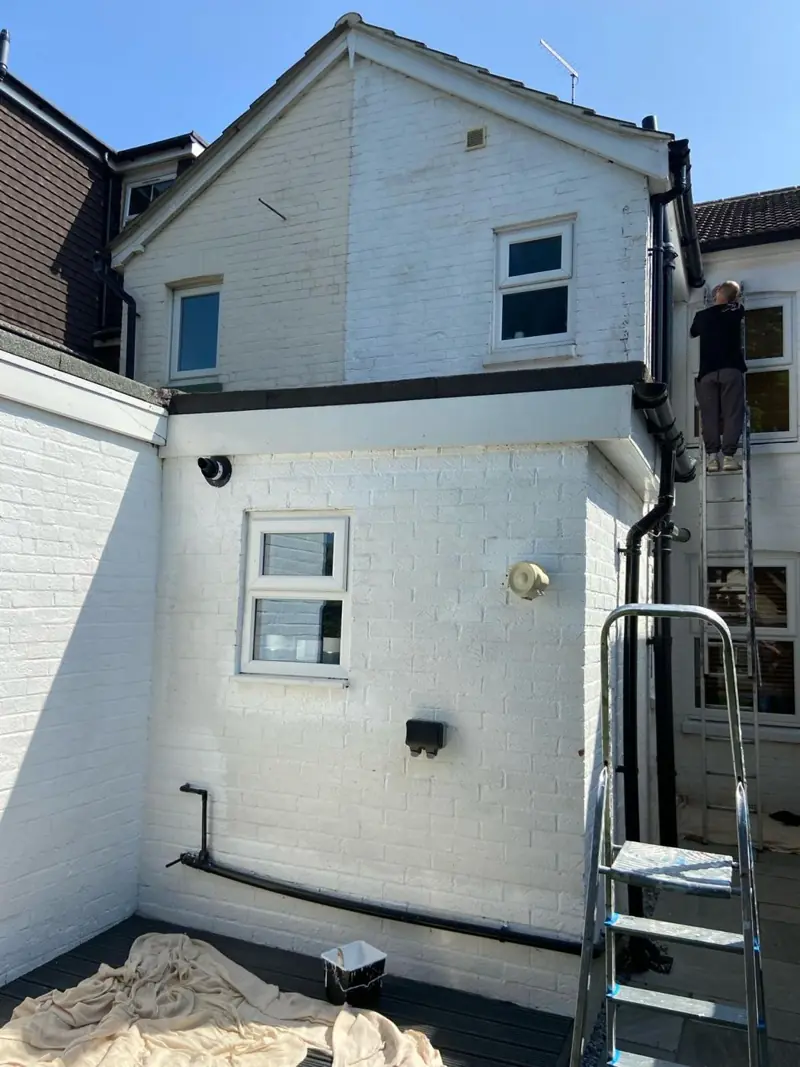
The houses built around the village from the 1980s and 1990s, on Wootton Fields and Simpson Manor, are a different job. Many still have their original painted timber fascias and soffits, and after three decades or more the lower edges and joints are where paint fails first. Common problems are bare end grain where boards meet, splits around gutter brackets and flaking along the bottom edge. We cut back to sound wood, treat any soft spots with resin filler or tell you when a board needs a joiner, then prime and apply two coats of a gloss or satin system for exterior softwood. Our method is on the main fascia and soffit painting page.
Three-storey townhouses, like the four-bedroom one advertised to let on Turners Court, put the eaves a long way up. For those we use a tower or work from a properly footed extension ladder with a stand-off, and we need to know how close the neighbouring cars park.
Trees, shade and green boards
Wootton has a lot of mature trees for a parish this close to town: the ten yews in the churchyard, sycamores outside the Yeoman of England, a beech by the Memorial Hall, and silver birches with more yews on the lanes around The Green. Leaves block gutters, overflowing water runs down the face of the fascia, and the shaded boards stay damp long enough to grow algae. We wash with a biocide before sanding and point out blocked gutters, since repainting a board that is soaked every winter won’t last. In the conservation area, trees over 75mm across are protected and work on them needs six weeks’ written notice, so we work around branches rather than cutting them.
Where the ladders go
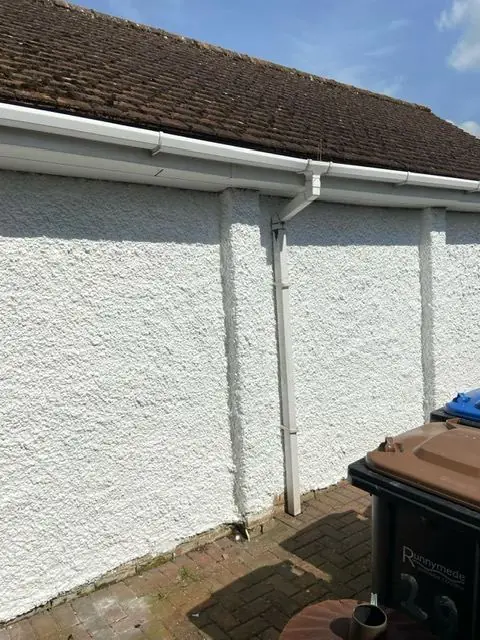
In the village core, the lanes are narrow and often sit below the house, and on High Street the house fronts sit right at the pavement edge below overhead cables, and nobody can park outside on the yellow lines. High stone boundary walls can make the back of a cottage hard to reach. We visit before quoting, agree where the ladders stand and where the van can wait, and price that into the job. The cost guide explains what affects the price of a roofline, and the Wootton area page covers other work in the parish.
Last updated by Dean, DH Painter & Decorator.