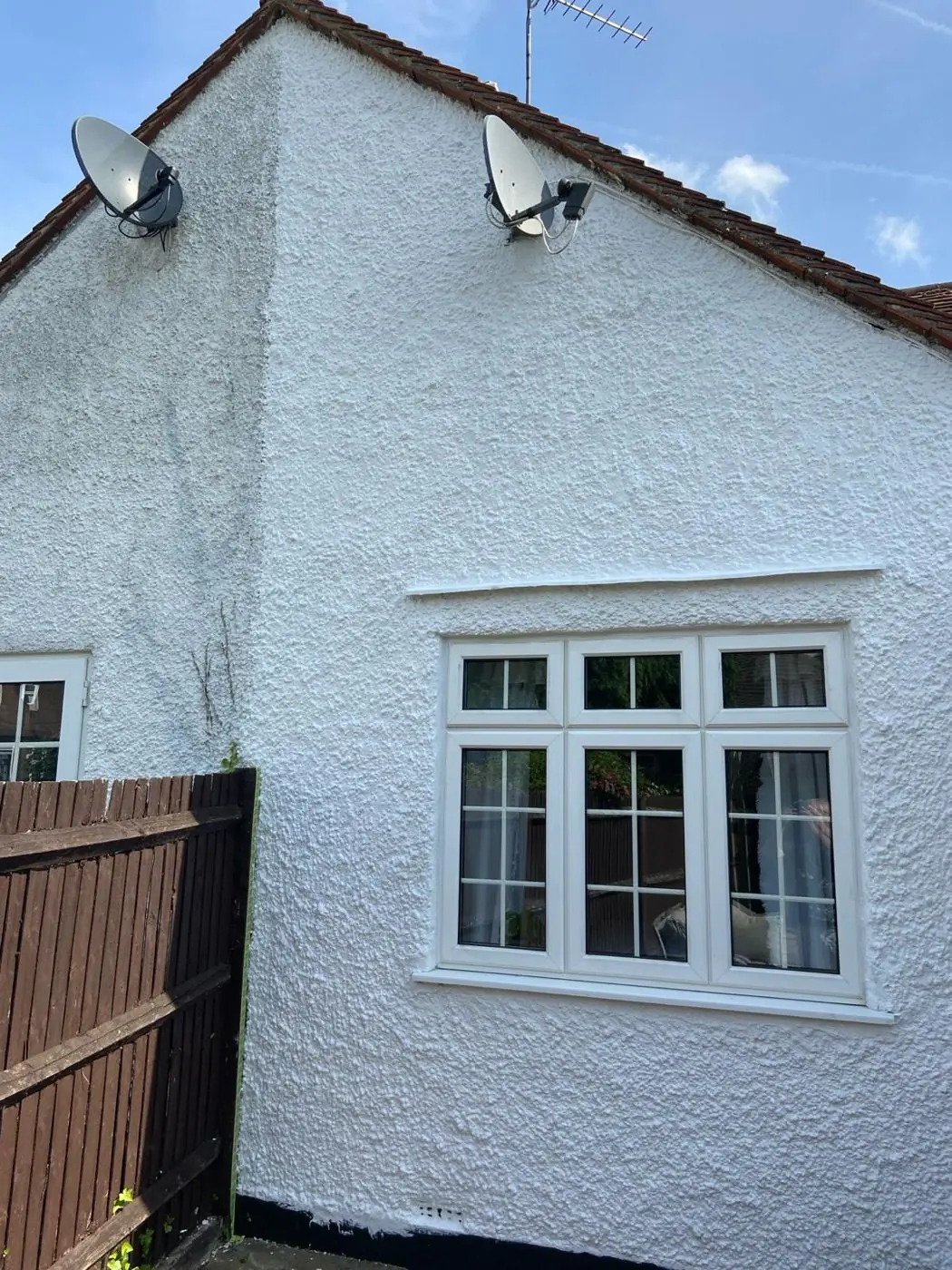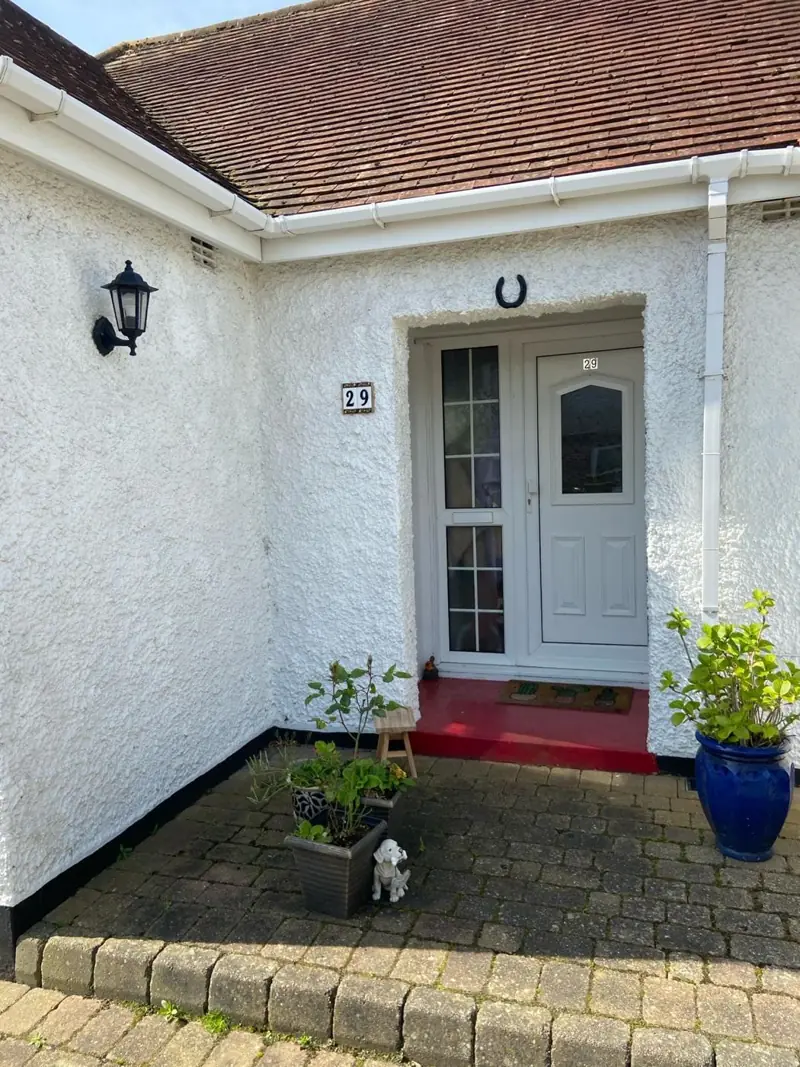
DH Painter & Decorator repaints timber fascias, soffits and bargeboards in East Hunsbury, NN4, the 1980s-90s suburb a little under two miles south of Northampton. Many of the suburb's houses still carry their original 30 to 40-year-old roofline timber, and Dean checks it board by board before quoting.
Roofline timber that has been up for thirty-odd years
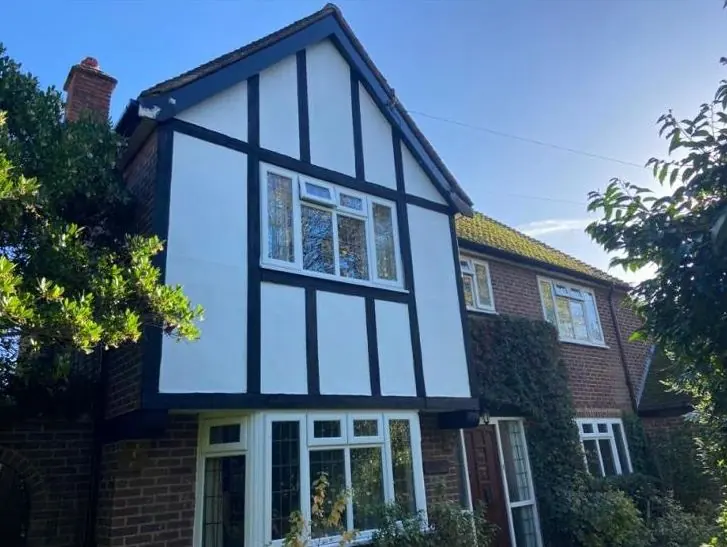
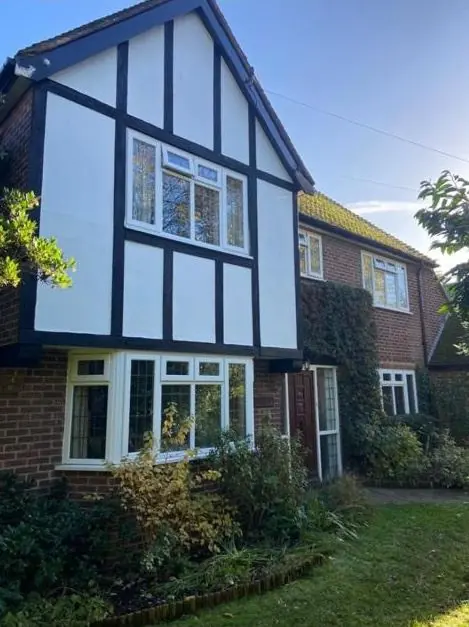
East Hunsbury was built mostly in the 1980s and 1990s, which means a great many of its rooflines are now 30 to 40 years old. Where the original timber fascias, soffits and bargeboards are still in place, they have usually been painted several times, and the layers are starting to tell. Paint lifts first along the bottom edge of the fascia where water drips off the gutter, at the joints between boards and on the ends of bargeboards on gable walls. Behind each of those spots the timber may still be sound, or it may be starting to soften.
That is why the first job is a close look along every board, with a probe at the joints and ends. Sound timber gets scraped, sanded to feather the old paint edges, knotted, spot-primed, filled where needed, then undercoated and top-coated. Our main fascia and soffit painting page walks through that sequence and the products.
Repaint or switch to uPVC?
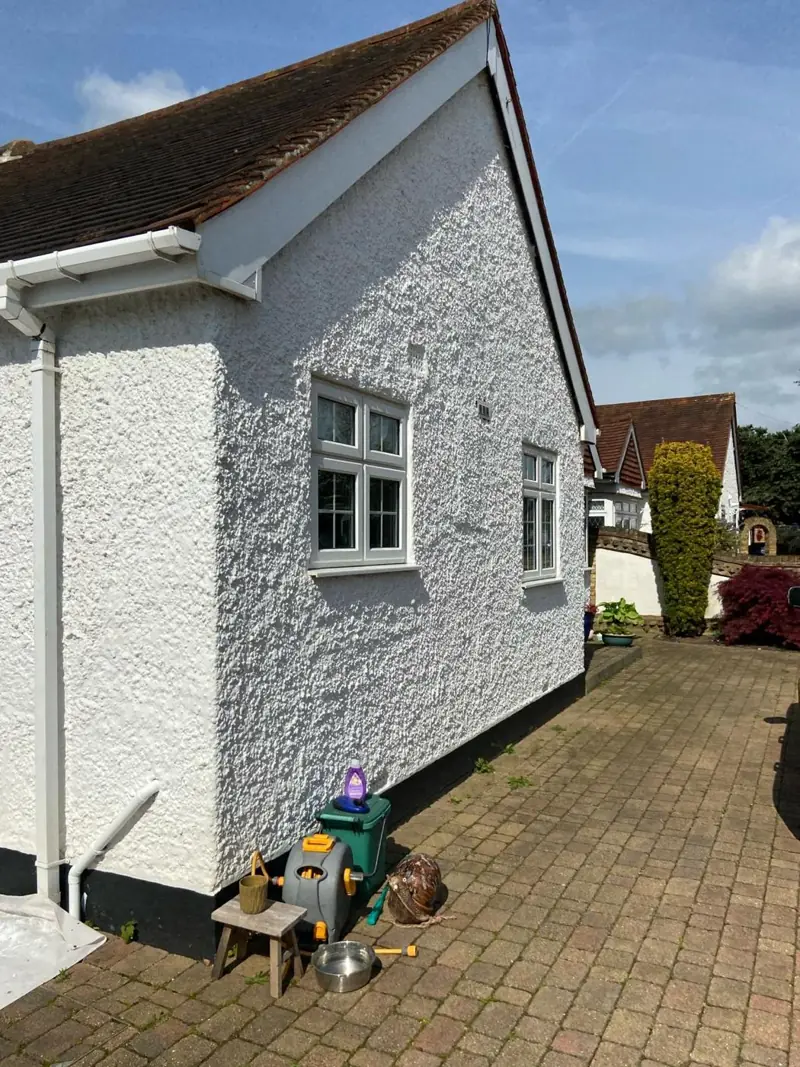
On houses of this age the roofline is a genuine decision point. uPVC replacement is the obvious alternative, and it is worth weighing up honestly. Here is how we would frame it:
- Repainting makes sense when the boards are mostly sound, with soft patches limited to a few ends that a carpenter can splice or replace.
- Replacement makes more sense when rot runs along long lengths, gutters are pulling away and the soffit boards are swollen.
- A mix is common: a new section of bargeboard on the worst gable, with the rest prepared and painted to match.
We are painters, so we will say honestly if a board is beyond paint rather than coat over rot. If you go the replacement route for part of the house, we can paint any timber left on the other elevations.
Working from sloping drives and raised plots
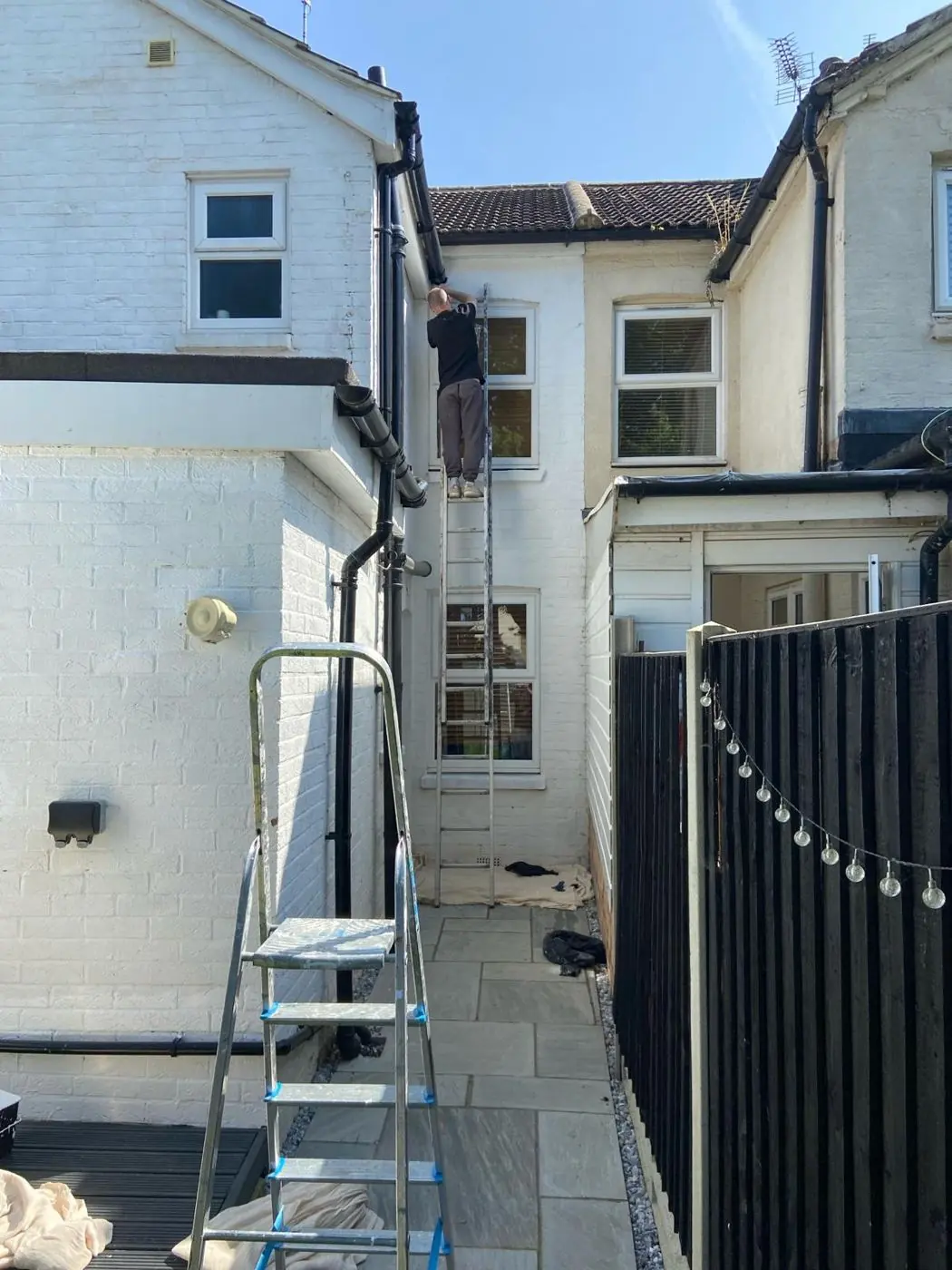
The suburb sits on a hill running down from the Mere Way dual carriageway to the brook valley, and some houses, such as an elevated detached home on Stanford Way that appeared in sales listings, sit above the road with sloping drives and paths. Roofline work is ladder work at full height, so the footing matters more here than in a flat terraced street. We use levelling legs and stand-offs, and where a run of fascia sits over a steep bank or a conservatory roof, a small tower is often safer. The better news is that most homes have their own drive and garage, so the van and kit can stay off the road in the many cul-de-sacs off Rowtree Road and Windingbrook Lane.
Conservatory roofs and garages below the eaves
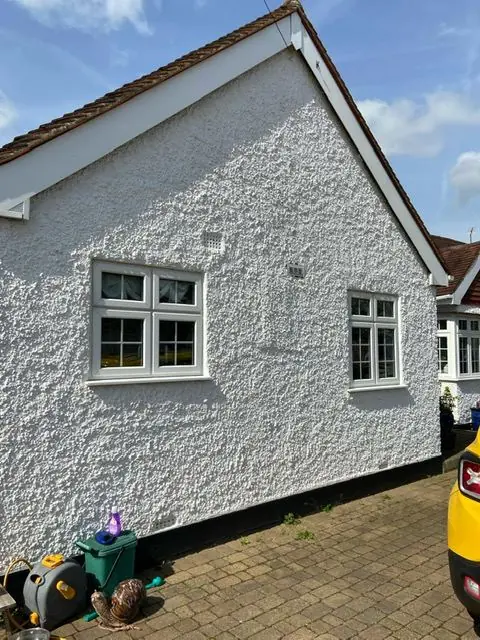
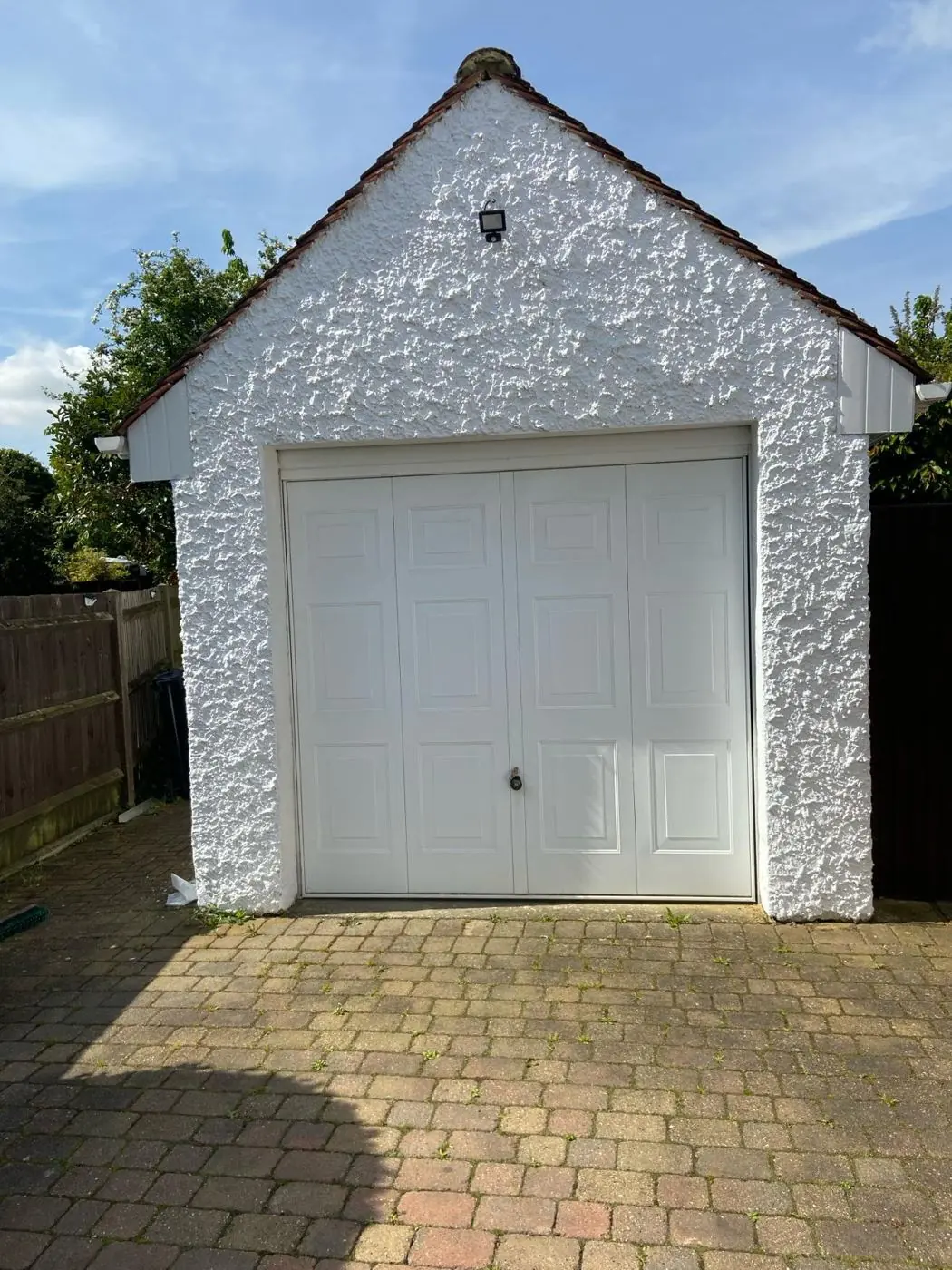
Conservatories and sun rooms are common additions, and they often sit right under a run of fascia or soffit. Paint flakes and sanding dust have to be kept off the glazed roof, and ladders cannot rest on it, so we sheet the roof and plan ladder positions around it. Detached and attached garages usually have their own fascia boards too, often in worse condition than the house because nobody looks at them. It is worth including them so the whole roofline is done in one visit and finishes at the same colour.
For the wider picture of how we cover the suburb, visit our East Hunsbury page, or see the painter and decorator cost guide for what affects a quote.
Last updated by Dean, DH Painter & Decorator.