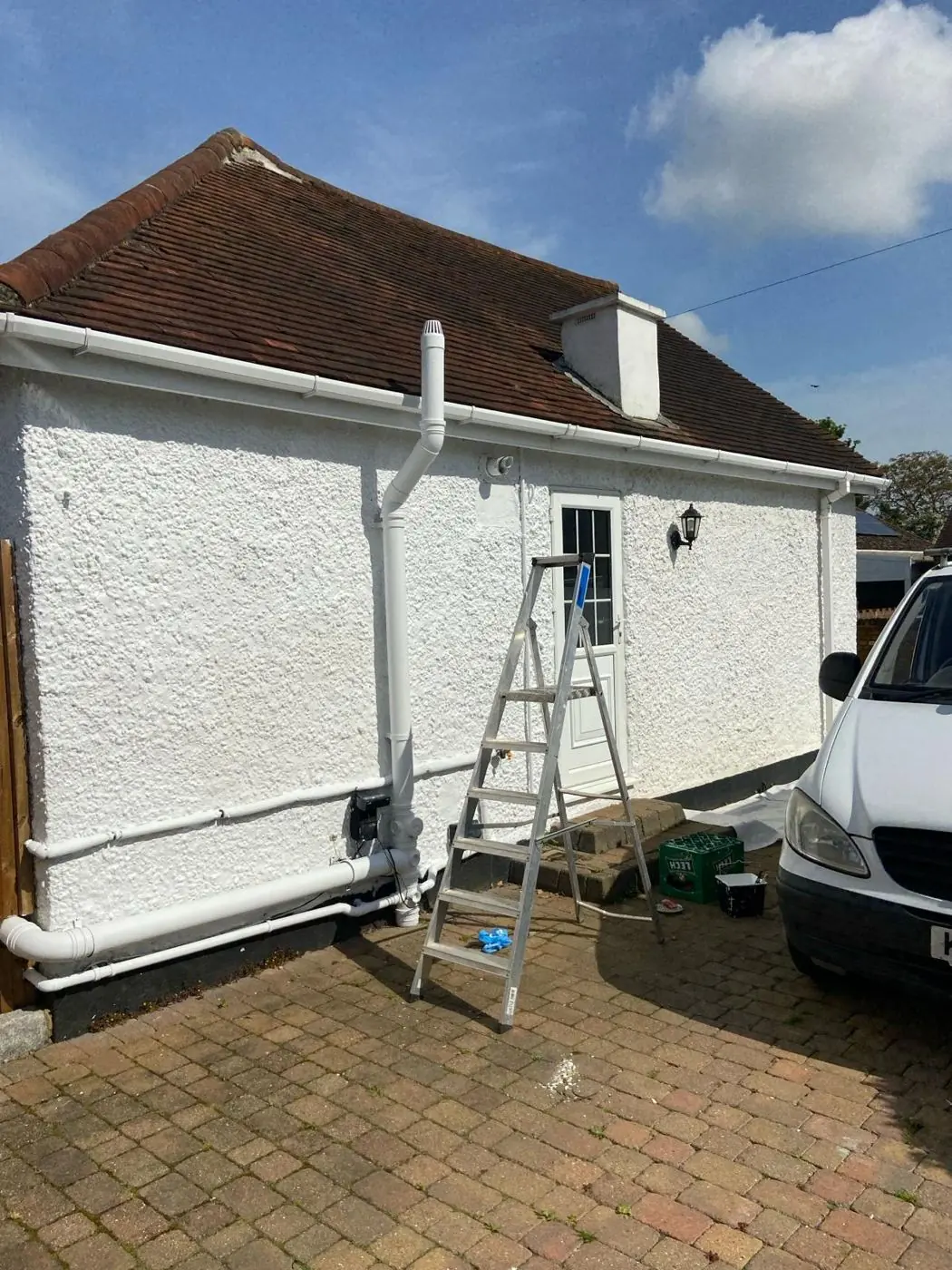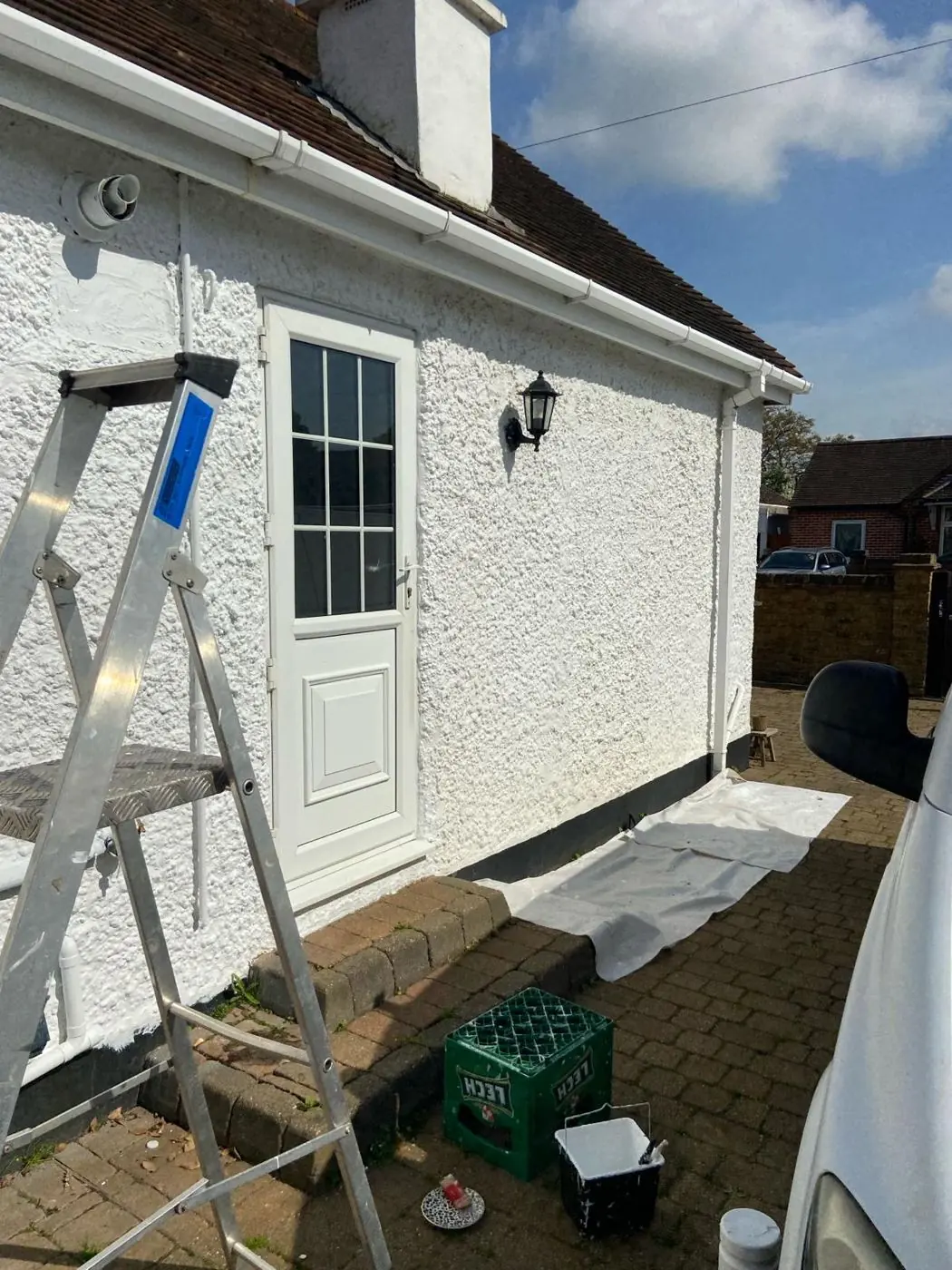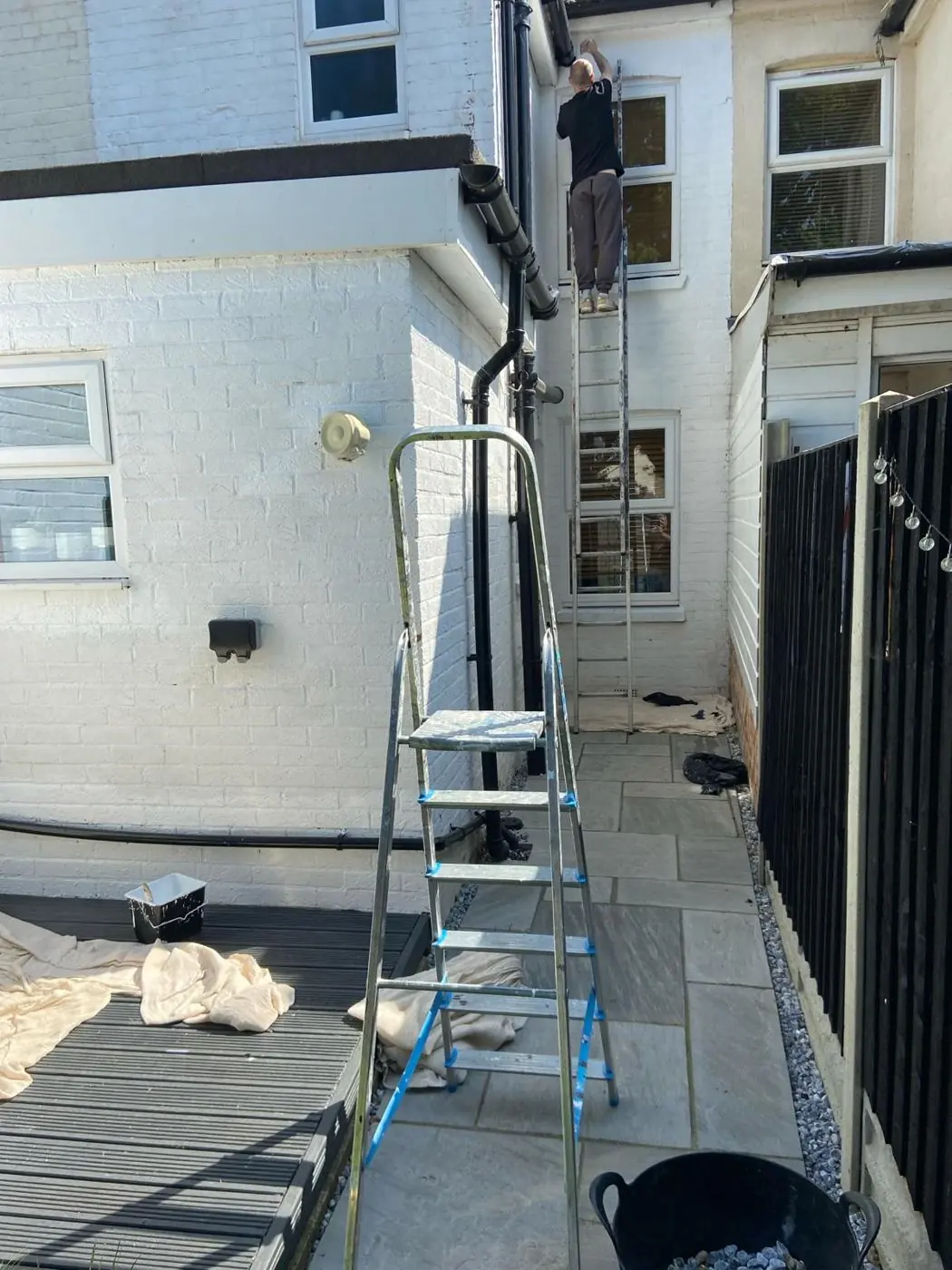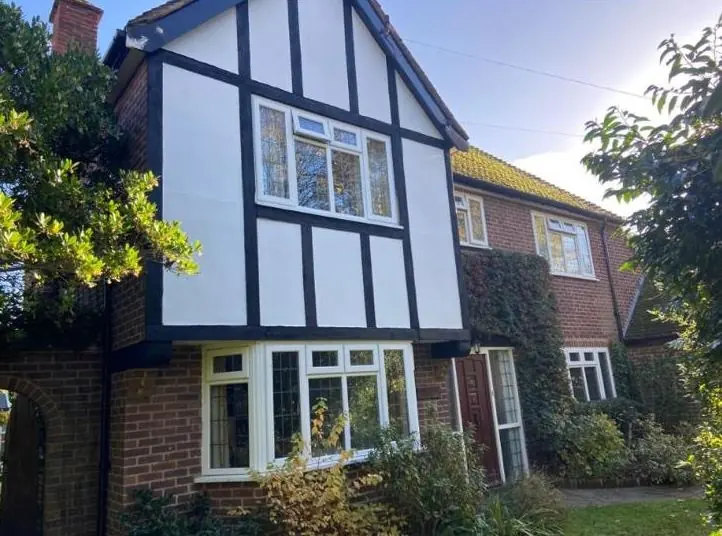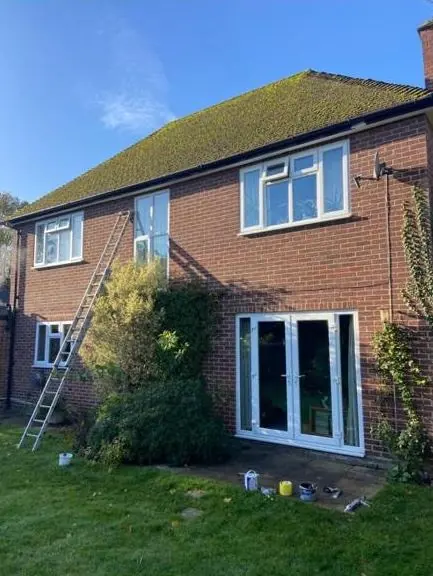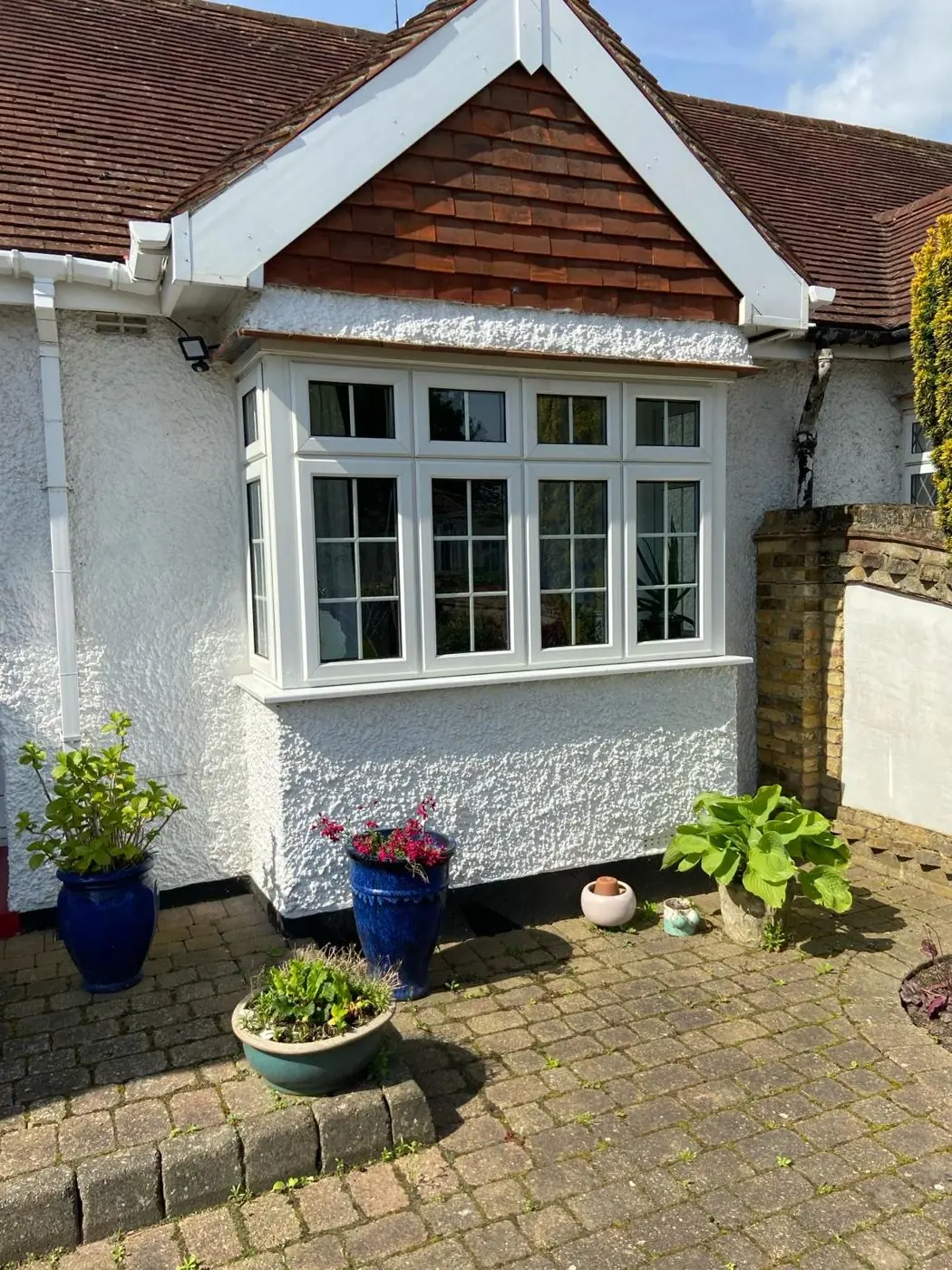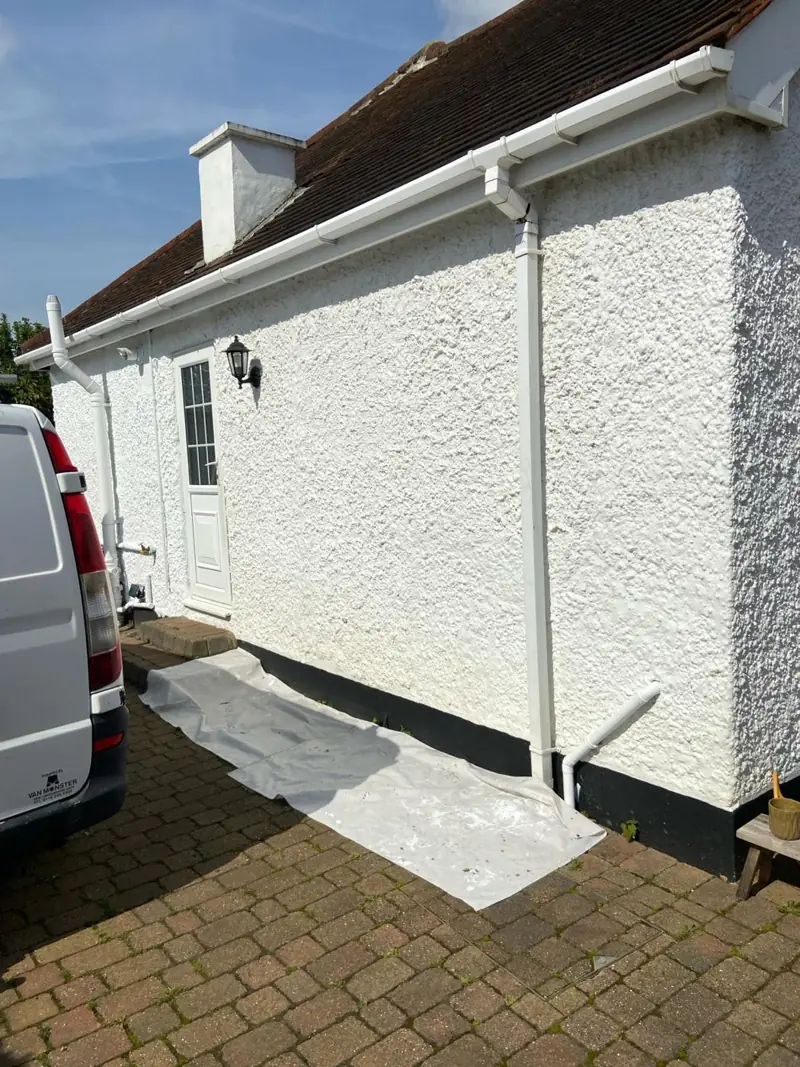
Dean paints fascias, soffits, gutters and bargeboards in Roade, NN7, about 5.4 miles south of Northampton town centre. Most of this work is on the 20th-century houses west of the A508, with more careful, slower roofline work on the stone and thatched cottages to the east.
The closes west of the main road
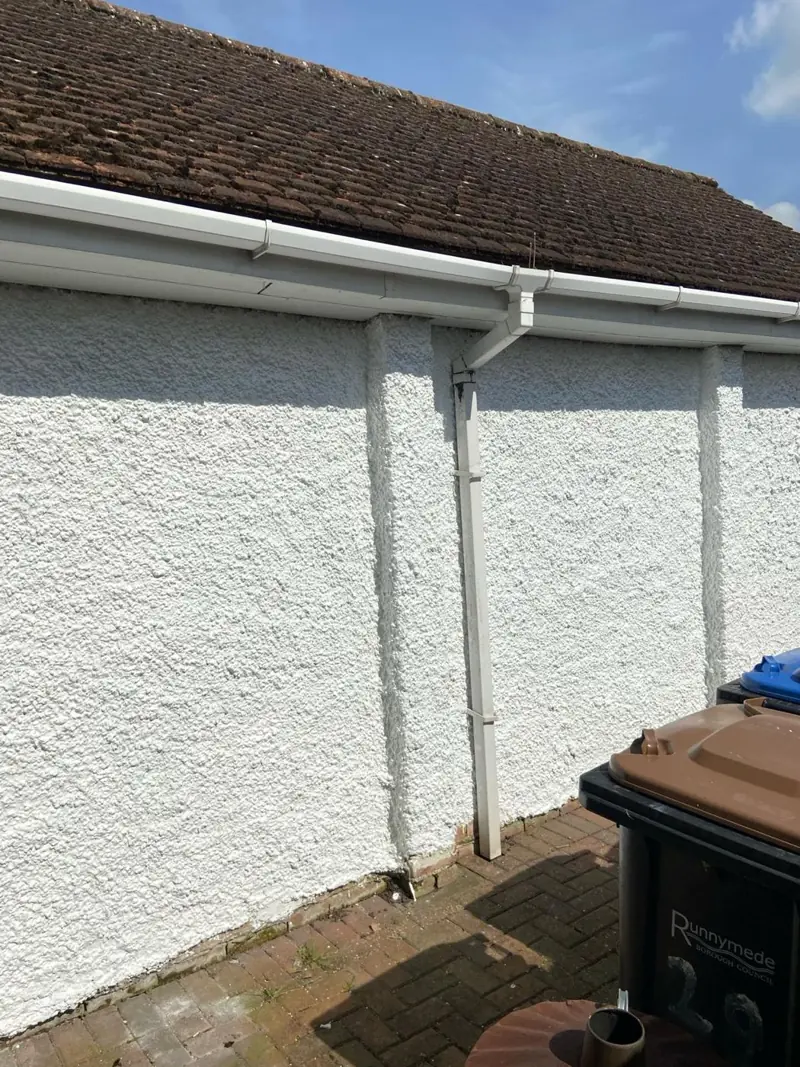
Most roofline work in Roade comes from the 20th-century housing that fills the western half of the village. Streets such as Bailey Brooks Close, Hyde Close, Manor Close and Wallwin Close are quiet residential closes off the through traffic of the A508, so ladders or a tower can usually be planned without the roadside problems the main road brings. The time goes into the boards themselves: checking for soft timber where gutters have leaked, sanding back failed gloss so old edges do not show, priming bare patches and finishing gutters and downpipes in the same visit so the whole roofline matches.
Houses on the outer edge of the village face open fields, and their gutters and boards on the south and west sides take the strongest sun and rain. Expect those runs to need attention before the sheltered side of the house does.
Where boards on a house in the closes have been replaced with uPVC, they need cleaning rather than painting, though gutters or a neighbouring timber section may still want a coat. On the visit we check which parts of your roofline are timber and which are plastic, so you only pay for the parts that actually need paint.
Bargeboards and eaves on the older cottages
East of the A508 the roofline looks very different. The late 17th-century cottages on the High Street and Memorial Green have low eaves, brick end stacks and in some cases thatch with eyebrow dormers. Here the job is usually a gable bargeboard or a length of timber eaves rather than a run of modern fascia, and the coped stone gables on some buildings leave only a short section of exposed timber to paint.
Thatch changes how we work. Ladders are never leaned against it, dust sheeting protects the thatch edge from paint drips and dust, and no blowlamps or other naked flames are used for stripping. Old paint comes off by hand scraping or a low-temperature method instead. On listed cottages, the existing colour is matched unless consent has been agreed for a change.
Not every older roofline here is stone and thatch. Tylecote House on Hartwell Road, built in the 1890s in red brick with tile-hung upper floors, shows the later Arts and Crafts side of the village. Any timber at eaves or gables on a house like that is brushed out by hand, with the tile hanging sheeted off below so drips do not mark the clay.
Access at a glance
| Property in Roade | Typical roofline | What shapes the job |
|---|---|---|
| Houses on the western closes | Fascias, soffits, gutters, downpipes | Drive access, leaking gutter joints, faded boards on field-facing sides |
| Thatched cottages, High Street and Memorial Green | Bargeboards, eyebrow dormer timber, low eaves | Protecting thatch, no naked flames, listed status |
| Stone houses on Hartwell Road | Timber eaves under slate or plain tile | Keeping ironstone dressings clean, like-for-like colours |
| Frontages on the A508 | Fascias and gutters on roadside elevations | Traffic dirt, ladder footing beside a busy road |
Before you book
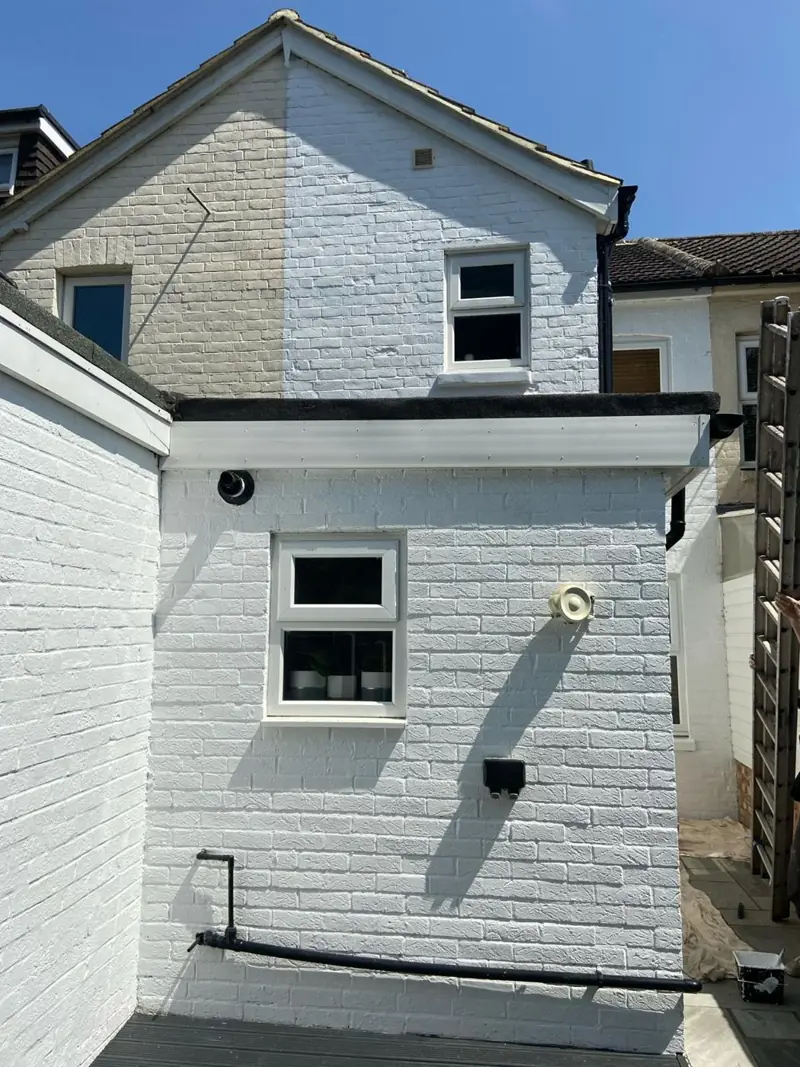
We look at the roofline from the ground and from a ladder where needed before quoting, because a board that looks only faded can be soft underneath. If it is rotten, painting it will not save it, and we will say so. Our main fascia and soffit painting page explains how boards, gutters and downpipes are prepared and finished, and the painter and decorator cost guide explains what affects the price of exterior work. You can read more about the village’s mix of houses on our Roade area page.
Last updated by Dean, DH Painter & Decorator.