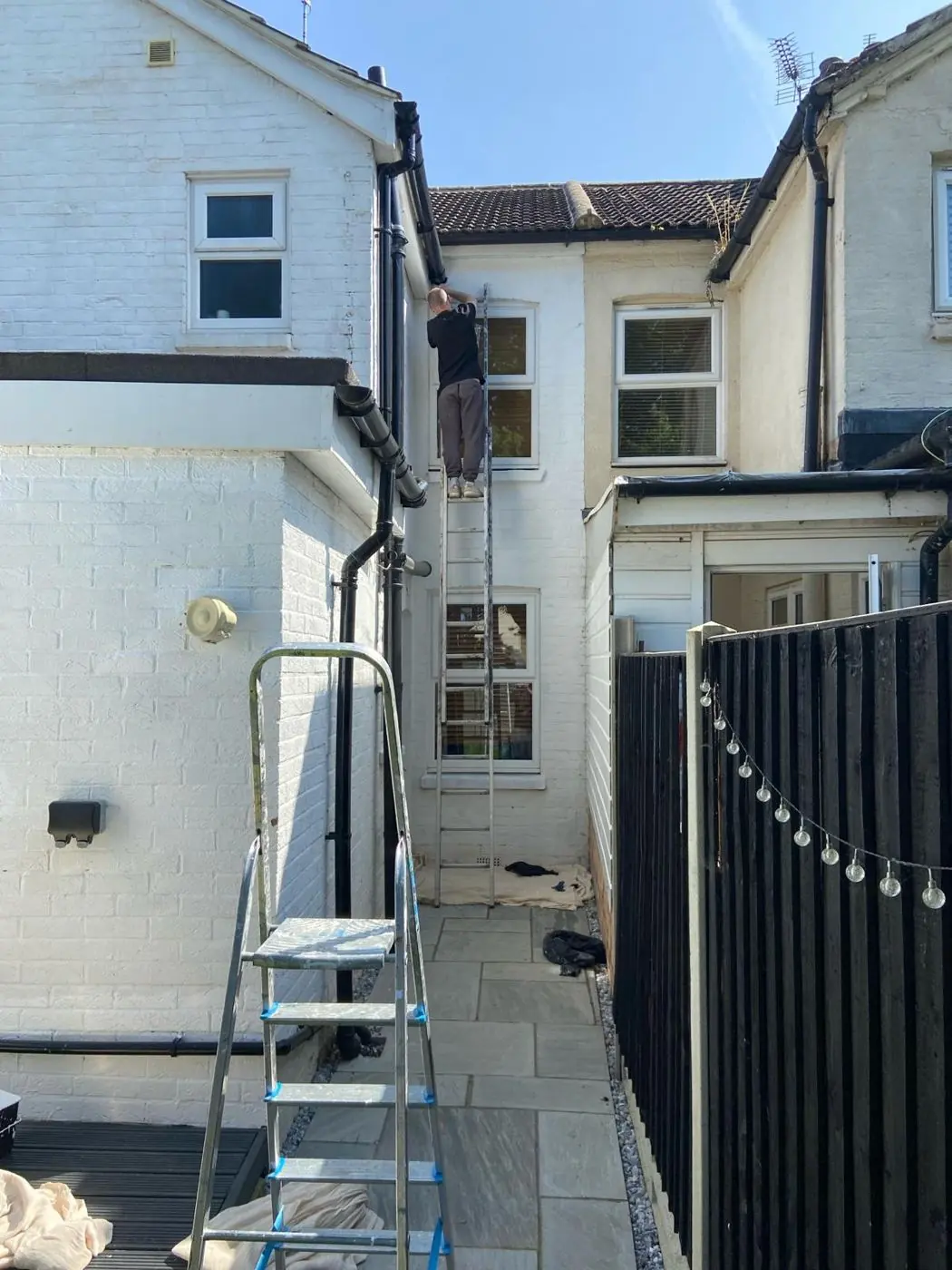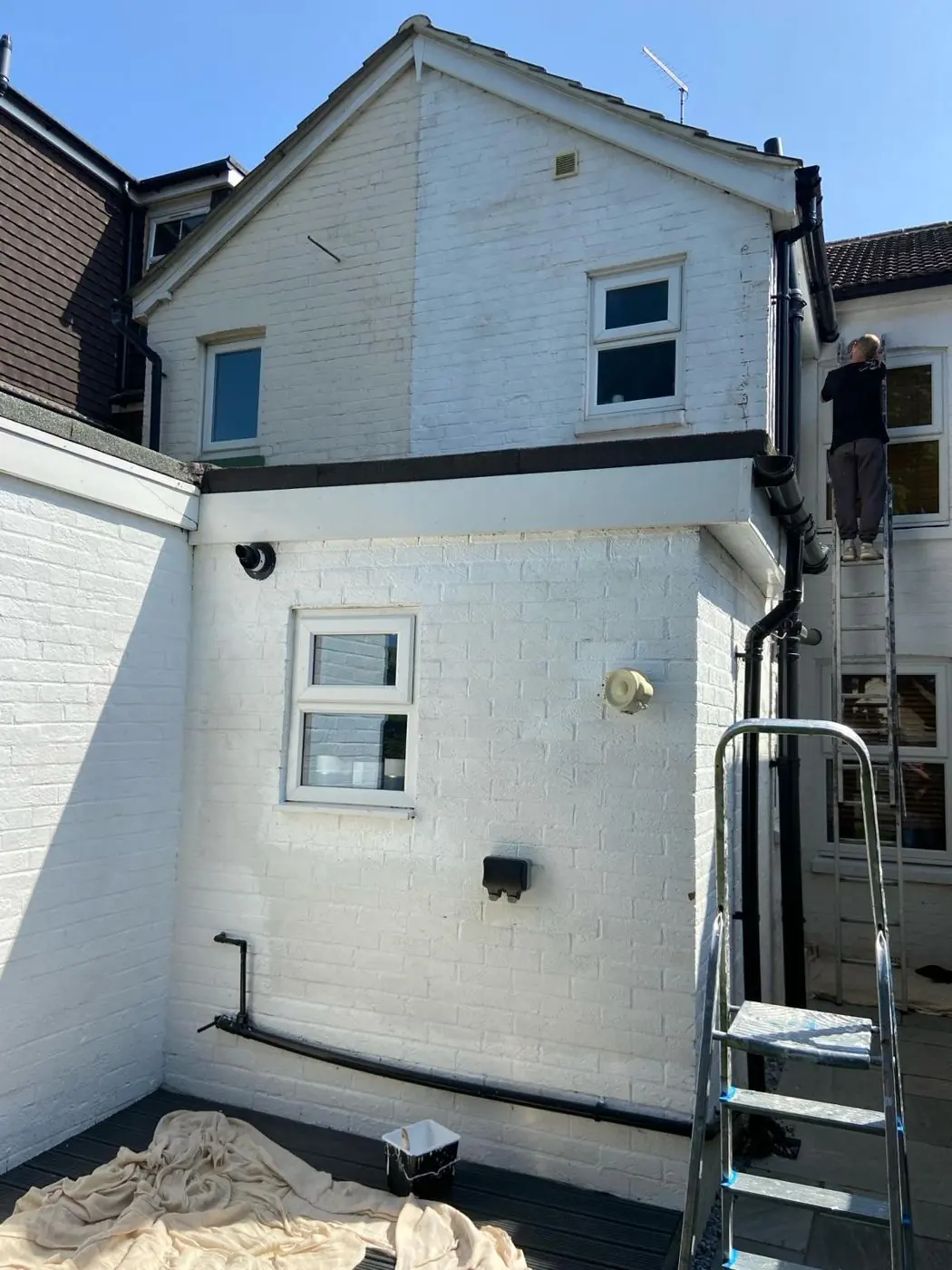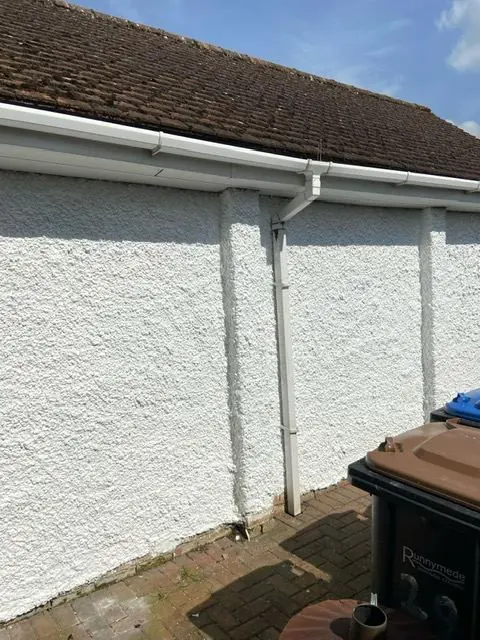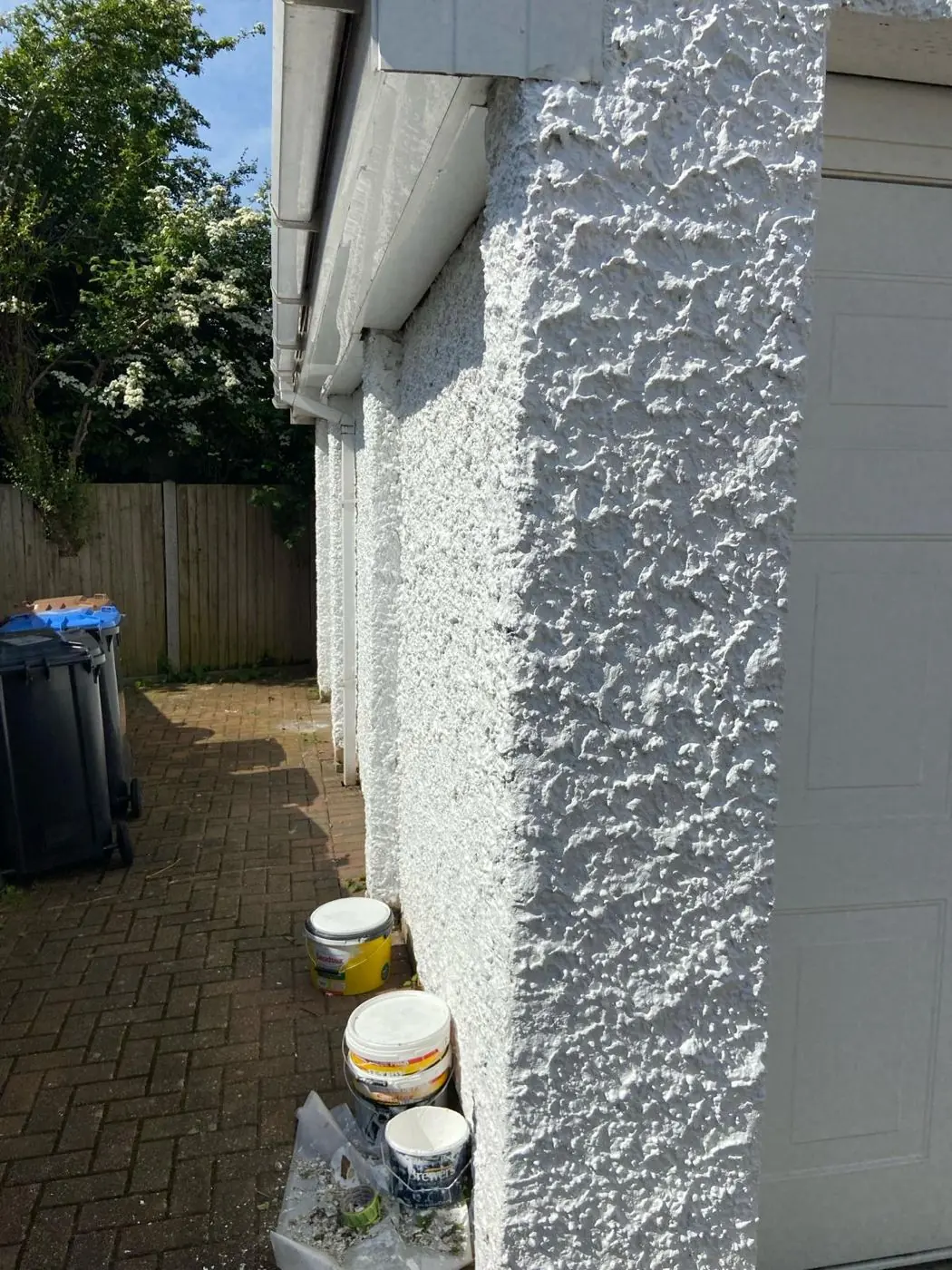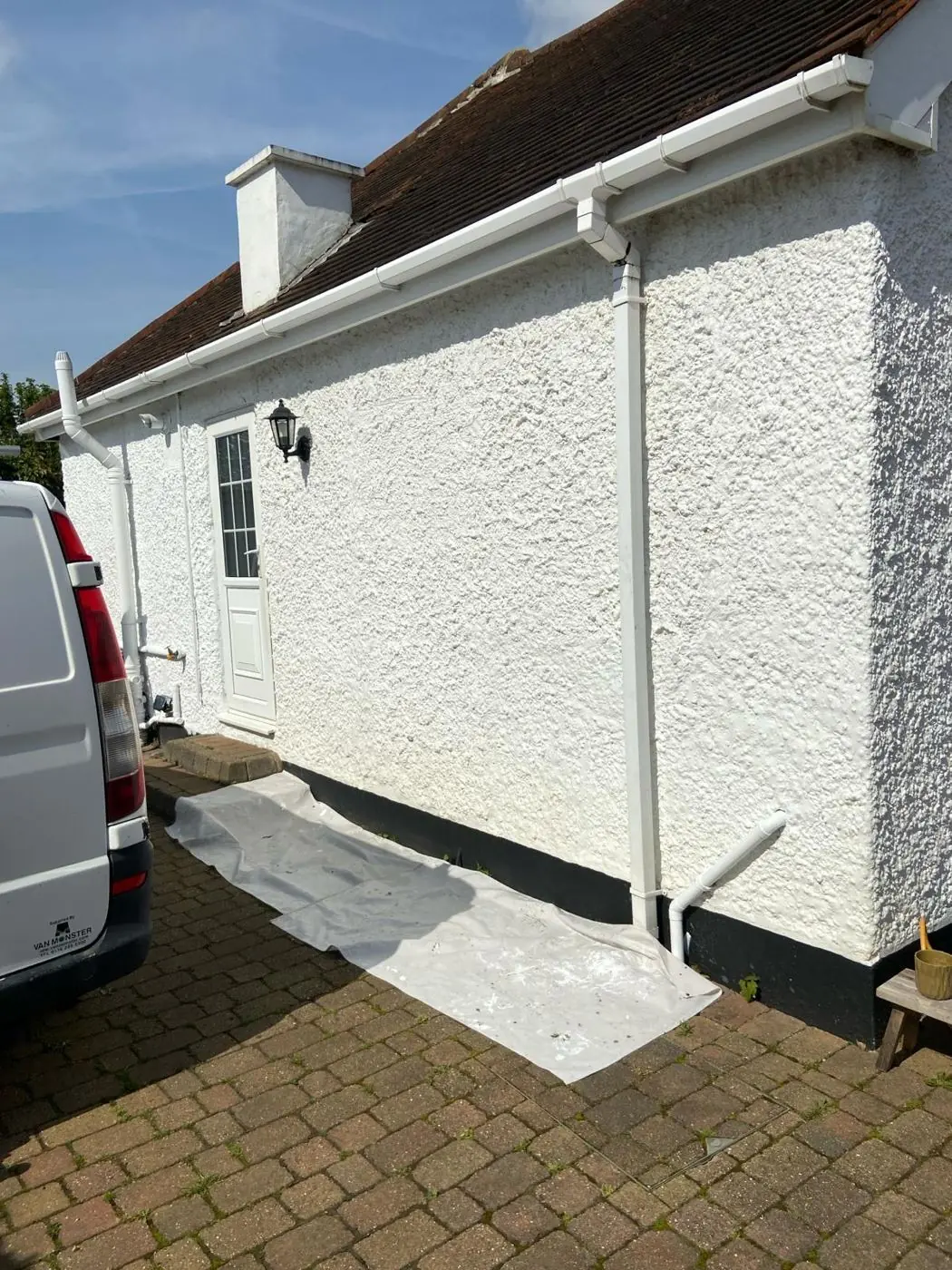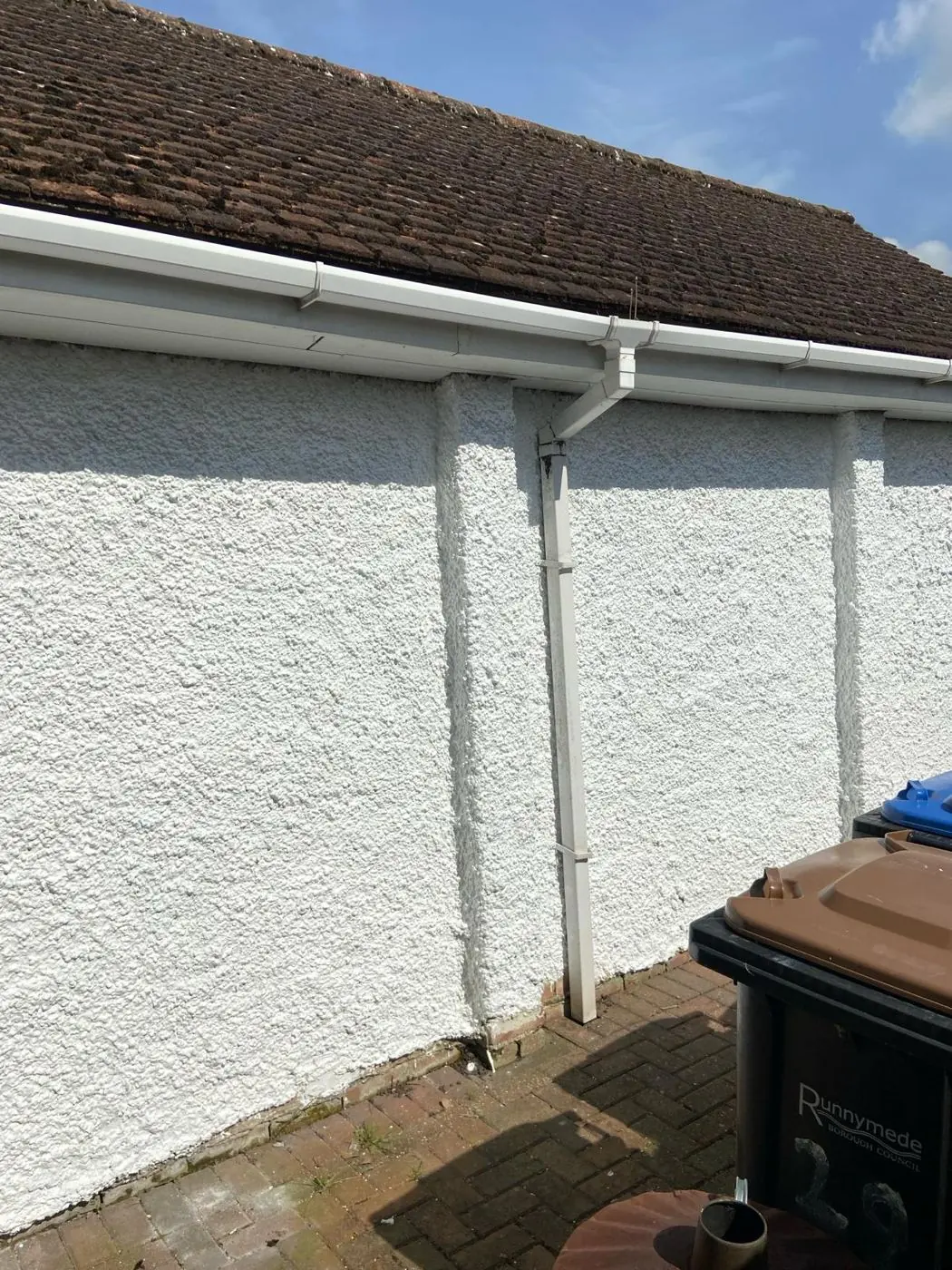
DH Painter & Decorator paints fascias, soffits, bargeboards and gutters in Hardingstone, NN4, a village 1.8 miles south of the town centre. Dean looks at the roof first, because a Welsh slate roof on Back Lane, a thatched cottage and a newer house south of the core each need a different approach at the eaves.
Reading the roof before quoting
Hardingstone’s roofs say a lot about the eaves below them. The 18th and early 19th-century houses in the conservation area typically carry Welsh slate, some later swapped for concrete tiles, with brick chimneys. The oldest cottages have steep pantiles, as on Millstone Cottages at 26-28 The Green, or thatch, which survives on four roofs. The 1930s and 1950s homes usually have timber boards unless they have been replaced, while the newer houses south of the core, on streets such as Falcon Way and Elm Tree Drive, tend to have uPVC or factory-finished fascias.
Each of those changes the job. Timber eaves under slate take a traditional primer, undercoat and gloss, or a microporous system, after any soft wood has been cut out and repaired. uPVC usually needs nothing more than a thorough clean, and painting it only makes sense with a specialist coating made for plastic. If a wash is all your roofline needs, we will tell you.
No heat near thatch
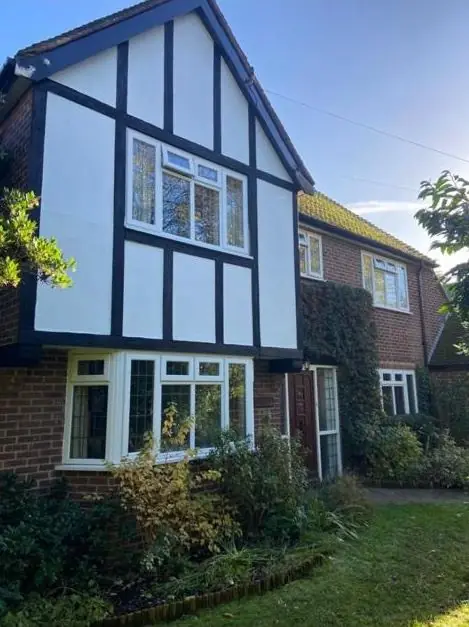
Where thatch overhangs or meets painted timber, as at Cobbler’s Cottage on the High Street and the thatched cottages on Back Lane, heat is ruled out. That means no heat guns, no blowlamps and no hot-air stripping anywhere near the eaves. Flaking layers come off by scraping, sanding with dust extraction or chemical stripper, which is slower and is allowed for in the quote.
The same care applies to any listed house. If you would like old bargeboards taken back to bare timber rather than prepared and overcoated, check with the council first, since stripping historic joinery can count as an alteration. Old paint on pre-1960s timber may also contain lead, so we work wet and collect the debris rather than letting it fall into gardens or onto the footway.
Cables, footways and falling needles
Overhead cables follow High Street, The Green and Back Lane, and many houses there stand right on the footway with no garden to put a ladder in. Ladder angle and tower position are therefore the first things we plan. On the stretch of High Street by the church, where the footway is narrow or missing, we work in short, staged sessions with barriers so the road and pavement stay usable.
The village’s protected trees add their own task. Pines, holm oaks, limes and yews drop needles, leaves and sap onto roofs and into gutters, so we clear the gutters and wash the boards before any paint goes on, and leave extra drying time where the eaves sit in permanent shade. Gutters and downpipes can be painted at the same visit, and we price the whole roofline together.
The 1930s and 1950s rooflines
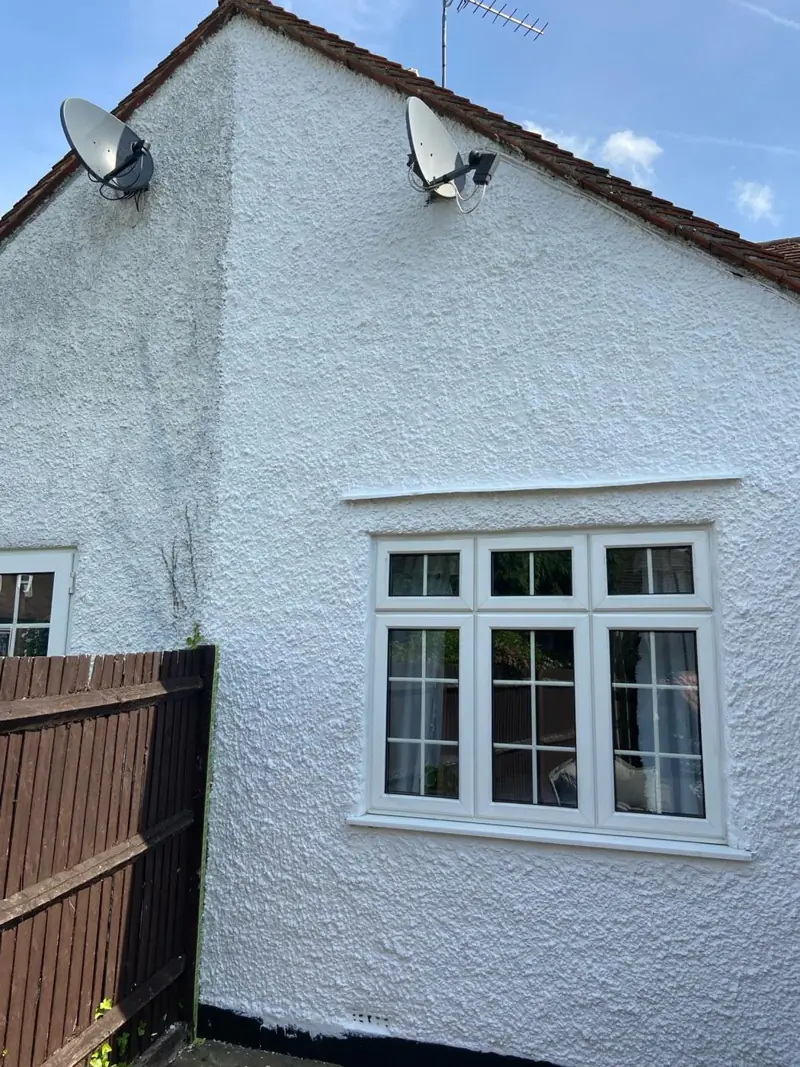
On Glebe Avenue and the western approach near Coldstream Lane, the semis and bungalows offer the simplest roofline work in the parish. They are set back behind front gardens, so ladders stand on your own ground, and bungalow eaves are often within easy reach. Original timber boards on houses of this age can still be sound under several coats of gloss; where joints have opened or the bottom edge of a fascia has gone soft, we repair before painting.
The full method is on our fascia and soffit painting page, what affects the price is explained in our painter and decorator cost guide, and the Hardingstone area page describes the conservation core and the newer streets.
Last updated by Dean, DH Painter & Decorator.