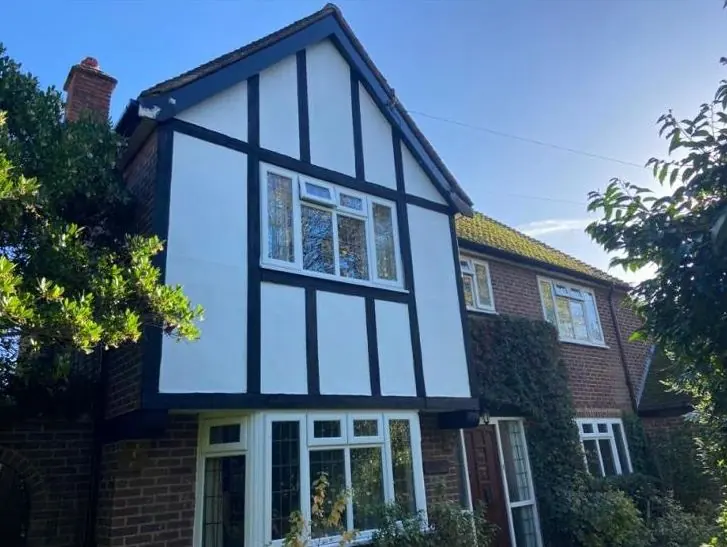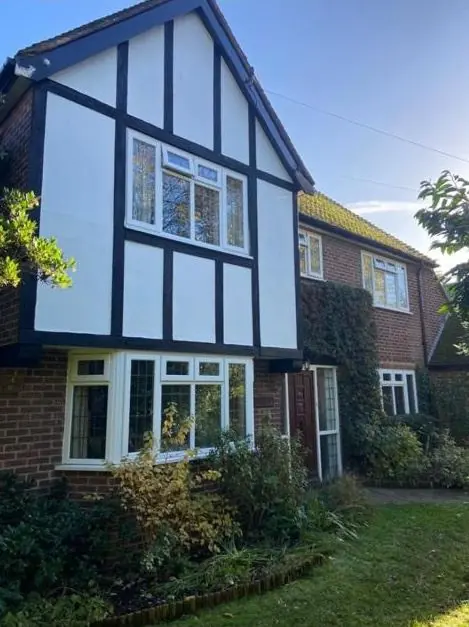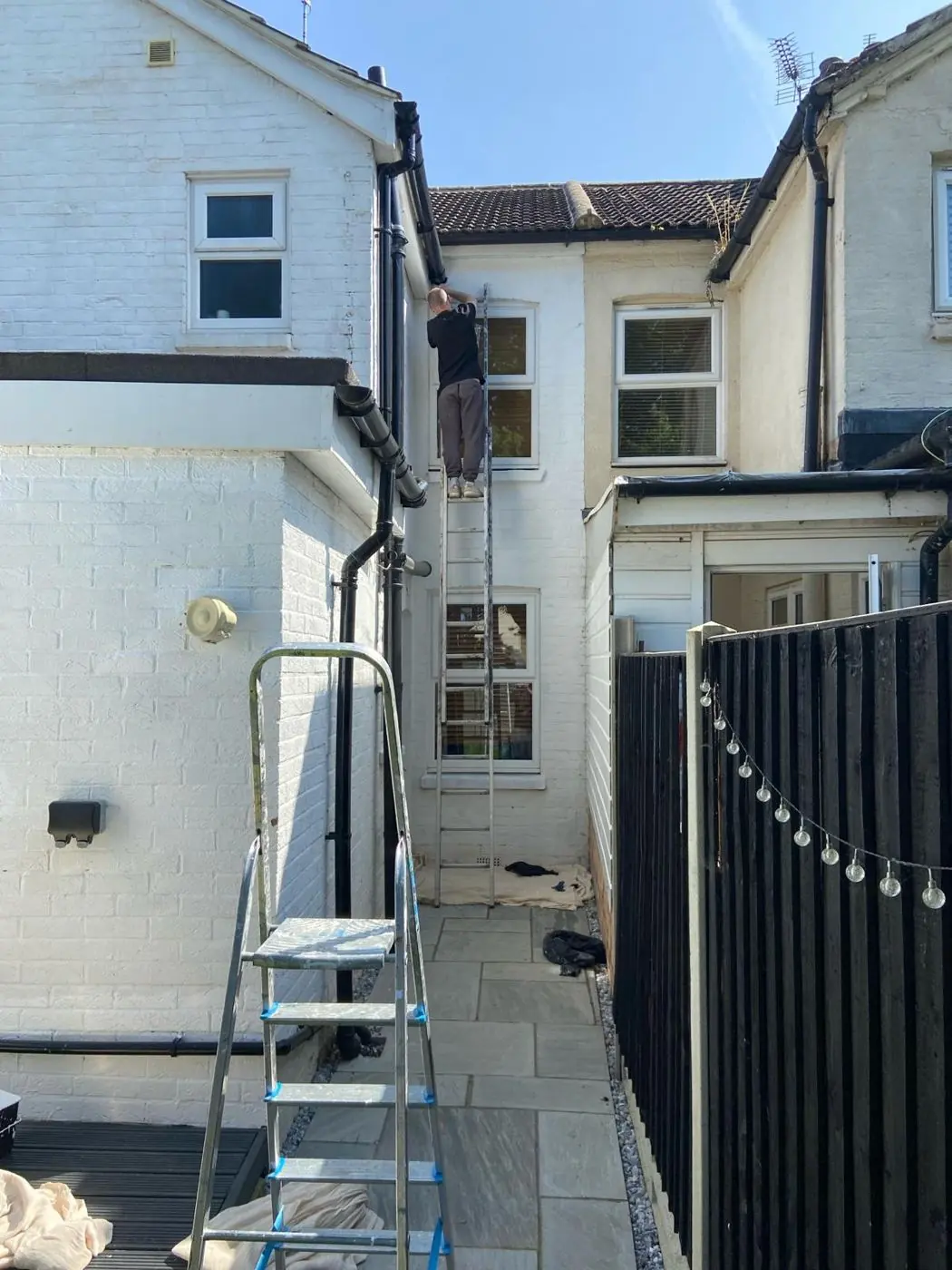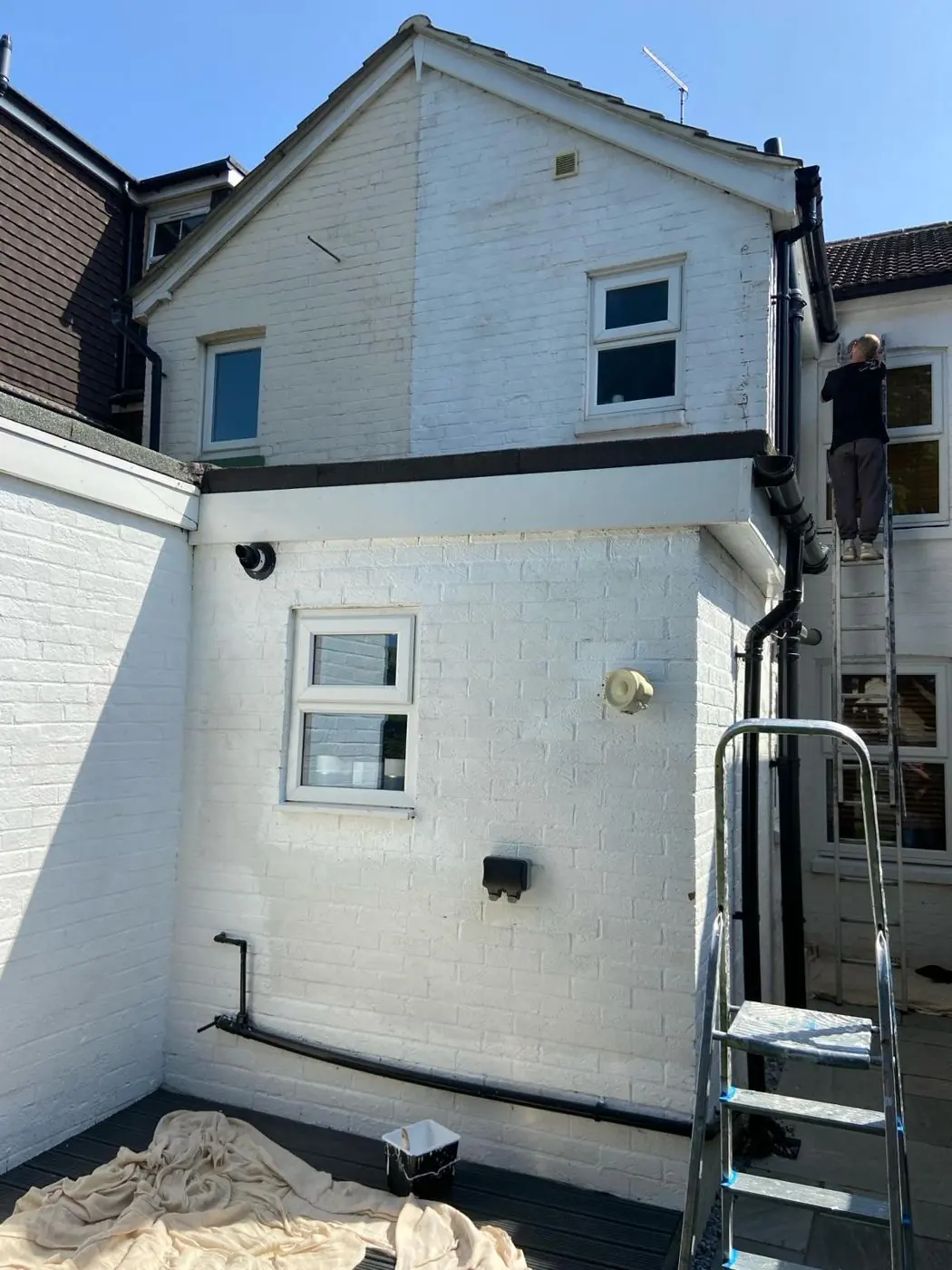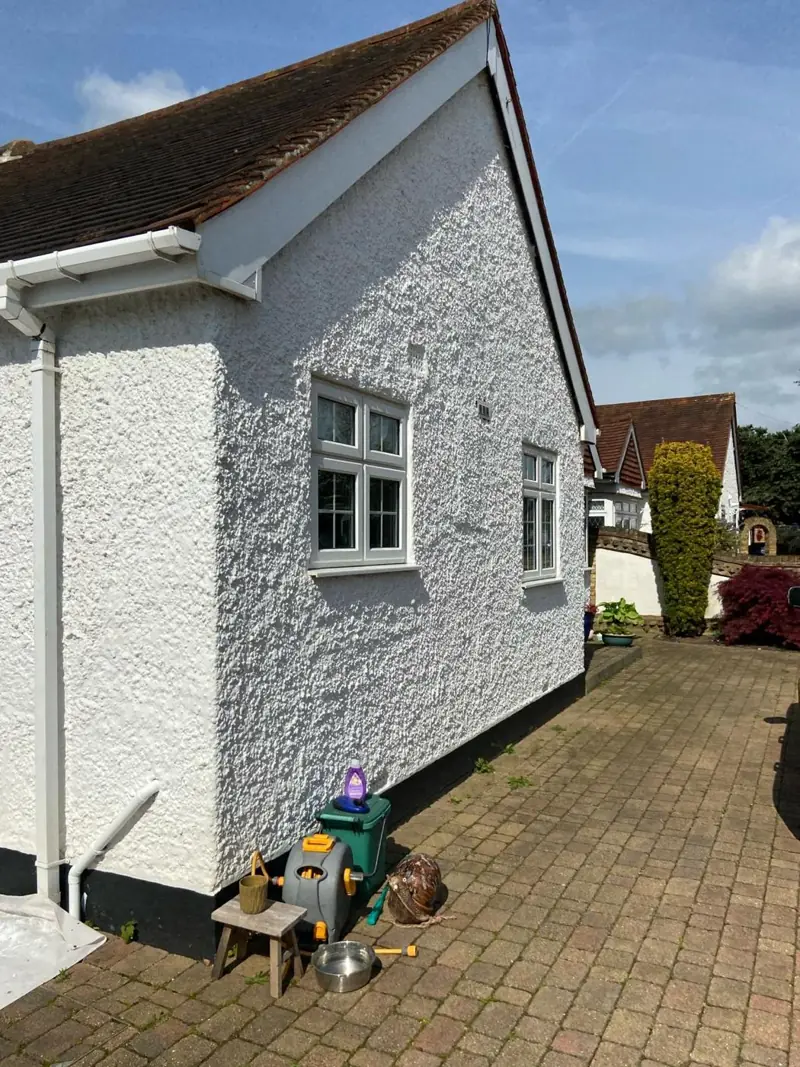
DH Painter & Decorator paints timber fascias, soffits, bargeboards, dormers and gutters in Collingtree, NN4, a 3-mile trip south from the town centre. Older High Street houses mostly have bargeboards and dormer timber under slate, while Collingtree Park's modern houses have long timber fascia runs that collect leaf litter.
What the roofline looks like in the old village
Many people think of roofline painting as a run of fascia boards along the front of a house. On Collingtree’s High Street that is often not what’s there. The listed houses have Welsh slate roofs with stone-coped gables and kneelers, so the gable end is finished in stone, not a painted board. The timber we paint tends to be in smaller, fiddlier places:
- bargeboards where a gable is not stone-coped
- dormer cheeks, fronts and the pediments over the sash dormers at The Rectory
- porch canopies and eaves boards on the cottages
- cast or plastic gutters and downpipes fixed to stone
Each of those is short, but they are high and awkward to reach, and dormers in particular cannot be done properly off a ladder. We put up a tower so we can scrape, prime and paint the cheeks and the dormer front from a stable platform without leaning anything on the slate.
Thatch and pantiles at the eaves
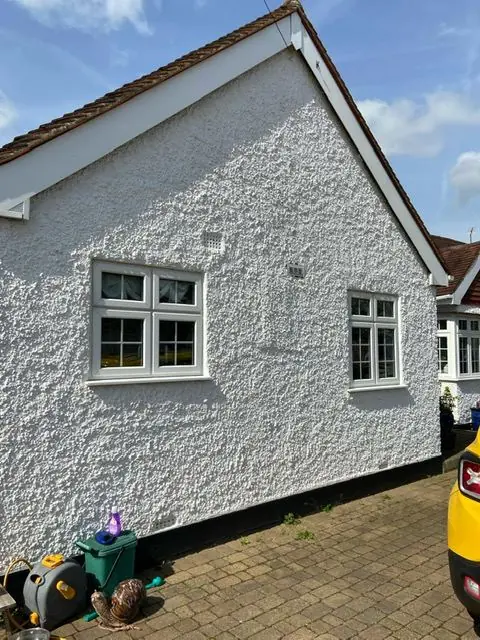
Two buildings need extra thought: the village pub, whose roof is still thatched, and the Barn Corner pair, which lost their thatch to pantiles. Where there is painted timber close to thatch, the thatch is sheeted and protected first, and old paint is removed by hand scraping and sanding. Open flame is never used for stripping near a thatched roof. Pantiled eaves are uneven, so cutting in along the underside of the tiles is done by brush with care rather than speed. Because the pub is a listed commercial premises, any work there would also be planned around its opening hours.
Leaf litter and long fascia runs at Collingtree Park
Off Windingbrook Lane and Rowtree Road, the golf-side houses have much longer rooflines and timber fascias. They also sit among mature trees, and so do the houses near Barn Corner in the old village. That combination is hard on a roofline. Leaves fill the gutters, water backs up over the fascia, and the boards stay wet in the shade. Paint on timber that keeps getting soaked from behind lifts and lets rot in, usually at the board ends and mitred corners first.
So on these houses we start at the gutter. We clear it, check the joints and outlets for leaks, and push a sharp point into any suspect timber. Small soft areas are cut out and filled; anything worse is pointed out to you for a carpenter to replace before we paint. Algae on soffits is killed with a fungicidal wash and brushed off, and any traffic film from the nearby M1 and A45 is washed away, before knots are sealed and bare wood is primed.
Planning the job around the setting
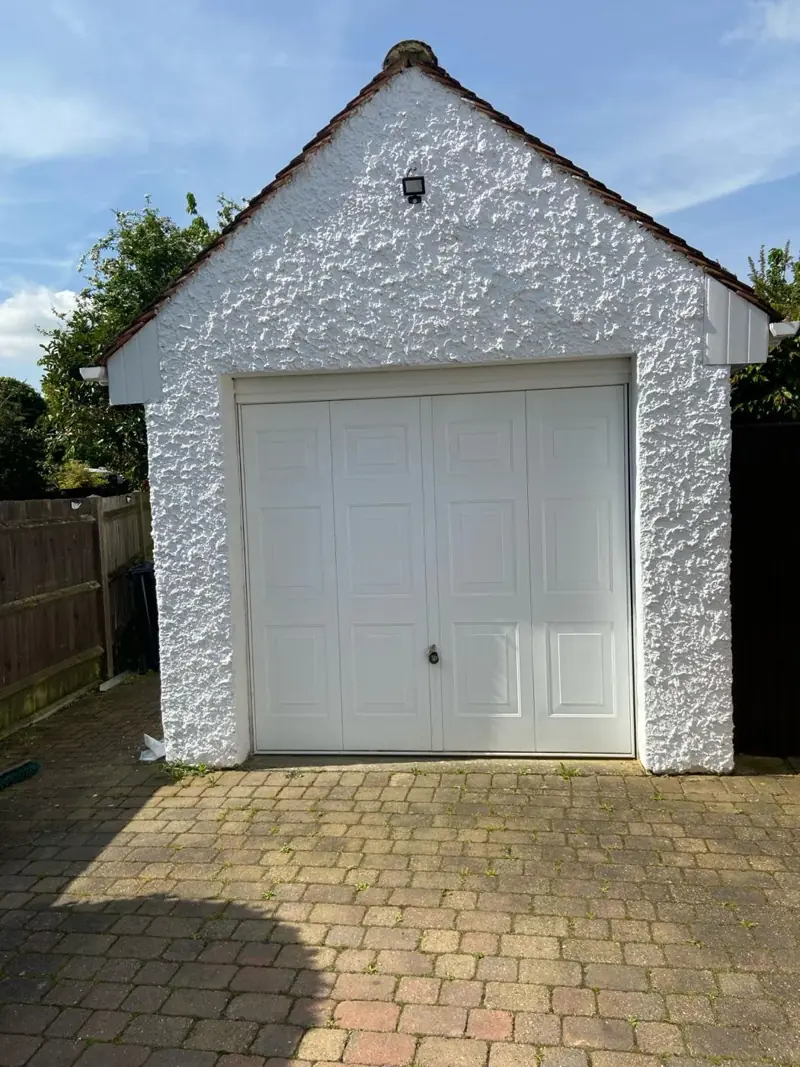
A roofline needs a tower or ladders standing below it, and in Collingtree that space is limited in different ways. On the High Street, continuous stone boundary walls and listed houses set close to the road leave little room, and the street is closed at both ends, so we agree where the van and tower go before starting. Near the golf club house, trees are under a Tree Preservation Order, so we keep equipment clear of branches rather than cutting anything back.
Our main fascia and soffit painting page covers the method and finishes. For a sense of what roofline work costs, our painter and decorator cost guide explains what drives the price. More about the village is on our Collingtree page.
Last updated by Dean, DH Painter & Decorator.