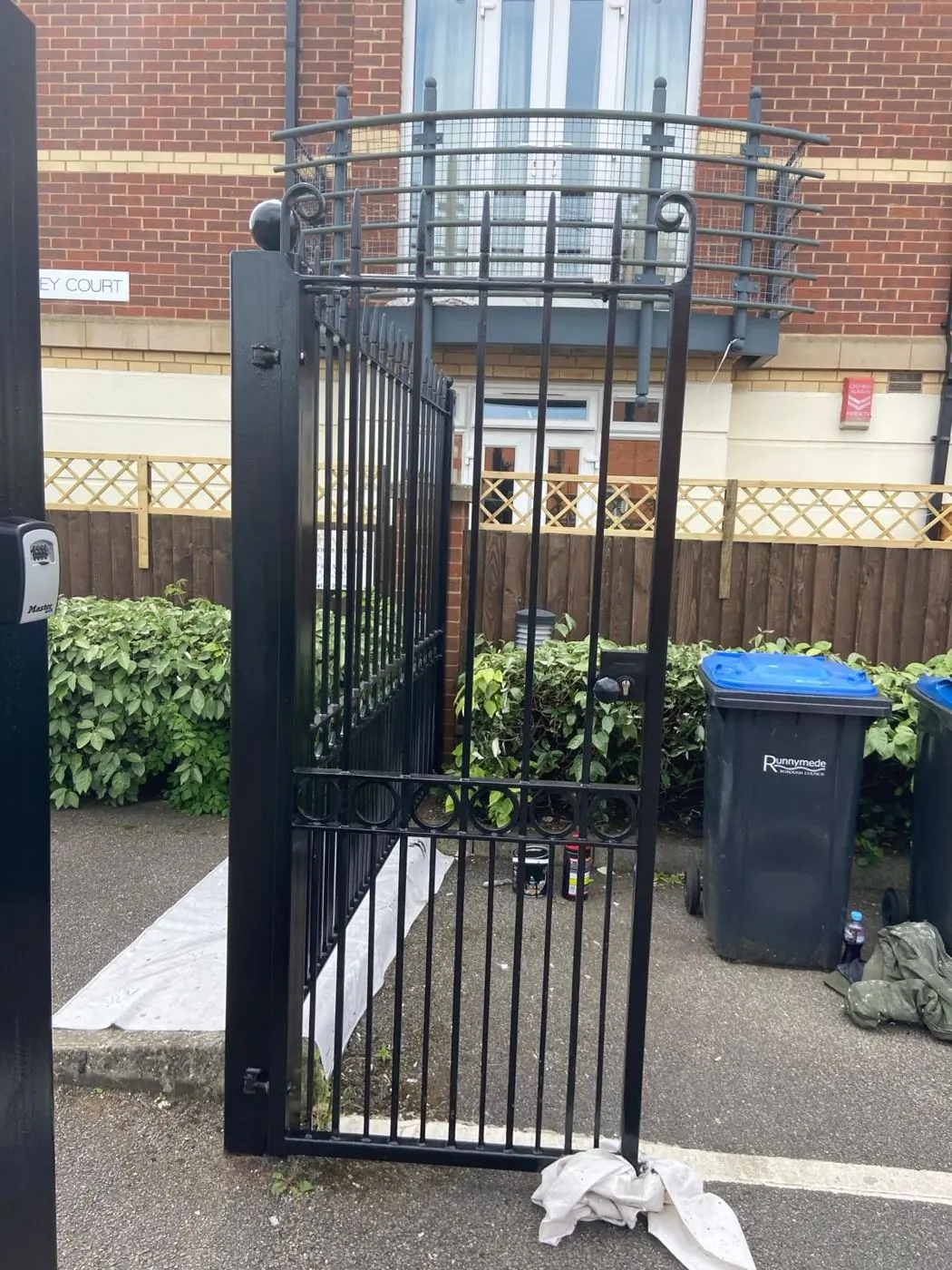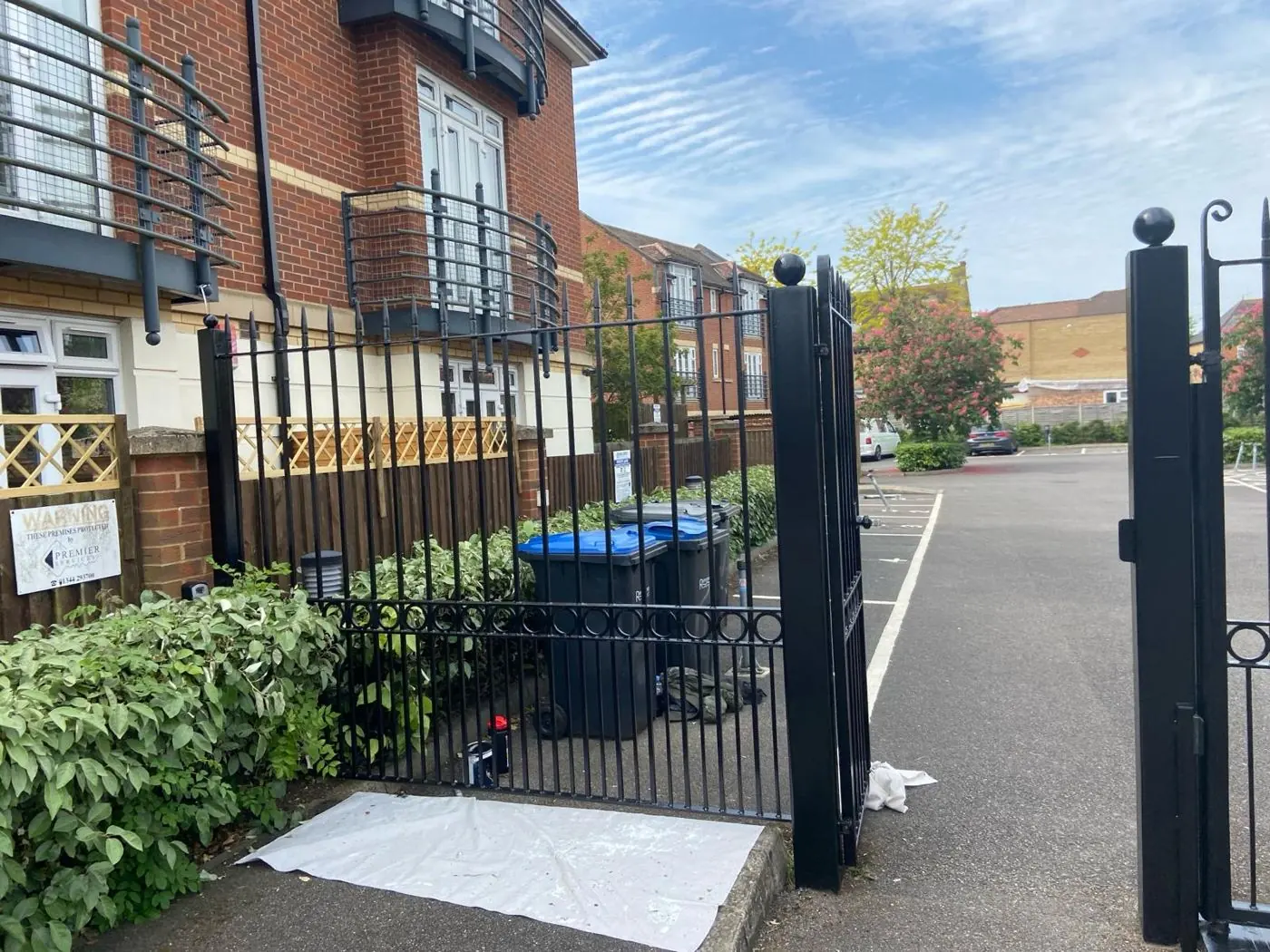
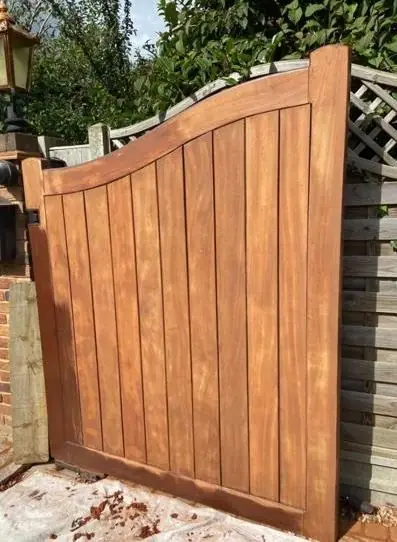
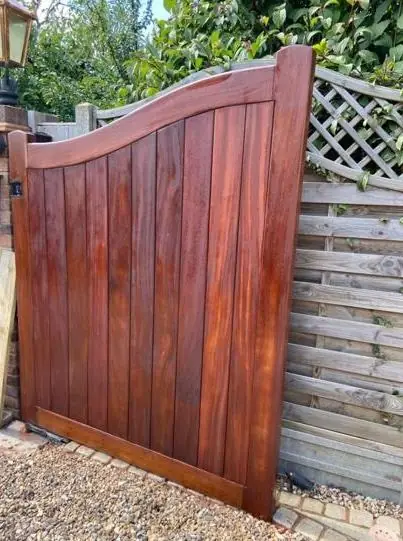
Dean stains and paints garden fences, posts and timber gates in Milton Malsor, a rural village about 3.2 miles south-west of Northampton. Many gardens border fields or sit near the stream through The Dip, so preparation and drying time matter as much as the stain itself.
Gardens that run out to open countryside
Milton Malsor is a small rural village with open fields and public footpaths round its edge, and gardens on the edge of the village can finish at a field boundary rather than a neighbour’s fence. That changes how garden timber weathers. A fence facing open ground takes wind-driven rain and full sun with no shelter, and the side facing the field is often hard to reach once crops or hedges grow up. We look at both faces on the visit and agree which sides are in scope before quoting.
Where a timber gate opens onto a footpath or field, the hinge stile and bottom rail are checked first. They take most of the wear and most of the water, and loose joints there are glued or screwed before any stain goes on.
Timber on these boundaries also picks up dust from field work and, on exposed plots, a fine film from the M1, the A43 and the railway. It is brushed off or washed down so the stain soaks into the wood rather than into the dirt.
Damp ground near The Dip
The soil is mostly sand, laid down by an ancient riverbed, and a stream runs north-west through the village and The Dip field. It flooded in 1998. Sandy ground drains in some places and holds water in others, and fences on lower plots near the stream sit in damp soil for much of the year. That shows up as:
- Green growth on the bottom rails and gravel boards.
- Posts that are soft or split at ground level.
- Stain that peels at the base while the top of the panel still looks fine.
Dean treats green growth with a fungicidal wash and lets it work before brushing it off. Soft posts are pointed out before any staining, because putting a finish on a post that is rotting at the base wastes your money. The timber then needs a dry spell to reach a sensible moisture level, and on these lower gardens that can mean waiting a little longer after rain than elsewhere.
Choosing a finish for a conservation-area boundary
Much of the old village lies in the Milton Malsor Conservation Area, among warm ironstone, limestone, thatch and pantile. A fence or gate seen from High Street, Green Street or Collingtree Road becomes part of that view. Natural browns, muted greens and greys tend to sit well against the stone; very bright fence colours can look out of place, though on an unlisted house in the village a fence colour is generally your choice.
The choice between stain and paint also matters on exposed boundaries:
| Finish | Suits | Upkeep |
|---|---|---|
| Penetrating stain | New or sound timber, gates where the grain should show | Fades gradually, easy to recoat without stripping |
| Opaque fence paint | Weathered or mismatched panels that need one even colour | Lasts well but can peel at the base on damp ground |
On a timber gate set between stone piers, the stain is cut in by hand so none of it marks the ironstone.
Booking the work
Fence staining in Milton Malsor is most reliable from late spring to early autumn, once the ground and timber have dried out. New pressure-treated timber is better left to dry before it is stained, following the product guidance. The general method for panels, posts and hardwood gates is on our main fence and gate staining page, and the timing exterior painting guide explains the weather side. For other work on the village’s houses, see our Milton Malsor page.
Last updated by Dean, DH Painter & Decorator.